Since the earliest dinosaurs appeared in the Valley of the Moon in Argentina 228 million years ago, they rapidly evolved and developed due to their excellent adaptation to the ecological environment at that time, and spread to all corners of the earth. In the Early Jurassic period, 200 million to 180 million years ago, the dinosaur family reached its first period of prosperity.
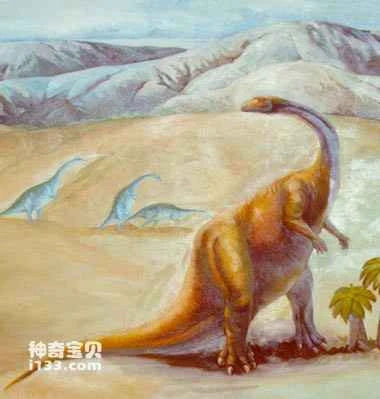
Lufeng Dragon
At that time, the supercontinent Pangaea had already begun to split into two large continents, Laurasia in the north and Gondwana in the south. Between them lay a broad ancient Mediterranean Sea, which had a beautiful name: the Tethys Sea, named after Tethys, the wife of the Greek sea god.
However, at the very beginning of the Jurassic period, the northern and southern continents had not yet completely separated. Therefore, dinosaurs could migrate between the various landmasses around the Tethys Sea.
Lesotho Dragon
Geologists have discovered that the strata deposited before this period initially consisted of clastic rocks predominantly light green and grayish-green, interspersed with coal seams. This indicates a warm, humid climate with abundant vegetation. Tall ferns, seed ferns, cycads, and other plants formed dense forests, teeming with various warm- and moisture-loving animals. Rivers crisscrossed the forest edges and in the depressions between forests, with numerous lakes and swamps, where large amphibians, mammal-like creatures, and reptiles such as pseudocrocodilians lived. This landscape likely persisted until the Late Triassic. In the Early Jurassic, the climate began to change, with a hot, dry climate replacing the previous warm and humid one. This is evidenced by the transformation of the deposited strata into red strata, rich in calcium cement and iron oxide. This climate was widespread and global at the time. These climatic conditions were undoubtedly more suitable for the development of reptiles that were no longer confined to water and preferred heat and drought. It was under these conditions that dinosaurs began to dominate the terrestrial ecosystems of the Earth.

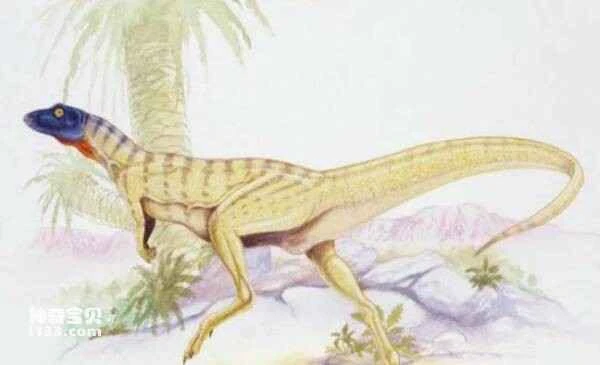
Coelophysis
Numerous fossils prove that the number of dinosaur genera and species was still relatively small during this period. These primitive dinosaurs included small theropods, archaeopods, and primitive ornithischians, with Coelophysis, Lufengosaurus, and Lesothoosaurus being representative examples. These early dinosaurs were the forerunners of the diverse dinosaurs that would later rule the Earth for over 100 million years, and were the ancestors of various dinosaurs of the Jurassic and Cretaceous periods. Because the dinosaur fossils discovered on different landmasses from this period are remarkably consistent, scientists speculate that the dinosaur fauna was global, hence the name "Circum-Tethys Sea Dinosaur Fauna." Strata containing related dinosaur fossils have been found in Asia, Africa, Europe, and the Americas. Among the most representative fossil sites are the Karoo Basin and Lesotho in South Africa, Arizona, New Mexico, and Kenyat and Newark in Texas in the United States, Coralud in Argentina, Konta in India, and the Lufeng Basin in Yunnan, my country.