Small things often attract attention and fascinate people. The same is true for tiny turtles; if a turtle were the size of a coin, many people would likely go to great lengths to acquire it. Here, we introduce ten of the world's smallest turtle species, including the miniature musk turtle, the fruit-shelled mud turtle, the tiger musk turtle, the helmeted mud turtle, the flat-backed musk turtle, the giant tortoise, the Egyptian tortoise, the diamondback tortoise, the hawksbill turtle, and the red-faced mud turtle. These miniature turtles possess an astonishing size and are undoubtedly captivating choices for animal lovers.
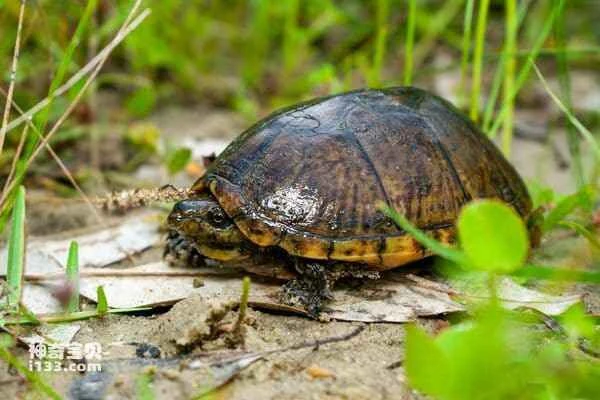
1. Miniature Musk Turtle (5-8 cm)
Miniature musk turtles, as their name suggests, are small, delicate, and adorable. Adult males typically only reach 5 to 6 centimeters in length, while females are no more than 7 to 8 centimeters. It's hard to imagine that the details of such a small turtle's body could be seen with the naked eye. They are mainly distributed in Florida, USA, and primarily feed on fish, shrimp, and earthworms. At first glance, miniature musk turtles don't appear much different from common musk turtles; their markings are largely similar. However, miniature musk turtles are narrower at the front and wider at the back, a feature less pronounced in common musk turtles. Furthermore, adult miniature musk turtles have a darker coloration, while common musk turtles are more pale. Finding a purebred miniature musk turtle in the market is quite difficult, and turtle enthusiasts need to choose carefully.
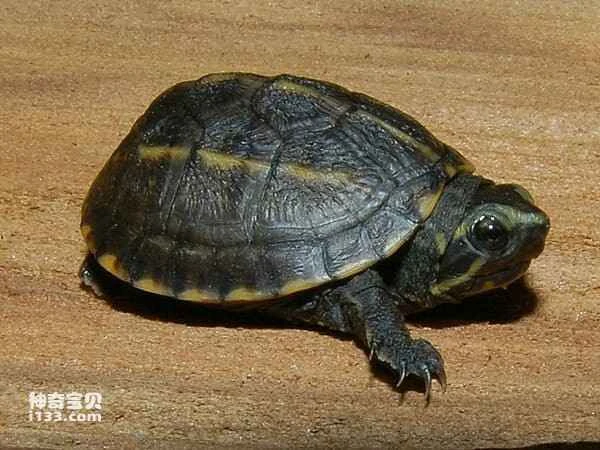
2. Mud Turtle with Fruit Kernel (7-8 cm)
The mud turtle (Mud Turtle) is one of the smallest adult turtles in the world. Wild adult females reach about 7-8 cm in length, while adult males reach about 7.5 cm. Their lifespan is typically between 30 and 55 years. Wild mud turtles often have algae attached to their carapace, which helps them blend into their natural environment and provides effective protection. These little creatures are mainly distributed in Florida, USA, and mostly inhabit swamps and mudflats, particularly favoring habitats with soft sandy or muddy bottoms. Mud turtles are carnivorous, feeding on insects, mollusks, and amphibians, and occasionally also consuming plant seeds, leaves, and various algae.
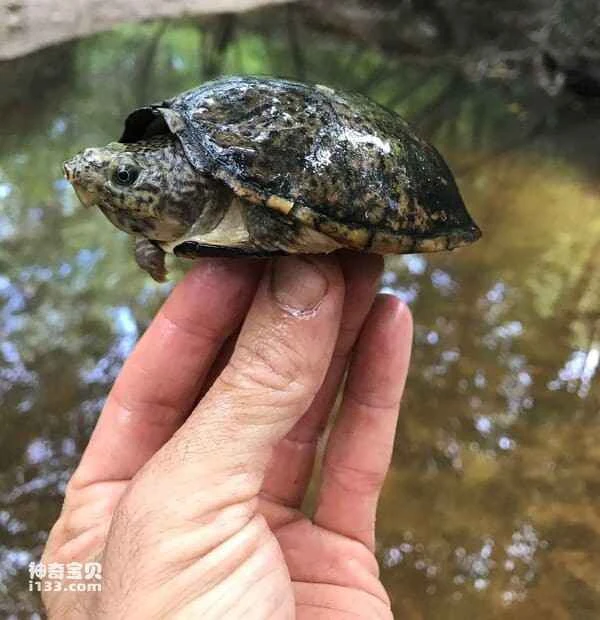
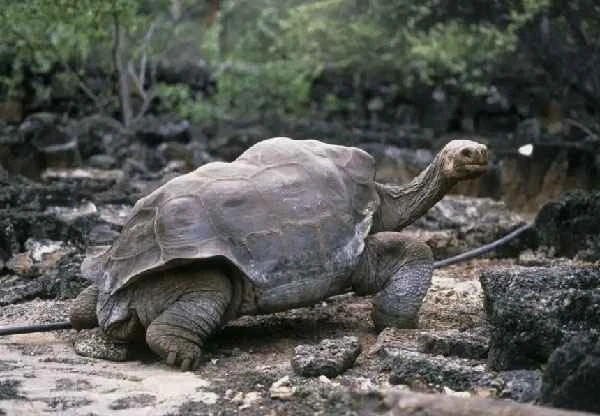
3. Giant Tortoise (7-10 cm)
Despite its name, the giant tortoise is actually a relatively small turtle. Adult male giant tortoises have a carapace length of 7 to 9 centimeters, while adult females have a carapace length of approximately 8 to 10 centimeters. They are mainly distributed in the southeastern United States and prefer to inhabit rivers, streams, swamps, and oxbow lakes. They also tend to climb fallen trees or rocks exposed above the water. They prefer environments with obstacles around their habitats, typically choosing large springs, streams, rivers, oxbow lakes, swamps, and ponds formed of limestone. Their diet consists of aquatic insects, crustaceans, small shrimp, small fish, spiders, and small reptiles.
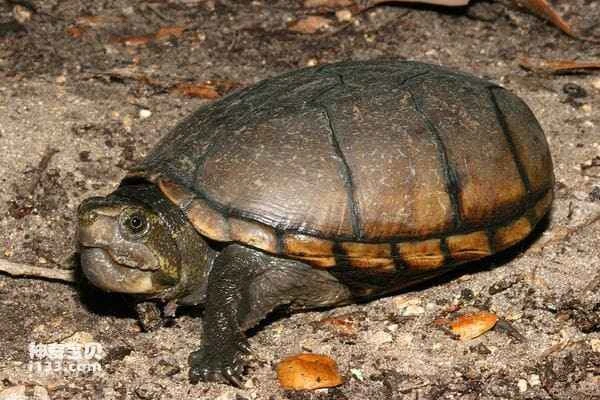
4. Helmeted Mud Turtle (7.5-10 cm)
The Helmeted Mud Turtle, also known as the Oriental Mud Turtle, measures approximately 7.5 to 10 centimeters in length. Its head typically features prominent spots or markings, with relatively few other markings, and is usually brown. This semi-aquatic turtle has a wide distribution, ranging from the Florida coast in the south, through central Texas, to the valleys of northern Mississippi, and further into Missouri, Indiana, and southern Illinois. Small numbers are also found in southwestern New York and Connecticut. They inhabit wet grasslands, ditches, and swamps, and can also survive in saline water. During the summer, these turtles burrow into the edges of swamps and fields to abstain from summer.
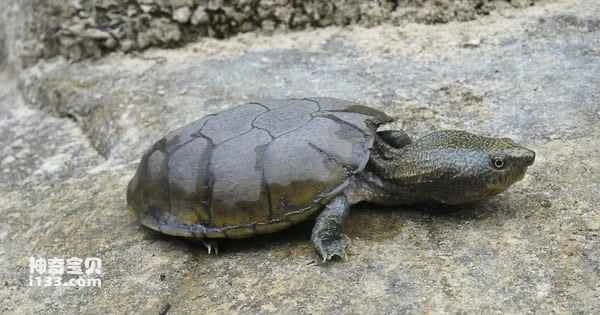
5. Flat-backed Musk Turtle (7.6-11.4 cm)
The flat-backed musk turtle is a shy, small aquatic turtle, named for its relatively flat carapace compared to other species. Adult flat-backed musk turtles typically measure 7.6 to 11.4 centimeters in length and have a lifespan of approximately 30 to 40 years. These turtles are mainly distributed in the upper and lower reaches of Alabama waters in the United States, preferring to inhabit medium-sized rivers, wide streams, and even dams. Initially, they feed on mollusks, sometimes also preying on insects and worms, and are particularly active during the twilight and at night, especially in the height of summer.
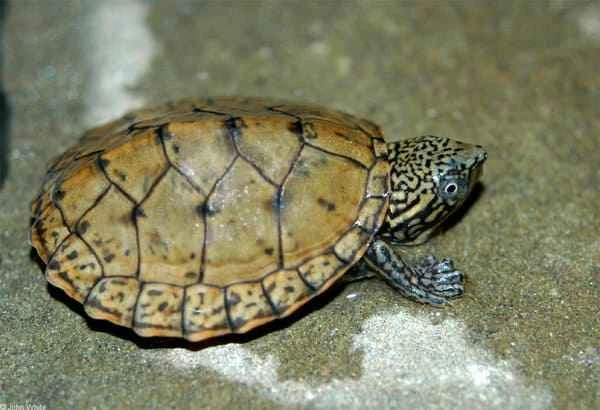
6. Tiger Musk Turtle (7-12 cm)
The tiger musk turtle, also known as the striped-necked musk turtle, is famous for its distinctive tiger stripes on its head, a prominent characteristic of the species. Adult tiger musk turtles typically range in length from 7 to 10 centimeters, with the largest individuals reaching only 12 centimeters. They are mainly distributed in southwestern Virginia, extending to eastern Tennessee, and further south to southeastern Mississippi. As a completely aquatic musk turtle, they prefer to inhabit streams and shallow, rocky areas. Their diet mainly consists of insects, snails, and other small animals, and they will occasionally consume plants from fields.
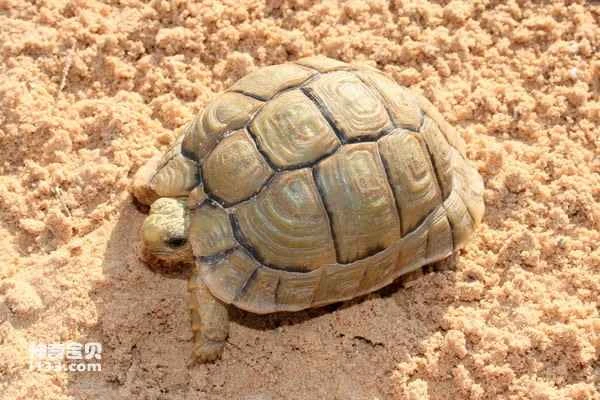
7. Egyptian tortoise (10-14 cm)
The Egyptian tortoise is a rare and exceptionally cute small tortoise that once inhabited the area near the Sahara Desert. They are unusually miniature tortoises, typically measuring between 10 and 14 centimeters in length, and their rounded shape adds to their appeal. Their golden carapace is highly arched, resembling an inverted golden bowl. Egyptian tortoises are adapted to desert and semi-arid environments, such as gravel plains, rocky areas, sandy dry valleys, and arid woodlands, and they have a strong adaptability to dry, cool conditions. They have a small appetite, primarily feeding on wild grasses and fallen leaves.
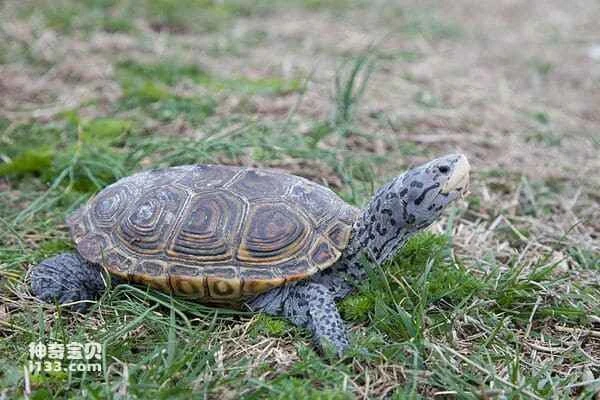
8. Diamondback Tortoise (11-17.1 cm)
The diamondback terrapin, also known as the rhomboid turtle, is a relatively large turtle species with grooves on its head and carapace. Females are typically twice the size of males at sexual maturity. Adult male diamondback terrapins generally reach about 11 cm in length, while adult females can reach 17.1 cm. Their lifespan is between 25 and 40 years. Native to the eastern and southern United States, the diamondback terrapin is the only turtle species in North America that lives in saline waters. They are frequently found along the coast, feeding on shellfish, shrimp, crabs, snails, and various small fish.
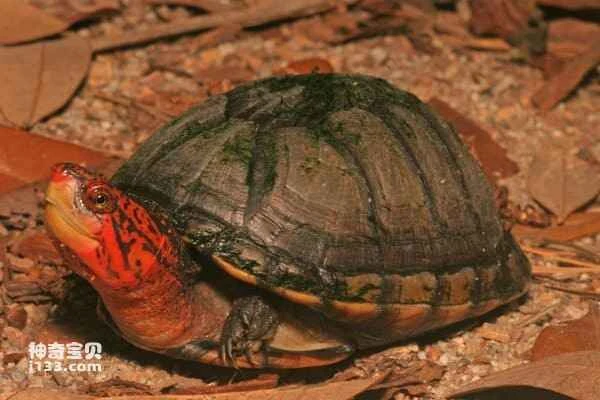
9. Red-faced Mud Turtle (12-17.5 cm)
The red-faced mud turtle, also known as the red-faced egg turtle, is a subspecies of the Amazon mud turtle. This turtle has a flattened shell, usually a solid gray or nearly black, and is generally not very large, ranging in length from 12 to 17.5 cm. Adult males weigh approximately 350 grams, while adult females weigh about 400 grams. This turtle is mainly distributed in Central and South America, inhabiting rivers and swamps. They are primarily carnivorous, with a diet including small fish and fresh shrimp.
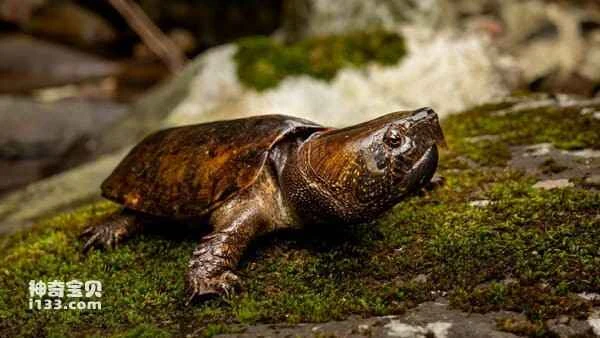
10. Hawksbill turtle (12-18 cm)
The hawksbill turtle, scientifically known as *Platychelys przewalskii*, is famous for its beak-like, pointed snout. Because its head is relatively large and cannot be retracted into its shell, its appearance is somewhat comical. The hawksbill turtle is also a relatively common small turtle, with adults having a carapace length between 12 and 18 centimeters. They are mainly distributed in Southeast Asian countries such as Vietnam, Thailand, and Myanmar, as well as southern China, inhabiting shallow, rocky streams in mountainous areas. Due to their amphibious nature, the hawksbill turtle can climb cliffs to forage or bask in the sun, demonstrating excellent climbing abilities. Its main diet is carnivorous, favoring snails and other shellfish, and occasionally consuming wild fruits.
The list of the world's ten smallest turtles was compiled by searching relevant online platforms for small turtle species within the order Testudines, taking into account their morphological characteristics, popularity, and influence. If you have any questions, please feel free to comment/criticize at the end.