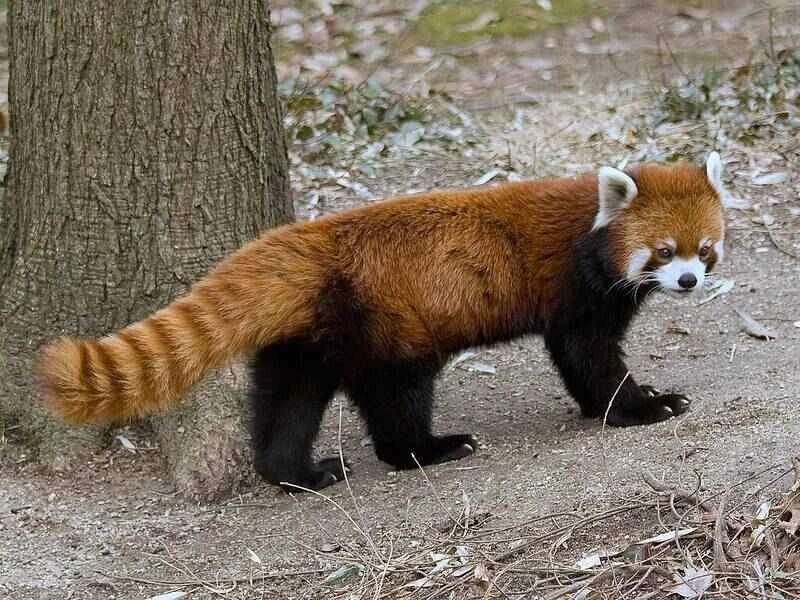
The red panda (scientific name: *Ailurus fulgens*), also known as the red panda or fire fox, is not related to the giant panda despite its name. This arboreal mammal, inhabiting the forests of the Himalayas and southwestern China, belongs to the order Carnivora, but its diet is primarily herbivorous, exhibiting a highly distinctive dietary structure. This article will analyze the red panda's wild dietary habits, digestive characteristics, captive breeding and management, and its relationship to conservation efforts from a zoological perspective.
1. Vegetarians in the "Carnivorous Order"?
1.1 The contradiction between the name and reality
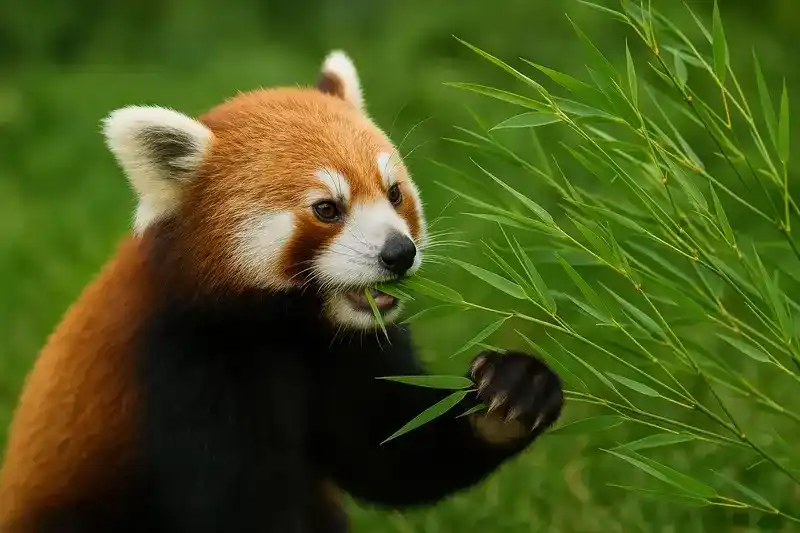
Although red pandas belong to the order Carnivora, over 90% of their diet consists of plants, primarily bamboo. These differences in diet and physiological structure reflect the results of evolutionary adaptation.
1.2 Unique ecological niche
Red pandas are among the very few carnivores that primarily feed on plants. They occupy a special position in the ecosystem and need to consume large amounts of low-nutrient-density plant-based foods to maintain their energy levels.
II. What do wild red pandas eat?
2.1 Staple food: Bamboo
Bamboo leaves and tender shoots are its main food source.
I prefer the tender bamboo shoots, as they have less fiber and are easier to digest.
2.2 Supplementary Foods
To meet other nutritional needs, red pandas also consume a variety of supplementary foods:
Wild fruits (such as berries and apples)
tender leaves and flowers of plants
Nuts and root vegetables
They also occasionally prey on insects, bird eggs, and small rodents.
2.3 Seasonal differences
As the seasons change, the red panda's diet will adjust accordingly:
Spring and summer: Eat more tender leaves, fruits, and flowers
Winter: Bamboo becomes the staple food, supplemented with root vegetables.
III. Restrictions of the Digestive System
3.1 Simple intestinal structure of carnivorous animals
Red pandas lack the digestive structures unique to herbivores, such as a ruminant stomach or cecum, resulting in lower efficiency in absorbing nutrients from bamboo.
3.2 High feeding time requirement
To obtain sufficient energy, red pandas need to eat for 8 to 13 hours a day, consuming an average of 1.2 kilograms of bamboo per day .
IV. Foraging Behavior of Red Pandas
4.1 Arboreal Foragers
Red pandas are good at climbing trees and usually pick tender leaves and fruits on the trees, but they also go down to the ground to eat bamboo and other plants.
4.2 Living Alone and Twilight Behavior
Red pandas are mostly solitary animals, and are most active in the early morning and evening to avoid competition and predators.
V. Dietary Management in Artificial Rearing
5.1 Common Zoo Feeds
In artificial environments, to supplement nutrition and provide diversity, keepers will provide:
Fresh or frozen bamboo leaves and bamboo shoots
Soft fruits such as apples and grapes
Specialized herbivore pellet feed
High-fiber vegetables such as carrots and sweet potatoes
5.2 The Importance of Enrichment Design
By hiding food and providing foraging toys, we can encourage them to use their natural foraging behaviors and avoid boredom and stress in captivity.
5.3 Dietary monitoring
The zoo regularly records the red pandas' weight, food intake, and excretion to ensure nutritional balance and health.
VI. Challenges and Risks Arising from Diet
6.1 Low digestion efficiency
Red pandas can only absorb 20-30% of the nutrients from bamboo, so the amount of food they eat is crucial for their survival.
6.2 Obesity in Domesticated Families
Reduced activity levels and higher food density in artificial environments can easily lead to obesity in red pandas, which in turn affects their reproduction and lifespan.
6.3 Wilderness Nutrition Crisis
Habitat destruction or large-scale bamboo die-off can lead to food shortages for red pandas, affecting population reproduction and cub survival rates.
VII. Dietary Considerations During Protection
7.1 Habitat Dependence
Red pandas are highly dependent on bamboo forests, so protecting their habitat and ensuring bamboo forest regeneration is crucial.
7.2 Threat of Climate Change
Abnormal climate will affect the growth cycle and distribution of bamboo, thus posing a potential food crisis for red pandas.
7.3 Nutritional support for artificial breeding
A scientifically designed feeding program can improve the success rate of reproduction and the survival rate of offspring, and is an important part of captive breeding and conservation.
VIII. Conclusion: The Evolutionary Miracle of Vegetarianism
Red pandas are "vegetarians within the order Carnivora," exhibiting a rare dietary reversal in the animal kingdom. Their survival depends on intensive foraging and a specific ecological environment.
A deeper understanding of what red pandas eat will not only help improve artificial breeding and nutrition management systems, but also have profound significance for habitat protection and global efforts to save endangered species.