Hippos (Hippopotamus) are fascinating animals; their enormous size, unique habitat, and behavior often spark curiosity. Since hippos spend most of their time in the water, people often ask: Do hippos swim? The answer might surprise you. Despite their close connection to water, hippos don't actually swim as we commonly believe. In this article, we'll explore in detail how hippos truly perform in the water, their adaptations to aquatic environments, and why they are often mistakenly perceived as "swimming experts."
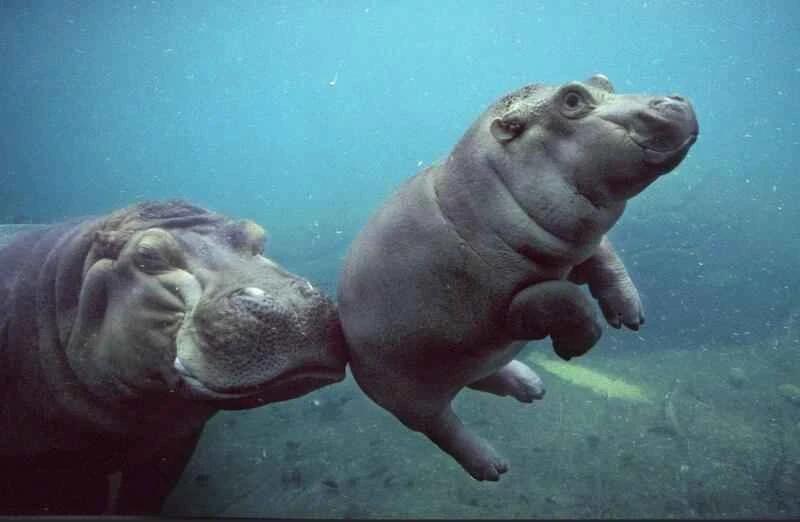
Amazing fact: Hippos can't swim
Although hippos spend most of their lives in the water, they don't swim like other aquatic animals. Unlike fish, otters, or crocodiles, which propel themselves through the water using their limbs, hippos don't actually swim . Instead, they move by walking or running on riverbeds or lake bottoms.
Hippos have a unique way of moving underwater. They use their powerful legs to propel themselves up from the bottom, moving forward as if "walking" or "running" in the water. Hippos have very dense bodies and lack air sacs or buoyancy devices like other aquatic animals, which makes it easier for them to sink to the bottom and stay near it.
How do hippos move in water?
Although hippos cannot swim like other swimming animals, they are very well adapted to aquatic environments. Here are some ways hippos move and survive in water:
1. Walking or running underwater
As mentioned earlier, hippos typically move in the water by "walking". When the water is deep, they use their powerful hind legs to push their bodies up from the bottom and glide forward before landing on the bottom, much like running in the water.
2. Body density and buoyancy
Hippos cannot swim because of their immense weight. Adult hippos weigh between 1,500 and 4,000 pounds, which makes them lack sufficient buoyancy. Their dense body structure is well-suited for walking on the water's surface, as this weight allows them to remain firmly anchored to the bottom.
3. Breath-holding ability
Hippos can hold their breath underwater for 3 to 5 minutes, allowing them to remain submerged for extended periods without frequently surfacing to breathe. This ability is especially important for animals that spend most of their time in the water.
4. Facial features suited to aquatic life
Hippos have their eyes, ears, and nostrils located on the top of their heads, allowing them to breathe and observe their surroundings even when most of their bodies are submerged. This adaptation helps them remain alert in the water and protect themselves from predators.
5. Energy-saving transportation methods
Although hippos cannot swim, their movement in water is remarkably energy-efficient. By walking on the underwater surface or utilizing buoyancy, hippos can remain in the water for extended periods without expending excessive energy. This is crucial for hippos that spend long stretches in the water during the hottest part of the day.
Why do hippos spend most of their time in the water?
Hippos are semi-aquatic animals that alternate between living in water and on land. Water plays a vital role in their daily lives and survival.
1. Cooling down
Hippos spend most of their time in the water to cool themselves down. They lack sweat glands, so staying in rivers or lakes helps them regulate their body temperature, especially in the hot sub-Saharan regions of Africa.
2. Sunscreen
Hippos also possess an amazing adaptation: their skin secretes an oily substance called "blood sweat." This secretion not only acts as sunscreen, protecting them from sun damage, but also has antibacterial properties, preventing infection. However, staying in the water also provides hippos with additional sun protection.
3. Avoiding predators
While adult hippos have virtually no natural predators due to their massive size, they still face threats on land, especially their young. Water provides them with a safer refuge, protecting them from terrestrial predators such as lions and hyenas. In the water, their enormous size and aquatic adaptations make them a formidable foe.
4. Social interaction and reproduction
Hippos are highly social animals, and their groups, often referred to as "hippo herds" or "floating groups," mostly congregate in the water. Male hippos are territorial in the water and often fight for dominance. Hippos mating also occurs in the water, providing more stable support for both males and females.
Hippopotamus: The Misunderstood "Swimmer"
People often mistakenly believe hippos are strong swimmers because they spend long periods of time in the water. While hippos don't swim as we understand them, their unique way of moving in the water is equally impressive. Here are some misconceptions and facts about hippopotamus water abilities:
1. Underwater agility
Although they cannot swim, hippos are incredibly fast in water. They can reach speeds of up to 8 kilometers per hour by walking and pushing on the bottom. This speed, combined with their size and strength, makes them formidable even in the water.
2. Astonishing speed on land
Hippos are often mistaken for slow-moving animals due to their enormous size. However, despite their massive size, they can run at speeds of up to 30 kilometers per hour on land. Combined with their aggressiveness, hippos are considered one of the most dangerous animals in Africa.
3. Adapted to aquatic life
Hippos have many physical adaptations that make them well-suited for aquatic life. Their skin, nostrils, ears, and heavy body structure are all ideally suited for water, allowing them to live comfortably both on land and in water.
Conclusion: Can hippos swim?
The short answer is no, hippos can't swim , but their methods of movement in water are equally impressive. By walking on the riverbed, propelling themselves forward, and utilizing buoyancy, they demonstrate remarkable adaptations to their aquatic environment. While hippos don't float or paddle like other animals, their aquatic lifestyle is undoubtedly a product of long-term evolution and a perfect fit for aquatic life.
Hippos are unique animals, their size, strength, and aquatic adaptations setting them apart in the animal kingdom. Misconceptions about their swimming abilities only add to their mystique, as they continue to dominate Africa's rivers and lakes.