We already know that the tragic mass extinction of the dinosaurs marked the end of the Mesozoic Era. In fact, it wasn't just the dinosaurs that went extinct; many aquatic reptiles that once roamed the oceans—ichthyosaurs, plesiosaurs, mosasaurs, and so on—as well as flying reptiles like pterosaurs, also perished in the catastrophe at the end of the Mesozoic Era. If we include the countless invertebrates that perished in this catastrophe, the list goes on to be even longer.
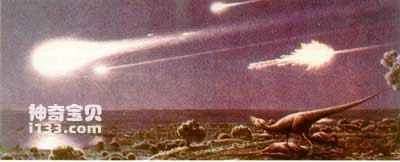
The mass extinction of dinosaurs
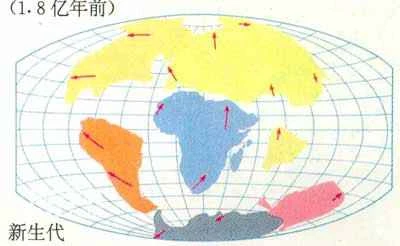
Positions of the continents at the end of the Mesozoic Era
In fact, during the cataclysmic event at the end of the Cretaceous period, our Earth was already undergoing, or was quietly changing. By the end of the Mesozoic Era, the relationships between the continents on Earth were essentially as they are today. The Bering Strait had formed between Asia and North America, while an isthmus connected North and South America, and Eurasia and Africa were linked by the Middle East. Oceania, which was once part of Asia during the Mesozoic Era, had been completely isolated and remains an island continent to this day.
The establishment of modern continental connectivity was largely a result of the crustal uplift that began in the Late Cretaceous. Parts of the continents that had been submerged by shallow seas during the Middle and Late Mesozoic were exposed above sea level during the Late Cretaceous and subsequent Cenozoic eras. These shallow seas retreated significantly, and the orogenic movements that began during this period laid the foundation for important mountain ranges such as the Himalayas, the Alps, the Rocky Mountains, and the Andes.
With the formation of the modern continental outline, the uplift of large landmasses, and the emergence of new mountain ranges, global climate change began. During the Middle and Late Mesozoic Era, most of the world was tropical and subtropical, with a relatively uniform climate from the equator to high latitudes and minimal seasonal variation. This allowed tropical plants and dinosaurs to spread from northern Eurasia and Canada all the way to the southern tip of the continent and Oceania. As continents rose and new mountain ranges formed, the Earth's environment began to diversify, climate zones gradually formed, and the boundaries between them became increasingly distinct over time. Seasonal changes became more pronounced, especially in high latitudes, where the stark contrast between harsh winters and hot summers created a striking difference.
Of course, this significant change in global climate had already altered the appearance of plants on Earth before the extinction of the dinosaurs. Before the Cretaceous period ended, modern deciduous trees had already appeared, and the lush green forests that were once composed of ancient ferns and conifers were replaced by oaks, willows, catalpas, and many other familiar trees, resulting in a diverse range of leaf shapes and mottled appearances, and an increase in plant diversity within biological communities.
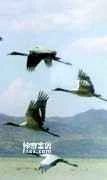
birds
Perhaps these changes in the Earth itself were the fundamental cause of the extinction of dinosaurs and the reptiles that dominated the Mesozoic Era, while factors such as asteroid impacts merely ignited a pre-prepared explosive. Regardless, dinosaurs and a large group of reptiles dramatically disappeared at the end of the Cretaceous period. The surviving members of the reptile family included only Eorosaurs, turtles, crocodiles, lizards, snakes, and the very limited-distribution rhinoceroses. Moreover, the Eorosaurs only survived until the early Cenozoic Era, unlike some of their more fortunate reptilian relatives who continued into the modern era.
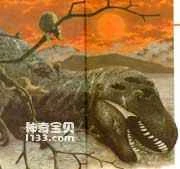
mammal
The true victors after surviving the cataclysmic event were actually only birds and mammals. Cenozoic birds evolved exceptionally rapidly, building upon the foundations laid by Mesozoic birds, resulting in a remarkably diverse group of flying vertebrates. Mammals, although they appeared alongside dinosaurs as early as the Triassic period, lived in the shadow of the dinosaurs. Only after the extinction of those reptiles, freeing up many ecological niches, did the surviving mammals rapidly diversify and occupy numerous groups, maintaining their dominance to this day.
Who survived the ordeal?
We know that during the Mesozoic Era, mammals had developed into five orders: Coccydontidae, Triconodontidae, Psittacodontidae, Archaea, and Polyconodontidae.
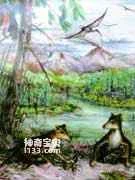
Zhanghesaurus—a type of pygmy mammal
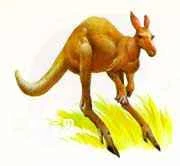
Giant kangaroo—an ancient marsupial
Not all of these ancient mammals survived into the Cenozoic Era. Triconodontia, Pseudotomadontia, and Archaeotheria became extinct as early as the end of the Early Cretaceous period, and they did not even have the chance to witness the great catastrophe at the end of the Mesozoic Era.
However, before their extinction, the order Paleotheidae diverged into two major new groups of mammals: marsupials and placental mammals. These two groups of mammals possessed a more sophisticated ability to adapt to changing ecological environments. Therefore, their strong competitive ability not only caused the three ancient mammal orders mentioned above to disappear from the historical stage shortly after their appearance, but also enabled them to survive the great catastrophe at the end of the Mesozoic Era. In the subsequent Cenozoic Era, they occupied almost all the ecological niches vacated by dinosaurs and were distributed to almost every corner of the earth.

Ancient Cleftfoot Beast—an ancient placental beast
In addition, the Polydonts also survived the great catastrophe at the end of the Mesozoic Era. However, they were too ancient and their competitiveness was far inferior to that of the newly emerging marsupials and placental mammals. Therefore, they became extinct not long after surviving the catastrophe in the early Cenozoic Era.
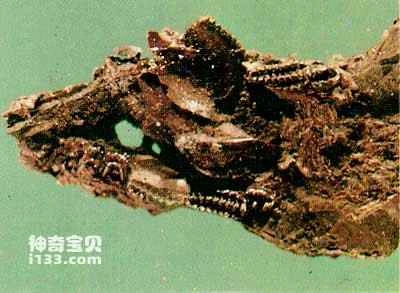
A fossil of a multi-conodont
Finally, there is a mysterious mammal—the monotremes—that still live like hermits in some remote corners of Australia. Due to a lack of fossil discoveries, scientists have never fully understood the phylogenetic relationships of these enigmatic animals. However, their very primitive characteristics (such as oviparity) suggest they certainly represent the remnants of one of the oldest mammals. Some scientists speculate that monotremes may be descendants of the ancient columnodonts.