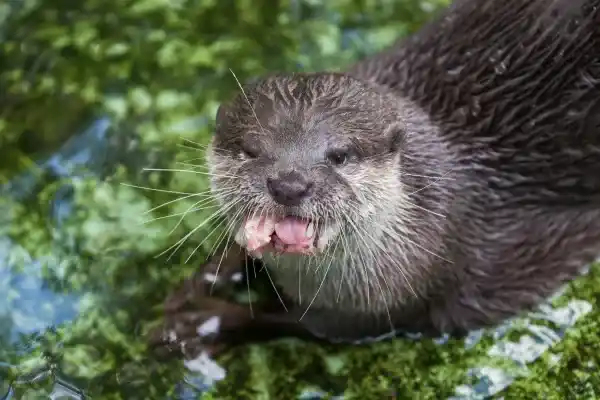
The European otter (scientific name: *Lutra lutra *), also commonly known as the Eurasian otter or Palearctic otter , is a typical semi-aquatic carnivorous mammal . They inhabit rivers, lakes, and wetlands, with some populations also found along coastlines and estuaries. Because otters are highly sensitive to water quality, food chains, and habitat integrity, in many regions the European otter is considered an **"indicator species of river ecological health": the presence and stable reproduction of otters often signifies cleaner water, more abundant fish resources, and better-preserved riparian vegetation.
Below is a systematic compilation based on the angles most frequently searched by users: How big and heavy is it? Where does it live? What does it eat? How does it live? How does it have children? Is it endangered? And some little-known facts .

Basic Information Overview
Chinese name : European otter / Eurasian otter
Scientific name : Lutra lutra
Family : Mustelidae; Genus: Lutra
Total length : Approximately 90–120 cm (including tail)
Tail length : up to approximately 40 cm
Weight : Approximately 5–12 kg (males are generally larger)
Activity time : mostly at dusk and night (twilight/nocturnal)
Lifestyle : Primarily living alone, with strong territoriality
Lifespan in the wild : mostly 8–12 years (can be longer under good conditions).
What animal family does the European otter belong to? (Classification and close relatives)
European otters are carnivores belonging to the Mustelidae family , and are closely related to badgers, minks, and weasels . Due to their distribution spanning different climate zones across Eurasia, European otters exhibit several subspecies/local population differences in different regions, primarily in terms of size and coat color.

What do European otters look like? What are their physical characteristics?
The European otter is an animal "born for water," with an physiology perfectly suited for diving and hunting prey.
Main features
Its body is slender and flexible , like a "water hunter," making it easy to turn and move quickly underwater.
Webbed toes : The limbs are more like "built-in webs", making swimming more efficient.
A strong and powerful tail : The tail is muscular and can be used to maintain balance and turn, like a "rudder".
Dark brown back, lighter abdomen : The back is usually dark brown, while the abdomen and throat are lighter, which is good for camouflage.
Otters have extremely dense fur, which forms an insulating layer to help keep them warm and maintain buoyancy in cold water.
Round head and small ears : reduce water resistance and make diving smoother.
The whiskers (tentacles) are extremely sensitive : these are key "sensory tools" that can detect subtle water currents and vibrations produced by prey in murky water or poor lighting conditions.
Many people mistakenly believe that otters rely on thick fat for warmth, but they actually depend more on their extremely dense fur and waterproof structure . This is why water pollution has a particularly significant impact on otters.
Where do European otters live? What is their distribution range?
European otters have very specific requirements for water: the water must be relatively clean, there must be enough food, and there must be a place to hide on the shore .
Preferred habitat
Rivers and streams (preferably with natural riverbanks)
Lakes and reservoirs (rich in fish resources, with secluded spots along the shore).
swamps, wetlands, floodplains
Coastal and estuary areas (some populations utilize marine areas, but usually still require freshwater replenishment and shoreline shelter)
What do they value most?
Abundant food (especially fish)
Dense riverside vegetation (providing shelter, rest, and raising young).
Quiet and undisturbed (the less human activity, the better).
Distribution area
Records were kept in most parts of Europe (from the Iberian Peninsula to many areas in Northern Europe).
From Central Asia to parts of East Asia , and as far as Japan
Parts of North Africa (such as Morocco and Algeria)
Historically (especially in the 20th century), European otters declined in many places due to pollution and hunting; however, with improvements in river water quality and the implementation of conservation measures, their populations have rebounded in some countries and regions.
What do European otters eat? Do they only eat fish?
European otters are carnivorous , but they don't just eat fish; they are more like "opportunistic hunters near the water."
Common foods
Fish (usually a staple food)
Amphibians (frogs, tadpoles, etc.)
Crustaceans (crayfish, river crabs, etc.)
Mollusks (snails, shellfish, etc.)
Occasionally: Small waterbirds
Sometimes: small rodents
Adjusted according to the season
In winter or when fish are harder to catch in certain river sections, otters may increase their diet with frogs, crayfish , etc., depending mainly on "what can be caught locally".
How do they catch their prey?
Using its **tentacles (whiskers)** to sense the movement of underwater prey.
Sprinting quickly by powerfully pushing off the water with the hind legs
A sudden, close-range attack is highly efficient.
Behavioral habits of European otters: Why do they look "cute and mischievous"?
European otters are indeed very intelligent and often exhibit playful behaviors, such as sliding down slopes, rolling, jumping over rocks, and chasing each other. But don't be fooled by their appearance—they are also highly skilled predators.
Social and Territory
They are primarily solitary animals , but are more commonly seen in groups except during the breeding season or when a mother is with her cubs.
Strong territoriality : An individual may occupy a long stretch of river range.
They mark their territory with feces, often called spraints , which contain scent information for "message communication."
Event Time
Most are diurnal/nocturnal (more active at dawn, dusk, and night).
They usually rest in secluded places during the day.
Where is "home"?
Otters use burrows or concealed dens, often referred to as holts in English. Common locations include:
Hollow tree roots
Riverbank Caves
Many otter dens, whether in natural rock crevices or hidden entrances, may have underwater entrances or exits , allowing for quick underwater escape in case of danger.
How do European otters reproduce? How long does it take for the pups to learn to swim?
Breeding time
European otters can breed year-round, but in many regions, breeding activity is more concentrated from late winter to spring .
Pregnancy and childbirth
Pregnancy period : approximately 60–70 days
Number of offspring per litter : usually 1–4
Child rearing responsibility : Primarily undertaken by the female alone , with males generally not involved in raising the young.
cub growth
The cubs were born with their eyes closed and were completely dependent on their mothers.
Breastfeeding for about 10 weeks
Start learning to swim around 8–10 weeks old
Most cubs stay with their mothers for almost a year , learning hunting and territorial survival skills.
Sexual maturity usually occurs between 2 and 3 years of age (related to food and environmental conditions).
life
In the wild : mostly 8–12 years , possibly longer under extremely favorable conditions.
Domesticated animals : Due to stable food and better medical care, their lifespan may be longer, but there is significant individual variation.

Is the European otter endangered? What threats does it face?
European otters are not "critically endangered" in many places, but remain vulnerable in some areas and are generally very sensitive to environmental changes.
Main threats
Water pollution : Pesticides, heavy metals, and industrial emissions can affect fish resources and may also cause indirect poisoning through the food chain.
Habitat destruction : Hardening of river channels, damming, shoreline clearing, and deforestation of riverbank vegetation will reduce hiding places and hunting grounds.
Road fatalities : Highways and bridges near rivers are high-risk areas where otters are easily hit when crossing them.
Illegal hunting and trapping : Historical or sporadic incidents may still exist in some areas.
Protection and Restoration
The recovery of otter populations is usually strongly correlated with the following factors:
River water quality improvement and pollution control
Riverbank vegetation restoration and ecological corridor construction
Monitoring items (fecal surveys, infrared cameras, patrols, etc.)
Public awareness and education and habitat restoration
Fun facts about European otters
It can hold its breath underwater for up to about 4 minutes .
The hair has a strong waterproof ability, and the outer layer of hair makes the water "slippery", reducing direct contact between the skin and cold water.
The range of a single otter may cover a long stretch of river (the better the environment and the richer the resources, the more stable the range may be).
**Spraints** are "social message boards," not random markings.
They may look cute, but they are very decisive when hunting and are highly efficient predators.
The presence of otters often indicates a higher ecological quality in the waters.
The cubs can recognize their mother by scent from a certain distance.
Otters in cold regions may use snow caves or ice crevices to approach the water surface for activity and hunting.
Frequently Asked Questions (FAQ)
1) Do European otters attack people?
Almost never. They are usually very wary and will actively avoid people. The very few conflicts that do occur are mostly related to being cornered or having their nesting area disturbed.
2) Can you see otters during the day?
In quiet areas with minimal human interference, they may be seen during the day, but overall they are more active at dusk and night .
3) What are the differences between otters and beavers?
Beavers mainly eat plants and build dams; otters are carnivorous, mainly feeding on fish, and do not build dams like beavers.