The crested lemur (Eulemur coronatus), also known as Korver's crested lemur or jumping lemur, is a primate endemic to Madagascar, attracting much attention for its unique appearance and lifestyle. It is not only an important part of Madagascar's ecosystem but also occupies a significant position in global animal conservation. This article will provide a detailed introduction to the crested lemur's scientific classification, morphological characteristics, ecological behavior, diet, and conservation status, and explore its important ecological, cultural, and economic value.
I. Scientific Taxonomy of Species
The crowned lemur belongs to the family Lemuridae and is a species of lemur (Eulemur). Its scientific name is *Eulemur coronatus*, where "coronatus" means "crowned crown," referring to the distinctive crest of hair on its head. Like other lemurs, the crowned lemur inhabits specific ecological zones on the island of Madagascar, but its ecological habits differ significantly from those of other lemur species.
The scientific taxonomy of the crowned lemur ( Eulemur coronatus ) is as follows:
Kingdom : Animalia
Phylum : Chordata
Class : Mammalia
Order : Primates
Suborder : Anthropoidea
Family : Lemuridae
Genus : Eulemur
Species : Eulemur coronatus
II. History of Zoology
The crested lemur is a relatively recent discovery. It was first discovered around the 1960s, but due to its limited habitat and limited early research, progress in its study was slow. With the advancement of genetic research, scientists gradually recognized the significant differences between the crested lemur and other lemurs, finally classifying it as a separate species in 2001. Today, as a species endemic to Madagascar, the crested lemur is an important subject in primate research.
III. Morphological characteristics and physical properties
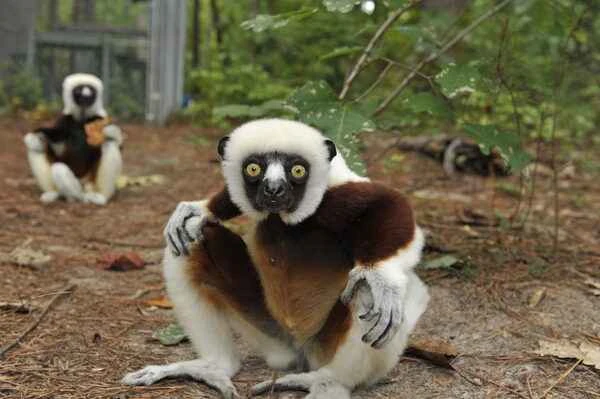
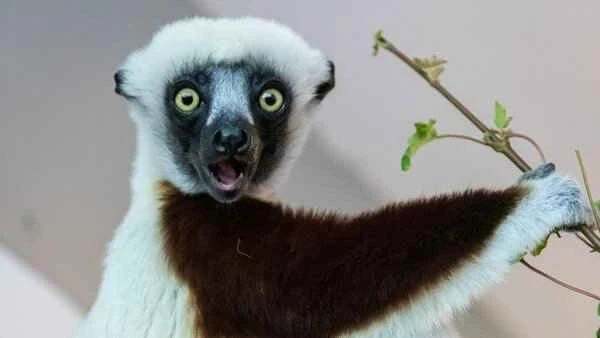
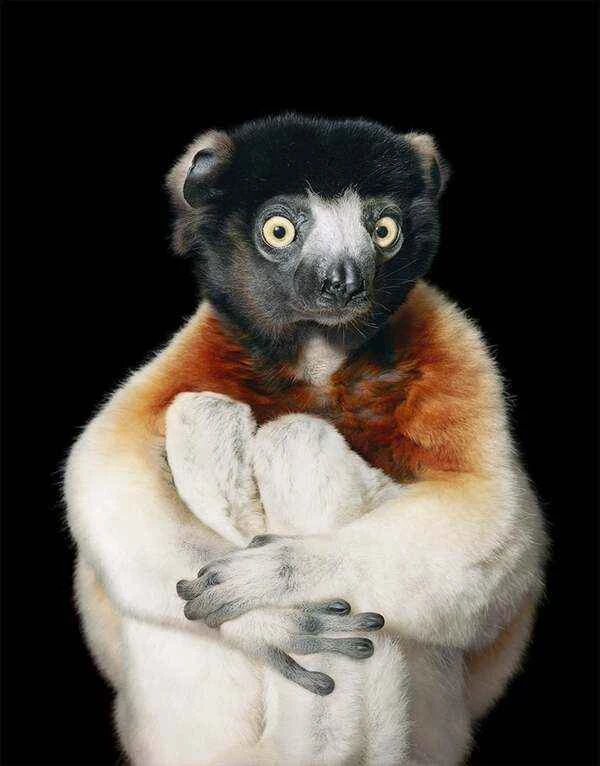
The crested lemur is a medium-sized primate, typically measuring 40 to 50 centimeters in body length. Its tail, also about 40 to 50 centimeters long, is similar in length to its body and helps maintain balance when leaping between trees. Adult crested lemurs weigh approximately 1.8 to 2.5 kilograms . The crested lemur has very distinctive physical characteristics: its back is covered in gray or brown fur, while its head is covered with a golden crest of hair, one of the most striking features of the species.
The crested lemur has a bare, black face and typically yellow or gold eyes, a color that helps it navigate in low light conditions. Its long, flexible limbs allow it to climb effectively, an adaptation to its entirely arboreal lifestyle . Crested lemurs typically live 15 to 20 years , but this lifespan can be extended in well-protected environments.
IV. Global Distribution and Habitat
The crested lemur is endemic to Madagascar, found only in the northwestern part of the island. They inhabit both arid and tropical forests, particularly at altitudes between 250 and 900 meters . Crested lemurs primarily live in the upper layers of dense forests, preferring secluded forest environments; however, their distribution is becoming increasingly limited due to habitat shrinkage.
The crested lemur's habitat is mainly concentrated in protected areas such as Ankarafantsika National Park and Bora Special Reserve, but with the destruction of these habitats, the crested lemur faces severe challenges to its survival.
V. Ecology and Behavior
Crowned lemurs are diurnal animals, primarily active at dawn and dusk. They are arboreal , enjoying leaping and climbing between trees, where they forage and socialize. Crowned lemurs typically live in matriarchal societies , with small groups generally consisting of 3 to 10 individuals.
Crowned lemurs exhibit complex social behaviors, communicating among group members through sound, visual cues , and scent . They use a **"shif-auk"** call to warn other members of potential predators, especially birds of prey or other large predators.
VI. Daily Activities and Social Behavior
The daily life of crested lemurs mainly consists of foraging, socializing, and resting. They socialize in groups, with females holding a dominant position and typically having priority access to food resources. When foraging, crested lemur group members often help each other, with females leading the group to find food and maintaining order by queuing during the foraging process.
The group behavior of crested lemurs exhibits a clear hierarchy, with adult males typically subservient to adult females. They frequently use body language to communicate, such as shaking their heads, offering their tails, or leaning slightly forward to indicate threat or affection.
VII. Diet and Foraging Strategies
Crowned lemurs are omnivorous , and their diet includes leaves, flowers, fruits, seeds, bark, and small insects. Their diet varies with the seasons: during the wet season, they primarily eat ripe fruits, tender leaves, and flowers; during the dry season, when food resources are scarce, they rely more on leaves and bark.
Due to the high fiber content of their diet, crested lemurs have developed a well-developed cecum and long colon , which helps them digest food and extract more nutrients. Crested lemurs spend approximately 30% to 40% of their time foraging each day.
8. Crowned lemur breeding
The breeding season for crested lemurs typically occurs during Madagascar's rainy season , specifically from November to December each year. Female crested lemurs enter estrus during this period and usually give birth to only one offspring at a time. The birth of the offspring coincides with Madagascar's dry season (June to July), which helps the mother nurture her young during a period of greater food abundance.
Newborn crested lemurs weigh about 100 grams and cling tightly to their mother's chest until about a month later when they begin to move to her back. The juveniles are weaned around six months of age and gradually become independent.
IX. Current Status and Conservation Level of the Crowned Lemur
The crested lemur is currently listed as an endangered species by the International Union for Conservation of Nature (IUCN), with its status at **"Critically Endangered"**. The main threats facing the crested lemur include habitat loss** (due to deforestation, land clearing, and other activities) and illegal hunting. Despite active conservation efforts by the Madagascar government and several international organizations, the crested lemur's survival remains extremely precarious due to the island's continued ecological degradation.
10. Current Population Status
The population of crested lemurs has declined dramatically over the past few decades. Currently, it is estimated that fewer than 10,000 crested lemurs remain globally. Studies have shown a slight recovery in protected areas and natural habitats in Madagascar, but the recovery process is slow due to habitat loss and external threats.
XI. Major Threats and Natural Enemies
The main threats facing the crowned lemur include:
Habitat destruction: Deforestation and land reclamation are the main causes of habitat loss for crowned lemurs.
Illegal hunting: Despite hunting bans in some parts of Madagascar, crested lemurs still face threats from hunters.
Invasive species: The introduction of invasive species such as cats and dogs has threatened the crested lemur's ecosystem.
In terms of natural predators, crowned lemurs mainly face hunting threats from birds of prey, snakes, and meerkats. Although crowned lemurs possess some escape abilities, their survival faces significant challenges due to habitat destruction.
XII. Protective Measures
To protect the crested lemur, the Madagascar government and several international organizations have implemented a number of conservation measures, including:
Establish protected areas, such as Ankarafantsika National Park and Bora Special Reserve, to protect the crowned lemur and its habitat.
Combating illegal hunting: Strengthen law enforcement and severely crack down on illegal hunting of crowned lemurs.
Community involvement: Through education and awareness-raising programs, local communities are encouraged to participate in conservation efforts to reduce habitat destruction.
XIII. Ecological Value
Crowned lemurs, endemic to Madagascar, hold significant ecological value. They are a vital part of tropical forest ecosystems, helping to maintain plant diversity through seed dispersal and providing food for other animals. Conservation of crowned lemurs not only helps maintain the ecological balance of Madagascar but also has important implications for global biodiversity conservation.
XIV. Relevant Cultural and Economic Value
The crested lemur holds a special place in Madagascar's culture, playing a central role in many local folklore. It also plays a vital role in ecotourism, attracting numerous tourists and becoming one of Madagascar's key ecotourism resources. Furthermore, the conservation of the crested lemur has boosted the local economy, driving regional economic growth through ecotourism.
15. Close relatives of the crowned lemur
The crowned lemur's close relatives include other lemur species; the following is a comparison table of some related species:
| Species name | Body length | weight | Distribution area | Features |
|---|---|---|---|---|
| Crowned Lemur (Eulemur coronatus) | 40-50cm | 1.8-2.5kg | Northwest Madagascar | Golden crest, brownish-grey hair |
| Common lemur (Eulemur fulvus) | 40-50cm | 1.6-2.4kg | Southern Madagascar | gray or brown hair |
| White-handed lemurs (Eulemur albifrons) | 40-50cm | 1.5-2.0kg | Western Madagascar | White facial hair |
A comprehensive analysis of the crested lemur allows us to understand not only its unique biological characteristics but also its crucial role in ecological conservation, cultural preservation, and sustainable economic development. The protection of the crested lemur requires global cooperation and the joint efforts of local communities to ensure this beautiful species is not forgotten by history.