Chinese name: Sinornithosaurus
Latin name: Sinornithosaurus
Era: Early Cretaceous
Fossil origin: Western Liaoning, China
Physical characteristics: 1 meter long (sub-adult)
Diet: Carnivorous
Type: Theropod
Definition: Bird-like dinosaurs from China
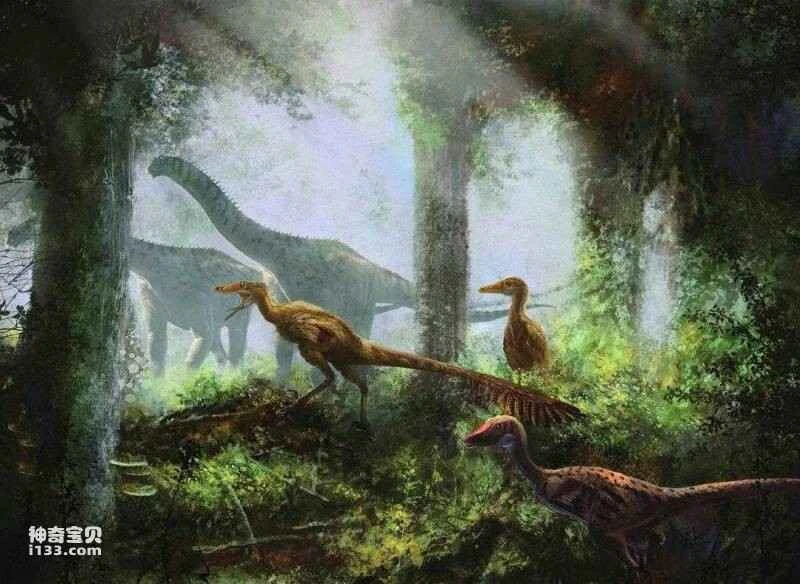
In September 1999, Chinese scholar Xu Xing reported the discovery of *Sinornithosaurus* in western Liaoning, China, in the journal *Nature*. Fundamentally, the revival of the avian-dinosaur origin theory is largely based on research into the skeletal morphology of dromaeosaurids. However, due to limitations in available materials, there have been many misunderstandings regarding the anatomy of dromaeosaurids. Consequently, this hypothesis has faced strong attacks from opponents in certain aspects.
Sinornithosaurus belongs to the Dromaeosauridae family of theropods. Its discovery has made it possible to study the anatomical structure of dromaeosaurid dinosaurs in detail. Preliminary research shows that dromaeosaurids were already very close to early birds in morphology.
The *Griffon* discovered in Argentina belongs to the same type as *Sinornithosaurus*, and its well-preserved fossils demonstrate its connection to birds, making it particularly valuable. However, compared to similar fossils discovered in western Liaoning, my country, our fossils are at least 10 million years older. The *Griffon* unearthed in South America shares many similarities with *Sinornithosaurus* from Liaoning, China. For example, like birds, they have a U-shaped furcula on their heads; compared to other dinosaurs, their forelimbs are long and agile; their beaks are pointed and long, and the gaps between their teeth are relatively large—features consistent with those of birds.
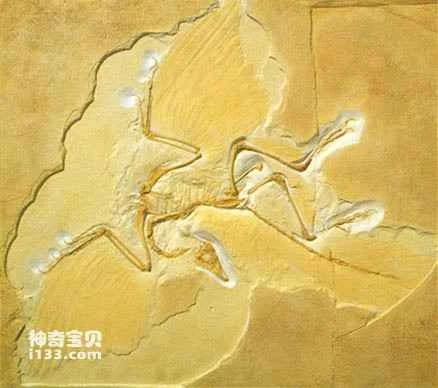
The postcranial morphology of dromaeosaurids, represented by Sinornithosaurus, differs significantly from most dinosaurs, exhibiting many characteristics of early birds. Its shoulder girdle structure is almost identical to that of Archaeopteryx, the world's earliest bird discovered in Germany. Although Sinornithosaurus could not fly, its forelimb structure had undergone a series of adaptations for flight. Unlike most theropod dinosaurs, its forelimbs no longer extended forward and to the abdomen, but rather extended upward and laterally like bird wings. This skeletal system fully met the requirements for flapping flight, laying the foundation for this transformation into avian flight in terms of skeletal structure—a typical "pre-evolutionary model."