In nature, excrement is not merely a result of waste disposal; it also plays a vital ecological role, sometimes even possessing unique shapes and characteristics. These distinctive shapes not only help animals adapt to their environment but also provide scientists with a wealth of information about animal diets, health, and even behavioral patterns. This article will explore some examples of animals with unusual excrement shapes and reveal the fascinating natural phenomena behind them.
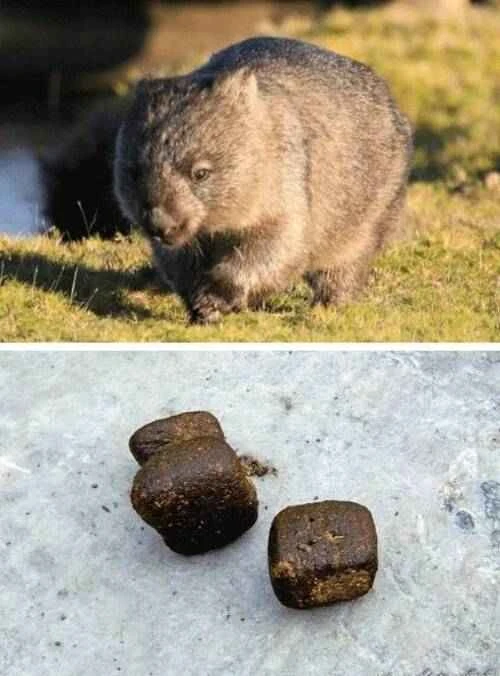
1. Wombat - Cube-shaped feces
Shape characteristics: cube
Wombats have a very distinctive shaped excrement – their droppings are perfectly cubic. Endemic to Australia, the cubic shape of their droppings is not a coincidence or an anomaly, but rather a result of evolution. Wombats use these lumpy droppings to mark their territory. Because their habitat is mostly rocky or uneven ground, cubic droppings stay in place more firmly than round or irregular droppings, preventing them from rolling away easily.
Causes of formation:
Colon wall structure : The wombat's colon has a unique structure and strength, which allows it to compress feces into blocks during the fecal formation process.
Function : Cube-shaped droppings can more effectively mark territory and even serve as a social signal to communicate with other wombats.
2. Bat droppings - powdery feces
Shape characteristics: powder
Bat droppings (also known as bat guano) may not look particularly appealing, but their texture is quite unique. Because bats feed on insects, their excrement contains a large amount of undigested insect exoskeletons. These exoskeletons turn into fine powder after the droppings dry, and the droppings are rich in nutrients, often used as fertilizer, especially in agriculture.
Causes of formation:
Dietary characteristics : Bats mainly eat flying insects. The main component of the exoskeleton of these insects is chitin, which is difficult to digest, so it is excreted in powder form.
Uses : Bat guano is rich in nitrogen and phosphorus and is often used in organic agriculture as a high-quality natural fertilizer.
3. Beaver - Discomfort with a distinctive scent
Shape characteristics: cylindrical, slightly fragrant
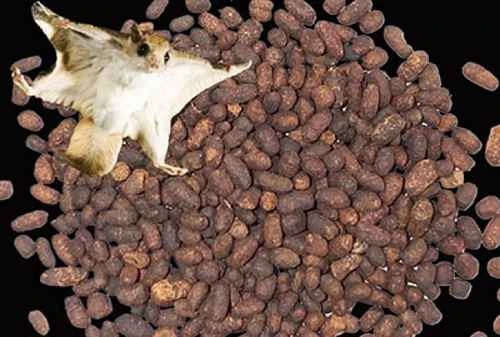
Beaver droppings are relatively simple in shape, usually cylindrical, but their unique characteristic lies in their odor. Beaver excrement often has a sweet fragrance, due to their diet of large amounts of plant matter, especially the aromatic resins in tree bark. Beaver droppings are often used to mark territory, and their scent helps them maintain territorial security near water sources.
Causes of formation:
Diet : Beavers mainly feed on tree bark and aquatic plants. The natural aromatic substances in some plants give their feces a unique fragrance.
Function : Scented feces can serve as territorial markers, warning other beavers to keep their distance.
4. Sea turtle - translucent excrement
Shape characteristics: Jelly-like, translucent
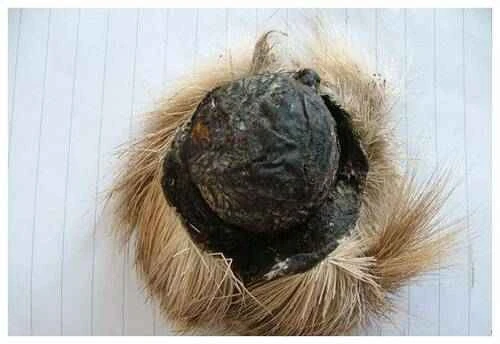
Sea turtle feces have a peculiar, translucent, jelly-like appearance, especially after they have eaten jellyfish, at which point the shape and texture of their excrement become even more distinctive. This unique form of excrement is due to the fact that jellyfish are rich in water and have a jelly-like structure. The sea turtle's digestive system cannot completely break down these water-rich tissues, resulting in their jelly-like feces.
Causes of formation:
Food source : Sea turtles like to eat jellyfish, and jellyfish contain a lot of water and gelatinous substances. After the sea turtle digests them, its feces will have a jelly-like appearance.
Ecological importance : Sea turtle feces play an important role in marine ecosystems, helping the cycling of nutrients in the ocean.
5. Rabbit - Sticky "cecal feces"
Shape characteristics: soft, pasty clumps
Rabbits have two different types of droppings: one is hard, round droppings, and the other is called "cecal feces," which is a soft, pasty mass. This type of droppings is a product of fermentation during the rabbit's digestion of food. Rabbits will then eat these cecal feces to obtain more nutrients, especially vitamin B and other trace elements.
Causes of formation:
Digestive strategy : Rabbits' digestive system cannot completely absorb all nutrients at once, so the cecal feces produced by fermentation provide a secondary digestion opportunity.
Nutritional acquisition : Rabbits obtain more nutrients by eating these special feces, which is one of their unique survival strategies.
6. Tapir - A floating "poop boat"
Shape characteristics: cylindrical, floats on water.
Tapirs are large mammals that live in tropical rainforests. Their droppings sometimes float on the water, forming a small, boat-like shape. Tapirs typically defecate in the water, which helps them avoid being tracked by predators and also allows their droppings to be dispersed by the water currents. The floating droppings can also provide information, helping scientists study their health and habitat.
Causes of formation:
Aquatic excretion habits : Tapirs like to excrete in water, and their feces float with the water flow, thus being discharged in inconspicuous places.
Defense strategy : By excreting in water, tapirs can reduce their scent exposure and prevent predators from tracking them.
7. Civet - Coffee bean droppings
Shape characteristics: Contains partially digested coffee beans
Civets are known for the coffee beans found in their droppings, which contain undigested coffee cherries. Civets feed on coffee cherries, absorbing only the pulp during digestion and excreting the undigested beans. These beans are known as "kopis coffee," a rare and premium coffee ingredient.
Causes of formation:
Food digestion : The civet digests the pulp of the coffee cherries, but the beans cannot be completely digested and are therefore retained intact in its excrement.
Commercial value : This coffee bean is known as "civet coffee" and is renowned in the global market for its unique flavor.
8. Goose - Long, grass-like droppings
Shape characteristics: Long and thin strips, with grass clippings
Goose droppings are typically long and thin, often containing undigested grass clippings. Because geese are herbivores with relatively short digestive systems, their droppings frequently contain fibrous residue, resulting in a coarse texture and grassy components. Goose excrement is common on farms and in wetlands, contributing to soil fertility.
Causes of formation:
Dietary structure : Geese mainly feed on grass and other plants, and undigested plant fiber often appears in their excrement.
Farmland fertilizer : Goose droppings can be used as fertilizer to provide additional nutrients to plants.
The shapes and characteristics of animal excrement not only showcase the diversity of nature but also reflect the survival strategies of different species in adapting to their environments. From the cubic droppings of wombats to the coffee bean excrement of civets, each form has a unique ecological function. These distinctive excrement forms provide scientists with valuable clues for studying animal health, diet, and lifestyle habits.