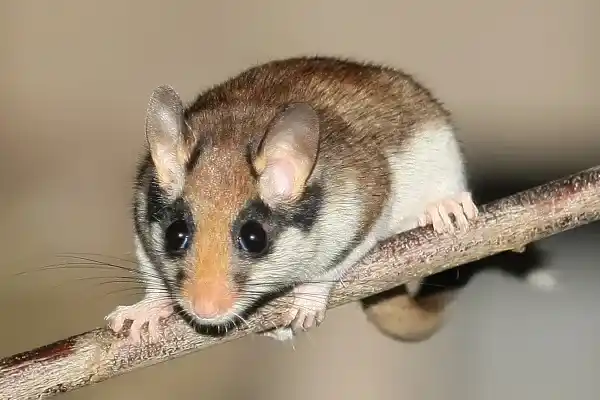
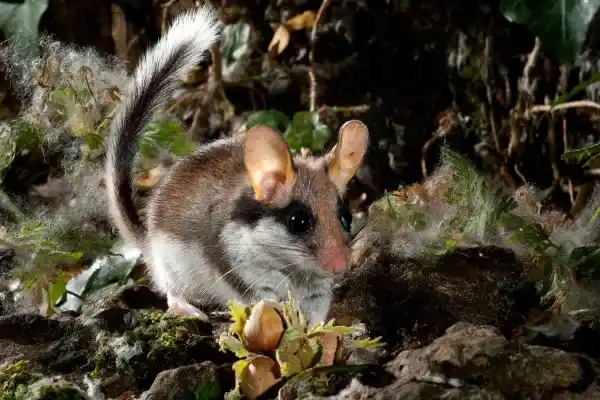
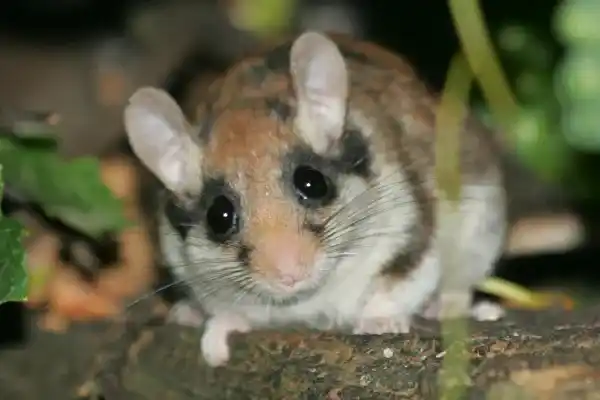
The masked dormouse (also commonly known as the garden dormouse , scientific name: Eliomys quercinus ) is relatively common in Spain and is one of the most representative small mammals in Europe. It looks like a little guy "wearing a black eye mask" and has a tuft of hair at the end of its tail that looks like a brush, making it very easy to identify.
However, although it can still be found in some areas, the masked dormouse has declined significantly in many regions due to changes in the ecological environment, a reduction in insects, and the impact of agricultural chemicals, and has even disappeared in some areas .
Below, we will explain its classification, appearance, habitat, diet, behavior (especially hibernation), reproduction, threats, and protection from the perspectives most frequently searched by users.
Basic Information Overview
Chinese name : Masked Dormouse / Garden Dormouse (common translation)
Scientific name : Eliomys quercinus
Classification : Order Rodentia, Family Gliridae
Body length (including tail) : Approximately 18–31 cm
Key identifying features : black "eye patch", tuft of fur at the end of the tail, and large, round ears.
Activity time : Primarily nocturnal
Key characteristics : Long hibernation period, deep sleep
Main diet : Predominantly carnivorous (with a high proportion of insects and other animal-based foods)
1) Taxonomy of the masked dormouse
It belongs to the Dormyidae family, and is neither a squirrel nor a common mouse (although both belong to the rodent family).
Kingdom : Animalia
Phylum : Chordata
Class : Mammalia
Order : Rodentia
Family : Gliridae
Genus : Eliomys
Species : Eliomys quercinus
There are some subspecies/local population differences in different regions, and the differences may be more obvious in tail color (more white or more black) and body color depth.
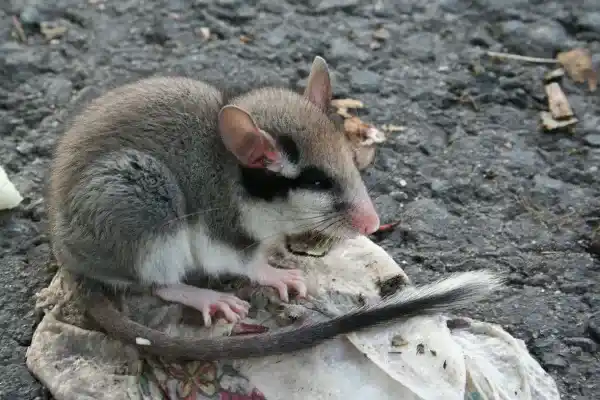
2) What does a masked dormouse look like? How can it be identified quickly?
The most noticeable feature: a black "eye patch"
It has a distinct black band of fur around its eyes, like it's wearing a mask, which is the origin of its name "careto".
Other external features
Body color : The back is mostly brown to grayish-brown , while the abdomen is significantly lighter, whiter, or light gray.
The tail is like a brush : there is a tuft of thick hair at the end of the tail, like a "paintbrush head".
Medium size : Overall length (including tail) approximately 18–31 cm .
The snout is relatively long, with a pink nose tip ; the muzzle is slender, and the nose tip is often pink.
Large and round ears : The auricle is relatively large and often appears pinkish when backlit.
3) Where do masked dormouses live? Distribution and habitat.
Geographical distribution
The masked dormouse is mainly distributed across most of mainland Europe and parts of North Africa . It is not common or absent in some island regions (such as the Canary Islands and the British Isles).
Common habitat types
They are quite adaptable and are commonly found in:
coniferous forest
deciduous broad-leaved forest
Forest edges and shrubland
Farmland and orchard surroundings
near rocky ground and stone walls
It may even appear in some semi-urbanized areas (on the edge of villages, in the cracks of old house walls, etc.).
"Location" is very important
Masked dormouses are highly dependent on hiding places; they will build their nests in:
Tree holes, gaps in fallen logs
Rock crevices, piles of stones, and the roots of shrubs
Old house wall cavities, eaves gaps
Nesting materials are mostly hair or other soft materials . They may also "take it easy" and directly use abandoned bird nests or old squirrel nests .
4) What do masked dormouses eat? Why are they described as "carnivorous"?
Many people think that dormouses only eat nuts and fruits, but the masked dormouse is one of the dormouse species with a high proportion of animal-based food .
Main food
Insects (beetles, etc.)
Insect larvae and caterpillars (in some areas they even eat pest caterpillars).
Occasionally preying on small birds/chicks
Occasionally preying: small mammals
Food that will also be supplemented
Nuts and seeds : such as walnuts, acorns
Roots, tender stems and other plant parts
Bird eggs (opportunistic feeding)
Gaining weight before hibernation is crucial for survival.
Masked dormouses significantly increase their food intake and weight before hibernation to store fat. During hibernation, they eat almost nothing, so they often become very thin after emerging from hibernation and need to quickly replenish their energy.
5) Behavioral habits: nocturnal, gregarious, and hibernation of "dormouses".
nocturnal
They are mainly active at night, which makes them less likely to be spotted by predators and safer.
It has a certain degree of sociality
Masked dormouses are not entirely solitary; they sometimes form small groups.
Let's go for a meal
They can communicate by sleeping together or sharing a nest, and they can also make a variety of sounds.
Hibernation lasts a long time
You'll likely "never find it" because it spends a long time of the year in a dormant/hibernating state:
They usually begin hibernation around October.
They only gradually awaken when temperatures rise in spring.
During their normal activity season, they may sleep for 12–15 hours a day; once they enter hibernation, the hibernation period can last for several months , or even close to 8 months (depending on the local climate).

6) How do masked dormouse breed? How long does it take for the pups to open their eyes?
Breeding time
They typically begin to reproduce shortly after hibernation ends (most commonly in spring). They are highly prolific, capable of reproducing multiple times a year under favorable conditions, but in the wild, they usually have around two litters per year .
Pregnancy and childbirth
Pregnancy period : approximately 25 days
Number of pups per litter : Approximately 2–8
cub development
They are mostly hairless and very fragile at birth, and are completely dependent on breast milk.
As they develop, they gradually transition to solid foods.
They start opening their eyes around 3 weeks old.
7) Threats and Protection: Why are many places experiencing a decline?
Although still common in some areas, the masked dormouse has seen a significant decline in many regions overall and has been listed as a species of concern by some assessments.
Main threats
The insect population is declining . They are highly dependent on insects, and once the insect population decreases, the food chain breaks down.
The effects of pesticides and insecticides : Pesticides can reduce insects and may also cause direct or indirect poisoning.
Accidental Killings During Rat Control Operations <br/>Some "rat control and extermination" operations may accidentally kill dormice (which are also commonly referred to as "rats").
Competition with rodents <br />In environments with strong human interference, rats and rodents are more "adapted to cities and farmlands," potentially crowding out the living space and resources of dormice.
Habitat structure changes <br/>Reduced understory vegetation, clearing of fallen trees, and reduction of stone walls/tree holes make it more difficult for them to find safe nesting sites.
Protection strategies (common approaches)
Reduce reliance on pesticides and preserve the rich ecological boundaries of insects.
Preserve the diverse structures of the woodland (shrubs, fallen trees, tree cavities, and piles of stones).
Rodent control management is becoming more refined to avoid accidentally harming non-target species.
Protect their nesting sites and breeding grounds
8) Curiosities about masked dormouses
Tail tip "escape" : When encountering predators, the end of the tail may partially detach to help escape. It can regenerate to some extent afterward, but unlike some reptiles, it cannot "grow back even the bones".
The description of them " sleeping like dormouses " is not an exaggeration: they sleep very deeply and are not easily awakened during hibernation.
Hibernation is the most dangerous period : when hibernating, people move slowly or almost do not move at all, making them more vulnerable to predators.
They will borrow other people's old nests : they don't necessarily build their own nests from scratch, and they will "move in with their bags packed" whenever they have the opportunity.
Historical records show that people in ancient Rome kept dormice as food (a bit of a historical anecdote).