On the African savanna, there are many species of antelope, but the eland is definitely the most striking: it is enormous, looking like a "combination of a cow and an antelope," yet it can run very fast and is adept at jumping and climbing. Elands belong to the genus *Taurotragus * and are commonly divided into two species:
The common eland ( Taurotragus oryx , also known as the southern eland/common oryx)
Giant oryx ( Taurotragus derbianus , also known as "Derby oryx/Giant Eland")
The following article, based on the most frequently searched methods by users, provides a systematic introduction to: what it looks like, where it lives, what it eats, how it moves, how it reproduces, what threats it faces , and adds some interesting facts.
1) What are the physical characteristics of the oryx? How big and heavy is it?
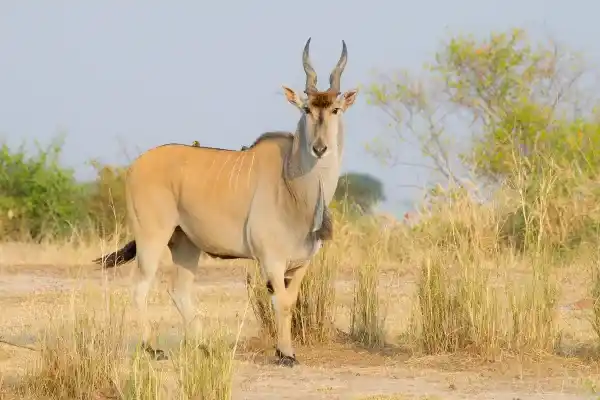
The oryx is a typical "large herbivore" with a sturdy body and a broad chest, making it very imposing on the grassland.
Body size and weight
Their body length is usually about 2–3 meters (this may vary depending on the region and species).
The weight range is very wide : generally from around 300 kilograms to around 1.2 tons .
Sexual differences : Females are usually slightly smaller and lighter than males, while males are more robust.
Key points of appearance identification
The body resembles that of a cow : the back is slightly arched, the shoulders are thick, and the chest is well-developed, sometimes giving the impression of "like a young bison".
The fur is mostly light brown or yellowish-brown : light vertical stripes can often be seen on the neck or sides of the body (some are more obvious, some are lighter).
A prominent laryngeal fold : The laryngeal fold in males is usually larger and more prominent.
Large hooves : suitable for long-distance walking and adaptable to ground conditions that vary between dry and wet seasons.
The horns are very distinctive : they are conical and twisted like a bottle opener , dark in color (black or dark brown), and both males and females have horns .
Ear tip tufts + neck mane : Some individuals have small tufts of hair at the tips of their ears, and may have darker mane on the back of their neck, giving them a somewhat "goat-like" appearance.
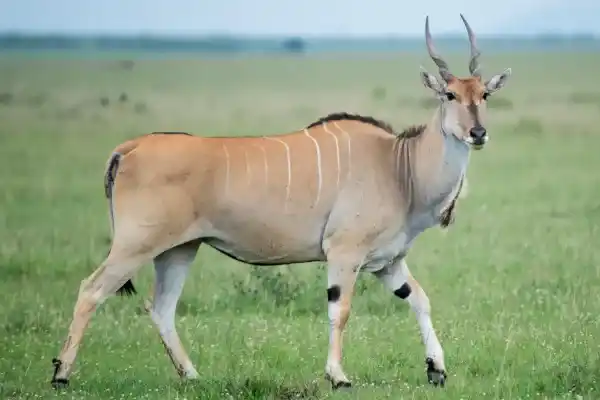
2) What are the differences between the two types of oryx? Common oryx vs. Giant oryx
Common oryx ( Taurotragus oryx )
They are relatively more numerous and more widely distributed, and are more common in southern Africa and parts of eastern Africa.
They are still quite large, but are generally slightly smaller than giant antelopes.
In some regions, humans have attempted to raise or semi-domesticate them (primarily because of their potential for meat and milk production).
Giant oryx ( Taurotragus derbianus )
They are larger overall, have more prominent Adam's apples, and their light-colored vertical lines are often more pronounced, sometimes extending from the neck to the torso.
Wild populations are even smaller and more scattered, commonly found in some areas of West and Central Africa.
They are generally more difficult to tame and more challenging to manage in captivity.
3) Where do oryx live? Main distribution and habitat.
The oryx is a typical animal of the African savanna and shrub-wood transition zone .
Habitat characteristics
Savanna: mainly composed of shrubs and low vegetation, with sparse trees but providing shade.
Shrublands and sparse woodlands : provide both foraging opportunities and shelter from high temperatures and predators.
In some areas, the woodlands will also be entered : especially during seasons when food or shelter is better.
General distribution pattern
Common oryx : More commonly found in the vast grassland-sparse forest areas of southern Africa and surrounding regions.
Giant oryx : More common in West and Central Africa, and populations are often scattered across different regions.
In addition, due to their strong meat and milk production capacity and environmental tolerance, oryx has been introduced into specific breeding/protected areas or wildlife management projects in some places outside Africa.
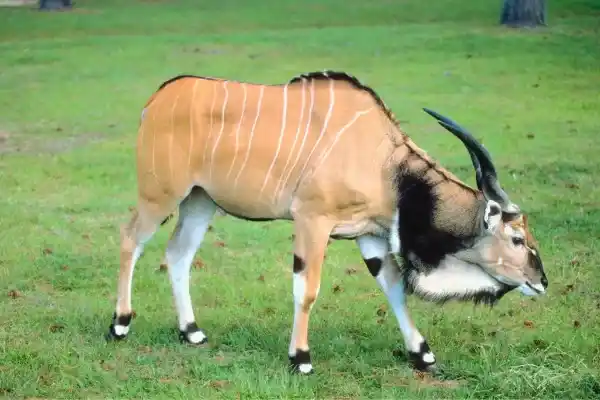
4) What do oryxes eat? Why can they survive well during the dry season?
The oryx is a herbivore , but it doesn't just eat grass—it's more like a hybrid that "eats both grass and leaves," and it's especially good at surviving the dry season by "nibbling on leaves."
Main food
Grass (usually more abundant during the rainy season)
Leaves, twigs, buds
pods and fruits
Shrubs and succulents (especially important during the dry season)
Survival advantages during the dry season
When water is scarce or unavailable, oryx can obtain a significant portion of their water from plants, especially by eating leaves, tender shoots, fruits, or plant tissues with high water content. Therefore, they do not necessarily need to drink water every day like some other animals.
5) Behavioral habits of the antelope: It is big, can jump, and can also "climb"?
The antelope's "unexpected charm" lies here: it is huge in size, but its movements are not clumsy.
Activity patterns
They prefer to be active in the early morning and evening (when the temperature is lower, they are more comfortable).
During the midday heat, we often rest in the shade of trees to reduce physical exertion and water loss.
Jumping and climbing abilities
They can jump over obstacles of about 1.5 meters (especially when startled or fleeing).
In some environments, they also exhibit "climbing to feed" behavior, standing or using the terrain to reach higher leaves, and can even move flexibly in rugged terrain.
social
They are usually social animals , with a common group size of about 25–60 individuals (this can vary depending on the environment).
During the rainy season , water and food are more concentrated, making it easier for groups to gather.
During the dry season , resources are dispersed, and populations tend to be more scattered and move over a wider range.
temperament
Ordinary oryx are relatively easier to adapt to captive environments;
Giant antelopes are generally more wary and harder to tame.
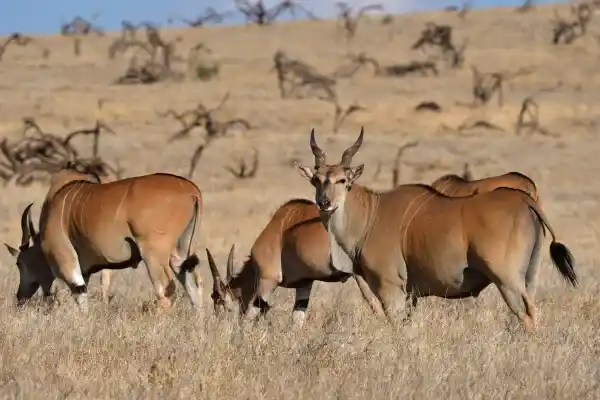
6) How do oryx reproduce? How many offspring do they give birth to at a time? How long is the gestation period?
The oryx is a viviparous animal; the mother gives birth to her cub directly after becoming pregnant.
Males often hold a dominant position in a group, which can affect mating opportunities.
Typically, a woman gives birth to one offspring per pregnancy.
The gestation period is approximately 250 days (close to 8–9 months).
Under natural conditions, females typically give birth once a year (this is more stable when nutritional conditions are good).
After birth, the cubs will attempt to stand and follow the group for a short period of time, but they still need the mother's protection and nursing in the early stages.
7) Natural enemies and ecological role: What is its position in the grassland food chain?
Despite their large size and strength, the oryx remains a significant prey for apex predators on the grasslands, with young antelopes being particularly vulnerable to predation.
Common threats include lions, cheetahs, leopards , etc. (depending on the region and prey composition).
Ecologically, the oryx converts "plant energy" into biomass for large mammals by consuming large amounts of vegetation, supporting upper-level predators in the grassland food chain and serving as a crucial "intermediate link".
8) Threats and Conservation Status: There are significant differences between common oryx and giant oryx.
common oryx
In many regions, the population size remains relatively stable, resulting in relatively less overall pressure.
giant antelope
The overall trend is more worrying: fewer in number and more scattered in distribution. Key problems include:
Habitat fragmentation : Different groups are too far apart, making gene exchange difficult and slowing down recovery.
Poaching and overhunting : In some areas, wild animals become a source of food or a target of illegal trade.
Impact of social conflict/war : Survival pressures are higher in turbulent regions, and protection and management are more difficult to sustain.
Disease risk : They are more susceptible to certain bovine diseases, and there have been instances in history where outbreaks have led to significant reductions in their numbers.

9) Fun Facts about the Great Eland
They make a "clicking" sound when they walk : a crisp "clicking" sound can often be heard when they walk. Some people think it comes from the collision of hoof structures, while others think it may be related to the tendons/joints of the legs. There are still different opinions.
Males can also make sounds by rubbing their uvulas together : some males produce a unique rustling sound when they walk by rubbing their uvulas against grass blades.
They are quite fast : when startled or needing to escape, antelopes can burst into very high running speeds.
"Large but not clumsy" : They can walk long distances and jump over obstacles, making them a very successful representative of giant herbivores on the grasslands.