Grasshoppers (also commonly called locusts or grasshoppers, the terms are often used interchangeably in colloquial speech) belong to a large group of insects in the order Orthoptera. Their most distinctive feature is their exceptionally well-developed hind legs , enabling them to leap quite far. Different species of grasshoppers vary greatly: some are enormous and move like "mini armored vehicles"; some are slender like a blade of grass; and others suddenly reveal "flashing wings" of blue, pink, or other colors when they take flight, making them very easy to identify.
To better cater to the intentions of "browsing" users (quick understanding, quick comparison, and quick identification), the following article is organized according to " appearance identification points + body size + habitat + diet + interesting points ," and includes a quick matching guide at the end.
A simple trick to spot a grasshopper at a glance (read this first for better results)
Look at the head shape :
Those with pointed, cone-shaped, or "long-nosed" heads are usually of the "cone-head/long-head" type, and have an extremely strong ability to camouflage themselves.Observe the color of the hindwings when it takes flight :
Some species are usually inconspicuous with their grayish-brown color, but once they take flight, their blue/pink wings are revealed, which is the simplest way to identify them.Look at the color of the hind legs :
Some species have tibiae (the part that resembles the "calf") that are reddish or yellowish, making them easy to identify up close.Habitat observation :
Sand dunes, salt marshes, wetlands, stony shrublands, farmland edges... different environments often correspond to different groups.
A small supplement:
In many contexts, "locusts" refers to certain grasshopper species that can proliferate explosively and even migrate in swarms . Not all grasshoppers become a plague; most live a solitary life.
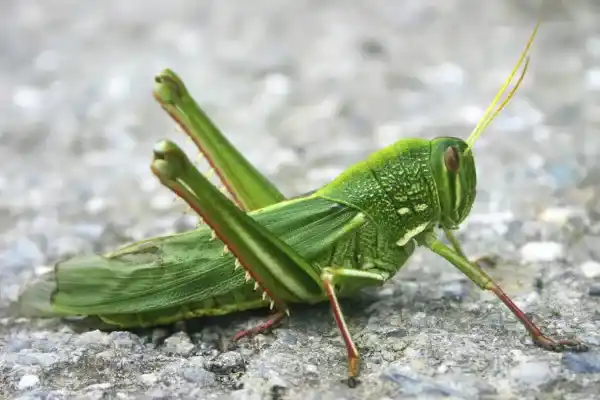
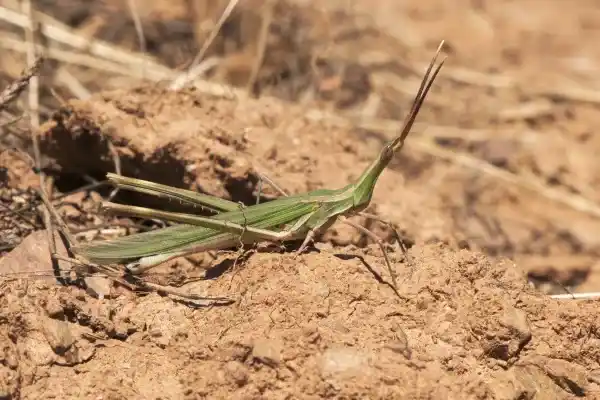
1) Long-nosed grasshopper / Long-headed grasshopper (Truxalis nasuta)
Distinguishing features : The body is slender, and the most striking feature is the head, which is elongated like a nose and looks somewhat "pointed".
Body length : up to about 75 mm (considered quite large).
Habitat : Prefers dry grasslands and shrub edges , found around the Mediterranean and in a wider area.
Diet : Primarily herbivorous, mainly consisting of various herbaceous plants.
Interesting aspect : Its straw color or green blends almost seamlessly with the withered grass, making it difficult to spot when it is stationary.
2) Common Grasshopper (Calliptamus plebeius)
Identification features : Mostly reddish-brown/brown , with a more "solid" overall appearance, closely resembling the color of arid shrubs.
Body length : males are about 17 mm and females are about 27 mm .
Habitat : Prefers arid, shrub-rich environments and can adapt to areas from low to high altitudes.
Diet : It eats grass and shrub leaves, and often feeds on local shrubs.
Interesting point : This "earthy" appearance makes it almost invisible in gravel and dead bushes.
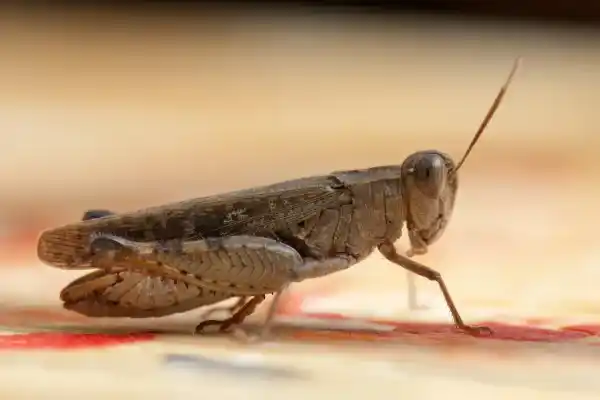
3) Pleasant Grasshopper (Chorthippus jucundus)
Distinguishing features : The body is usually uniformly green , with some reddish areas on the legs; there are no obvious white markings on the wings.
Body length : male 15–18 mm , female 18–22 mm .
Habitat : Prefers mountain wetlands, damp meadows, and the edges of marshes .
Diet : It mainly eats wetland herbs and rush pith, etc.
Interesting point : Wetland species often do not rely on long-distance flight to avoid predators, but rather on "stationary movement + color camouflage".
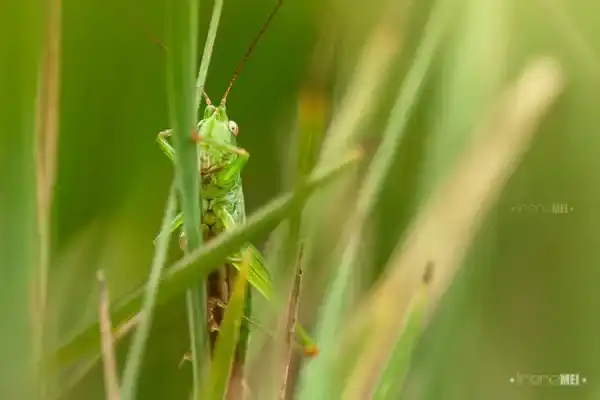
4) Blue-winged grasshopper (Oedipoda caerulescens)
Identification features : When at rest, it is inconspicuous with its grayish-brown color; once it takes flight, its blue hindwings are revealed, with distinct black stripes.
Body length : approximately 1.5–3 cm .
Habitat : Highly adaptable, can be found in bare land, grassland, forest edges, farmland, and arid areas .
Diet : Grass, seeds, and leaves; it also eats the stems and leaves of cereal plants.
Interesting aspect : Its "blue flashing wings" act like warning lights, and it immediately folds its wings and turns back to earth color after landing, making it easy for predators to lose track of it.
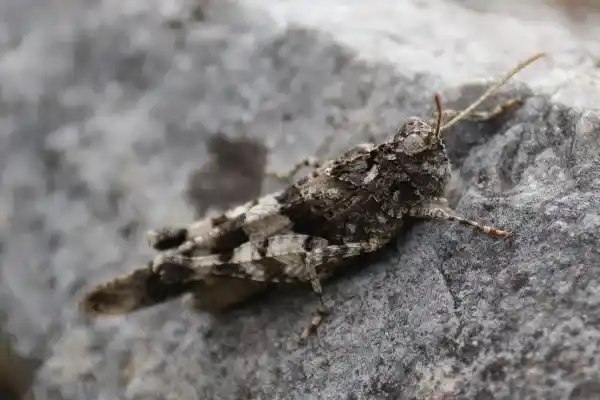
5) Festive Grasshopper (Stenobothrus festivus)
Identification features : The antennae are relatively straight, and the ridges of the pronotum (which resemble "armor") are very distinct .
Body length : male 15–18 mm , female 18–22 mm .
Habitat : Commonly found on dry grassy slopes and grasslands similar to steppes , and can also be found at medium altitudes.
Diet : Primarily herbaceous plants.
Interesting point : Its color usually matches the grass, making it a typical grasshopper that "relies on the background color".
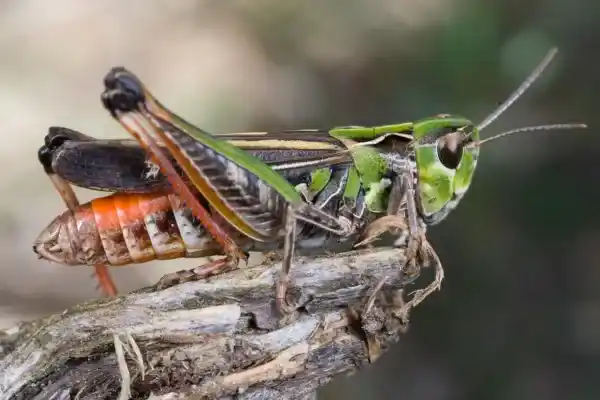
6) Giant grasshopper (Acinipe hesperica)
Identifying features : Sturdy body, relatively short wings or not good at long-distance flight, more like a "walkable stone".
Body length : Females can reach 70–80 mm (very large).
Habitat : Prefers warm, dry, stony shrubland .
Diet : Mainly grasses and leaves.
Interesting aspects : It often walks and moves among rocks, and although it is large, it does not always rely on flying to escape.
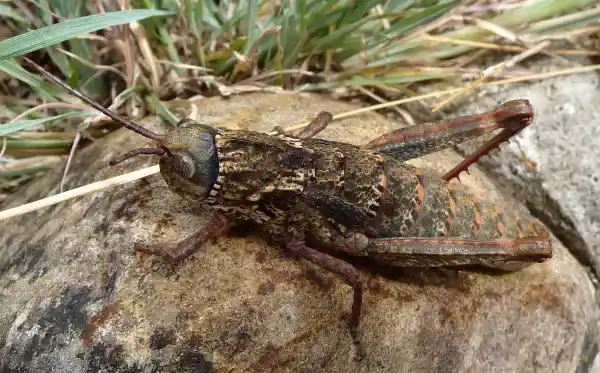
7) Java grasshopper (Valanga nigricornis)
Identification features : obvious differences between males and females; body color can be yellowish-brown or greenish, often with dark markings; pink/red hues can be seen on the hindwings.
Body length : male 45–55 mm , female 55–75 mm .
Habitat : Forest edges, thickets, plantations, etc. in tropical regions.
Diet : It is omnivorous (eats a variety of foods), and will consume a variety of herbs, legumes and crops.
Interesting aspect : Due to their large size and diverse diet, they are more easily noticed in agricultural areas.
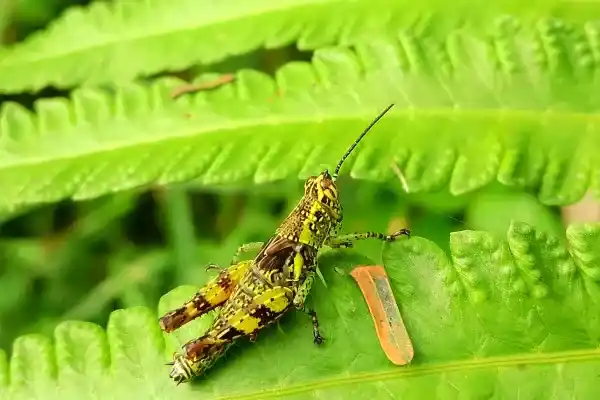
8) Egyptian locust (Anacridium aegyptium)
Identification features : eyes often have vertical stripes ; antennae are relatively short; the pronotum has light-colored spots and warm-colored stripes.
Body length : female 65–70 mm ; male approximately 30–55 mm .
Habitat : Dry scrubland, orchards, forest edges, and can be found from low altitudes to mountains.
Diet : Mainly shrub and tree leaves.
Interesting point : It is mostly solitary and does not always form large-scale flocks for migration.
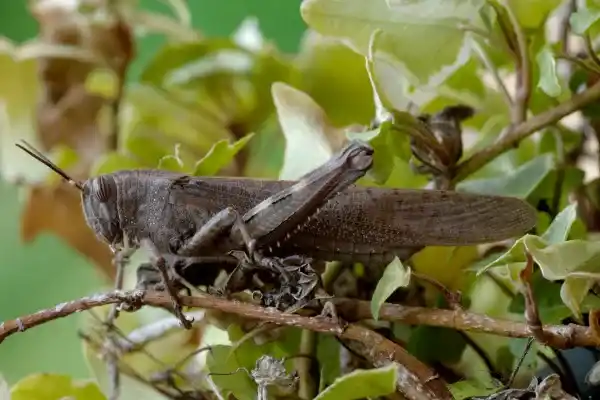
9) Wandering grasshopper (Schistocerca nitens)
Identification features : Adults have long wings and are relatively large in size; nymphs are often bright green or yellowish-green and are very conspicuous.
Habitat : Adaptable to arid to humid environments: deserts, grasslands, shrublands, mountain forests, tropical regions , and even the outskirts of cities.
Diet : Grass, shrub leaves, and tender parts of various plants.
Interesting aspect : It has a wide range of distribution and environmental adaptability, making it a typical "can survive anywhere" type.
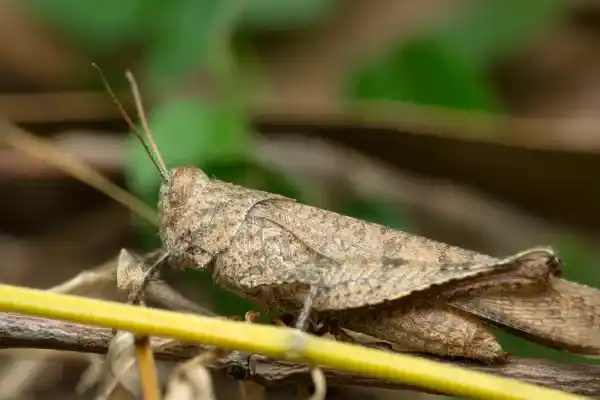
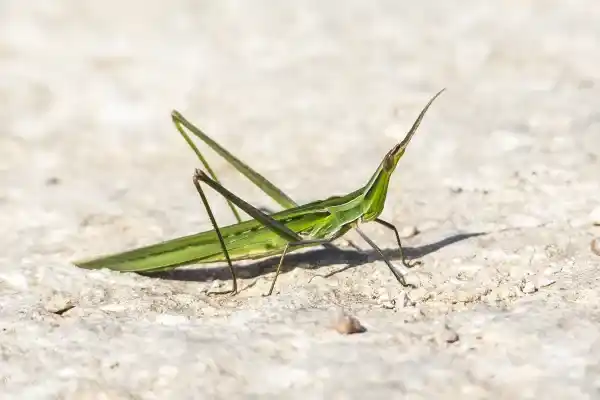
10) Mediterranean bamboo grasshopper (Acrida ungarica)
Identification features : Slender body, cone-shaped head, resembling a grass stem when at rest; relatively short antennae.
Body length : approximately 6 cm .
Habitat : dry grasslands, sand dunes, salt marshes, Mediterranean grasslands and barren slopes.
Diet : Herbivorous, feeding on a variety of herbaceous plants.
Interesting aspect : Its color shifts towards green or brown depending on the environment, making it a very typical "master of mimicry".
11) Golden Rake Grasshopper / Barbary Grasshopper (Calliptamus barbarus)
Identification features : mostly brownish-gray in color, likes to perch and bask in the sun; generally more "drought resistant".
Body length : Varies considerably between different regions, but is generally of medium size.
Habitat : Dry, sunny slopes, shrub grasslands, and arid, hot environments.
Diet : It eats grass, seeds, and tender shoots; nymphs also nibble on leaves and seeds.
Interesting point : It particularly prefers places that are "sunny", and is rarely seen in damp places.
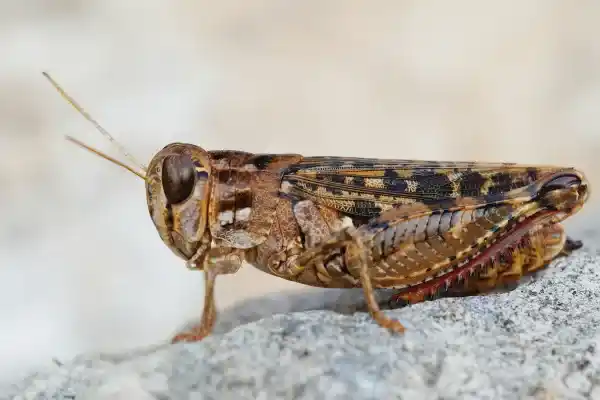
12) Italian locust (Calliptamus italicus)
Identification features : gray base with dark spots; pink visible at the base of the hindwings; hind legs often have red/pink tinges.
Habitat : Arid Mediterranean landscapes, semi-deserts, grasslands and dry slopes, extending from Europe to parts of Asia.
Diet : It usually feeds on a variety of broad-leaved herbs (such as wormwood), and its population may also harm crops when it increases dramatically.
Interesting point : It is one of the types that "explodes whenever there is an opportunity," so it is often discussed as a "locust."
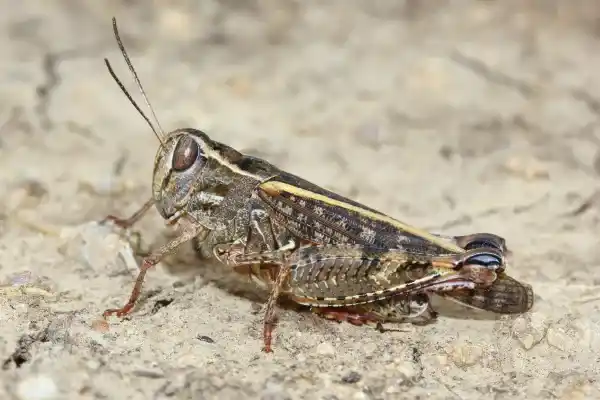
13) North American Grasshopper (Chortophaga viridifasciata)
Identification points : Common color differences between males and females: males are more brownish, while females are more greenish; wings may be slightly yellowish, and the wingtips have a smoky color.
Body length : male 23–30 mm , female 28–38 mm .
Habitat : Moist grasslands, roadside ditches, sunny pastures, etc. in many parts of North America.
Diet : It prefers grasses and will also eat other herbs.
Interesting point : In North America, if you startle one while walking casually in a meadow/ranch, this type is often a candidate.
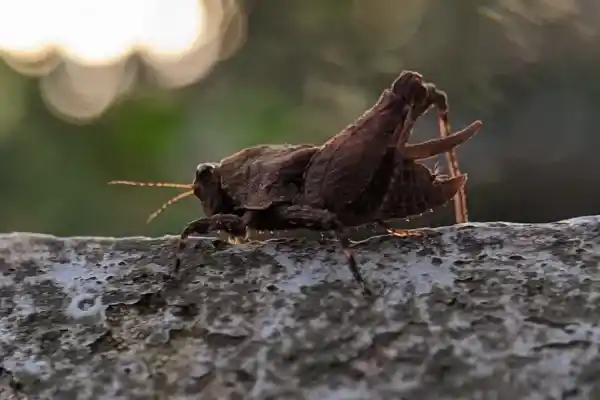
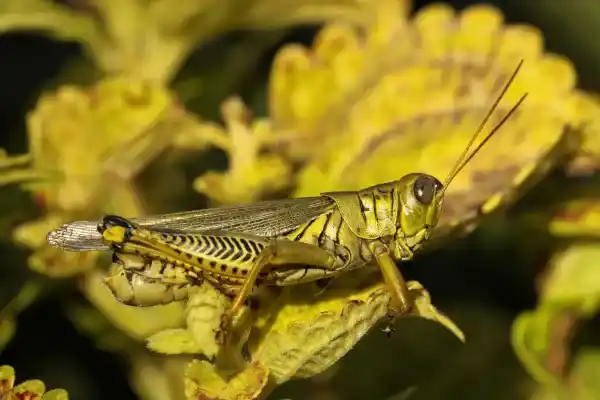
14) Differential Grasshopper (Melanoplus differentialis)
Identification features : Body color is yellowish-green or greenish, often with a "serrated/zigzag" pattern; tibiae may be yellowish and have black spines.
Body length : approximately 28–50 mm .
Habitat : Grasslands, forest edges, moist farmland and open areas; widely distributed.
Diet : It has a wide range of food sources, including grasses, broadleaf herbs, and even horticultural crops.
Interesting point : It is easier to remember in agricultural areas because it eats a variety of foods, is highly adaptable, and has a strong presence when its numbers increase.
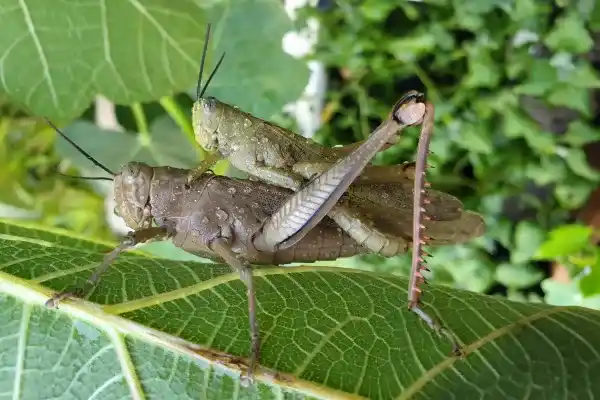
15) Australian Giant Grasshopper (Valanga irregularis)
Identification features : Large body size, gray-green base color with black spots, darker hindwings that resemble the shadow of a leaf when perched.
Body length : female 80–90 mm , male about 60 mm .
Habitat : Tropical/subtropical regions of northern and eastern Australia, commonly found in bushland, gardens, and forest edges.
Diet : It eats almost any leaf, belonging to the "broad-spectrum leaf-eating group".
Interesting point : A common behavior is to sunbathe in the morning and wait for the body to warm up before starting to move around and eat.
Quick comparison: Which one are you most likely to see?
Long-nosed/particularly long-nosed : Long-nosed grasshopper (Truxalis nasuta)
With a slender, grass-like body and a cone-shaped head, it is a striking mimic : the Mediterranean stick grasshopper (Acrida ungarica).
Its wings suddenly turn blue after it takes flight : Blue-winged grasshopper (Oedipoda caerulescens)
Mediterranean region, with vertical stripes around the eyes, and a large body size : Egyptian locust (Anacridium aegyptium)
Iberian stony shrubs, enormous size, walking more than flying : the giant grasshopper (Acinipe hesperica).
Huge specimens found in Australian gardens/bush : Australian Giant Grasshopper (Valanga irregularis)
Additional information: The life cycle of grasshoppers (more relevant to frequently asked user questions)
Eggs : They are mostly laid in the soil and often form an "egg pod".
Nymphs : Newly hatched nymphs resemble smaller adults, but have no wings or very short wings , and will molt multiple times.
Adults : Wings are fully developed, capable of flying or gliding short distances; more active during the breeding season.
Why do some species suddenly increase in number? Factors such as temperature, rainfall, vegetation growth, and reduced predators can all combine to cause a rapid increase in the population of certain species.
References
Animalia.bio. https://animalia.bio/es
Wild Life Natural. https://wildlifenatural.com/
Animal Diversity Web. https://animaldiversity.org/
Brisbane Insects (2013). Giant grasshopper (Valanga irregularis). Available at: https://www.brisbaneinsects.com/
Joachim, J. (2021). Sténobothre occitan (Stenobothrus festivus). https://jessica-joachim.com/
Jardin Sauvage (2021). Orthoptera: order of caelifera. https://jardinsauvage.fr/
NatureSpot (sf). Egyptian grasshopper – Anacridium aegyptium. https://www.naturespot.org.uk/