In the Arctic, if we were to choose a runner-up solely based on flight distance, it would be the Golden Plover. The Golden Plover gets its name from the golden spots scattered across its back. This relatively large bird prefers dry conditions and often forms small flocks to forage for worms, crustaceans, snails, and insects along rivers and coastlines. It breeds along the west coast of Alaska and northeastern Siberia, and migrates to southern my country, eastern India, Indonesia, the Hawaiian Islands, and even Australia during the winter. They can fly continuously for over 50 hours at speeds of approximately 90 kilometers per hour, yet lose only 0.06 kilograms of weight, demonstrating extremely low energy expenditure and thus remarkable endurance. How it manages to do this remains a mystery.
The golden plover, found in western Alaska, can fly for 48 hours straight, covering more than 4,000 kilometers, all the way to Hawaii, and then fly another 3,000 kilometers to the Marquesas Islands in the South Pacific or even further south. Moreover, during such long-distance flights, they can precisely choose the shortest route and arrive at their destination without deviating, demonstrating the remarkable sophistication of their navigation system. How they achieve this remains a mystery.
Like the Arctic tern, the golden plover is also a very brave bird. It always fights fiercely against foxes or even hunters who dare to enter its territory, even at the cost of its life. Therefore, some small birds specifically build their nests near the golden plover's territory for protection. Sometimes, when predators attack, to protect its young, the golden plover will extend a wing as if it were broken, thus attracting the enemy's attention. The predator often believes this and chases after it, only to be led astray and thus protected from harm. This shows that the golden plover is also a very intelligent bird.
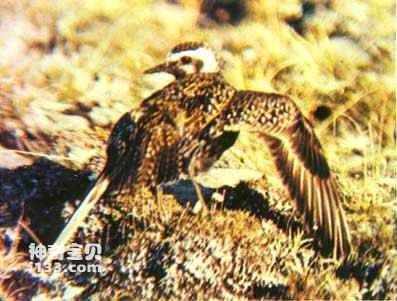
The golden plover extends one wing as if it were broken to attract predators.