In nature, while human eyes have evolved to near perfection, many animals possess equally astonishing visual abilities. They may be able to see farther or have a wider field of vision. An animal's visual acuity depends heavily on its environment and hunting habits. Some animals need to clearly see prey at a distance, while others need to quickly detect changes in their surroundings. Here are ten animals with exceptional vision: falcons, owls, crab-eating macaques, chameleons, tigers, bats, flies, horses, geckos, and tube-eyed fish. Let's take a look.

1. Falcon
Falcons are among the animals with exceptionally strong eyesight. They possess a unique eye structure, with a central fovea and a lateral fovea on the retina of each eye, allowing them to receive images of objects in their anterior and posterior fields of vision, thus providing a remarkably wide field of view. Furthermore, the cornea and lens of falcons have very high refractive indices, enabling light to be focused more effectively onto the retina.

Their eyes also possess a large number of cone cells, which are responsible for sensing color and light intensity, and the cone cells in falcons are more sensitive than those in other birds. These characteristics enable falcons to identify prey at long distances and attack their targets swiftly and accurately. In fact, falcon eyesight is considered among the best in birds, allowing them to easily spot small mammals, birds, and insects while in flight. Even soaring at altitudes of over a thousand meters, falcons can still spot prey on the ground and use it as a target for their next attack.
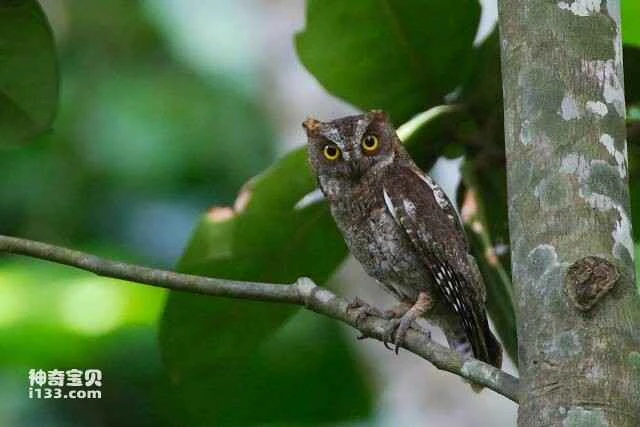
2. Owl
Owls are nocturnal birds with exceptionally keen eyesight, capable of seeing even the faintest light in the dark. Their eyes are located directly in front of their faces, giving them excellent depth perception during hunting. Owls have large pupils, allowing light to enter more easily, and their retinas are rich in rod cells but lack cone cells, resulting in a cylindrical eye shape that is highly sensitive to low light, making them particularly well-suited for nocturnal activity.
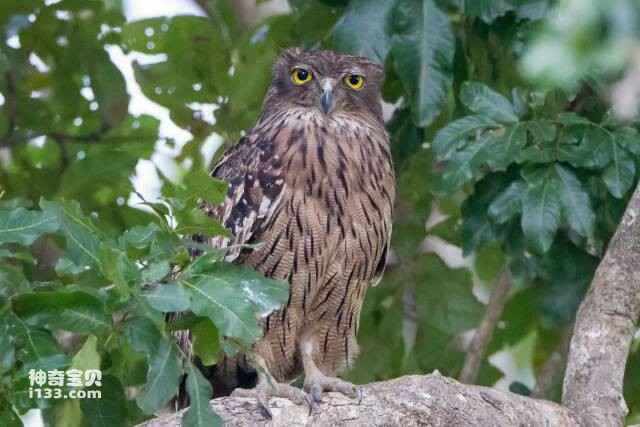
Furthermore, owls possess highly refractive lenses and corneas, allowing light to focus onto the retina. Their eyes also have a large number of visual fibers, making them exceptionally sensitive. Owls are considered to have among the best eyesight of any bird. They can spot prey in extremely low light conditions and strike their targets swiftly and accurately. Studies have found that owls' vision can be up to 100 times better than humans, a key factor in their prowess as nocturnal hunters.
3. Crab-eating macaques
Crab-eating macaques are agile animals that live in tropical coastal areas and possess excellent eyesight. Their eyes are located on the sides of their heads, allowing them to extend their field of vision laterally. This unique eye structure enables them to better monitor their surroundings in order to detect food and potential threats.
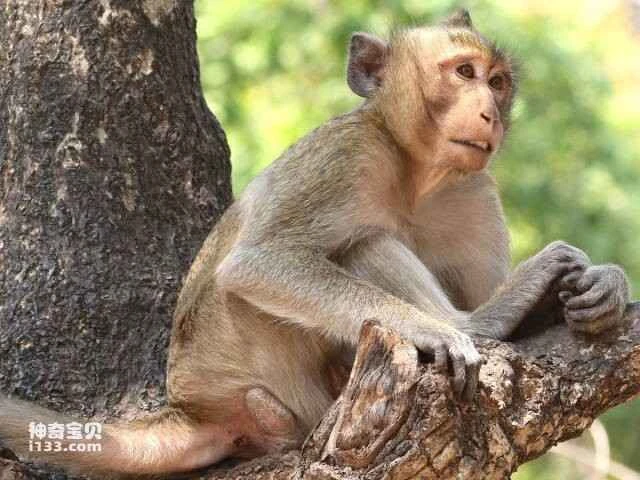
Furthermore, the cynomolgus macaque's eyes possess highly sensitive corneas and lenses, enabling them to focus light more effectively onto the retina. The cynomolgus macaque's retina contains numerous cone and rod cells, allowing it to perceive color and light intensity, and making it more adaptable to low-light conditions. The cynomolgus macaque's vision is highly adapted to its tropical coastal environment, enabling it to quickly and accurately locate and capture small marine creatures such as crabs and small fish.
4. Chameleon
Chameleons are fascinating animals with uniquely structured and functional eyes. Their eyes can independently focus on different targets, allowing them to scan their surroundings and quickly adapt to varying hunting and courtship strategies. Furthermore, chameleon eyes are highly sensitive, capable of perceiving a wide range of light, including ultraviolet and infrared radiation. This exceptional visual ability enables chameleons to better identify vegetation, detect predators, and engage in social interactions.
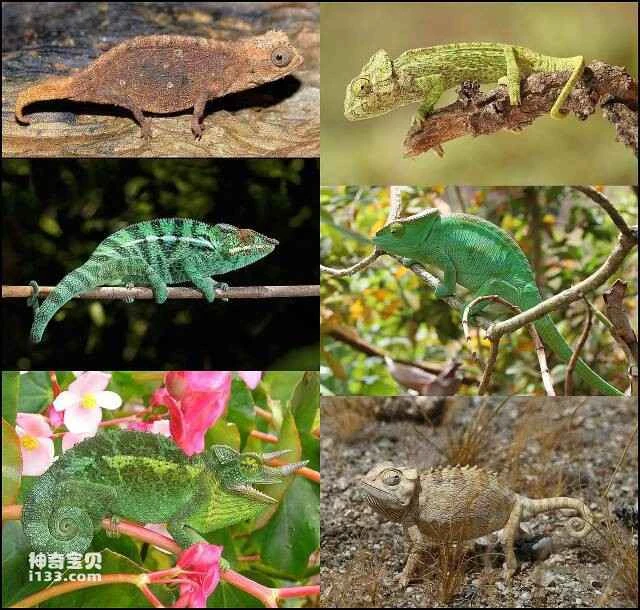
Chameleons possess a high concentration of cone and rod cells in their retinas, enabling them to perceive color and light intensity. Furthermore, their corneas and lenses have a very high refractive index, allowing them to focus light onto the retina. This exceptional vision is a remarkable adaptation to their arboreal environment, enabling them to quickly and accurately locate prey or avoid predators. Chameleons' unique visual abilities have made them a significant subject of study for biologists.
5. Tiger
Tigers, as predators, possess exceptional eyesight. Their eyes are larger than human eyes and contain more rod and cone cells, enabling them to perceive a wider spectral range and fainter light. Tigers also have very large pupils, allowing them to spot and track prey in dim environments. Furthermore, their lenses and corneas have a high refractive index, focusing light onto the retina and enhancing their visual resolution.
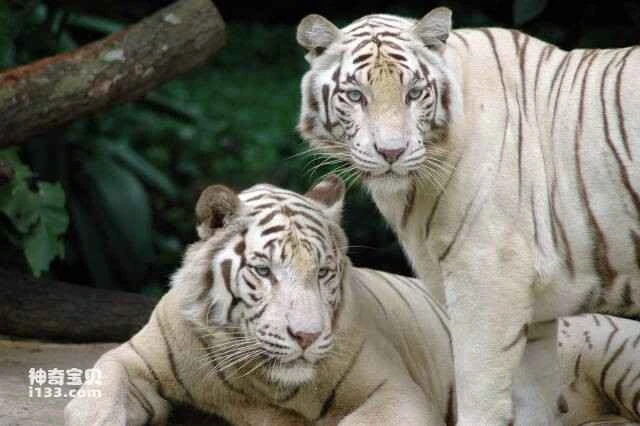
Tigers' eyes can focus forward, giving them exceptional depth perception, allowing them to better locate and track prey. Their eyes are also positioned directly at the front of their heads, enabling them to better focus ahead, accurately locate prey, and attack. A tiger's vision is highly adapted to its hunting behavior in environments such as grasslands and forests, allowing them to quickly and accurately spot and pursue prey. This visual ability is also a crucial factor in a tiger's dominance of the food chain.
6. Bats
Bats are the only mammals that can truly fly freely. Like birds, bats also possess keen eyesight. However, many people have long believed that bats have poor eyesight or are even blind. But contrary to this view, a growing number of scientists point out that bats have excellent vision, which has not degenerated. In fact, different species of bats have their own unique levels of visual acuity.
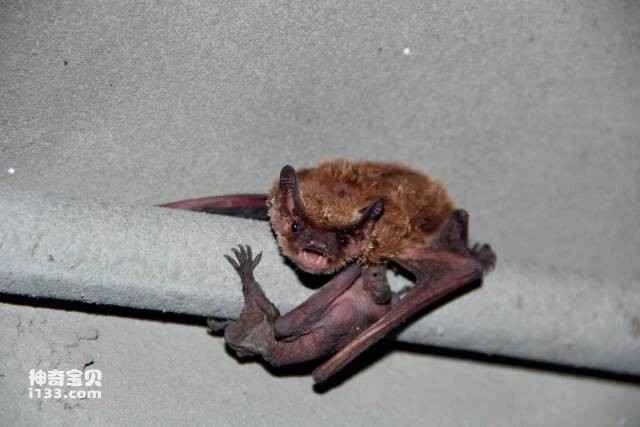
Although bats use ultrasound for navigation and positioning, their eyes are structurally complete, and their opsins change color depending on the light, indicating that vision remains crucial for them. Some bat species can even see shorter wavelengths of ultraviolet light that are imperceptible to humans. Therefore, while bats primarily rely on ultrasound to locate and hunt prey, their visual acuity is not overlooked. In practice, bats utilize their powerful vision and ultrasound technology to adapt to a wide variety of environments.
7. Flies
Flies have a unique eye structure, consisting of a hemispherical shape made up of many hexagonal ommatidia. Each ommatidia has a very high temporal resolution, capable of segmenting a moving object into a series of individual images. Each ommatidia has a cornea and a lens, and each can form an image independently. Therefore, the number of ommatidia in a fly's eye can simultaneously form as many images as possible. These images are then combined in the fly's brain to form a clear image of a moving object. Even fast-moving objects cannot escape the fly's keen eye.
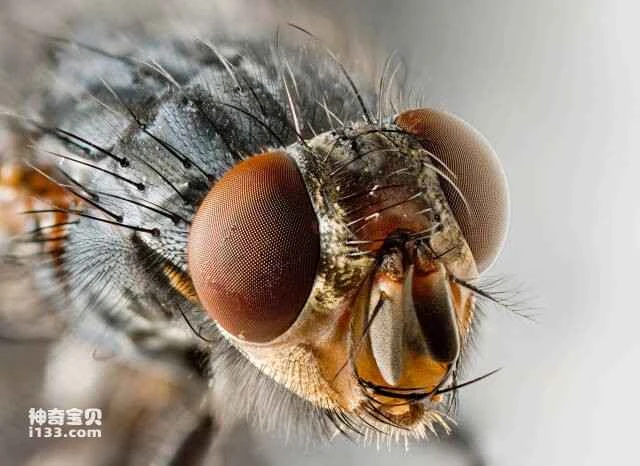
Flies possess incredibly high visual acuity and resolution, capable of seeing ultraviolet light imperceptible to the human eye, and refocusing at astonishing speed. In contrast, while the human eye typically takes 0.05 seconds to discern the outline of an object, a fly's eye takes only 0.01 seconds. Flies' eyes have a unique structure and function, enabling them to sense moving objects and quickly and accurately locate prey and danger. The fly's visual system is one of the key factors in its success and survival within its ecosystem.
8. Horse
Horses possess astonishing eyesight, boasting a wider visual field and a greater range of perception than humans can achieve. Each of a horse's eyes has a visual range of 65 degrees, enabling them to clearly see objects a certain distance in front of them and to see objects completely behind them without turning around. This extended visual range makes it easier for horses to spot potential prey or threats in their natural environment and allows them to better adapt to their surroundings.
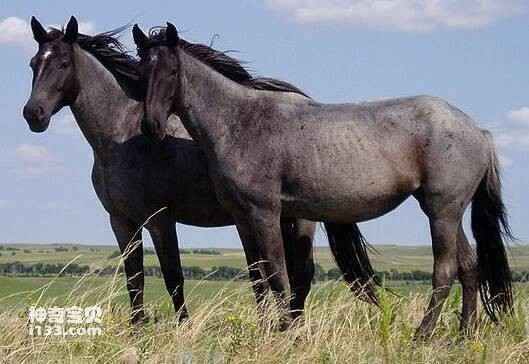
However, because horses use binocular vision, they have difficulty directly detecting objects at close range between their eyes. Therefore, horses always have a 3-degree blind spot, which is a limitation of their vision. Horses' vision is highly adapted to the needs of survival on the savanna, and despite the blind spot, they still possess a significant visual advantage. The range and sensitivity of a horse's vision are among the key factors for its success and survival in the savanna ecosystem.
9. Gecko
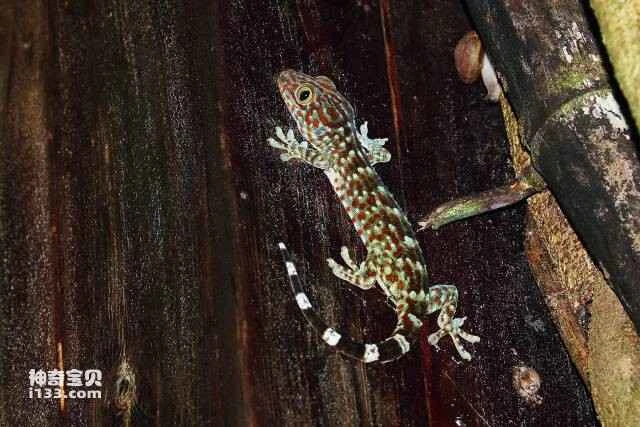
Geckos are a type of reptile whose visual system helps them move quickly among trees, rocks, and buildings and hunt prey. Geckos have relatively small eyes but possess extremely high visual sensitivity. Their pupils are very large and can adjust freely to adapt to changes in light intensity. The gecko's retina contains many rod and cone cells that can sense information such as light intensity, color, and direction of movement in the surrounding environment. While humans cannot see colors in dim moonlight, geckos can still distinguish colors in this light, with a color perception ability 350 times stronger than humans.
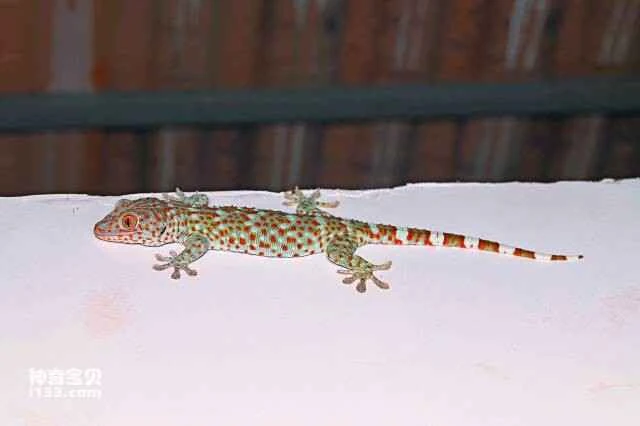
Furthermore, geckos' eyes can distinguish stereoscopic images just like humans, allowing them to better locate and capture prey. Each of a gecko's eyes can move independently, and each eye can see different scenes, enabling the gecko to better perceive its surroundings and prey. Vision is a crucial factor in a gecko's survival and movement. Geckos adapt to various environments through their highly sensitive visual system and use their agile eye movements to quickly and accurately locate and capture prey.
10. Tube-eyed fish
Tubeeye fish are a type of deep-sea creature that lives in the extremely high-pressure environment of the deep sea. Due to the unique nature of their environment, their vision differs from that of other fish. Tubeeye fish have very large eyes, about one-third the length of their head. Their eyes are elongated and cylindrical, composed of a transparent cornea and lens. The pupils of tubeeye fish can dilate and constrict to adapt to different light intensities at different depths. Because light is extremely weak in the deep-sea environment, tubeeye fish eyes have adapted to this low-light condition. Their retinas contain a large number of rod cells, which are highly sensitive to changes in light intensity and help tubeeye fish perceive their surroundings.
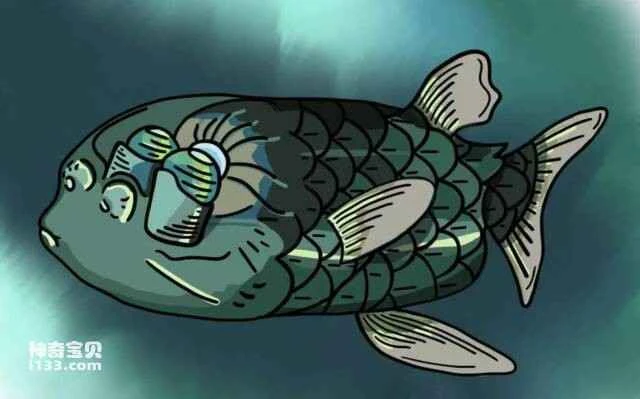
However, their sensitivity is much lower compared to visual information such as color, shape, and movement. In addition to the rod cells in their retina, tubeeyes possess a unique structure in their eyes—a mirror. This mirror focuses light onto the retina, enhancing their vision and helping them perceive the dim light in their surroundings. Tubeeyes' vision is adapted to the low light conditions of the deep-sea environment. Although their sensitivity to visual information such as color, shape, and movement is much lower, their rod cells and mirrors help them perceive their surroundings and react quickly and accurately.
The list of the top ten super-vision animals was compiled by searching relevant online platforms. The selection was based on factors such as exceptional visual abilities, unique skills, and a combination of factors including their fame and influence. If you have any questions, please feel free to leave a comment or criticism at the end.