Flowerhorn cichlids, also known as Flowerhorn fish, Flower Chicken, Flower Head Fish, Golden Dragon Fish, and Male Fish, are ornamental fish renowned for their vibrant colors and unique appearance. They possess a large, round head with a fleshy mound, bright hues, and a lively personality, making them one of the most popular and eye-catching ornamental fish worldwide. This article will detail the unique features, origins, care requirements, and best practices for keeping them as pets.
What is a Flowerhorn fish?
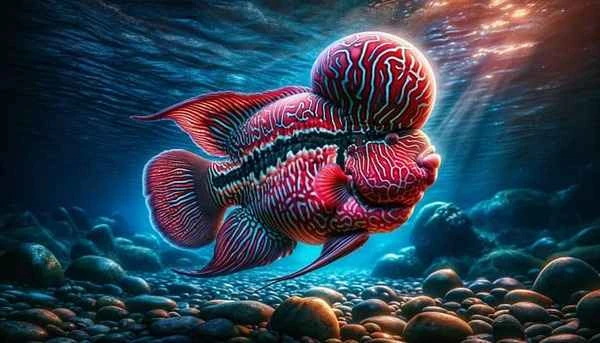
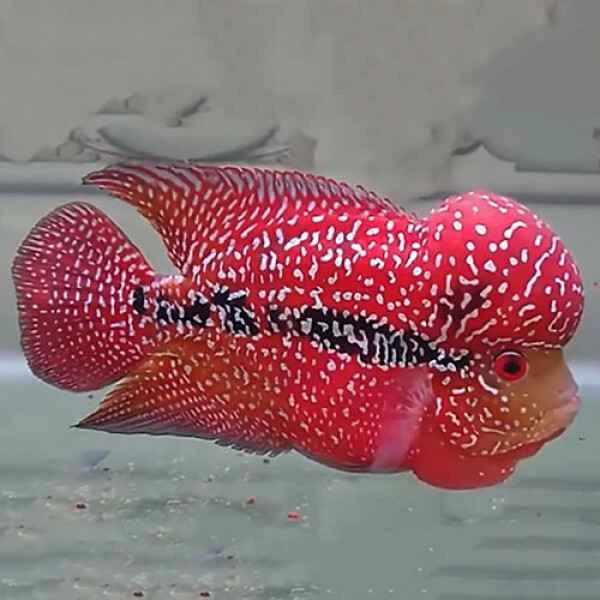
Flowerhorn cichlids are hybrid fish bred specifically for ornamental purposes. Due to their unique and often exaggerated appearance, they have become one of the most popular fish species among aquarium enthusiasts. The most striking feature of the Flowerhorn is the large, fleshy mound on its head, which becomes more prominent with age. This mound, combined with their vibrant colors and large fins, gives them a very distinctive and attractive appearance.
Although Flowerhorn cichlids are most commonly identified as fish with "fleshy mounds," their colors are usually very vibrant, ranging from red, yellow, orange, and even blue. Their appearance and personality make them a favorite among both beginners and experienced aquarists.
The origin and history of Flowerhorn fish
The Flowerhorn cichlid was first bred in Malaysia in the late 20th century. It is a hybrid fish created by crossing several different cichlids, such as the Midnight Cichlid , Red Devil Cichlid , Oscar Cichlid , and Leopard Cichlid . The purpose of breeding the Flowerhorn cichlid was to create an ornamental fish that is both visually striking and lively.
Over time, breeders focused on developing Flowerhorn cichlids with specific characteristics, such as larger head mounds, more vibrant colors, and unique patterns. This selective breeding process resulted in different varieties of Flowerhorn cichlids, each with distinct appearances and colors.
Physical characteristics of Flowerhorn fish
Flowerhorn cichlids are particularly noteworthy for the following characteristics:
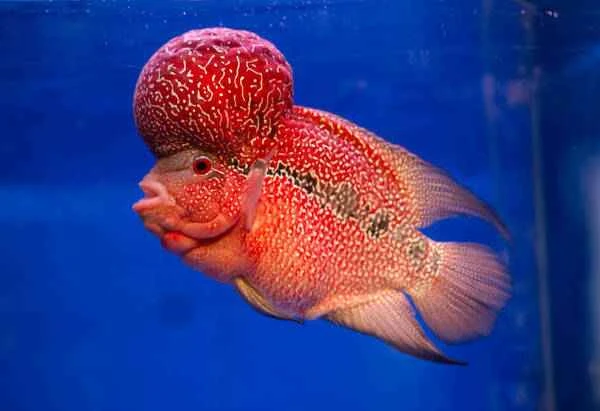
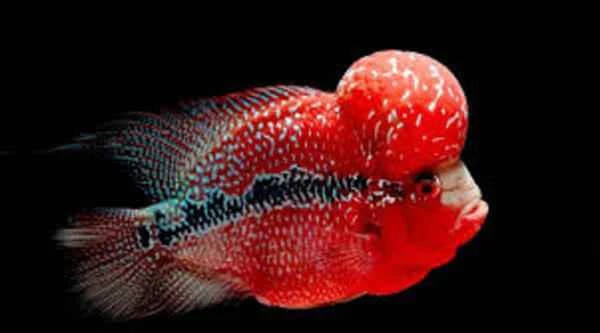
The most distinctive feature of the Flowerhorn cichlid is the prominent "mound" on the top of its head. This mound becomes more pronounced as the fish matures, especially in males. The size and shape of the mound vary depending on the species and variety of the fish.
Vibrant Colors : Flowerhorn cichlids are famous for their vibrant colors. Depending on the variety, they can be red, yellow, orange, and sometimes even blue. As the fish grows, their colors become even more intense.
Extended fins : Flowerhorn cichlids have long, flowing fins that make them appear elegant as they swim. Their tails and fins often have ornate patterns, adding to their beauty.
Unique patterns : Each Flowerhorn fish has a unique body color and pattern. Some fish have complex spots, stripes, or even flower-like patterns, which is the origin of their name.
The personality and behavior of Flowerhorn fish
One of the most captivating aspects of the Flowerhorn cichlid is its lively and energetic personality. Unlike many other ornamental fish, Flowerhorn cichlids are typically very interactive and may even recognize their owners. When their owners approach, they often swim to the front of the aquarium to interact with them. Some Flowerhorn cichlids can even be trained to eat from their owner's hand or follow simple commands.
Flowerhorn cichlids are also known for their territoriality and aggressiveness. They are best kept alone or with other strong, large fish to avoid aggressive behavior. When keeping Flowerhorn cichlids with other fish, sufficient space must be provided to reduce aggressive behavior.
Requirements for raising Flowerhorn fish
Flowerhorn cichlids are relatively easy to keep, but they do have some specific needs. Here are some key points to keep in mind when keeping Flowerhorn cichlids:
Aquarium Size : Flowerhorn cichlids can grow quite large, typically reaching 12 to 16 inches (30 to 40 cm). Therefore, they require a large aquarium, ideally 55 gallons (about 208 liters) or larger, to provide ample swimming space. The larger the aquarium, the better, as this helps reduce aggressive behavior and provides sufficient room for the Flowerhorn to grow.
Water quality requirements : Flowerhorn cichlids prefer slightly alkaline water, with a pH value maintained between 7.0 and 8.0. Their optimal water temperature range is 78°F to 84°F (25°C to 29°C). Regular water changes and a good filtration system are essential for maintaining the health of Flowerhorn cichlids.
Filtration System : Due to their large size and active nature, Flowerhorn cichlids produce a significant amount of waste. Therefore, a powerful filtration system is essential to maintain clean water and prevent pollution in the aquarium.
Diet : Flowerhorn cichlids are omnivorous fish, consuming a variety of foods, including high-quality pellet food, live or frozen foods such as shrimp and insects, and some plant-based foods such as spinach and peas. Providing a balanced diet is very important for maintaining the health and color of Flowerhorn cichlids.
Companion Selection : As mentioned earlier, Flowerhorn cichlids can be aggressive, so care should be taken when choosing companions. They are best kept alone or with larger, stronger fish that can defend themselves. Avoid keeping them with smaller or more docile fish, as they may become targets.
Breeding Flowerhorn Fish
Breeding Flowerhorn cichlids can be a very rewarding experience for experienced aquarists. Flowerhorn cichlids typically exhibit behavioral changes when preparing for breeding. Males become more territorial, while females display more vibrant colors. The female lays eggs, which the male fertilizes. After hatching, the parents protect the fry, ensuring their safety.
Breeding Flowerhorn cichlids is not suitable for beginners, as it requires special attention to water quality, aquarium setup, and fish behavior. Furthermore, Flowerhorn cichlids can be very aggressive due to their instinct to protect their eggs and fry, so extra care must be taken during this process.
Types of Flowerhorn Fish
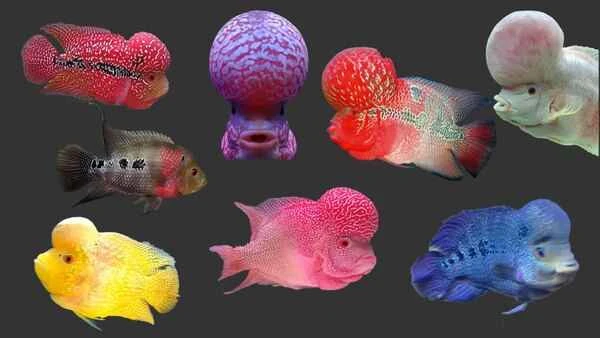
Flowerhorn cichlids are a hybrid fish species with many different varieties, varying in color, pattern, and appearance. Different types of Flowerhorn cichlids are usually classified according to their unique characteristics, such as body size, head shape, and color. Below is a detailed table of the main types of Flowerhorn cichlids, showing their defining characteristics.
| type | describe | Unique features | Place of origin |
|---|---|---|---|
| Red Dragon Flowerhorn Fish | It is known for its bright red body and large, round fleshy mounds (protrusions that highlight the head). | Bright red, large fleshy mounds, tall stature, and strong aggression. | Southeast Asian mating and reproduction |
| Kamfa Flowerhorn Fish | Known for its vibrant color combinations, typically including red, orange, and yellow. | It has a round body shape, is quite aggressive, and has small but still noticeable fleshy mounds. | Thailand, Malaysia |
| Pearl Flowerhorn Fish (Zhen Zhu) | Its body is covered with shimmering, pearl-like scales, making it distinctive. | It has a pearly luster, small but noticeable fleshy bumps, and is usually bright in color such as red, yellow or orange. | Malaysia, Thailand |
| Golden Kamfa Flowerhorn Fish | It is one of the most popular varieties due to its unique colors and large, prominent head. | Large fleshy mounds, prominent black markings, golden or reddish-orange body, and very aggressive. | Southeast Asian mating and reproduction |
| Golden Monkey Flowerhorn Fish | This variety has a golden body and prominent fleshy bumps. | Rich in golden yellow, with medium-sized fleshy mounds, they are typically very territorial and aggressive. | Malaysia, Thailand |
| Tianjin Flowerhorn Fish | It is known for its consistent and vibrant color patterns, often featuring bright red and blue. | Large fleshy mounds, vibrant body color and striking patterns, aggressive personality. | China (especially the Tianjin area) |
| Darth Vader Flowerhorn Fish | A darker variety of Flowerhorn fish, typically with a black body and vibrant contrasting colors. | It has a predominantly black body, often with yellow or red fins and markings on the body, and large fleshy mounds. | Southeast Asia |
| Midnight Flower Fish | This variety of Flowerhorn fish has a deeper hue and more subtle color contrasts. | Darker body (usually black or dark blue), bright fleshy mounds, strong territoriality. | Southeast Asia |
| Banana Flower Fish | This unique flowerhorn fish has yellow and orange hues and is shaped like a banana. | Yellow to orange body color, medium-sized fleshy mounds, active and aggressive. | Southeast Asian mating and reproduction |
| Tornado Flowerhorn Fish | Its characteristics include exaggerated fleshy mounds and a streamlined body, often with dramatic patterns. | Large, prominent fleshy mounds, deep red or orange body, often with contrasting black markings. | Thailand, Malaysia |
Key factors for identifying Flowerhorn fish species:
Fleshy head (head hump) : Fleshy head is one of the most distinctive features of the Flowerhorn fish. Larger fleshy head usually indicates a more popular individual.
Color and pattern : While some varieties, such as the Red Dragon Flowerhorn, have relatively simple colors, others, such as the Pearl Flowerhorn, have pearly or multicolored scales.
Body shape : Different varieties of Flowerhorn fish may have a rounder body shape (such as Kamfa Flowerhorn fish ) or a more slender body shape, depending on their genetic lineage.
Size : Flowerhorn cichlids can grow quite large, with some varieties reaching 12-16 inches (30-40 cm) in length.
Aggression : All Flowerhorn cichlids have a certain degree of aggression, but varieties like the Golden Kamfa Flowerhorn cichlid are usually more territorial.
These different varieties of Flowerhorn cichlids are beloved by aquarium enthusiasts for their unique appearance and charming personalities. Based on these characteristics, Flowerhorn cichlid varieties vary greatly in appearance and temperament, and this diversity is one of the reasons for their popularity.
Price and Purchase Methods of Flowerhorn Fish
The price of Flowerhorn cichlids varies depending on several factors, including the size, color, and breed. Generally, Flowerhorn cichlids range in price from $30 to $200, or even higher. The rarer and more vibrant the color or pattern, the higher the price. Specially bred varieties, those with larger, more prominent hump-like growths, or unique colors, may fetch even higher prices.
Flowerhorn cichlids are widely available in pet stores and from online fish breeders. However, due to their specific care requirements and relatively aggressive nature, it is best to purchase from a reputable breeder to ensure the health and welfare of the fish.
Flowerhorn cichlids are stunning and unique ornamental fish, perfect for aquarium enthusiasts who prefer active and interactive pets. With their vibrant colors, distinctive head mounds, and energetic personalities, Flowerhorn cichlids are sure to attract everyone's attention in your aquarium. Although they are more demanding to care for than some other fish, the rewards of raising healthy and happy Flowerhorn cichlids are well worth it. Whether you are an experienced aquarist or a beginner, this beautiful fish will be a charming new addition to your aquarium.
Why is it called a Flowerhorn fish ?
The Flowerhorn cichlid gets its name from its distinctive appearance, especially the large fleshy mound on its head and the flower-like patterns on its body. This mound gradually becomes more prominent as the fish grows, resembling a flower, and is particularly noticeable in males. Therefore, the word "flower" aptly describes its head shape. Furthermore, the Flowerhorn cichlid's vibrant colors and unique patterns make it a very fitting name.
Flowerhorn fish are bred from which fish species?
Flowerhorn cichlids are bred through crossbreeding several different cichlid species. The main parent fish include:
Midnight Cichlid (Paraneetroplus synspilus)
Red Devil Cichlid (Amphilophus citrinellus)
Oscar fish (Astronotus ocellatus)
Jaguar cichlid (Parachromis managuensis)
These fish were first bred in Malaysia in the late 20th century with the aim of creating an ornamental fish that was both beautiful and lively. Over time, different varieties of Flowerhorn cichlids gradually emerged, with variations in appearance and color.
Lifespan of Flowerhorn Fish
The average lifespan of a Flowerhorn cichlid is about 10 to 12 years , although some can live longer under ideal conditions. Their lifespan is affected by factors such as water quality, diet, and living environment. Regular water changes, providing a balanced diet, and avoiding stressors can help extend their lifespan and maintain their health.
Breeding Flowerhorn Fish
Breeding Flowerhorn cichlids is both challenging and very interesting. Flowerhorn cichlids are particularly aggressive during breeding due to their territoriality and aggression. The breeding process is roughly as follows:
Pairing behavior : When male Flowerhorn cichlids are ready to breed, their colors become more vibrant and the fleshy mound on their heads becomes more prominent. Females typically become more rounded, showing signs that they are about to lay eggs.
Egg laying : Females lay their eggs on flat surfaces, usually on rocks or aquarium glass. Males then immediately fertilize the eggs.
Parental care for fry : Once the eggs hatch, the parents will protect the fry from threats, especially during the early stages of the fry's growth. Flowerhorn cichlids are typical examples of protective parents.
Raising fry : Fry grow very quickly and require regular water cleaning and suitable food. They are usually separated from their parents when they are large enough to live independently.
Flowerhorn cichlids require a special aquarium environment to breed in order to cope with their aggression and potentially violent behavior during the breeding process.
Suitable companions for Flowerhorn cichlids
Flowerhorn cichlids are territorial and aggressive fish, so choosing the right companions is very important. Here are some suggestions on suitable companions for Flowerhorn cichlids:
Large, strong fish : Flowerhorn cichlids are well-suited to coexisting with larger, more aggressive fish, such as other cichlid species, Oscar cichlids , or leopard cichlids . These fish can withstand attacks from Flowerhorn cichlids.
Avoid small fish : Small fish such as guppies and tropical fish are not suitable companions for Flowerhorn cichlids, as they may become targets of attack.
Provide sufficient space : To avoid conflict, it is important to provide Flowerhorn cichlids with enough space and hiding areas. Flowerhorn cichlids need a large aquarium of 55 gallons (about 208 liters) or more, preferably one that allows the fish enough room to swim.
Many aquarium enthusiasts choose to keep Flowerhorn cichlids alone to avoid territorial disputes.
Are Flowerhorn fish good pets?
Flowerhorn cichlids are excellent pets for experienced aquarists, but they can be challenging for beginners. Here are some of the pros and cons of keeping Flowerhorn cichlids as pets:
Highly interactive : Flowerhorn cichlids are very intelligent and can establish an interactive relationship with their owners. They will often swim to the front of the aquarium to greet their owners, and can even be trained to eat from their owners' hands.
Distinctive Personality : Flowerhorn cichlids are lively and energetic, enjoy exploring their surroundings, and are quite opinionated. Their personality may be very appealing to people who enjoy interacting with pets.
They have high requirements for care : they require a large aquarium and a powerful filtration system. Furthermore, their diet needs special attention to ensure a balanced diet.
Aggression : Flowerhorn cichlids can be aggressive, especially during the breeding season, when they are very territorial. If you want a peaceful aquarium, this might not be ideal. However, if you can arrange their companions properly and provide them with enough space, they can coexist peacefully.
Flowerhorn cichlids are captivating and unique ornamental fish. With their vibrant colors, distinctive head mounds, and lively temperament, they have become a favorite among many aquarium enthusiasts. Although they require more care than other fish, with proper attention, Flowerhorn cichlids can be a vibrant and charming aquarium pet. Whether you are an experienced aquarist or a beginner, this beautiful fish will bring you much joy and surprise.
How to raise Flowerhorn fish
Flowerhorn cichlids are a popular choice among aquarium enthusiasts due to their vibrant colors and unique personalities. They are very eye-catching in the aquarium, but to ensure their healthy growth and make them a pleasant pet, they require special care. Here is a detailed guide on how to properly care for Flowerhorn cichlids:
1. Aquarium size and layout
Flowerhorn cichlids are relatively large, growing to 12-16 inches (30-40 cm) , thus requiring a spacious aquarium. The following points should be considered when keeping them:
Aquarium size : A single Flowerhorn cichlid requires a minimum of 55 gallons (208 liters) of aquarium. If you plan to keep other fish, it is best to choose a larger aquarium, such as 75 gallons (284 liters) or more.
Filtration System : Flowerhorn cichlids produce a lot of waste, so a high-efficiency filtration system is essential to maintain clean water. A powerful filter effectively removes impurities from the water, ensuring healthy water quality.
Substrate : Fine pebbles or smooth sand can be used for the bottom. Flowerhorn cichlids like to dig at the bottom, so a material that is harmless to them should be used.
Decorations : You can place some stones , driftwood , or plastic plants as camouflage, providing the Flowerhorn fish with more space to move around and hide. Avoid using sharp objects to prevent injury to the fish.
Water quality parameters : Flowerhorn cichlids adapt to warm water, slightly acidic to neutral. The ideal water temperature is between 80-85°F (27-29°C) , and the pH value should be maintained between 6.5-7.5 .
2. Water quality management and maintenance
Good water quality is essential for the health of Flowerhorn fish.
Regular water changes : Since Flowerhorn fish eat a lot and produce a lot of waste, it is recommended to change 20-30% of the water every week.
Water quality testing : Regularly test the levels of ammonia, nitrite, and nitrate in the water, especially since Flowerhorn fish produce a lot of waste. Ammonia and nitrite should be 0 ppm , and nitrate concentration should be kept below 20 ppm .
Oxygenation : Flowerhorn cichlids need plenty of oxygen. There should be some bubbles or water flow on the surface of the aquarium to keep the water oxygenated.
3. Diet of Flowerhorn Fish
Flowerhorn cichlids are carnivorous fish and require a high-protein diet to maintain their health and vibrant colors. Here are some suggestions for feeding flowerhorn cichlids:
Pellets : Provide high-quality cichlid pellets for Flowerhorn cichlids, ensuring they contain sufficient high protein . Choose pellets suitable for large cichlids.
Live or frozen food : Flowerhorn fish love live or frozen food , such as bloodworms, shrimp, and dried shrimp . These foods help promote their natural hunting instincts and provide additional nutrition.
Vegetables : Although they are carnivorous fish, they can be fed some vegetables occasionally, such as blanched spinach, peas or zucchini , which can supplement their nutrition.
Feeding frequency : Flowerhorn cichlids should generally be fed 2-3 times a day , and the amount of food should not be excessive. The amount of food should be such that they can finish it within 5 minutes to avoid uneaten food polluting the water.
4. Suitable companions for Flowerhorn cichlids
Flowerhorn cichlids are territorial and aggressive fish , so you need to be especially careful when choosing companions.
Solitary keeping : Many Flowerhorn enthusiasts choose to keep them alone to avoid conflict with other fish.
Large, strong fish : If you wish to keep them with other fish, you can choose other large, strong cichlids , such as Oscar cichlids , leopard cichlids , and tiger cichlids . They can handle the aggression of Flowerhorn cichlids.
Avoid small fish : Small fish such as guppies and other small tropical fish are not suitable companions for Flowerhorn cichlids, as they are easy targets for attack.
Aquarium space : If you plan to add other fish, make sure the aquarium is large enough, preferably 75 gallons (284 liters) or more.
Many aquarium enthusiasts choose to keep Flowerhorn cichlids alone to avoid territorial disputes.
5. Temperature and Lighting
Lighting : Flowerhorn cichlids do not require special lighting, but standard aquarium lighting will better showcase their vibrant colors. A 12-hour light cycle is recommended.
Water temperature : Maintain the water temperature between 80-85°F (27-29°C) , as Flowerhorn cichlids are tropical fish and suitable warm water contributes to their health. Use a heater or aquarium heater to maintain a constant temperature.
6. Health Management and Disease Prevention
Flowerhorn cichlids are generally healthy, but like all fish, they can get sick if not properly cared for. Here are some tips for keeping your Flowerhorn cichlid healthy:
Observe behavior : Regularly observe changes in the behavior of Flowerhorn fish, such as inactivity, loss of appetite , or abnormal swimming , as these may be signs of illness.
Common Diseases : Common diseases in Flowerhorn cichlids include white spot disease (Ich) , fin rot , and head perforation . Regular water changes and maintaining good water quality are key to preventing these diseases.
Avoid stress : Flowerhorn cichlids are prone to stress if they feel threatened, especially when kept with smaller or more introverted fish. Prolonged stress can weaken their immune system, making them more susceptible to illness.
7. Breeding of Flowerhorn Fish
Breeding Flowerhorn cichlids requires a suitable environment and a pair of mature fish. Here are the basic steps for breeding:
Breeding in pairs : To breed Flowerhorn cichlids, a mature male and female pair is required. The male's wattles will be larger, while the female's abdomen will become more rounded.
Breeding aquarium : Set up a dedicated breeding aquarium with a flat surface for the female to lay eggs. Ensure the water quality and temperature are suitable for breeding.
Parental Care : Flowerhorn cichlids are typical protective parents . After the female lays eggs, the male fertilizes them. After hatching, the parents care for the fry until they can swim independently.
Raising fry : Fry grow very quickly and require regular water cleaning and proper feeding. When they are large enough, they can be separated from their parents.
8. The personality and interaction of Flowerhorn fish
Flowerhorn cichlids are very active and can establish good interactions with their owners.
Interacting with their owner : Flowerhorn cichlids are highly intelligent and can recognize their owners . They may swim to the front of the aquarium to greet their owners, and may even eat from their owners' hands.
Training : Flowerhorn fish can be trained with time and patience to follow their owner's finger and even eat from their owner's hand.
Distinctive Personality : Flowerhorn cichlids have a unique personality, are usually energetic and curious , and are very attractive pets, especially suitable for aquarium enthusiasts who enjoy interacting with pets.
Keeping Flowerhorn cichlids requires some experience and patience, but they bring endless joy to aquarium enthusiasts. By providing a suitable aquarium, clean water, a high-protein diet, and a reasonable arrangement of companions, Flowerhorn cichlids can thrive.