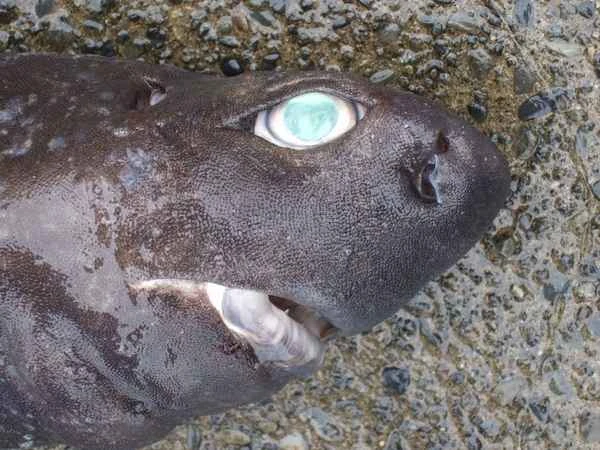
The Earth's deep oceans remain the last frontier yet to be fully explored. In this dark depths, scientists continue to discover bizarre creatures unlike any found on land. Among them is the Kitefin Shark , recently recognized as the largest known bioluminescent vertebrate .
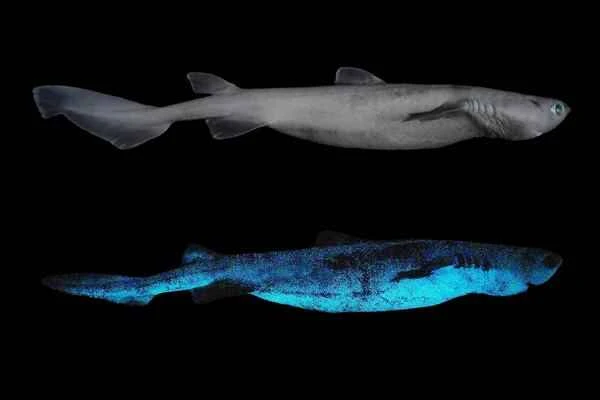
The unique features of the camelfin shark
The camelfin shark (scientific name: *Dalatias licha* ) is awe-inspiring not only for its enormous size but also for its extraordinary ability—it can emit light . This biological characteristic, called bioluminescence , allows the camelfin shark to produce its own light in the dark ocean. Specialized cells within its body— photocells —can emit light through chemical reactions; these photocells contain proteins that release light under specific conditions.
While many deep-sea fish, jellyfish, and other marine creatures can also bioluminesce, the bioluminescence of the camelfin shark is a very rare and remarkable characteristic of vertebrates. Its bioluminescence helps it survive in the dark environment of the deep sea.
Size and Habitat
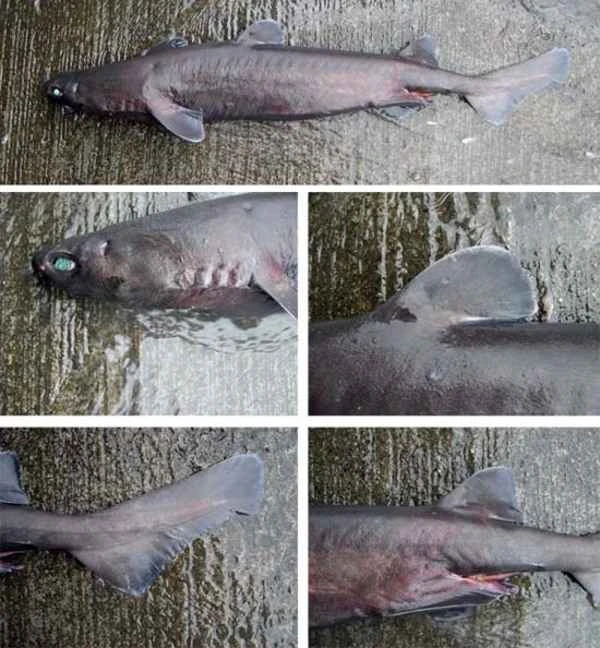
The camelfin shark is the largest known bioluminescent vertebrate , reaching lengths of up to 2 meters (approximately 6.6 feet) . This is significantly larger than many other bioluminescent animals, such as small fish and invertebrates. Despite this, the camelfin shark is highly elusive, typically inhabiting the mid-deep sea zone (depths ranging from approximately 200 to 1000 meters), often referred to as the "twilight zone" because sunlight cannot penetrate to this depth, creating a dark and mysterious environment.
In these dark waters, the camelfin shark may use its bioluminescence to attract small fish or other prey. Furthermore, scientists believe its bioluminescence may also serve as a defense mechanism , protecting itself by confusing potential predators or competitors.
The significance of this discovery
The discovery that the camelfin shark is the largest bioluminescent vertebrate has given us a deeper understanding of deep-sea life. While many bioluminescent species live in the deep ocean, the camelfin shark's bioluminescence is particularly remarkable because it is a vertebrate —an animal with a vertebral column.
Previously, the largest bioluminescent vertebrates were generally considered to be small species such as lanternfish , but the camelfin shark's size shattered this perception. This discovery not only demonstrates the adaptability of marine life but also reminds us that the mysterious world of the deep sea remains full of unknowns, waiting for us to explore and reveal them.
The scientific principles of bioluminescence
Bioluminescence is the phenomenon of light being produced when certain chemicals react with oxygen. The color of this light can be blue, green, or even red, depending on the species and its habitat. For camelfin sharks, bioluminescence can have multiple uses, including attracting prey, communicating with other sharks, or confusing enemies. Their bioluminescence is usually regular and can be controlled by adjusting the frequency of the flashing light to achieve different purposes.
The wondrous world of the deep sea
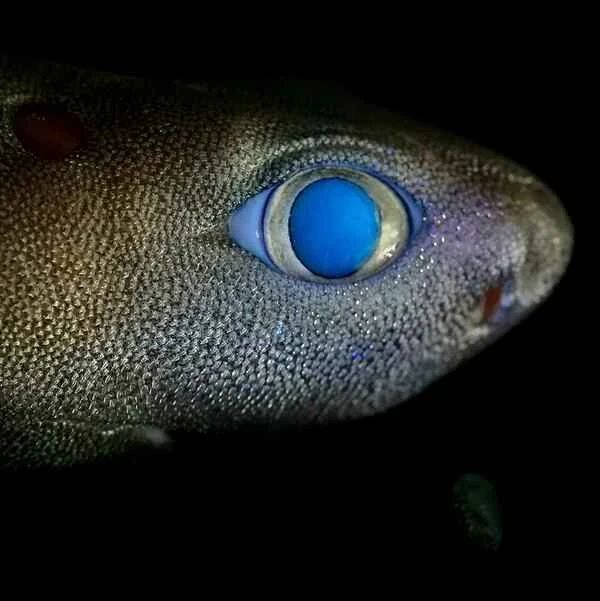
The bioluminescence of the camelfin shark is just one of many adaptations that allow it to survive in the extreme deep-sea environment. The ocean depths are vast, dark, and not yet fully explored, but as our understanding of these mysterious environments deepens, we discover that life can still thrive under the harshest conditions.
The bioluminescent properties of the camelfin shark remind us that many unknown creatures lurk in the deep sea, possessing a variety of survival skills and the ability to find their way in the dark. As scientists delve deeper into the study of these creatures, we may uncover more mysteries of the deep sea, secrets that could transform our understanding of biology, evolution, and survival in extreme environments.
The bioluminescence of the camel fin shark is a magnificent testament to the wisdom of nature. As the largest known bioluminescent vertebrate, this shark proves that amazing creatures can be found even in the darkest and most unexplored regions of the earth. From its shimmering body to its deep-sea lifestyle, the camel fin shark is undoubtedly yet another example of nature's wonder, reminding us that countless breathtaking discoveries still await our exploration in the deep sea.
And those bioluminescent vertebrates: wondrous creatures of the deep sea.
Bioluminescence is an amazing phenomenon in nature, where certain organisms can produce light. Many people might think of fireflies or jellyfish when they think of bioluminescence, but in fact, some vertebrates , including fish and amphibians, also possess this remarkable ability. These bioluminescent vertebrates live in the deep ocean, where there is no sunlight, and they use their bioluminescence to attract prey, communicate, camouflage, and protect themselves. This article will introduce some other well-known bioluminescent vertebrates besides the camelfin shark .
1. Lanternfish (Myctophidae)
Lanternfish are among the most well-known bioluminescent vertebrates . They are small, live in the deep sea, and possess bioluminescent organs called photopsias on their bodies. Lanternfish primarily use bioluminescence to attract prey and communicate . They inhabit the twilight zone (mesosphere) of the ocean, at depths of approximately 200 to 1000 meters. In this area, their bioluminescence helps them blend into the faint light above the surface, making them much harder for predators to spot.
2. Cookie shark (Isistius brasiliensis)
Cookie sharks are small deep-sea sharks with the ability to glow. These sharks have bioluminescent organs on their bellies and undersides, likely used for camouflage to help them survive in the dark depths. By mimicking the faint light overhead, they can avoid detection by predators and hunt at night.
Cookie sharks are known for their unique feeding behavior, where they bite circular, "cookie-like" wounds into large animals such as whales, dolphins, and even other sharks. Bioluminescence may help them feed more safely at night without being detected by predators.
3. Glass Frog (Centrolenidae)
Glass frogs, found in Central and South America, are another amazing group of bioluminescent vertebrates. While not as well-known as deep-sea fish, some glass frog species display bioluminescent organs on their abdomens, which may be used for communication or courtship displays . The bioluminescence in these frogs is relatively faint and is generally considered a social or reproductive adaptation.
4. Transparent-headed fish (Macrouridae)
The transparent-headed fish is a peculiar deep-sea fish with a transparent head and large, round eyes. While not as widely known as other deep-sea fish, it can emit a faint glow under certain conditions. Although the exact purpose of this light is not fully understood, researchers believe it may be used to attract prey or for communication . These fish live in waters 600 meters and deeper, where bioluminescence is crucial for their survival in near-total darkness.
5. Sawfin fish (Argyropelecus)
Sawfin fish are deep-sea fish with flattened bodies and sharp dorsal fins. These fish possess photophores on their bellies, allowing them to emit light for reflective camouflage . By emitting light from their bellies, sawfin fish reduce their chances of being detected by predators in the deep sea. This bioluminescence helps them survive and forage in the dark environment of the deep ocean.
Sawfin fish typically inhabit the twilight zone of the ocean at depths of 200 to 1000 meters. They rely on bioluminescence to avoid being detected by predators and to find food.
6. Bearded Sea Devil (Melanocetus johnsonii)
The bearded sea devil , also known as the Johnson's dogfish , is a bioluminescent predator. It possesses a glowing lure on its head to attract prey. This luminous appendage, suspended like a fishing rod, lures approaching prey into the shark's gaping maw. For the bearded sea devil, living in the dark depths of the ocean, this bioluminescent lure is a crucial tool for hunting.
7. Pacific Black Arowana (Idiacanthus antrostomus)
The Pacific black dragonfish is a deep-sea fish with bioluminescent capabilities. It is one of the few vertebrates capable of actively hunting using bioluminescence. Black dragonfish possess photophores that they use to confuse prey, attract mates, or evade predators. They live in deep-sea areas between 200 and 1000 meters deep, primarily feeding on small fish and squid.
8. Pinecone fish (Monocentris japonica)
Pinecone fish are deep-sea fish that live in the Pacific Ocean. They have a series of photophores on their bodies, which are presumably used to attract prey or communicate with other fish. Although the bioluminescence of pinecone fish is not as intense as that of some other deep-sea species, it is still an interesting example of bioluminescent vertebrates.
The discovery of bioluminescent vertebrates like the camelfin shark has given us a deeper understanding of the amazing creatures of the deep sea. From small lanternfish to predatory bearded sea devils, these bioluminescent organisms demonstrate how life can survive in the dark ocean by emitting light. Bioluminescence is not only used to attract prey, communicate, or for camouflage; many deep-sea species also use it as a tool for hunting and protection. As we delve deeper into the deep sea, it is clear that there are still many more secrets and wonders in the bioluminescent world waiting to be discovered.
Why do some animals glow in the dark? The scientific principles behind bioluminescence.
Bioluminescence is the phenomenon of organisms producing and emitting light. While this phenomenon may sound like science fiction, it is actually a naturally occurring feature in many species, particularly deep-sea creatures, fungi, and certain insects. So, why do some animals glow in the dark? This article will explore the science behind bioluminescence and explain why animals living in dark environments, especially those in the deep sea, have evolved this remarkable ability.
1. The chemical principle of bioluminescence
Bioluminescence is produced through a chemical reaction within an animal's body. This reaction involves two key components:
Luciferin : A luminescent molecule that reacts with oxygen.
Luciferase : an enzyme that catalyzes reactions.
When luciferin reacts with oxygen, it produces light under the action of luciferase. This process is highly efficient, meaning that almost all the energy is converted into light, with almost no heat generated (this phenomenon is called "cold light"). The color of the emitted light varies depending on the species and the type of luciferin, and is typically blue, green, or red.
2. Why do animals glow?
The purposes of bioluminescence vary depending on the species, but they are generally related to survival. The ability to glow in the dark provides a significant advantage to organisms, especially those living in light-scarce environments such as the deep sea, caves, or dense forests. Here are some of the main reasons why animals glow:
A. Disguise and concealment
One of the most common uses of bioluminescence is camouflage . Many animals living in deep-sea environments use their bioluminescence to blend in with the faint light coming down from the water's surface, helping them avoid detection by predators.
Albedo camouflage : Some deep-sea creatures, such as lanternfish and bladefish, use bioluminescence to blend with the faint light above them. This technique, known as albedo camouflage, helps these fish avoid being seen by predators below by emitting light from their bottom that blends with the surrounding light, thus achieving a concealed effect.
B. Attracting prey
Many predatory animals use bioluminescence to attract prey , especially in deep-sea environments where prey may not be able to detect the approach of a predator in the dark.
Anglerfish : The most famous example of an Anglerfish is the bioluminescent lure on its head, a luminescent substance that attracts small fish and invertebrates, helping it to capture prey. Bioluminescent lures are a typical example of bioluminescence used to attract prey .
Lanternfish and Cookie Shark : Some fish, such as lanternfish, attract prey by using their bioluminescent bodies and exploit the prey's curiosity to catch them.
C. Communication and Interaction
In some species, bioluminescence is used as a form of communication . Especially for species living in large groups or communities, bioluminescence plays a crucial role in social interaction.
Fireflies : Fireflies are among the most well-known bioluminescent insects. Male fireflies attract females through their bioluminescent patterns; the flashing rhythm is unique to each species, which helps fireflies find mates in dark environments.
Fish and squid : In the deep sea, some fish and squid use bioluminescence to communicate with other individuals of the same species, usually for reproduction or social interaction.
D. Defense mechanisms
Some animals use bioluminescence as a defense mechanism , using the light to confuse or scare away predators, thus gaining an opportunity to escape.
Jellyfish : Some jellyfish species, such as the comb jellyfish, emit light when stimulated. This may be a fright defense , confusing or deterring predators from attacking by glowing.
Squid and Cuttlefish : Some squid species can spray a luminous liquid to distract predators, thus creating an opportunity to escape. This defense mechanism is similar to a cloud of ink, but with the added benefit of luminescence.
E. Courtship and Reproduction
In some species, bioluminescence is associated with reproduction . Animals may use bioluminescence to signal to potential mates or to attract mates of the same species.
Angel fish (mentioned again) : Female angel fish are larger than males and may use bioluminescence to signal their presence or fertility. Male angel fish are smaller and rely on bioluminescence to find females.
3. Bioluminescent animal habitats
Most bioluminescent animals live in the deep sea , where sunlight cannot reach them. They typically inhabit the twilight zones (200-1000 meters deep) and dark zones (below 1000 meters) , areas with almost no light source. However, bioluminescence is not limited to the ocean:
Bioluminescence in terrestrial organisms : While most bioluminescent organisms live in water, a few terrestrial organisms can also emit light, such as fireflies, certain fungi, and some bioluminescent mushrooms (such as "foxfire" or "fairy fire").
Cave environments : In dark cave systems, some fish and amphibians also use bioluminescence as a survival strategy.
4. Why did bioluminescence evolve?
The evolution of bioluminescence may be a way for animals to adapt to their environment. In certain habitats, especially the deep sea, light is scarce, so animals that can emit their own light have a greater advantage for survival. Whether used to attract prey, escape predators, or communicate, bioluminescence provides these animals with tools for survival.
Bioluminescence is a remarkable adaptation in many animals, enabling them to survive and reproduce in environments with almost no sunlight. From the deep sea to dark caves, these bioluminescent organisms showcase the wonders of nature. Bioluminescence is not only used for camouflage, communication, attracting prey, and self-protection, but it may also play a crucial role in reproduction. As our exploration of deep-sea and cave ecosystems deepens, the mysteries and wonders of bioluminescence continue to await discovery. It is a magnificent display of nature and a breathtaking example of life's adaptation and evolution.