Cygnus is an important genus in the family Anatidae of the order Anseriformes. These elegant birds are called swans or white swans, and are commonly known as "swans". Swans are closely related to geese and ducks, and are classified in the subfamily Anseriae along with their closely related geese.
Swans typically remain together for life after pairing, forming a rare example of unwavering loyalty in the animal kingdom. However, occasional "divorce" does occur, especially after reproductive failure. If a mate dies, a swan will often seek a new partner. During each breeding season, swans lay between 2 and 10 eggs.

Swans are renowned for their graceful forms, melodious calls, and loyal behavior. They have a long cultural history throughout Eurasia, reflected in both Eastern and Western cultures. Swans are considered symbols of purity, loyalty, and nobility, a consensus shared across different cultures. But do you know which swan species is the most beautiful? Today, we've brought you 10 of the world's most beautiful swan species, including: the Mute Swan, the New Zealand Black Swan, the Nominate Subspecies of the Black Swan, the Whooper Swan, the Black-necked Swan, the Black-billed Swan, and the Ussuri Bewick's Swan. Let's take a look!
1. Mute Swan
The Mute Swan has a wide distribution, with large numbers found in Europe and smaller numbers in Asia. It is the national bird of Sweden. In Asia, the Mute Swan population is small, and wild populations are very rare. The Mute Swan is listed as Least Concern in the IUCN Red List, primarily based on its status in continental Europe. In China, it is a Class II protected animal .
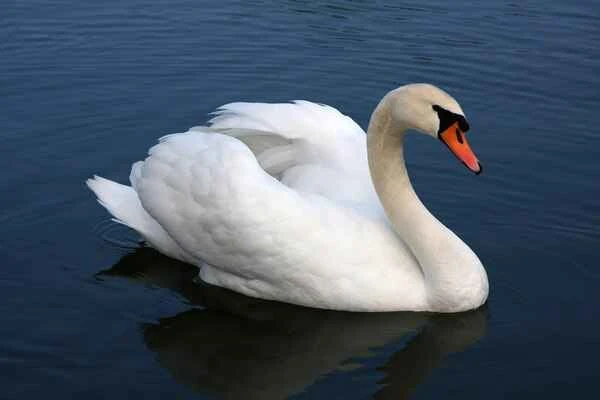
The Mute Swan has consistently been a prominent figure in rankings of the most beautiful swan species. It also goes by many other names, including the Mute Swan, the Silent Swan, the Red-billed Swan, the Tufted Swan, the Bright Swan, and the Red-billed Swan. This species shines with a unique brilliance amidst its various names, and is hailed as one of the most elegant birds, imbued with the rich fairytale charm of Annes Tarkov.
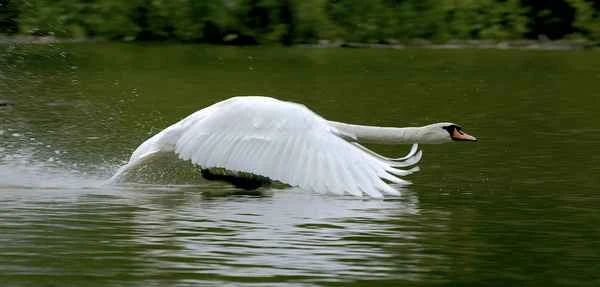
The mute swan has snow-white plumage and a long, slender neck that curves gracefully in an S-shape when swimming, displaying ultimate elegance. It gets its name from the prominent wart-like protuberance on its forehead. Legend has it that the ballet "Swan Lake" was inspired by the mute swan's graceful movements; this elegant dance and the mute swan's form are perfectly integrated, adding a legendary touch to this agile swan species. According to legend, the mute swan cannot sing, but it will sing a beautiful song before it dies, known as its "swan song."
2. Black Swan (New Zealand species)
Black swans are distributed in Heilongjiang, Jilin, Liaoning, Xinjiang, and the central and southeastern coastal areas of China, as well as in Australia and New Zealand and their nearby islands; they inhabit lakes, reservoirs, and marshes.
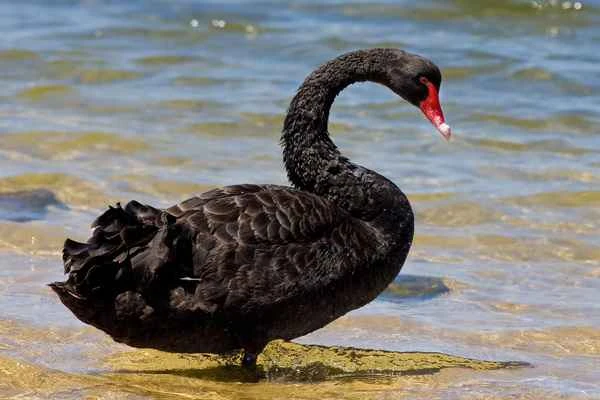
Black swans are widely recognized as one of the most beautiful swan species. Their distinctive feature is that, except for a small portion of their primary flight feathers which are white, the rest of their plumage is glossy black, hence their name. Black swans possess red beaks and black feathers, with their entire body covered in curled feathers that shimmer with spots, creating a visually striking appearance and making them highly prized for their beauty. These swans boast the longest and most beautiful necks of their species, typically arched in an S-shape or held upright, showcasing graceful and elegant lines. Their jet-black plumage and bright red beak create a striking contrast with white swans, making black swans more approachable than mute swans.
3. Black Swan Nominate Subspecies
The New Zealand black swan primarily breeds in the southeastern and southwestern regions of the Australian continent. Within the Australian continent, black swans lead a migratory lifestyle , with migration patterns varying depending on climatic conditions.
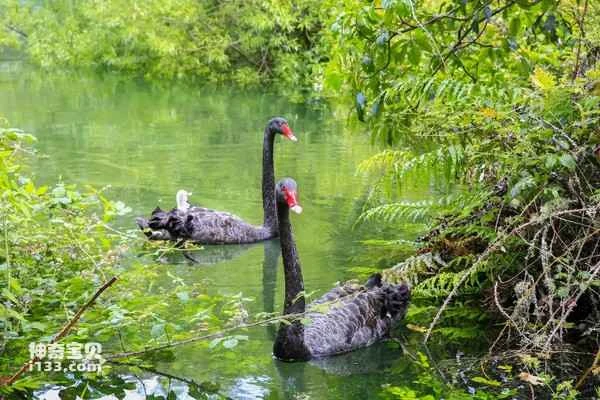
There are two subspecies of black swans: the New Zealand subspecies and the nominate subspecies. They range in length from 80 to 120 centimeters and weigh approximately 6 to 8 kilograms. These black swans have curly plumage, primarily blackish-grey or blackish-brown, with a greyish-white belly and white flight feathers. Their bills are red or orange-red with a white bar near the tip. The iris may be red or white, while the tarsi and webbed feet are black. Compared to the New Zealand subspecies, the nominate subspecies has a thicker bill.
It wasn't until the late 17th century that people began to understand black swans, and thus the term "black swan event" came to refer to events that were completely beyond experience and unpredictable. This imagery stemmed from the perception of the mystery and rarity of black swans, which symbolized unpredictability and the unexpected.
4. Whooper swan
Whooper swans are mainly distributed in China and Siberia, Russia. It can also be found in Huanggang, Xianning, Huangshi, Ezhou, Xiaogan, Wuhan, and Xiantao in China, and is the national bird of Finland. It is listed as a Class II protected wild animal in China's "National Key Protected Wild Animals List".
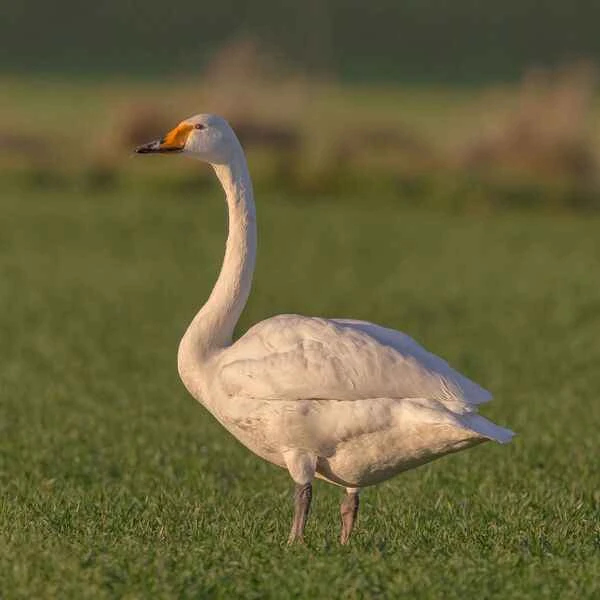
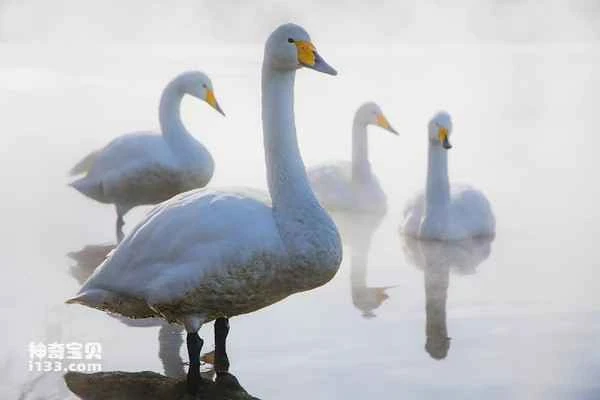
The Whooper Swan is considered one of the most beautiful swan species, with flawless, pure white plumage. Males and females are identical in color, although females are slightly smaller than males. Their overall appearance is identical, with pure white feathers except for a slight tinge of pale brownish-yellow on the head. Their irises are dark brown, their beaks are black, and the base of the upper beak is yellow, extending to both sides of the beak base to form a distinctive trumpet shape. The Whooper Swan is one of the world's most richly feathered birds and the second highest-flying bird, capable of migrating over Mount Everest, reaching altitudes exceeding 9,000 meters. Due to its enormous size, pure white plumage, and graceful swimming style, the Whooper Swan's beauty once made it a target of rampant hunting.

The most distinctive feature of this species is its beak. The beak of the Whooper Swan is composed of black and yellow, with the yellow area located at the base of the beak. Compared to the Bewick's Swan, the yellow area on the Whooper Swan's beak is larger, extending beyond the nostrils.
5. Black-necked swan
Black-necked swans are mainly distributed in Brazil and Argentina in South America and are the largest native geese and ducks in South America. Some zoos in China exhibit them. Due to their elegant and beautiful appearance, they are very popular and have a close relationship with visitors in parks; they will swim to people's side whenever they are fed.
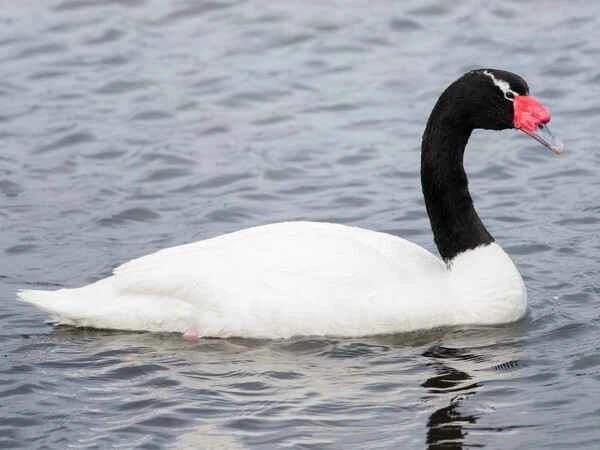
Black-necked swans are renowned for their monogamous nature, remaining mates for life. As one of the ten largest swan species, they are among the smallest swans in the world. While their plumage is snow-white, like that of the whooper swan, the black-necked swan's head and neck are black, making them distinctive and unique. They also possess a large, prominent, bright red corona on their forehead, known as a wart.
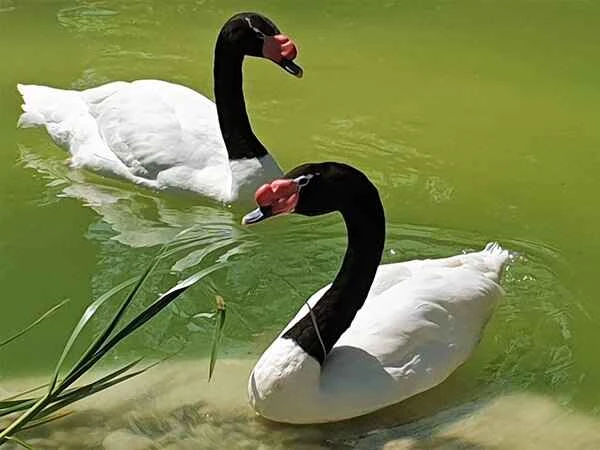
Black-necked swans are beloved for their elegant and charming appearance. However, it's important to note that they are world-renowned rare and prized ornamental birds, and not well-suited for keeping as pets.
6. Black-billed Swan
Black-billed swans are found in Alaska and western Canada, and migrate to the southern coast of Alaska during the winter.
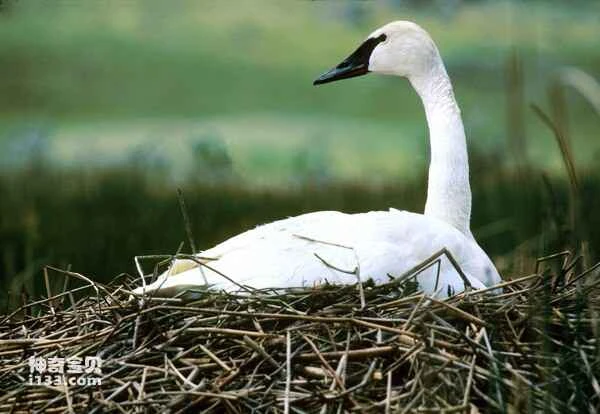
The Black-billed Swan is considered one of the most captivating swan species and one of the largest native birds in North America. Not only are they among the largest waterfowl on Earth in terms of weight, but they are also remarkably magnificent. Their entire body is covered in pure white feathers, while their bill is black, a striking contrast that makes them even more striking. The Black-billed Swan has an exceptionally long neck, which, when swimming, is typically held vertically upwards, with the head extended forward and wings close to the sides of the body. The forequarters are mostly submerged, while the hindquarters are relatively less submerged, making the prominent hump on their back particularly noticeable when viewed from the side. Their swimming is light and slow, requiring frequent splashing and running on the water for a distance before successfully taking off.
7. Bewick's Swan Ussuri
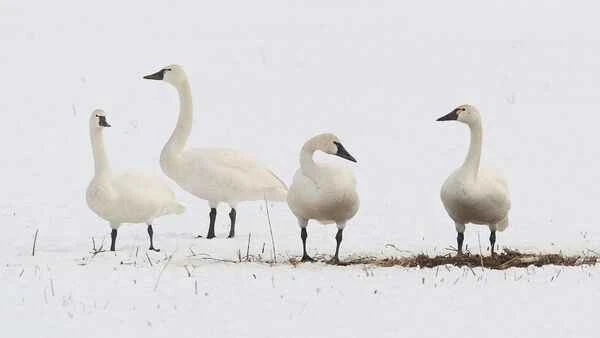
The Bewick's swan breeds in Northern Europe and the far north of Asia, and winters in Europe , Central Asia , the southeastern coast of the Yangtze River basin in China, and Japan ; during migration, it can be seen in Northeast China , Xinjiang , and northern Inner Mongolia. It is listed as a Class II protected animal in China's "National Key Protected Wild Animals List".
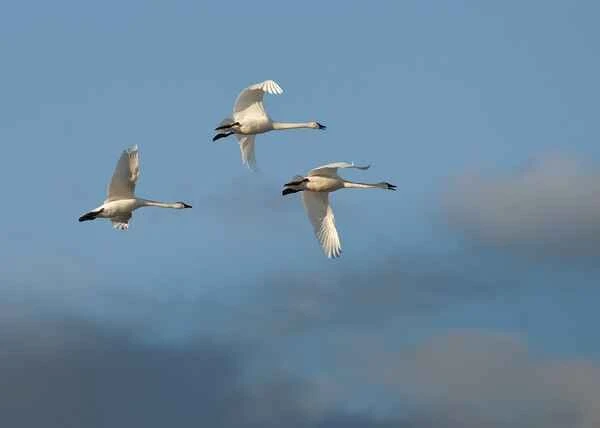
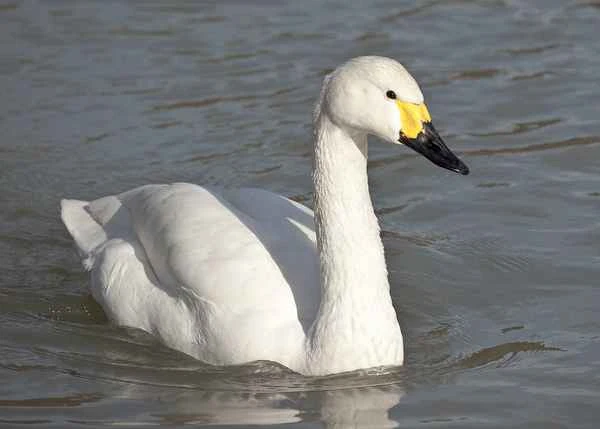
The Bewick's Swan, also known as the Ussuri swan, is a species of swan that closely resembles the Whooper Swan in appearance, but is significantly smaller. Their necks and bills are relatively shorter than those of the Whooper Swan. The black patch on their bill is larger, while the yellow patch is smaller and limited to the sides of the bill base, not extending below the nostrils. Males and females are similar in appearance, with females being slightly smaller. Adults have pure white plumage, except for a slight brownish-yellow tinge from the crown to the nape. Outside of the breeding season, they often live in small groups or family flocks, and sometimes mix with Whooper Swans.
8. Biyik Swan
The Byuik swan is mainly distributed in the Arctic tundra region of northern Russia, Denmark, France and the British Isles in northern Europe, and will migrate further south to spend the winter.

The Byui Swan is widely recognized as one of the most enchanting swan species, its snow-white plumage exuding elegance. Every summer, these graceful Byui Swans breed in the Arctic tundra of northern Russia. In autumn, flocks of Byui Swans migrate south to escape the harsh Arctic winter. Their migration routes extend as far as Northern Europe, China, and Japan. The Byui Swan's migration distances are among the longest of all swan species, with each migration route stretching up to 7,000 kilometers. Newly hatched Byui Swans have grey plumage, which transforms into snow-white as adults, showcasing purity and grace.
9. The nominate subspecies of the Bewick's swan
Adult Bewick's swans are covered in snow-white feathers, except for a slight light brownish-yellow tinge on their heads and napes. Males and females are similar in appearance, with females being slightly smaller. Their irises are brown, their bills are blackish-grey, and the yellow spots on either side of the base of the upper beak extend forward to near the nostrils. Their tarsi, webs, and claws are all black. The graceful appearance of the Bewick's swan is widely admired, making it a star among ornamental birds.
In comparison, the Snow Goose and the Bewick's Swan share some physical similarities, both being covered in pure white feathers. However, the Snow Goose is smaller, has a bright red bill without black spots, black primary flight feathers, a black tail when standing, and black wingtips when flying. These characteristics clearly distinguish it from the Bewick's Swan. The Bewick's Swan has three subspecies, showcasing its diversity and richness.
10. Flat-billed swan
The flat-billed goose is distributed throughout South America, from southern Chile and central Argentina to Tierra del Fuego and the Falkland Islands. In winter, they migrate north to central Chile, northern Argentina, Uruguay, and southeastern Brazil.
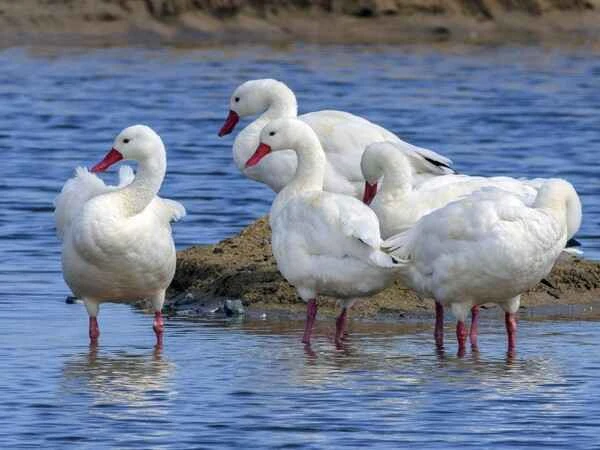
The distribution range of the Common Swan is similar to that of the Black-necked Swan, while its plumage is similar to that of northern swans, presenting a pure white appearance. However, compared to the Black-necked Swan, the Common Swan is smaller in size, with a body length of approximately 90 to 115 cm, a wingspan of 42.7 to 48 cm, and a weight between 3800 and 4600 grams. Its bill is approximately 6.3 to 6.8 cm long, and its tarsus is approximately 9.2 to 9.4 cm long.
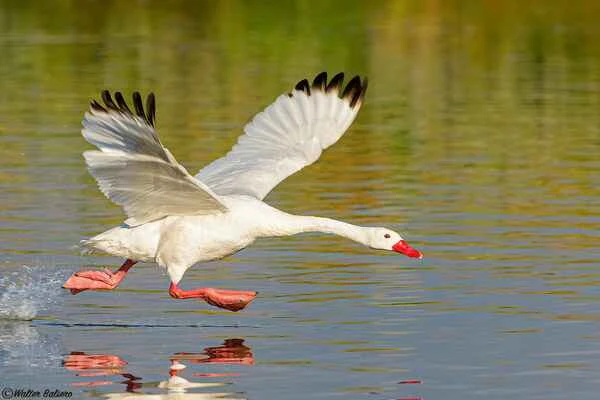
The flat-billed swan has pure white plumage, while the tip of its sixth primary flight feather is black. Because this part is located close to the wings, it is difficult to observe normally, but becomes very noticeable in flight. Its bill and feet are red, and its overall appearance is more similar to a goose than a traditional swan. It does not have the black cheeks characteristic of swans, and the appearance of males and females is similar.