鳖 (biē) is a general term for soft-shelled turtles belonging to the family Trionychidae, suborder Trionychidae within the order Testudines. Common Chinese names include 甲鱼 (jiǎyú), 团鱼 (tuányú), 水鱼 (shuǐyú), 泥龟 (níguī), and 王八 (wángbā). The origins of turtles can be traced back to the Late Jurassic period, approximately 150 million years ago. They first appeared in Asia and expanded to North America and Africa around 60 million years ago during the Middle Paleocene. They typically inhabit freshwater environments such as rivers, ponds, and rice paddies. Currently, there are about 30 species in the family Trionychidae, some of which are among the largest living freshwater turtles. The main turtle species in China include the Chinese soft-shelled turtle (Sinapis alba), the mountain soft-shelled turtle (Trionyx sinensis), and the spotted soft-shelled turtle (Spotted soft-shelled turtle), with the Chinese soft-shelled turtle being the most common.
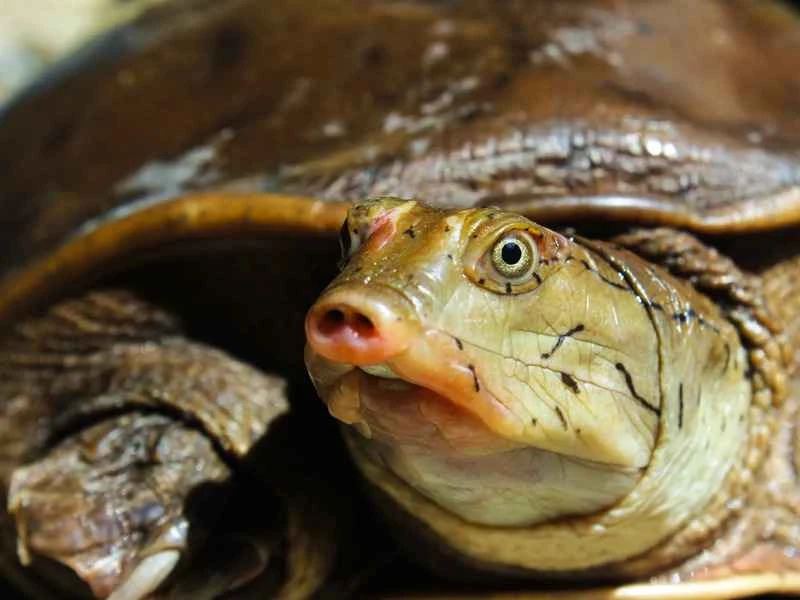
Soft- shelled turtles are often consumed as a tonic due to their delicious flavor and high nutritional value, and some species are now endangered. So, what are some of the most valuable soft-shelled turtles in the world? Common soft-shelled turtles include the Chinese soft-shelled turtle, the Yangtze giant soft-shelled turtle, the pearl soft-shelled turtle, the mountain soft-shelled turtle, the Asian soft-shelled turtle, the Indian soft-shelled turtle, the Malayan soft-shelled turtle, the Burmese peacock soft-shelled turtle, the horned soft-shelled turtle, and the African three-clawed soft-shelled turtle. Next, we will introduce you to the world's top ten soft-shelled turtles and explore more well-known soft-shelled turtle species and their characteristics.
1. Chinese soft-shelled turtle (a relatively common farmed turtle species)
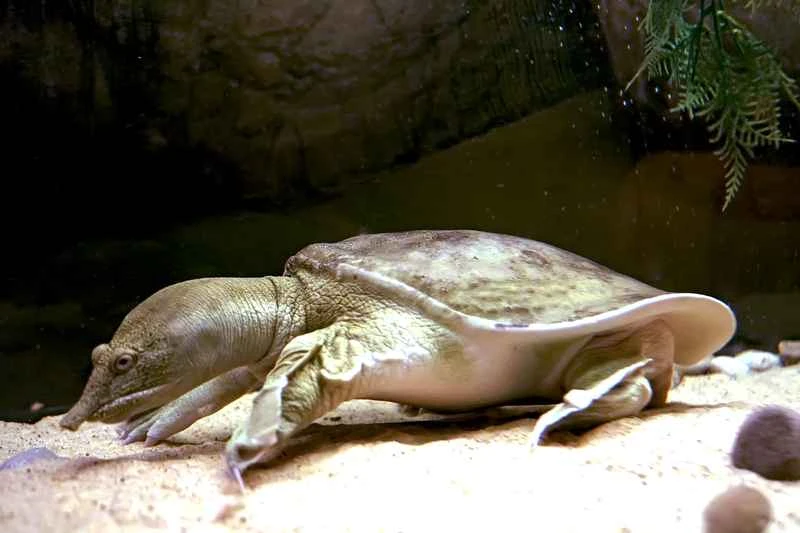
In China, common soft-shelled turtles include the Chinese soft-shelled turtle (Trionyx sinensis), also known as water turtle, soft-shelled turtle, or round turtle, belonging to the family Trionychidae in the order Testudines. The Chinese soft-shelled turtle is one of the most commonly farmed turtle species, widely distributed in China, Japan, northern Vietnam, South Korea, and eastern Russia. In my country, it is widely distributed, found in all provinces except Xinjiang, Tibet, and Qinghai, with particularly high yields in Hunan, Hubei, Jiangxi, Anhui, and Jiangsu provinces.
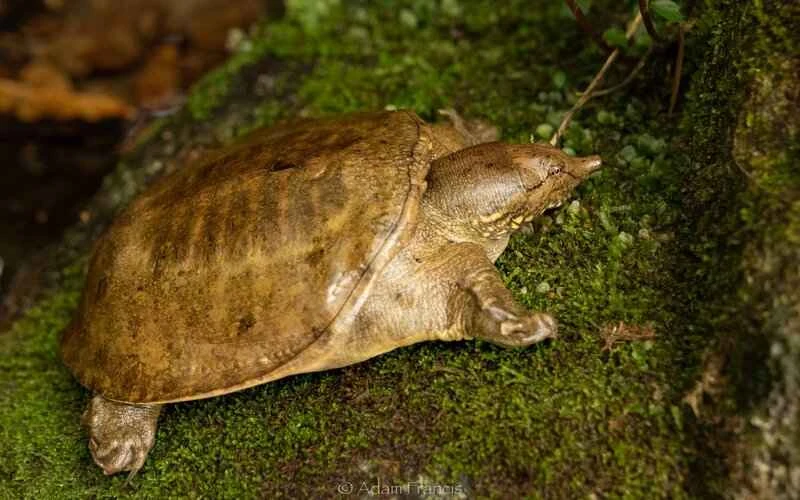
The Chinese softshell turtle primarily inhabits freshwater areas with sandy or muddy bottoms and enjoys basking in the sun on land. Their diet consists mainly of fish, shrimp, and mollusks, and they are typically nocturnal. The Chinese softshell turtle reaches a length of approximately 30 centimeters and can live for over 60 years.
2. Yangtze giant softshell turtle (critically endangered/known as the "giant panda of the water")
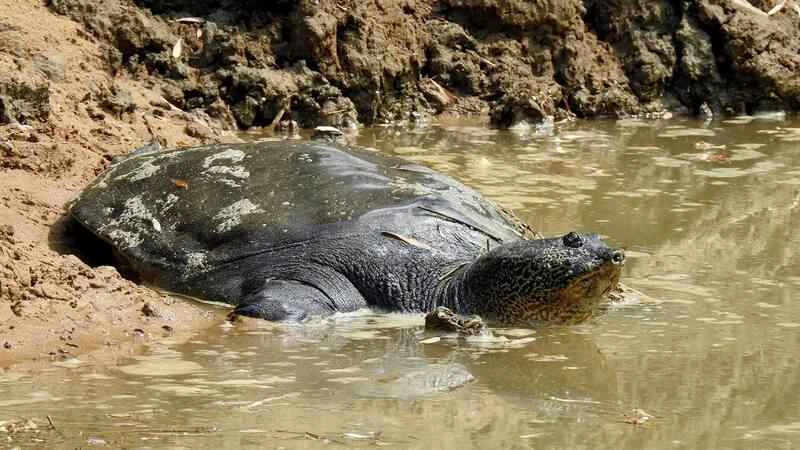
The Yangtze giant softshell turtle (Rafetus spp.) is a Class I protected animal in China, extremely rare, and arguably the most endangered species among turtles and tortoises. Currently, only three individuals are known to exist worldwide. They primarily inhabit the bottom of rivers, lakes, and marshes, feeding on aquatic animals. The Yangtze giant softshell turtle has a carapace length of approximately 36-57 centimeters and can weigh over 100 kilograms, making it the largest freshwater turtle in the world.
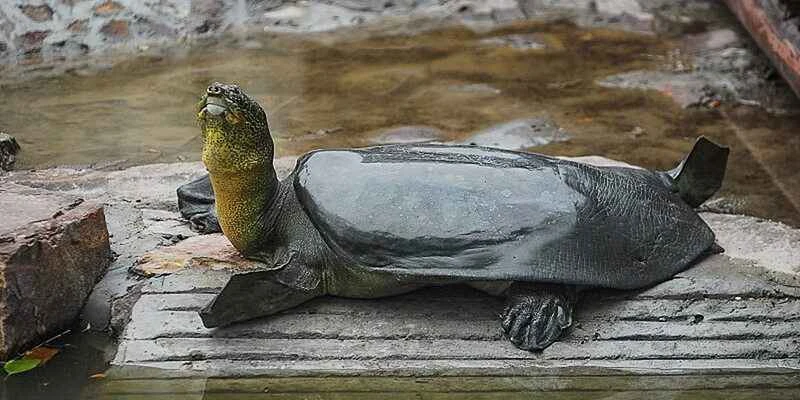
The Yangtze giant softshell turtle's carapace is almost as wide as long, nearly circular in shape, with a flattened body and a slightly raised back. The skin on its back is smooth and glossy, while the back of its head, neck, and limbs is dark green with irregular yellow spots. These dense yellow spots are a distinctive feature of the Yangtze giant softshell turtle.
3. Pearl softshell turtle (a type of softshell turtle native to the United States)
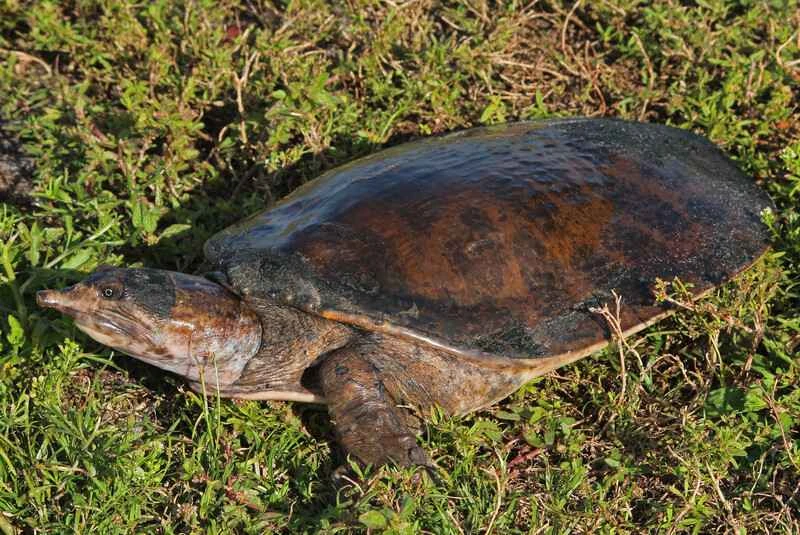
The Florida softshell turtle, commonly known as the Florida softshell turtle (scientific name: *Apalone ferox*), belongs to the family Trionychidae and the genus *Apalone*. This species is native to the United States, but has been introduced to Guangdong and Guangxi provinces in my country. They inhabit freshwater environments such as lakes and rivers. The Florida softshell turtle is a common large species; females can reach over 12 kg, and males can reach over 5 kg.
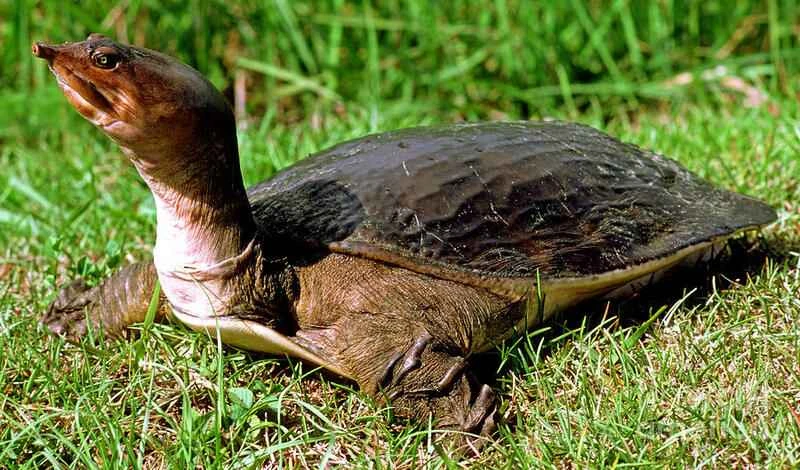
The pearl softshell turtle has an oval body shape, a smooth surface, a relatively long nasal tube, and a thick, wide skirt. Its carapace is dark green and covered with diffuse black spots, with symmetrical dotted warts along the anterior and posterior edges. The plastron is white, and the toes of its limbs have well-developed webbing. Male turtles are smaller, with a flattened body and a thicker tail; female turtles are larger, more robust, and have a shorter tail.
4. Mountain softshell turtle (a precious and rare turtle species found in the southern mountainous areas)
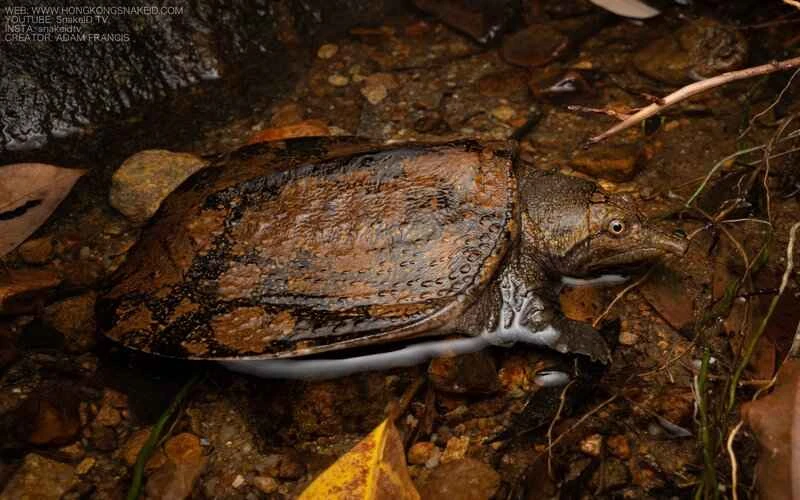
The Chinese softshell turtle (scientific name: *Palea steindachneri *) belongs to the family Trionychidae and the genus *Palea*. It is an animal that resembles the common softshell turtle, the Chinese softshell turtle. It is slightly larger and more stout, with a round body. Native to China and Vietnam, the Chinese softshell turtle has also been introduced to Mauritius and the Hawaiian Islands of the United States. They mainly inhabit rivers, streams, and ponds in mountainous areas, especially preferring clear, flowing mountain streams.
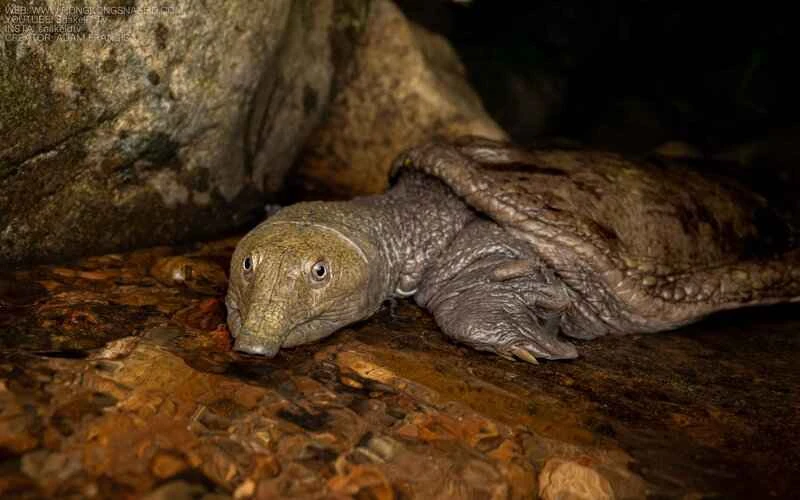
The Chinese softshell turtle has a round body and a conical head, typically black or dark green in color. Its snout protrudes, forming a tubular proboscis, and its skin is soft yet rough. It has a long neck with fleshy, bulging projections on both sides of the base and the front edge of the carapace, and a row of prominent granules along the anterior edge of the carapace. Its limbs are flat, with well-developed webbing between the toes. Males have a narrow, long tail, while females have a wide, short tail. The Chinese softshell turtle is listed as a Class II protected animal in China, and catching or selling wild Chinese softshell turtles without a permit is illegal.
5. Asian softshell turtle (one of the most common softshell turtles)
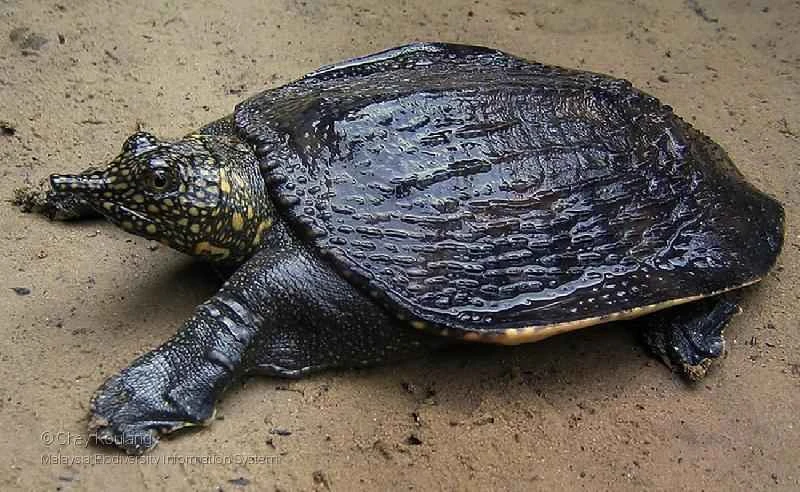
The Asian softshell turtle (scientific name: *Amyda cartilaginea *) is one of the most common turtle species, also known as the Indochina giant softshell turtle. It has a pig-like snout and can flip its head and neck over its back. Although its appearance suggests aggression, it is not actually highly aggressive. The Asian softshell turtle's carapace is round or oval, with the largest reaching 70 cm in length. Its carapace surface is usually grayish-green or olive-colored, occasionally with black spots or radiating stripes with yellow edges; these spots gradually disappear as it grows. The male's plastron is white, while the female's is gray.
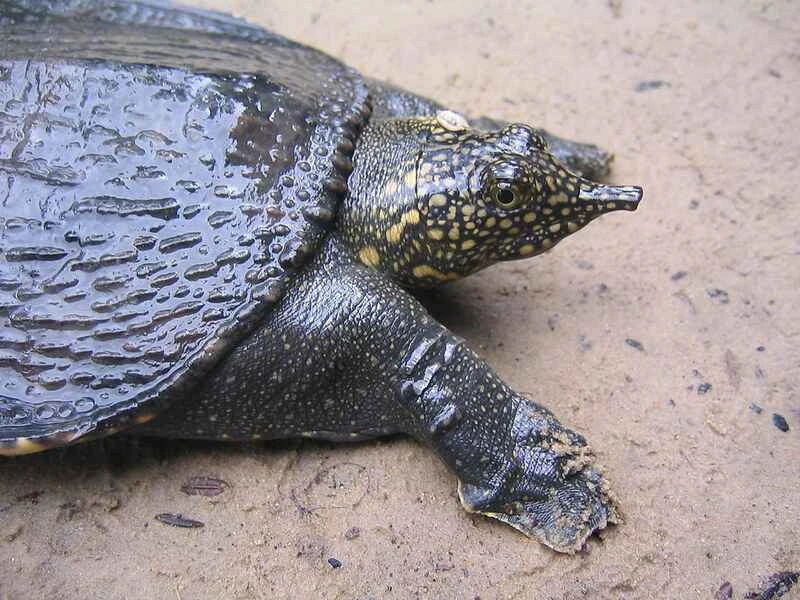
These turtles inhabit freshwater environments such as lakes, rivers, and ponds, and are omnivorous. They prefer to eat fish, insects, crabs, carrion, fruits, and amphibians. Asian softshell turtles are nocturnal, usually hiding during the day and active at night, preying on fish, frogs, small shrimp, and aquatic insects.
6. Indian softshell turtle
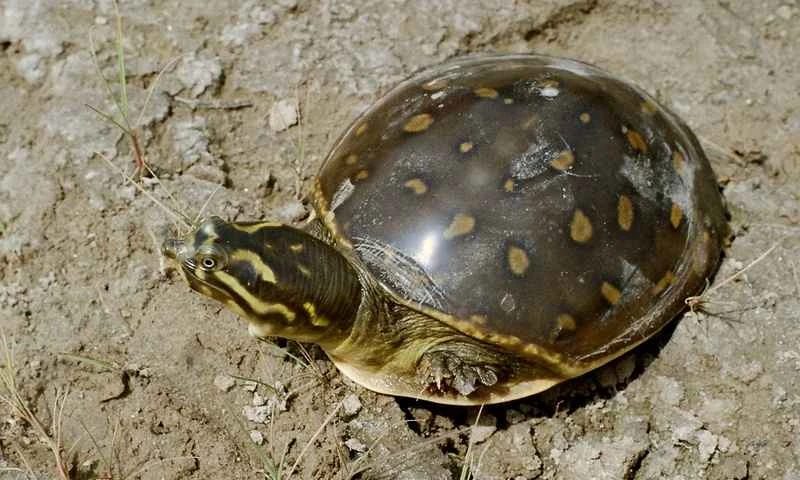
The Indian softshell turtle, also known as the marginal plate turtle or marginal plate tortoise, is characterized by its small head and extremely short, soft snout, which is less than half the diameter of its eye. It is mainly distributed in South Asia and is an oviparous amphibian. The Indian softshell turtle's carapace is oblong, covered with leathery skin, with smooth, wart-free edges and a very short skirt.
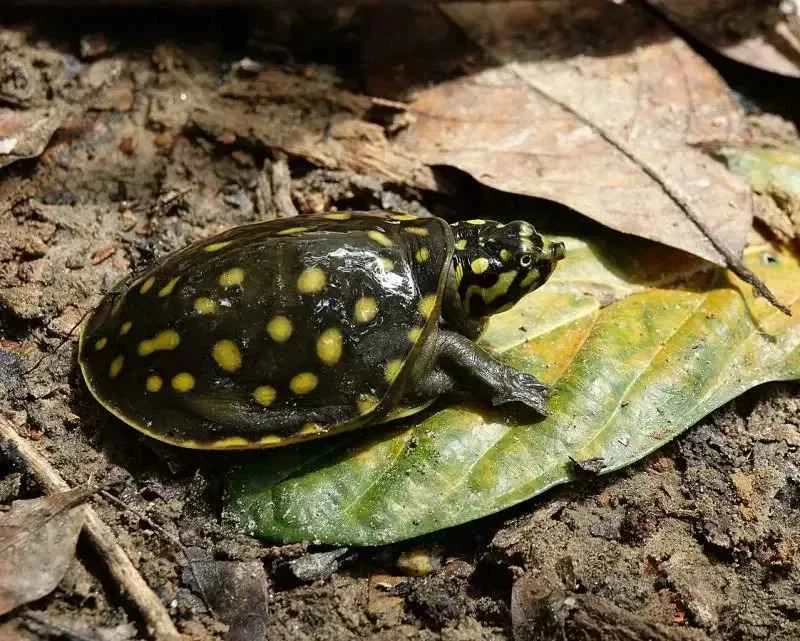
Its neck frill is movable and closes tightly with the anterior edge of the plastron; the plastron is flat with a semi-circular anterior edge. There is a pair of fan-shaped fleshy lobes on the inner side of the hind limb pouches; once the hind limbs are retracted into the shell, the plastron and carapace can close tightly. Each limb has three claws on the inner side, with abundant webbing between the fingers and toes. The tail is relatively short and generally olive-colored, while the plastron is creamy white or pale yellow.
7. Malayan softshell turtle
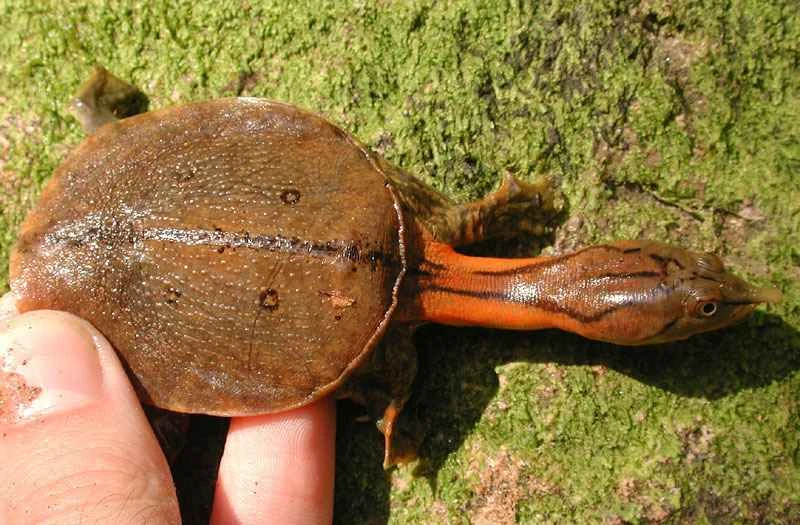
The Malayan softshell turtle is one of the world's top ten turtle species. Its carapace is covered by skin, which is dark olive or brown with a distinct dark black central stripe and two to three pairs of black eye spots. Although this pattern is very noticeable in juveniles, it gradually fades as they grow. The plastron is pale yellow or gray, and juveniles often have a large, slightly reddish spot behind their eyes, which disappears in adults.
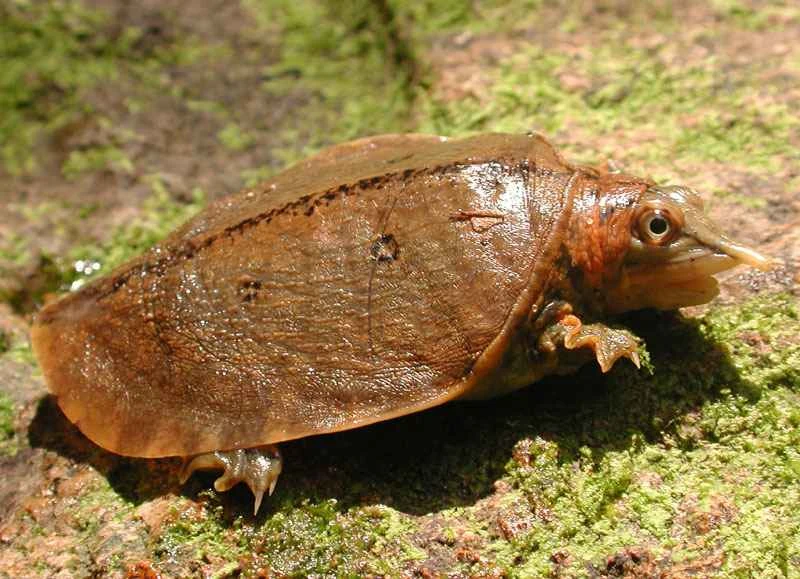
As they grow, adults develop hinged structures on their shells, which help them hide under large pebbles along stream banks. The Malayan softshell turtle is a species of turtle that inhabits high-altitude areas, primarily found in clear, rocky mountain streams. It's important to note that the Malayan softshell turtle has a very strong bite, so it must be handled with extreme care.
8. Burmese Peacock Softshell Turtle
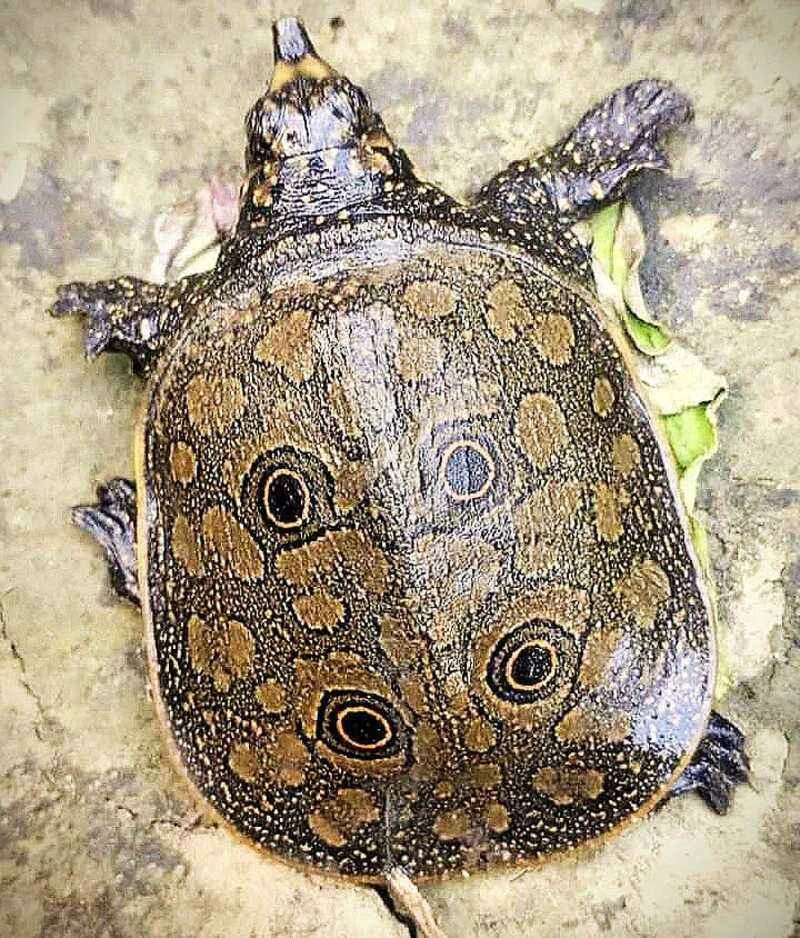
The Burmese peacock softshell turtle, scientifically known as *Nematocera nigricans*, is also called the Burmese peacock turtle. Its carapace is light green with prominent black spots, resembling the markings on a peacock's tail feathers, hence its name. This turtle has a round shell that can reach up to 65 centimeters in length, and its color ranges from olive gray to olive-blackish brown. It is mainly distributed in Southeast Asia and India.
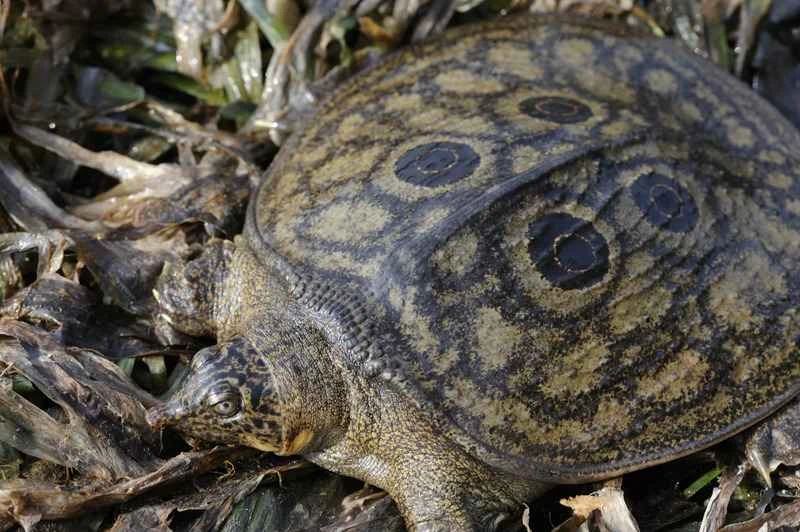
The Burmese peacock softshell turtle has three distinctive features: first, it has four circular black spots on its carapace; second, it has four calluses on its ventral scutes; and finally, it has a relatively short tail and a blunt, rounded posterior edge on its ventral scutes. As an introduced species, the Burmese peacock softshell turtle is widely used for farming and consumption in some regions.
9. Horned Softshell Turtle
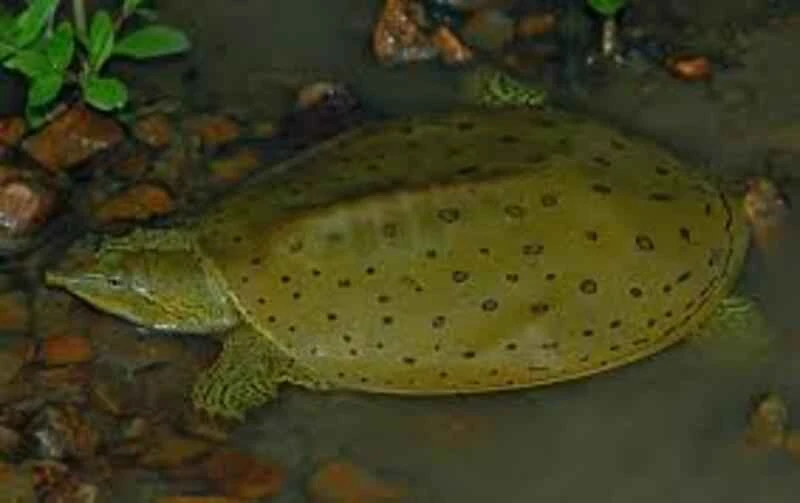
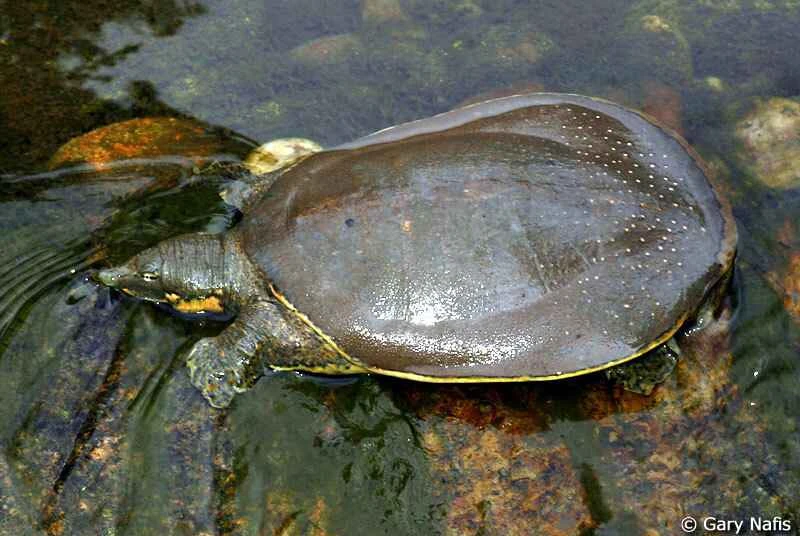
The horned softshell turtle, also known as the spiny softshell turtle, is a species belonging to the family Trionychidae and the genus Mollusca. Its main distribution area is in North America, from southern Canada to northern Mexico. In recent years, it has also been introduced to my country and is being tested for breeding. The horned softshell turtle is relatively large, with adults reaching up to 45 cm in length and weighing approximately 3 to 5 kg, making it one of the medium to large-sized softshell turtles.
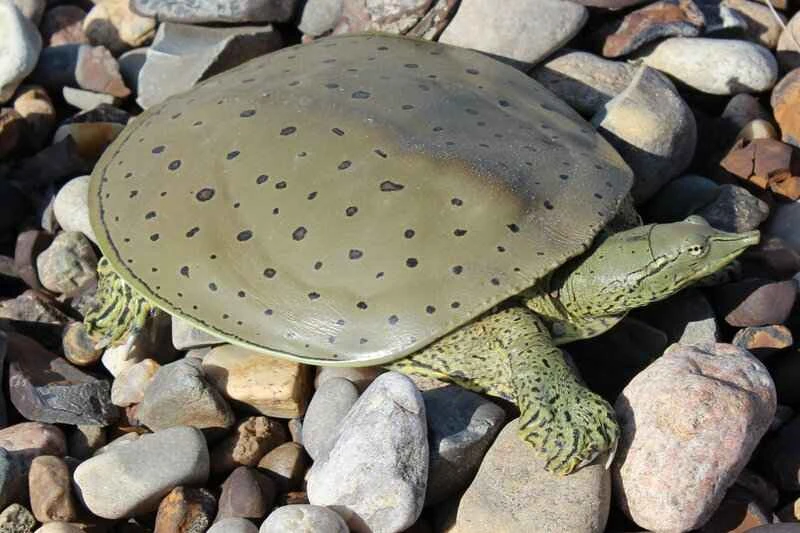
The horned softshell turtle has a flat, oval body with a wide, thin skirt. Its head is medium-sized with a relatively long snout. The head is olive-colored with pale yellow stripes on both sides, the edges of which are edged with black lines. The eyes are small, and the neck is thick and long. The carapace is olive-green with black eye-like markings, a rough texture, and is covered with small warts; the anterior edge also has spiky projections. The abdomen is pale white, grayish-white, or light yellow.
Horned softshell turtles are timid and have a limited range, mainly inhabiting rivers and lakes. They feed on crustaceans, mollusks, small fish, and insects.
10. African Three-clawed Softshell Turtle
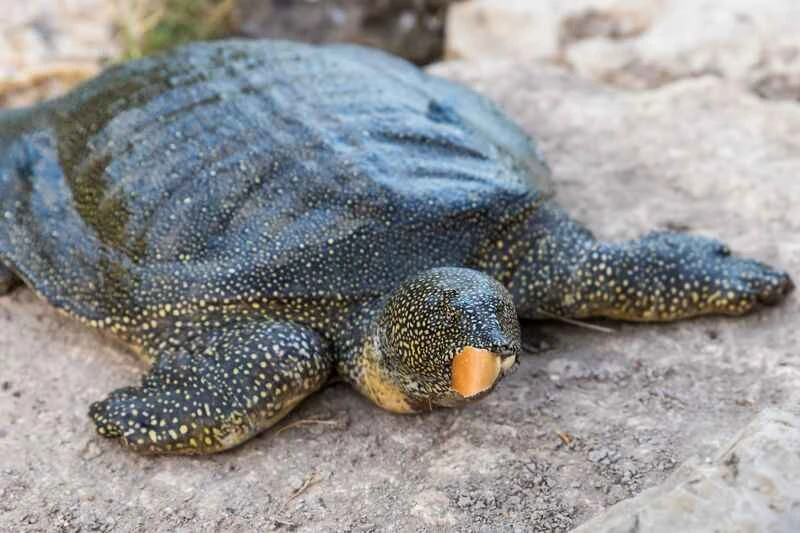
The African softshell turtle, also known as the African trident turtle, is the only species in the subfamily Trionycisinae found only in Africa. It is widely distributed throughout Africa except the Sahara Desert, as well as West Asia and Turkey, primarily inhabiting slow-moving freshwater lakes and streams.
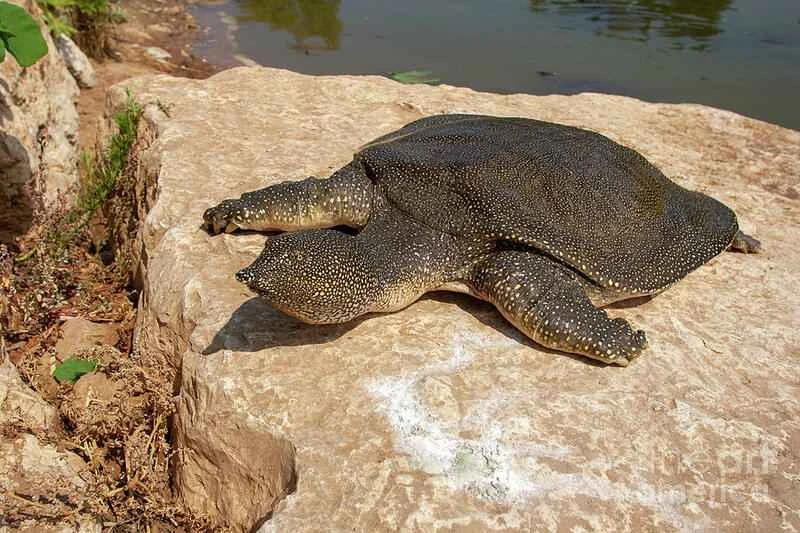
The African three-clawed softshell turtle is enormous, with adults reaching over 1 meter in carapace length, making it one of the largest softshell turtles in the world. Its limbs, head, and carapace are often covered with small yellow spots, especially noticeable in its juvenile stage. As it ages, the spots on its carapace gradually become less prominent and may even disappear completely.
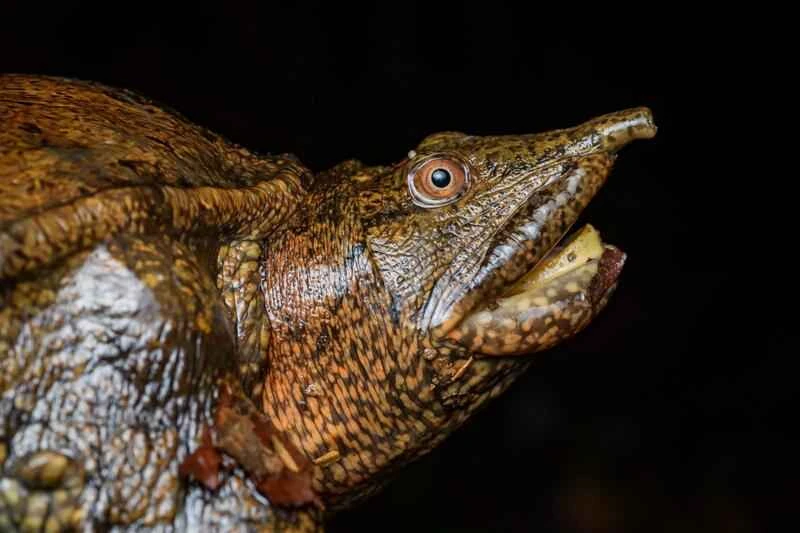
The ranking of the world's top ten soft-shelled turtles is based on a comprehensive analysis of the characteristics, distribution areas, habits, rarity, and popularity of different turtles around the world, combined with data from relevant online rankings. This ranking is for reference only, and any questions or corrections are welcome in the comments section at the end of the article.
Other turtles
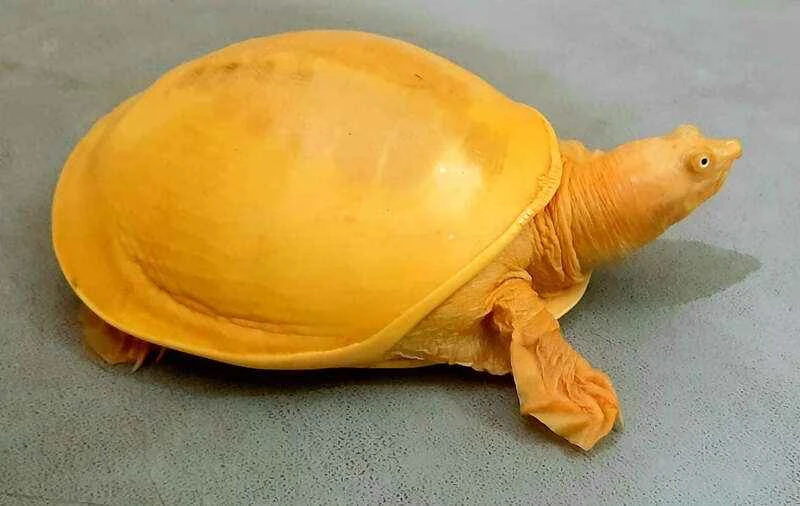
Golden Turtle
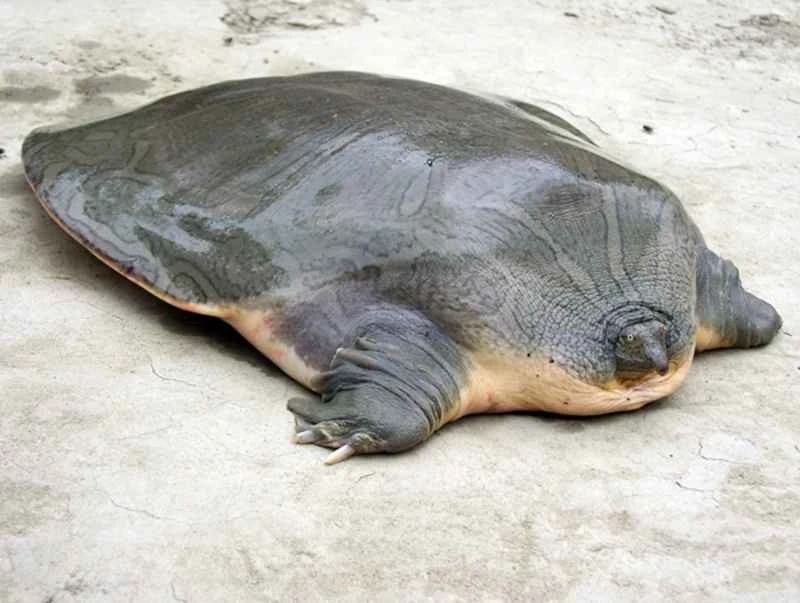
Indian Small-headed Softshell Turtle
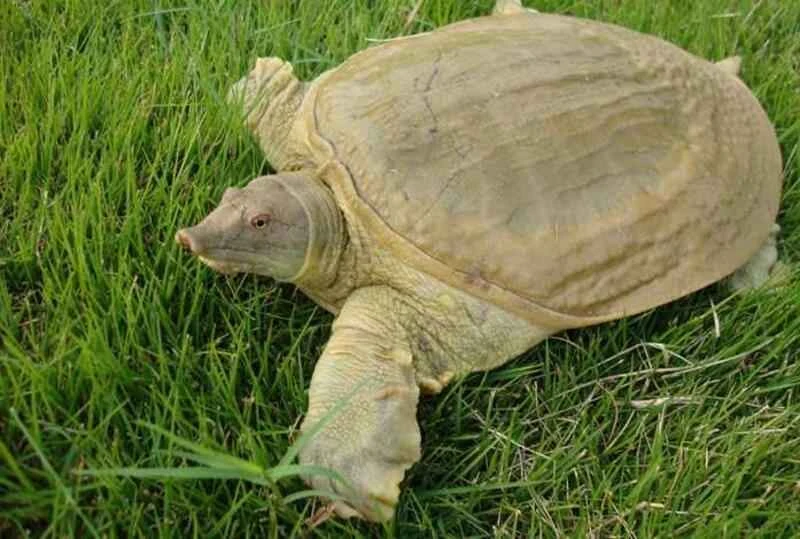
Yellow River turtle
Texas spiky