When we think of mammals, we usually think of viviparous animals like dogs, cats, monkeys, and humans. Most mammals reproduce by giving birth to live young, meaning their offspring develop inside the mother and are not separated from her until birth. However, there is a group of mammals that breaks this convention; they reproduce by "laying eggs," and these unique animals are called "monotremes."
What are monotremes?
Monotremes are among the most primitive and oldest groups of mammals. They retain some characteristics similar to reptiles, notably reproducing by laying eggs rather than giving birth to live young. Monotremes possess all the key features of mammals, such as being warm-blooded, having hair, and nursing, but their egg-laying reproductive method makes them a unique branch of evolution.
Monotremes are named for having only one common body opening called the cloaca, used for excretion, mating, and reproduction. Unlike most mammals, monotremes reproduce through this single opening.
Currently known monotremes include the following two major groups: platypuses and echidnas .
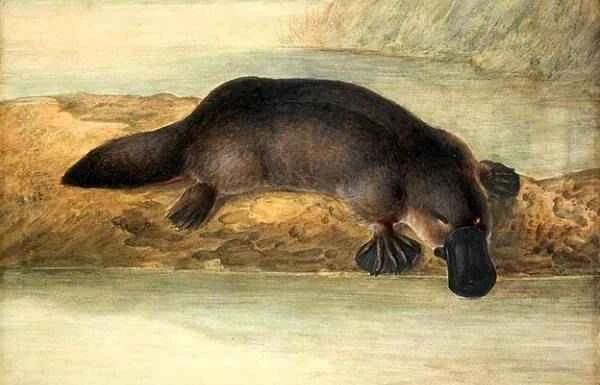
1. Platypus
Scientific name : Ornithorhynchus anatinus
The platypus is one of the most well-known monotremes, inhabiting freshwater rivers, lakes, and swamps in eastern Australia. They have a distinctive appearance, with a flat, duck-like beak, a body covered in thick, waterproof fur, and webbed limbs for swimming.
Characteristics of egg laying :
female duckbill
Platypus eggs are softer than bird eggs, resembling reptile eggs, with a relatively soft and elastic shell.
The female platypus places her eggs in a safe nest to incubate them for about 10 days. During incubation, the mother platypus warms the eggs with her body to maintain a constant temperature.
Breastfeeding methods :
Unlike other mammals, platypuses do not have nipples. Instead, they secrete milk through the skin of their abdomen, which seeps into their fur, and the young obtain nutrition by licking their mother's fur.
Young platypuses are quite vulnerable after hatching, and the mother will care for them in the nest until the young are able to live independently.
Other unique features :
The platypus is one of the few mammals with venom. Male platypuses have venomous spurs on their hind limbs, which they use to protect their territory or fight during the mating season.

2. Echidna
Echidnae, also known as anteaters, are another type of egg-laying mammal. Their bodies resemble hedgehogs, covered in stiff, spiky hairs, and they are mainly found in Australia and New Guinea. Echidnae are insectivorous, primarily feeding on ants and termites.
Characteristics of egg laying :
After mating, the female echidna lays one egg and stores it in a temporary pouch on her abdomen (similar to a kangaroo's pouch).
Echidna eggs are very small with soft shells, and the larvae usually begin to hatch 10 days after being laid.
Breastfeeding methods :
Like the platypus, echidnas do not have nipples. The mother echidna secretes milk through mammary glands, and the young obtain nutrition by suckling the milk seeping from the mammary glands in their pouches.
The young grow in the pouch for about 7 weeks until they develop hard spines and begin to leave their mother's care.
Other unique features :
The echidna has a very long, slender beak with sensitive tactile receptors that help it find its way in mud or bark.
They are very cold-resistant animals, especially in winter, when echidnas enter a brief hibernation state to conserve energy.
Monotremes
Monotremes are unique in that they occupy an evolutionary position between reptiles and other mammals. They retain egg-laying characteristics similar to reptiles, but also possess typical mammalian features such as lactation, homeothermy, and fur. Scientists believe that these characteristics of monotremes are remnants of early mammalian evolution, representing an early stage of mammalian development.
Research indicates that monotremes diverged from other mammals approximately 160 million years ago due to a common ancestor. This means that monotremes existed since the time of dinosaurs and adapted to their environment through evolution. Although they are now found only in a few areas of Australia and New Guinea, their existence provides invaluable insights into mammalian evolution.
Due to their unique evolutionary position and biological characteristics, monotremes face certain threats to their populations. The impacts of human activities, such as habitat destruction, pollution, and climate change, are threatening the survival of these rare species. The platypus, in particular, faces significant challenges to its survival due to factors such as changes in water quality in its habitat and agricultural development.
To protect these unique animals, the governments and environmental organizations of Australia and New Guinea have taken several measures, including establishing nature reserves, restoring habitats, and implementing species monitoring and conservation programs. Furthermore, scientists worldwide are working to study their habits and reproductive methods in order to better protect and manage these precious species.
Although egg-laying is extremely rare among mammals, monotremes—such as the platypus and echidna—demonstrate a unique evolutionary path within mammals. They not only retain the egg-laying characteristic of reptiles but also possess other key mammalian traits, such as lactation and homeothermic regulation. The existence of these animals reminds us that evolution is a diverse process capable of producing a rich variety of life forms and reproductive strategies. In today's world, where global biodiversity is threatened, protecting these rare species is not only a responsibility to nature but also essential for further understanding the history of life and the mysteries of evolution on Earth.