The giant panda (Ailuropoda melanoleuca) belongs to the Ursidae family, not the Felidae family. Despite its name containing "cat," the giant panda is not related to felines but is more closely related to bears. The following is a detailed introduction to the giant panda's family of Ursidae:
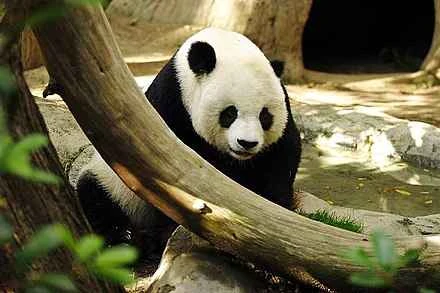
Physical characteristics : Giant pandas resemble bears more in appearance. They have a round, plump body, short, thick limbs, rounded ears, and a round face. These features are more similar to bears than to felines.
Diet : Giant pandas are omnivorous animals that primarily feed on bamboo. This is quite different from the diet of felines, which are mainly carnivorous.
Ecological Role : Giant pandas play a role in the ecosystem more similar to bears. They are typically solitary animals, living in bamboo forests and relying primarily on bamboo for food. Felines, on the other hand, are usually hunters, inhabiting a variety of different environments.
Evolutionary history : From an evolutionary perspective, the giant panda is more closely related to bears. According to genetic and morphological studies, the giant panda is more closely related to other bears than to felines.
In conclusion, although the name of the giant panda contains the word "cat," they belong to the bear family (ursidae), which is distinct from felines (cats). Giant pandas are more similar to bears in morphology, diet, ecological role, and evolutionary history, and are therefore classified as bears.