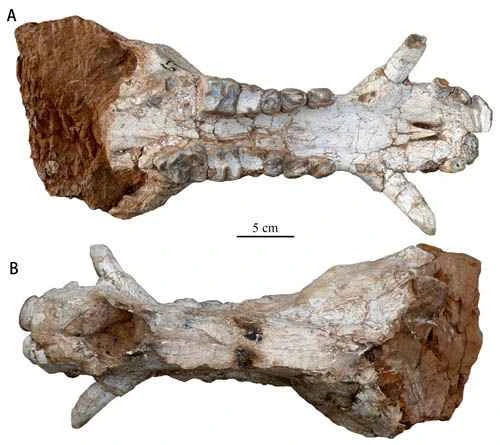
Cervidae is a large family, comprising 16 genera and approximately 47 different species. However, due to habitat destruction and illegal hunting by humans, many wild deer species are endangered, and some are even extinct in the wild. So, which wild deer species are the rarest? Which deer species are endangered? In this article, we will list 10 of the world's rarest deer species, including Eld's deer, Chilean red deer, hog deer, Vietnamese muntjac, and northern Pudu deer, among others. Let's learn more about them.

1. Eld's deer (a Class I protected animal in China)
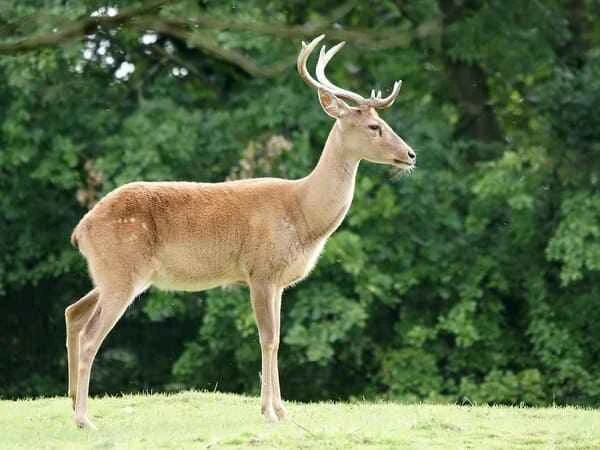
The Eld's deer is a medium-sized deer, similar in appearance to the sika deer, but smaller in size, with fewer spots, and a more slender neck, torso, and limbs, making it appear very agile. It typically measures about 160 cm in length, 104-110 cm in shoulder height, and weighs between 70-130 kg. The Eld's deer is mainly distributed in Southeast Asia and Hainan Island, China. It is one of the most precious deer species, listed as a Class I protected wild animal in the *National Key Protected Wild Animals List of China*, and also listed as an endangered species (EN) in the IUCN Red List of Threatened Species 2008 ver 3.1.
2. Chilean moose (endangered)
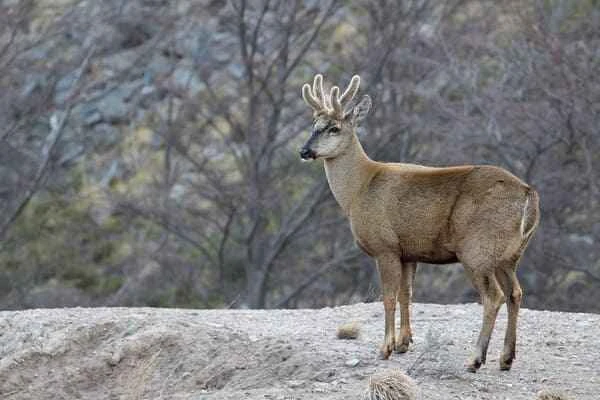
The Chilean horse deer is one of two species in the genus *Odon* of the family Cervidae. Males are approximately 140-175 cm long, while females are approximately 140-157 cm long, with a shoulder height of 80-90 cm and a weight of 40-100 kg. Due to habitat destruction and frequent hunting, the Chilean horse deer has been on the verge of extinction since 1976. They are currently only sparsely distributed in southern Argentina and Chile, and by 2008, the global population was less than 2,000, thus being listed as Endangered (EN) on the IUCN Red List of Threatened Species in 2008.
3. Hog Deer (Endangered)
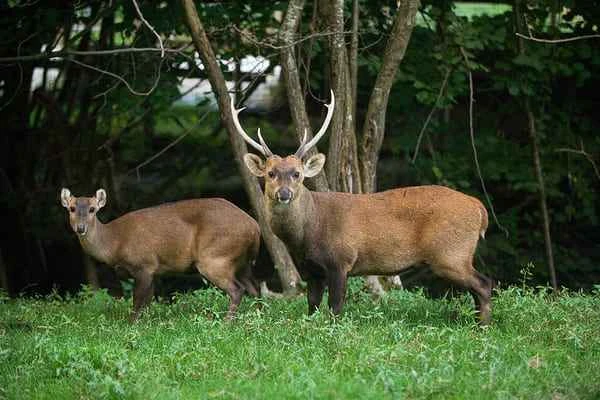
The hog deer, also known as the reed deer or pig deer, is a medium-sized but relatively stocky animal with short limbs, giving it a stout appearance. Its blunt, low-set rump and pig-like posture give it its name. Due to habitat destruction, wild hog deer are extremely rare, mainly distributed in Bangladesh, Bhutan, Cambodia, India, Nepal, and Pakistan, with most surviving in Dudwa National Park and Jaldapala Wildlife Reserve in South Asia. Due to its rarity, it was listed as Endangered (EN) on the IUCN Red List of Threatened Species in 2012.
4. Vietnamese Giant Reeves' Muntjac (Endangered)
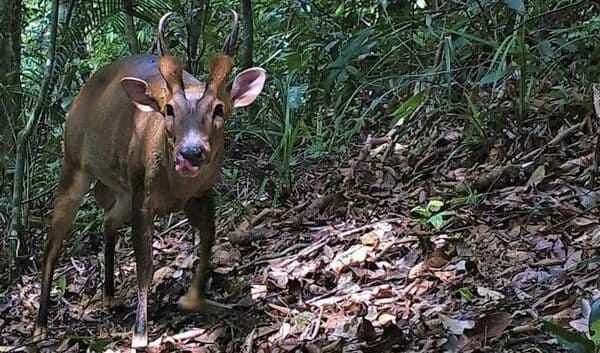
The Vietnamese giant muntjac, also known as the giant muntjac, is the largest species of muntjac in the world, discovered in 1994 in Ha Tinh Province, Vietnam, and central Laos. Weighing approximately 30-50 kg, they are hooves with a reddish-brown coat. The Vietnamese giant muntjac is mainly distributed in Cambodia, Laos, and Vietnam. Due to the continuous expansion of local agriculture and overhunting, the wild population has declined sharply, leading to its inclusion in the IUCN Red List of Threatened Species in 2008 as Endangered (EN).
5. Northern Pudu Deer (Endangered)
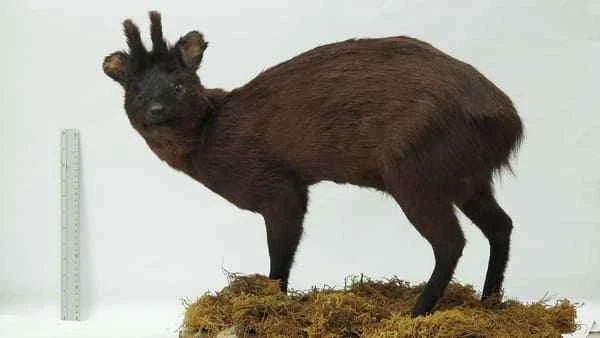
The Northern Pudu deer is a species of deer in the family Puduidae. They are relatively small with slender limbs and dark brown, dense fur that provides protection, making them less prone to injury when traversing jungles. They are approximately 60-80 cm long, with a shoulder height of up to 35 cm, a tail length of about 2-3 cm, and a weight between 8-10 kg. The Northern Pudu deer are mainly distributed in parts of the Andes Mountains, including Colombia, Ecuador, and Peru. They are a very rare deer species and are therefore listed as Endangered (EN) on the IUCN Red List of Threatened Species (2018).
6. White-lipped deer (a Class I protected animal in China)
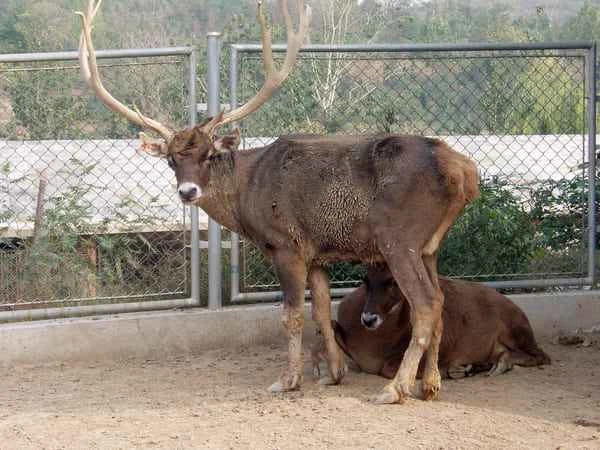
The white-lipped deer is a large, precious, and endemic deer species native to China. It resembles the red deer in size but is slightly smaller. It typically measures 100-210 cm in length, with a shoulder height of about 120-130 cm. Its tail is the shortest among large deer, only 10-15 cm long, and its weight is approximately 130-200 kg. The white-lipped deer is a Class I protected animal in China, mainly distributed in Gansu, Qinghai, northwestern Yunnan, Sichuan, and Tibet. This precious species is only known to exist abroad: a pair gifted by China to Sri Lanka in the early 1970s, and another pair gifted to Nepal in the early 1980s.
7. Père David's deer (a Class I protected animal in China)
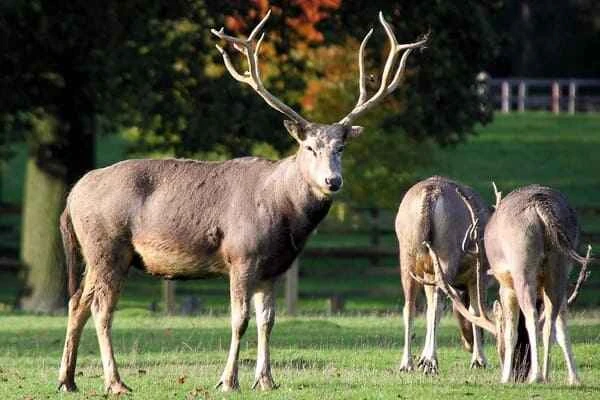
The Père David's deer is a unique species within the deer family, the only known member of the genus Père David's, and one of the rarest deer in the world. It has a long, narrow head, resembling a horse, and antlers, slightly different from other deer. Its hooves are broad like a cow's, and its tail is long and thin like a donkey's, hence its nickname "four unlikes." Native to the marshy areas of the middle and lower reaches of the Yangtze River in China, the Père David's deer is endemic to China. It was once extinct in its native habitat but was later reintroduced and successfully bred in Britain. Today, the Père David's deer has successfully recovered from the brink of extinction and has become a model for saving critically endangered species.
8. Black Muntjac (a Class I protected animal in China)
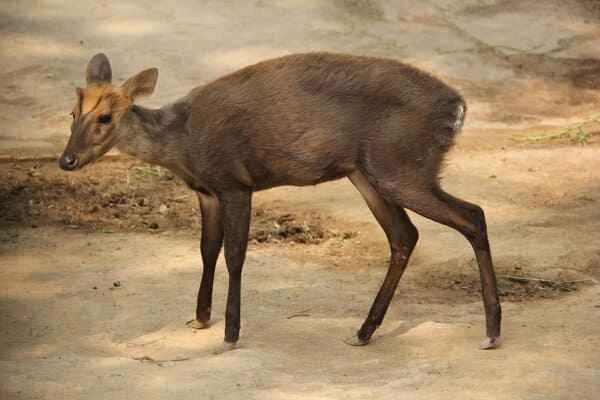
The black muntjac is a very rare species within the deer family, and is one of the larger species in the genus *Muntjac*. It measures approximately 100-110 cm in length, with a shoulder height of about 60 cm and a weight between 21-26 kg. Endemic to China, the black muntjac has no subspecies differentiation and its distribution range is very narrow, mainly found in southern Anhui, western Zhejiang, Huaiyuan County in eastern Jiangxi, and the Wuyi Mountains in northern Fujian. Currently, the black muntjac is listed as a Class I protected wild animal in China and is also listed as vulnerable by the International Union for Conservation of Nature (IUCN).
9. Steppe deer (endangered)

The Pampas deer, also known as the South American savanna deer, is an endangered deer species endemic to South America, primarily found in the Pampas grasslands of Argentina. They are slender and graceful with relatively long limbs. Male Pampas deer possess well-developed scent glands on their hind legs, emitting a scent that can travel up to 1.5 kilometers. With the development of the Pampas grasslands, much of their habitat has been occupied by cattle, posing a significant challenge to their survival.
10. Sika deer (a Class I protected animal in China)
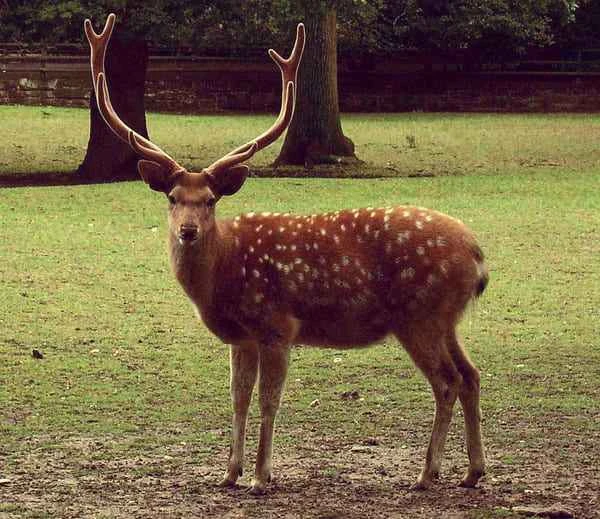
The sika deer is a species endemic to East Asia, primarily distributed in eastern Russia, Japan, and China. It typically measures 125 to 145 cm in body length, with a tail length of about 12 to 13 cm, and weighs between 70 and 100 kg. In summer, its coat is chestnut-red with numerous white spots resembling plum blossoms; in winter, its coat is smoky brown, the white spots are less prominent, and a mane grows on its neck. Due to long-term overhunting in China, the wild population of sika deer is extremely small, and its distribution is becoming increasingly dispersed. Therefore, the sika deer is listed as a Class I protected wild animal in China.

The list of the world's ten rarest deer species is based on a comprehensive summary of the endangered status of various wild deer populations and related online rankings, and is for entertainment and reference only. All data is current as of January 16, 2024.
Important Notice: Hunting, killing, consuming, or trading wild animals and their products are all illegal and criminal acts! Wild animals belong to nature. For the sake of the ecological environment and your health, please refuse to buy, keep, or consume wild animals!