Kopi Luwak , also known as civet coffee , is one of the world's most unique and luxurious coffees. This coffee is made from coffee beans consumed by an animal, which then excretes them. Its production process is both mysterious and unusual. So, how was this coffee discovered? Why does it attract the attention of coffee lovers worldwide? This article will delve into the animal that eats and excretes coffee beans , the history of Kopi Luwak, the science behind its unique flavor, and the ethical controversies surrounding its production.

1. Civet: The animal behind civet coffee
The key player in the production of civet coffee is the Asian palm civet ( Paradoxurus hermaphroditus ), a small nocturnal animal that lives in Southeast Asia. This animal feeds on ripe coffee cherries and excretes undigested coffee beans, thus becoming an important part of the civet coffee making process.
Why do civets eat coffee berries?
Natural Preference : Asian palm civets are naturally attracted to sweet, ripe coffee cherries. They eat the pulp, while the coffee beans remain undigested in their digestive system.
Picky eating habits : Civets are very picky eaters, usually only choosing the ripest and highest quality coffee cherries. This is one of the reasons why civet coffee is based on high-quality beans.
After passing through the civet's digestive system, the coffee beans undergo chemical changes under the action of natural enzymes within the body. Once excreted, these coffee beans are collected, cleaned, and roasted, ultimately producing the famous Kopi Luwak (civet coffee ).
2. The discovery of civet coffee: Indonesia during the colonial period
The discovery of Kopi Luwak (civet coffee) dates back to the early 18th century during the Dutch colonial period. At that time, the Dutch established large coffee plantations in Java and Sumatra , Indonesia, but local Indonesian farmers were prohibited from picking and consuming coffee on their own.
How was civet coffee discovered?
The Dutch coffee ban : Under the regulations of the Dutch colonies, plantation workers were not allowed to consume coffee beans grown on the plantations. This forced farmers to find other ways to enjoy coffee.
A coincidence involving civets : Farmers noticed that civets were eating coffee cherries and excreting coffee beans. Out of curiosity and need, the farmers began collecting these coffee beans, washing and roasting them to make coffee.
Surprisingly, this coffee had a milder flavor and less bitterness. Over time, this unique coffee attracted the attention of Dutch colonists, who also began to enjoy its distinctive flavor.
3. The scientific principles behind the unique flavor of civet coffee
The civet's digestive process is key to the unique flavor of civet coffee . As coffee beans pass through the civet's stomach, they undergo fermentation and are acted upon by digestive enzymes, altering the coffee beans' chemical composition.
How does the civet cat's digestion affect coffee beans?
Enzymatic breakdown : Enzymes in the civet's stomach break down the proteins in coffee beans, thereby reducing the bitterness and acidity of common coffee.
Fermentation process : The natural fermentation of coffee beans inside the civet cat further enhances the flavor of the coffee, making civet coffee smoother and richer.
Once excreted, these coffee beans are washed and roasted. Although the processing method is the same as that of ordinary coffee beans, their unique digestion process makes the finished coffee flavor more mellow, with earthy and nutty aromas.
4. Flavor characteristics of civet coffee
Kopi Luwak (civet coffee) is sought after for its unique flavor. Unlike traditional coffee, this coffee has a unique taste and aroma due to the digestive process of the civet cat.
Flavor characteristics:
Smooth taste : Kopi Luwak is known for its silky smooth taste, with a much lower acidity than regular coffee.
Earthy and nutty aromas : Fermentation in the civet cat adds earthy and nutty aromas to the coffee, making its flavor more complex and rich.
Reduced bitterness : Due to the breakdown of proteins, the bitterness of coffee is reduced, resulting in a smoother taste, a feature that many coffee lovers appreciate.
While some coffee enthusiasts find the flavor of Kopi Luwak (civet coffee) to be very unique, others believe that its rarity and unique production process are more appealing than its actual taste.

5. Ethical Controversies and Challenges
With the global popularity of civet coffee , there has been widespread discussion about the welfare of civets and the environmental impact of coffee production.
Wild and captive civets:
Wild civet coffee : Originally, civet coffee was made from coffee beans collected from the excrement of wild civets. However, as demand grew, many producers switched to raising civets in captivity.
Civet coffee production in captivity : On some farms, civets are kept in cages and fed primarily coffee berries. This practice often leads to animal welfare issues because the captive civets live in poor conditions and are in poor health. This has sparked ethical discussions about the commercial production of civet coffee.
Environmental impact:
Habitat destruction : The growing demand for civet coffee has led to deforestation, with forests being cleared to make way for coffee cultivation. This not only threatens the survival of wild civets but also damages the local ecosystem.
Sustainable production : Some producers are beginning to focus on ethics and sustainability, adopting methods that collect coffee beans from the natural habitat of wild civets to ensure that production has minimal impact on the environment and animals.
For those who wish to savor this rare coffee, it is crucial to choose products from responsible producers that meet animal welfare and sustainability standards.
6. The high price of Kopi Luwak (civet coffee)
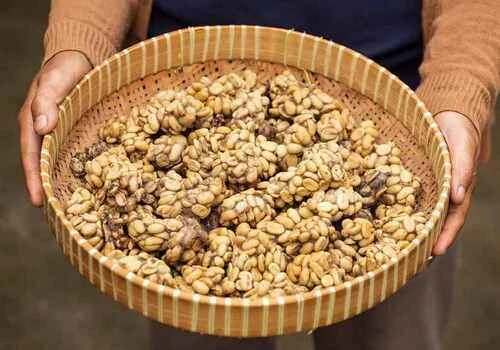
Another notable characteristic of Kopi Luwak (civet coffee) is its price, which ranges from $100 to $600 per pound. Its high price stems from several factors, including the complex harvesting and processing methods and the scarcity of the beans.
Why is civet coffee so expensive?
Limited supply : The production of civet coffee is limited by the way civets eat and excrete coffee beans, resulting in relatively small production volumes and making it a rare commodity.
Labor-intensive processing : The process of collecting, washing, and roasting coffee beans from civet cat excrement is very time-consuming and requires careful handling, which also increases costs.
Luxury Effect : Kopi Luwak has become a status symbol, often touted as one of the world's most unique and luxurious coffees. Its distinctive production method attracts those seeking an exclusive coffee experience.
in conclusion
Civet coffee , also known as Kopi Luwak , is one of the most interesting and unique coffees in the world. Made from coffee beans consumed and excreted by the Asian palm civet, this coffee was first discovered in Indonesia during the Dutch colonial period. Due to its smooth, rich flavor and unique production process, Kopi Luwak has gradually gained popularity worldwide.
However, with the increasing popularity of civet coffee, ethical controversies have arisen regarding civet welfare and the environmental impact of coffee production. For those wishing to sample this rare coffee, choosing ethically certified products is crucial to ensuring that animal welfare and environmental sustainability are prioritized.
Despite ongoing controversy, civet coffee remains a symbol of luxury in the coffee world, offering a unique coffee experience to those who wish to experience this extraordinary natural process.