Hibernation is a physiological adaptation developed by many animals to cope with food scarcity and low temperatures during winter. By reducing their metabolic rate, body temperature, respiratory rate, and heart rate, animals can survive the cold season with minimal energy expenditure. This article will systematically introduce the types of common hibernating animals, their hibernation mechanisms, and their ecological significance from a zoological perspective.
I. Representatives of Hibernation in Mammals
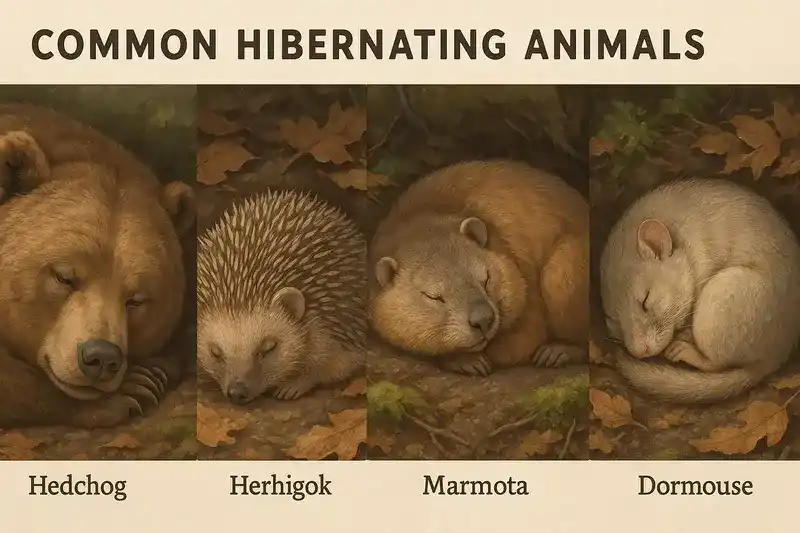
1.1 Black Bear (Ursus americanus)
Although bears do not hibernate as thoroughly as rodents, black bears do exhibit a distinct hibernation state during the winter.
Body temperature dropped slightly but not to the point of losing responsiveness.
Not eating or excreting for several months
Relying on body fat to maintain energy
1.2 Hedgehog (Erinaceus europaeus)
Hedgehogs are typical small mammals that hibernate.
Body temperature can drop below 5°C
Breathing and heartbeat were extremely slow.
They usually hide in piles of fallen leaves or bushes to hibernate.
1.3 Groundhog (Marmota monax)
North American groundhogs are known for their deep hibernation:
Body temperature can drop below 5°C
Heart rate decreased from 80 beats per minute to about 5 beats per minute.
They can hibernate continuously for 5 to 6 months.
II. Examples of Hibernation in Reptiles
2.1 Tortoises and Land Tortoises
Such as the Chinese pond turtle and the Hermann's tortoise:
They hibernate when the temperature drops below 10°C.
They mostly choose to hibernate in underwater silt or underground burrows.
Metabolism drops to extremely low levels, requiring only minimal physical energy to sustain life.
2.2 Snakes
Such as vipers and raccoon snakes:
They usually hibernate in groups in burrows, rock crevices, or under tree roots.
Almost stopped eating throughout the winter
They only became active again after temperatures rose in early spring.
III. Hibernation Strategies of Amphibians
3.1 Frogs and Toads
Examples include the black-spotted frog and the Chinese toad.
They mostly hibernate in the silt at the bottom of the water or deep underground.
The skin can still maintain a weak gas exchange.
Body temperature decreases in sync with ambient temperature
3.2 Salamander
For example, the Chinese giant salamander:
Inhabiting deep water or caves
Extremely slow metabolism
Can survive for a long time without food
IV. Special Hibernators Among Birds
4.1 Nighthawk (Common Poorwill)
It is currently the only known bird species with the ability to truly hibernate.
Inhabiting western North America
It can lower body temperature to 5°C
Remaining still in a cave or crevice for weeks or months
5. Do invertebrates also hibernate?
5.1 Snail
Like the garden snail:
Before winter, the shell seals off and enters a low-metabolism state.
It can withstand months of cold and dry conditions.
5.2 Insects
Such as ladybugs, ants, and butterfly pupae:
They mostly hide under the bark or in the leaf litter as adults or pupae.
Relying on "biological antifreeze" such as glycerin to prevent body fluids from freezing
VI. Physiological Mechanisms and Evolutionary Significance of Hibernation
6.1 Mechanism of metabolic inhibition
Hibernating animals minimize energy consumption by regulating thyroid hormones and reducing central nervous system activity.
6.2 Evolutionary Advantages
Conserving energy to cope with food shortages
Avoiding predators
Avoid cold damage
6.3 Risks and Challenges
A sudden rise in temperature or human interference can cause hibernation to consume a large amount of energy.
Young and weak individuals have a higher mortality rate during hibernation.
VII. Conclusion: The Pause Button of Life
Hibernation is one of nature's survival miracles, with different animals successfully adapting to the harsh winter environment through their own evolved mechanisms. From mammals and reptiles to invertebrates, hibernation not only demonstrates the adaptability of organisms but also provides models for scientific research, such as human space travel and medical cryopreservation.
Understanding which animals hibernate and how they hibernate helps us better protect wildlife and their habitats, while also inspiring deeper reflection on the nature of life.