Gastrea is a major evolutionary clade in the animal kingdom, alongside Deuterostomia, and is a collective term for most invertebrates. This group possesses unique characteristics during the "gastrulation" stage of early animal embryonic development, providing important clues for understanding animal evolution. This article will systematically introduce the definition, developmental characteristics, main categories, and ecological and evolutionary significance of gastrulation from a professional zoological perspective.
I. What are Gastrula?
1.1 Definition of gastrulation
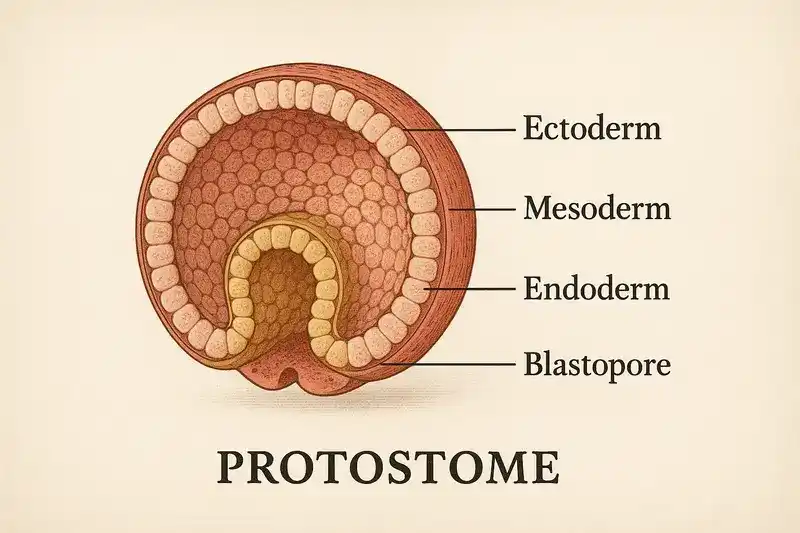
During embryonic development, the gastrula is the earliest digestive cavity to form in animals. A key characteristic of gastrula is that the protostomy develops into the mouth , meaning that the opening of the gastrula embryo develops into the mouth of the adult animal.
1.2 Differences from deuterostomes
In contrast to gastrulation are deuterostomes (such as vertebrates and echinoderms), in which the protomouth in the embryo develops into the anus, while the mouth reforms at the other end. The developmental paths of these two groups determine their branches on the evolutionary tree.
II. Developmental Characteristics of Gastrulation
2.1 Spiral cleavage
Early Gastrea embryos typically exhibit spiral division , a stark contrast to the radial division of Deuterostomes.
2.2 Fixed Fate Cleavage
The developmental fate of embryonic cells is determined early on, a process known as "mosaic development".
2.3 Mesodermal origin
The mesoderm is mostly developed from specific cell populations rather than formed by differentiation between germ layers.
III. Major Phylum of Gastrulation
3.1 Phylum Arthropoda
Including insects, spiders, crustaceans, etc.
The most diverse phylum of animals in the world
Possessing an exoskeleton and segmented body structure
3.2 Phylum Mollusca
Such as snails, octopuses, mussels, etc.
Typical features include soft body, shell, and foot structure.
3.3 Phylum Annelida
Including earthworms, leeches, etc.
It has segmented body cavities and repeating organ structures.
3.4 Phylum Platyhelminthes
Most are parasites, such as tapeworms and flukes.
It has no body cavity and its structure is relatively simple.
3.5 Nematoda
Such as roundworms, nematodes
Unsegmented body with a pseudo-cavity
IV. The Ecological Role of Gastrulation
4.1 Builders in Terrestrial Ecosystems
Insects are crucial for pollination, soil aeration, and organic matter cycling.
Earthworms and other organisms promote soil fertility formation.
4.2 Key Links in Marine and Freshwater Systems
Crustaceans and mollusks constitute an important part of the aquatic food web.
Some gastrula are also important filter feeders and sediment stirrs.
4.3 Parasites and Pathogen Vectors
Nematodes, tapeworms, and other similar organisms are important pathogens causing various diseases in animals and humans.
V. Evolutionary Significance of Gastrulation
5.1 Diversity and Adaptability
Gastrea are extremely diverse in structure, function, and ecological niche.
It is found in everything from deep-sea hydrothermal vents to alpine meadows.
5.2 The Centralization Trend of the Nervous System
Gastrea exhibits a phenomenon called "cephalomorphism," in which the nervous system gradually concentrates at the front end, forming the brain and sensory organs.
5.3 Provide models for evolutionary and developmental research
If flies and nematodes are widely used in genetic, developmental, and neuroscience research
VI. The Relationship Between Gastrea and Humans
6.1 Agricultural and Medical Impacts
Pests (such as locusts and nematodes) affect crop yield.
Parasitic diseases (such as schistosomiasis and ascariasis) affect public health.
6.2 Economy and Food Sources
Shrimp, crabs, and shellfish are important economic aquatic products.
Pearls, shellac, and other materials also originate from gastrulation.
6.3 Important Models of Scientific Research
Fruit fly gene research
Neurobehavioral studies of octopuses
VII. Conclusion: Gastrulation, a brilliant branch of animal evolution
Gastrea, a major branch of the animal kingdom, not only dominates in terms of species numbers but also holds an irreplaceable and vital position in ecological functions, evolutionary patterns, and scientific applications. A deeper understanding of this group helps us comprehensively grasp animal diversity, comprehend the pathways of life's evolution, and make more scientific decisions in fields such as agriculture, environmental protection, and biotechnology.