There is a small bird in nature with orange-red plumage and round, almond-shaped eyes. It looks sweet but is a "hidden killer." In the wild, if you see the corpses of frogs, geckos, or grasshoppers stuck in branches or wire mesh, don't assume it's just a prank by children. These might all be the work of a shrik.
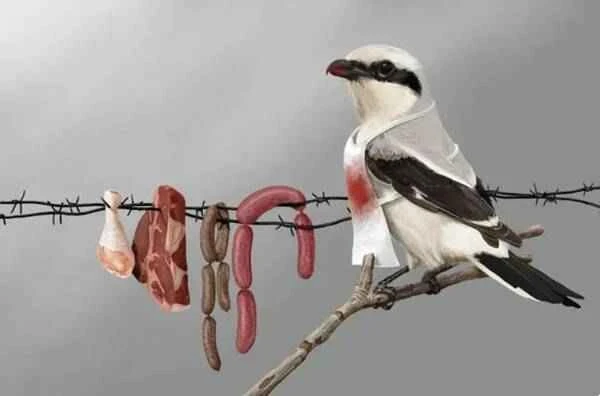
The captured prey not only lost their lives but also suffered humiliation, with the hunters hanging their bodies from branches or fences. Fortunately, they were already dead, otherwise it would have been a truly large-scale social death scene.
To understand why the seemingly cute and docile shrike would engage in the behavior of "killing insects and hanging corpses," we need to look at the reasons within itself.
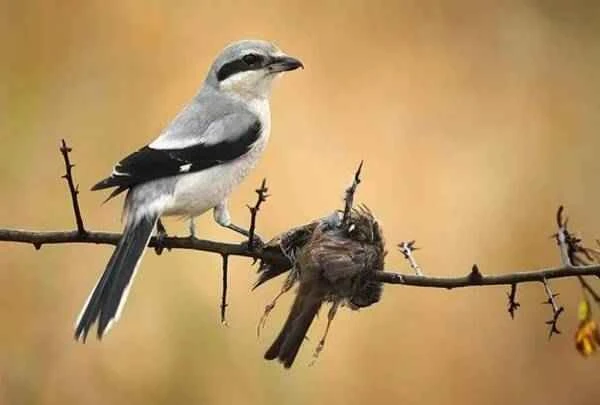
Sharp mouth, weak legs
The shrik belongs to the family Shrikeidae in the order Passeriformes, but is not a hawk or falcon. However, it is known as a "bird of prey" because its beak and claws are equipped with sharp hooks. It is fierce and primarily preys on small mammals, birds, lizards, frogs, and insects. Although its claws are hooked, its leg muscles are not well-developed, and its claws are relatively weak, preventing it from using its legs and claws to process prey simultaneously like birds of prey. In such cases, the shrik will pin its prey to a branch and then tear it apart piece by piece with its beak, creating a unique and flavorful "wild, wood-scented meat skewer."
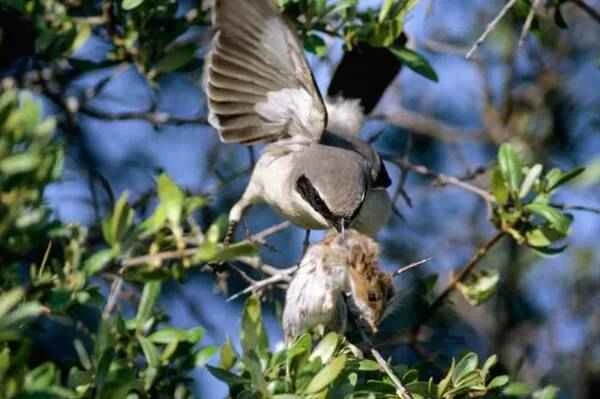
Born without a crop, find a way to manage it yourself.
As we all know, most birds have an organ called a crop, used to store food so they can eat whenever they're hungry. But shrikes don't have this organ. They need to constantly replenish their energy by eating. So shrikes devised a way to have the best of both worlds: they hang their food on branches, which on the one hand prevents land animals from stealing it, and on the other hand preserves the original flavor of the food to the greatest extent, making it easy to store and less prone to spoilage. For shrikes, being able to eat their fill is more important than the freshness of their food.
Declaring territory to other birds
Every spring, birds begin to breed. To establish themselves, they often need to find a safe, comfortable, and food-rich "territory" as a breeding ground, which is usually off-limits to other birds. To assert their "territory" to other birds, shrikes will hang their dead bodies as a warning to potential intruders, thus avoiding losses caused by conflicts with other birds over territory.
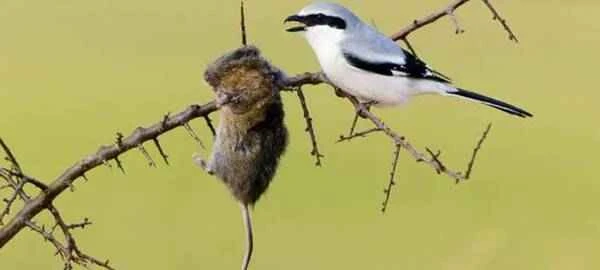
Economical Bird
For male shrikes, displaying their "corpse-like" plumage is also a way of showcasing their strength. The abundance of food seems to be a declaration of love to the female: "Look at me, I can catch insects and make money, I'm rich and ambitious, come and choose me!" This behavior attracts the attention of females, helping males find a mate sooner and accomplish the important task of having offspring. Data shows that male shrikes whose "corpse-like" plumage has been removed have a harder time finding mates and may even end up alone. Of course, shrik couples that successfully pair up and have offspring will raise their chicks together, flying side by side—a picture of lifelong monogamy. Shrikes truly are a textbook example of love.
Expand your diet and eat smarter.
Nature isn't just about lions and tigers; many venomous snakes, insects, and rodents can also be deadly. The shrike, a bird native to North America, often feeds on an insect called the "Eastern betel nut locust." This insect contains a large amount of toxins; eating it directly can cause nausea and even death. To protect themselves, the shrike dries the insect before eating it. Research shows that after hanging the insect for 1-2 days, the toxins in the Eastern betel nut locust disappear through the drying process. This not only satisfies the shrike's hunger but also broadens their diet compared to other birds, thus improving their survival ability in harsh environments.
It makes it easier for pups to eat and increases their flight rate.
Shrikes also hang food near their nests for their chicks to easily access. Chicks that receive ample food are stronger, which greatly increases their survival and flight rates.
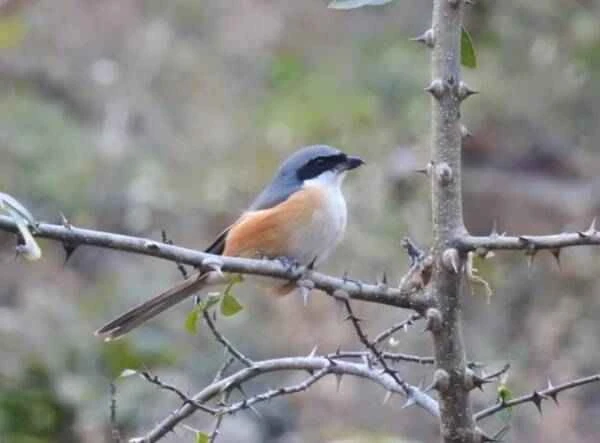
In conclusion, the shrike's butcher-like "meat-hanging" behavior is caused by a combination of factors. Shrikes are not born with this habit; young birds typically learn this skill around 4-5 weeks of age, and adult birds are much more adept at it than their young. Although cruel, for the shrike, survival is the top priority!