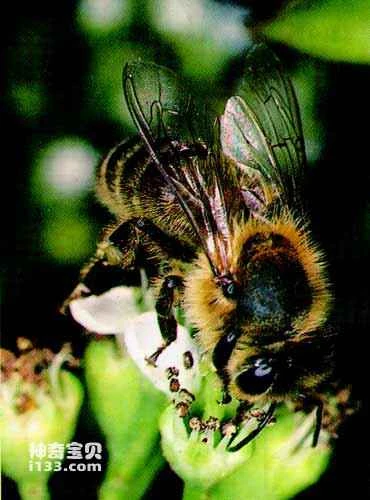
my country is the birthplace of the Eastern honeybee. Among the insects we recognize and utilize, honeybees undoubtedly rank in the top three. With the advancement of research methods such as molecular biology, new discoveries about honeybees continue to emerge. Recently, several research teams from the Xishuangbanna Tropical Botanical Garden of the Chinese Academy of Sciences discovered two more secrets about honeybees.
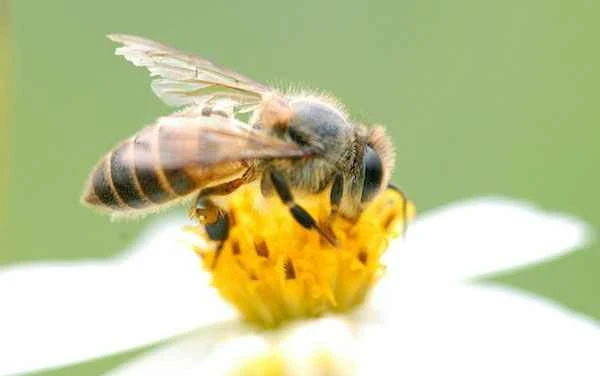
Bees are not only "academic superstars," but also expert eavesdroppers.
First discovery! Queen bees possess exceptional learning and memory abilities.
The queen bee's task is to lay eggs, while the drones' sole responsibility is to mate with her. During mating, the queen bee flies out of the hive, and all the drones in the colony follow her; this is called the nuptial flight. The queen bee selects her mate through a flying contest, and only the winner becomes her mate.
Here's the important part!
It's important to understand that the queen bee's mating flight and the worker bees' foraging activities are closely linked to their respective learning and memory abilities. Bees need to remember the precise location of their hive, the routes between nectar and pollen sources, the locations of various nectar-producing plants, and even the external characteristics and scents of the nectar sources they are collecting from, in order to devise the optimal foraging strategy.
Previous studies have also reported a link between learning and memory in bees and epigenetic DNA methylation. The significant differences in behavior between queen bees and worker bees sparked the interest of Dr. Gong Zhiwen and Researcher Tan Ken from the Chemical Ecology Research Group at the Xishuangbanna Tropical Botanical Garden, Chinese Academy of Sciences, in their cognitive and behavioral abilities. They tested the differences in learning and memory abilities between queen bees and worker bees by observing the proboscis response to a specific odor. They were the first to discover that queen bees possess exceptional learning and memory capabilities. The learning and memory abilities of 5-day-old queen bees were significantly higher than those of worker bees of the same age, equivalent to the learning and memory abilities of foraging worker bees aged 20 to 25 days.
Next, they conducted learning and memory tests on queen bees and worker bees after treatment with DNA methylation inhibitors. They found that DNA methylation affects the memory formation process of bees, not the learning process, and that the effect of DNA methylation on bee memory is time-dependent, meaning that the effect on bee memory varies at different treatment times.
The relevant research results were published in the international journal *Journal of Experimental Biology* under the title "First Evidence of Olfactory Learning and Long-Term Memory in Queen Bees".
Espionage is everywhere! Bees can eavesdrop on wasps' alarm signals.
Worker bees are not only hardworking, but also possess many abilities previously unknown to humankind—such as their information processing capabilities when facing predators.
Researchers believe that both bees and wasps are social insects, and they typically release an alarm pheromone when threatened. This alarm pheromone is normally stored in the venom of their venom sac, and when stimulated, they release the venom and alarm pheromone through their stinger.
Tan Ken's team conducted a detailed study on the anti-predation strategies of bees using the "prey-predator system" of bees and wasps, and the results were astonishing.
Researchers have discovered that both honeybee alarm pheromones and those of the hornet (Vespa mandshurica) trigger clustering defense in Eastern honeybees! One substance, simply called "IPA," is the most effective component in inducing clustering in honeybee alarm pheromones. Furthermore, several hornet alarm pheromone components, such as dinonanone and dodecanoone, also enhance the clustering response in honeybees. In contrast, Western honeybees, represented by Italian bees and European black bees, only respond to their own alarm pheromones and show no behavioral activity or electrophysiological response to the hornet alarm pheromone.
These results indicate that, in addition to using their own alarm pheromones, honeybees from the same region can also eavesdrop on wasps' alarm pheromones to exchange alarm information, thus defending themselves by swarming; while honeybees from other regions do not have the ability to eavesdrop on wasps' alarm pheromones. Therefore, it can be confirmed that the honeybees' ability to eavesdrop on the alarm pheromones of the predator wasp is a product of evolution.
The findings of this study, titled "Scent eavesdropping on predator warning messages," have recently been published in the international journal *Acta Animalologica Sinica*.