When you encounter a jellyfish while swimming at the beach, did you know that this "floating dancer" actually appeared on Earth more than 500 million years ago? Although jellyfish are often frightening because they can cause stings, observing them gracefully swimming in the seawater from a safe distance can be an amazing experience.
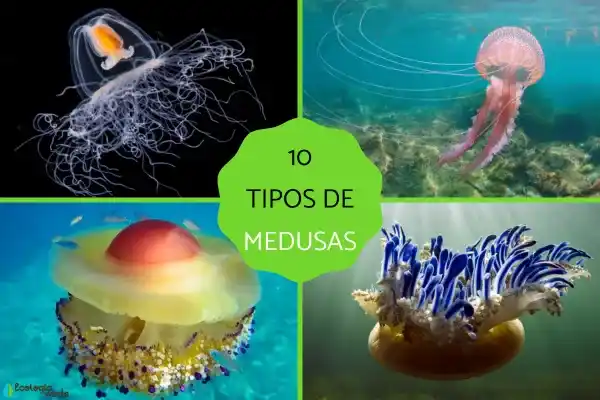
Jellyfish are incredibly adaptable creatures, found in everything from the frigid waters of Antarctica to the warm tropical seas, from coastlines to the deep sea, and even in some lakes. This article will introduce you to 10 unique jellyfish species and their characteristics, unveiling their mysterious and ancient secrets.
Basic characteristics of jellyfish
Jellyfish are invertebrates belonging to the phylum Cnidaria , and they can be found in almost all oceans and bays worldwide. They have the following distinctive characteristics:
Its body structure is soft and it is composed of more than 95% water , so it can float lightly in the sea and swim without developing muscles.
The three main body structures are: the umbrella-shaped "umbrela", the manubrio in the middle, and the tentacles at the edges.
Locomotion : Although the general direction is affected by ocean currents, jellyfish can also move slowly and actively by squeezing the bell with the muscle rings in their bodies.
The life cycle consists of two stages : the larval stage of the adult jellyfish (planktonic larva) attaches to the seabed and forms a structure called a "polypo", which then develops into a small jellyfish and enters the swimming life;
The stinging cells (nematocysts) on the tentacles contain toxins. When they come into contact with prey or enemies, they release venomous stingers through nematocysts, injecting venom.
It mainly feeds on zooplankton and small crustaceans , and may also consume small fish or other jellyfish;
The jellyfish has structures that sense light and direction called "ropalios," with the statocyst helping it maintain balance and the ocelotes used to sense light intensity.
Detailed Explanation of 10 Jellyfish Species
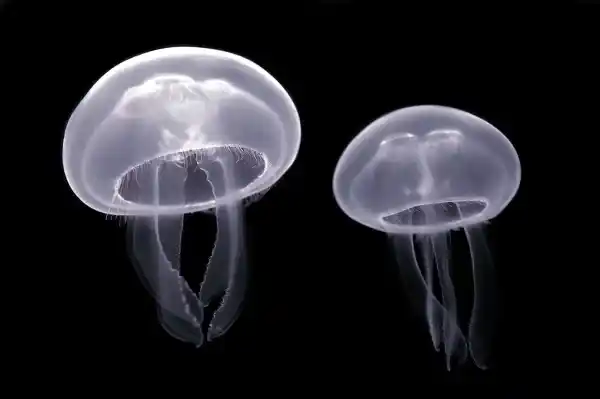
1. Moon jellyfish (Aurelia sp.)
Moon jellyfish are a common type of jellyfish living in nearshore areas. Their transparent bodies clearly show four horseshoe-shaped gonads, making them very easy to identify. The most well-known is the moon jellyfish (Aurelia aurita). They are highly adaptable, with an optimal water temperature between 9°C and 19°C, but they can also tolerate colder or warmer environments. They have a very wide distribution range.
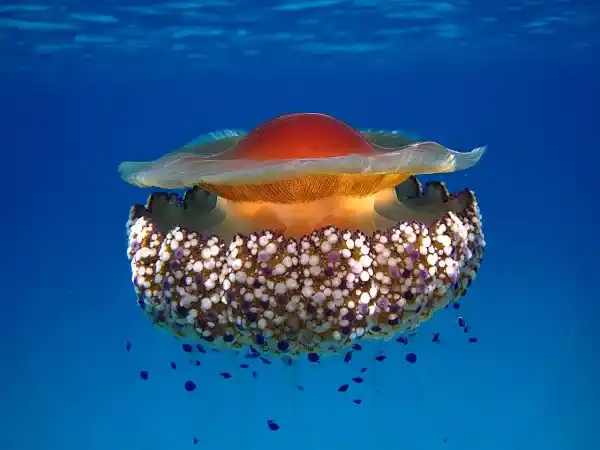
2. Fried Egg Jellyfish (Cotylorhiza tuberculata)
Named "Egg Jellyfish" because its bell resembles an egg yolk, its tip is dome-shaped, orange-yellow or yellowish-brown, and its tentacles are forked with disc-shaped protrusions at the ends. Some are purple. The overall diameter is about 30 centimeters, but can reach up to 50 centimeters. It is usually distributed in the eastern Mediterranean , has weak toxicity, and is almost harmless.
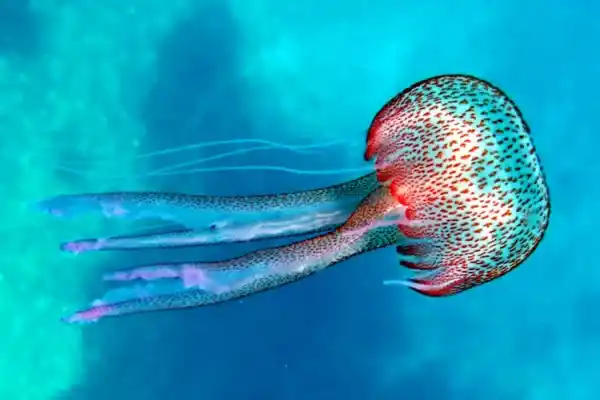
3. Bioluminescent jellyfish (Pelagia noctiluca)
This jellyfish is widely distributed in the Mediterranean and Atlantic Oceans , ranging in color from purple to brown, and has four long and prominent oral appendages. Its name "noctiluca" means "luminescent" because it emits bioluminescence, glowing faintly when the seawater is disturbed or when ships approach. It is one of the jellyfish that causes the most stings in the Mediterranean.
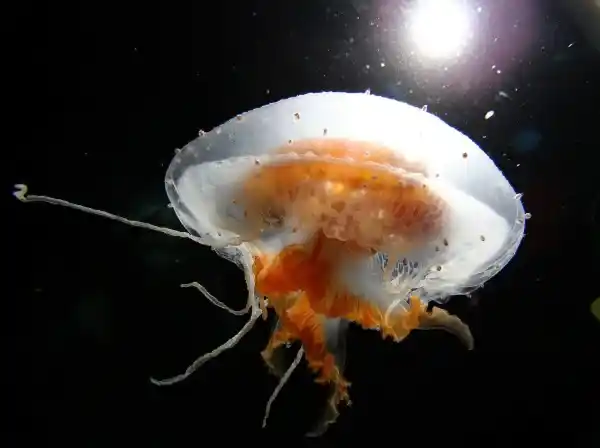
4. Antarctic jellyfish (Diplulmaris antarctica)
This jellyfish, adapted to cold waters, primarily inhabits the surface waters along the coast of Antarctica and its peninsula . Its transparent bell can reach 18 centimeters in diameter, and its orange stomach layer extending to its tentacles is a visual highlight. It feeds on krill, small crustaceans, fish larvae, and mollusc larvae.
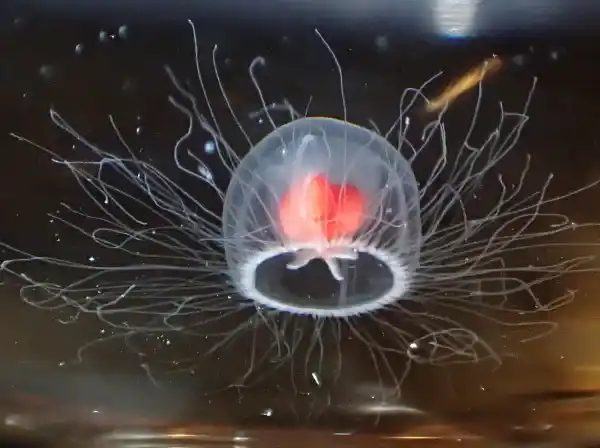
5. Immortal jellyfish (Turritopsis dohrnii)
Despite being less than 5 centimeters long, the most astonishing aspect of *Turritopsis dohrnii* is its ability to reverse its life cycle, theoretically possessing the capacity for "immortality." When injured or lacking food, it transforms itself back into a polyp, restarting its life cycle and generating a jellyfish identical to its original form. This cellular reprogramming process is known as " transdifferentiation ."
6. Lion's Mane Jellyfish (Cyanea capillata)
The largest known jellyfish can have a bell diameter of up to 1.8 meters and tentacles that can extend over 36 meters . An individual found in Massachusetts Bay, USA in 1870 was 2 meters in diameter. Its bell edge has eight groups, each with 70 to 150 long tentacles, which can cause intense pain when they sting humans. Widely distributed in the Atlantic, Pacific, North Sea, and Baltic Sea , it is commonly known as the " lion's mane jellyfish ."
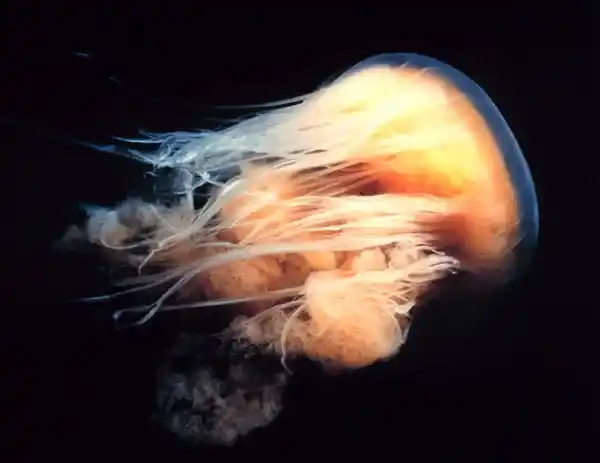
7. Victoria jellyfish (Aequorea victoria)
Known for its ability to emit blue bioluminescence, this jellyfish contains a protein called aequorin , which emits blue light in the presence of calcium ions, and also contains green fluorescent protein (GFP) , which gives it a green fluorescence. GFP is now widely used in research fields such as molecular biology and cell tracking .
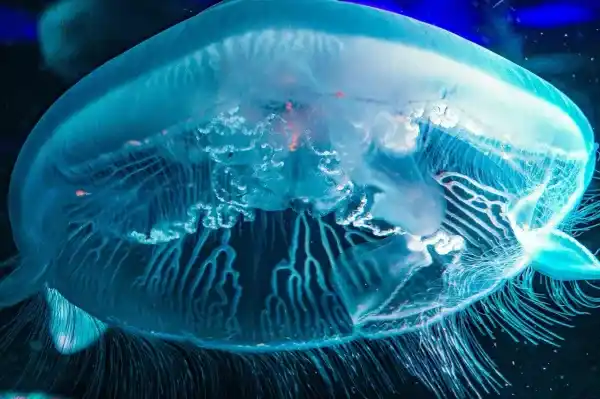
8. Golden Jellyfish (Mastigias papua)
Also known as the "golden jellyfish," it is distributed in the tropical waters of the Indian and Pacific Oceans , especially abundant in the salt lakes of the Palau Islands. Its body surface lives in symbiosis with zooxanthellae, relying on photosynthesis for nutrients. It is harmless to humans, making swimming with golden jellyfish a popular ecotourism activity in Palau .
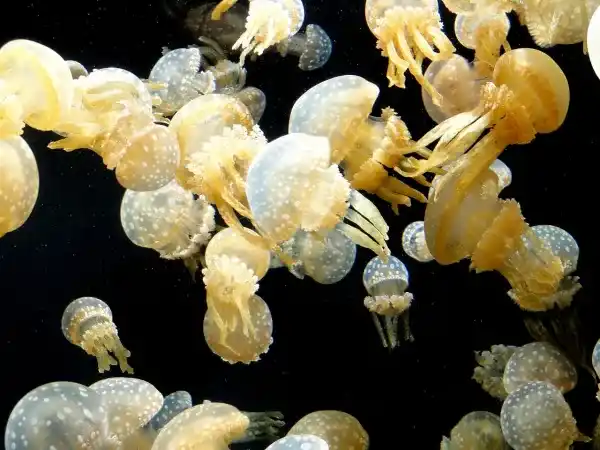
9. Upside-down jellyfish (Cassiopea sp.)
Although these jellyfish can swim, they usually lie on the seabed "head down," with their bells pointing downwards and their tentacles upwards, so that the symbiotic zooxanthellae can receive sunlight for photosynthesis and receive nutrients. Because of this unique behavior, they are often called " upside-down jellyfish ".
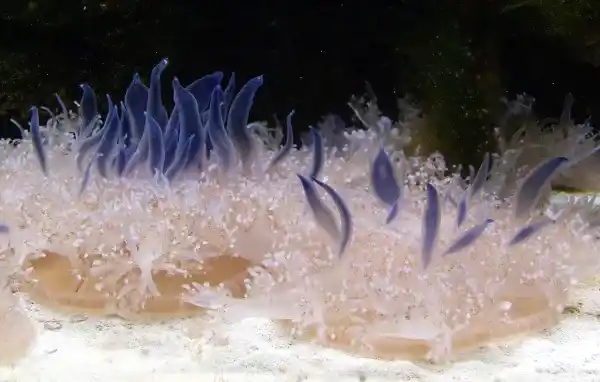
10. Irukanji Jellyfish (Carukia barnesi)
Unlike the aforementioned jellyfish, Carukia barnesi belongs to the Cubozoa genus , also known as the "box jellyfish," and is renowned for its potent venom. It is extremely small, with a bell only 12-30 mm long, almost invisible to the naked eye, but its tentacles can reach up to 80 cm in length. It inhabits the waters off northern Australia . Its stings can cause Irukangi syndrome , characterized by severe headaches, chest pain, vomiting, and difficulty breathing, and can even be fatal .
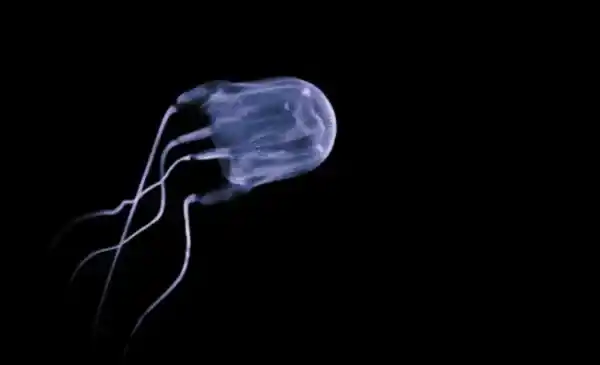
If you'd like to learn more about jellyfish species, we highly recommend you continue learning about the "box jellyfish (sea bee)"—one of the most venomous jellyfish known and considered one of the deadliest creatures on Earth.
Want to see more similar content? Welcome to our "Wildlife" section of the Animal Encyclopedia to explore the wonderful world of marine life.
References
Fenner P, Carney I. Irukangi syndrome. A devastating syndrome caused by jellyfish in northern Australia. Australian Family Physician. Nov 1999;28(11):1131-7. PMID: 10615756.
Naylor, B. 2000. “Cyanea capillata” (online), animal diversity website. Accessed March 8, 2022. URL: https://animaldiversity.org/accounts/Cyanea_capillata/
Chang, Y. 2011. “Mastigias papua” (online), Animal Diversity Website. Accessed March 7, 2022, URL: https://animaldiversity.org/accounts/Mastigias_papua/
Zou, Yawen, “Green Fluorescent Protein”. Encyclopedia of Embryo Projects (2014-06-11). ISSN: 1940-5030 http://embryo.asu.edu/handle/10776/7903.