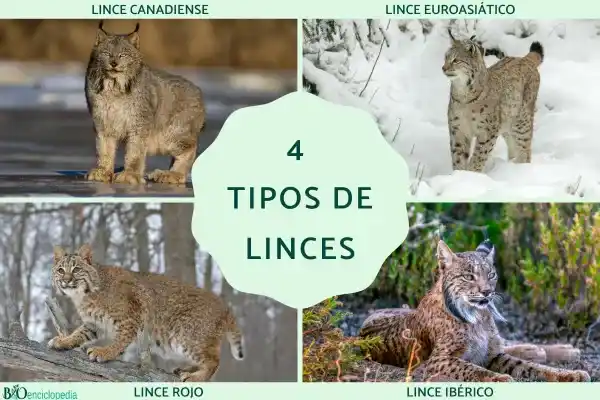
Among felines, the lynx is a highly recognizable wild predator: it often has distinctive black tufts of fur on its ear tips, a short tail, strong limbs, and is stealthy and extremely efficient at hunting. There are four extant species of lynx: the Canadian lynx ( Lynx canadensis ), the Eurasian lynx ( Lynx lynx ), the red lynx/lynx ( Lynx rufus ), and the Iberian lynx ( Lynx pardinus ). This article will first explain "what is a lynx," and then introduce the habitat, appearance, behavior, and reproductive characteristics of each species to help you quickly distinguish them.
What kind of animal is a lynx?
The lynx is a carnivorous mammal belonging to the Felidae family . Its body structure is perfectly suited for ambush hunting: powerful legs, thick paw pads for silent approach to prey, and keen hearing for precise location of prey movements. Most lynxes are solitary , territorial, and active primarily at night or during dawn and dusk (their activity varies depending on the region, season, and prey activity patterns).
1) Canadian Lynx ( Lyx canadensis )
Distribution and Habitat
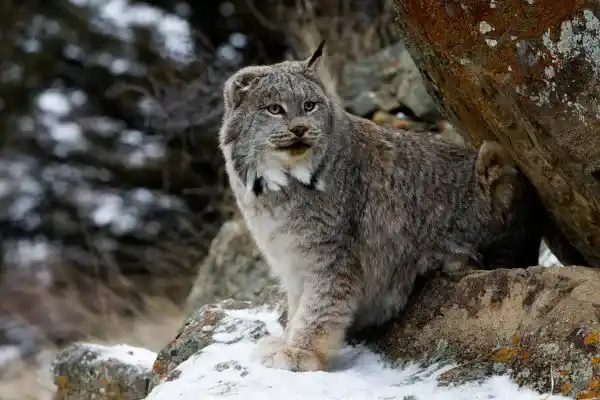
The Canadian lynx is primarily native to Canada , but is also found in the United States, such as in New England and parts of the western region (Utah is mentioned in the text). They can live in dense forests or relatively open forests , as well as on the edges of tundra and in rocky areas, provided there is sufficient shelter and food.
Appearance and body shape
Its fur is mostly yellowish-brown , with a grayish tinge on its back and a beige belly, which is good for camouflage in snowy forests and mixed terrain.
Weight: Approximately 4.5–17.3 kg
Lifespan in the wild: approximately 14.5 years
Reproduction and Habits
Females typically have an estrus period of only 1–2 days , with mating mostly occurring in February or March . Gestation lasts approximately 8–10 weeks , with litters generally consisting of 1–5 pups , each weighing about 200 grams at birth. Males usually do not participate in raising the young. Canadian lynxes are mostly solitary and exhibit strong territoriality.
Species and Current Status Overview
The article mentions that this species has three subspecies :
Lynx canadensis canadensis
Lynx canadensis mollipilosus
Lynx canadensis subsolanus
Overall, the Canadian lynx has faced pressure due to the fur trade and competition from other predators, but it is currently often classified as relatively stable in conservation assessments.
2) Eurasian Lynx
Distribution and Habitat
The Eurasian lynx (also commonly known as the "Northern Lynx") is the most widely distributed of the four lynx species, primarily found in Europe, Russia , and parts of Central Asia . Its distribution is influenced by human activities: densely populated areas with extensive road networks and development make it more difficult to maintain a stable population. Habitat types also vary geographically: in Europe and Siberia, it is commonly found in forested areas ; in Central Asia, it may be found in sparse forests, hills, and rocky mountains .
Appearance and body shape
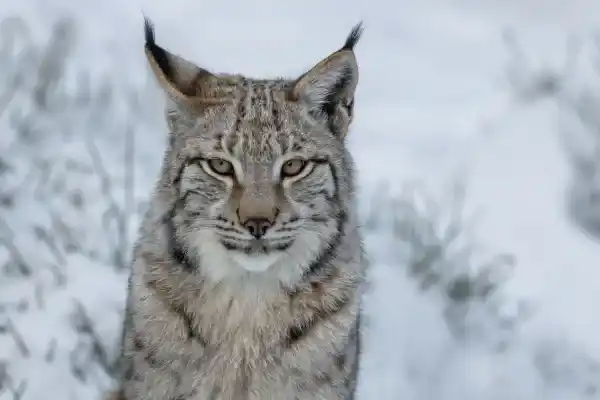
The Eurasian lynx is typically the largest lynx species . Its coat color and markings vary by region, commonly featuring a grayish-brown or yellowish-brown base with dark spots or stripes.
Weight: Approximately 18–36 kg
Lifespan in the wild: approximately 17 years
Reproduction and Behavior
The female's fertile window is very short, usually only about 3 days . Mating season is mostly between February and April . The gestation period is approximately 67–74 days , with cubs typically born in May , usually 2–3 per litter, weighing about 300–350 grams at birth. Eurasian lynxes are skilled climbers and swimmers ; their peak activity times are usually early morning and evening .
Subspecies Tips
The article lists that the Eurasian lynx has multiple subspecies (in considerable numbers), indicating significant differentiation in different regions and reflecting its wide geographical distribution.
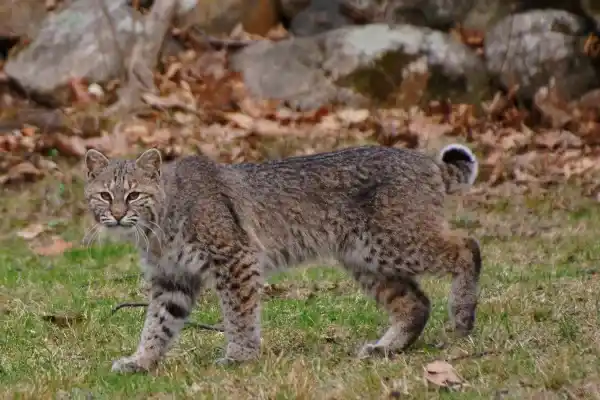
3) Red Lynx/Lynx ( Lynx rufus )
Distribution and Habitat
The red lynx (more commonly known as the "bobcat" in North America) has a very wide distribution, covering most of North America and extending to southern Mexico . It is highly adaptable to various environments, including forests, mountains, scrublands , and semi-deserts .
Appearance and body shape
The red lynx's coat is typically between beige and brown , often with dark spots or stripes . Key distinguishing features include a black tail tip and black areas on the back of the ears .
Weight: Approximately 4–15 kg
Lifespan in the wild: approximately 12 years
Reproduction and Habits
Females typically enter estrus in early spring . The gestation period is approximately 60–70 days , with each litter usually containing about three pups . Similar to other lynxes, red lynxes are mostly solitary and often more nocturnal (though this may vary by region).
Subspecies and Survival Pressure
The article mentions that the red lynx has 13 subspecies , reflecting its wide distribution and significant regional differences. It faces pressures including habitat loss due to urbanization , demand for its fur, and territorial competition with animals such as coyotes.
4) Iberian Lynx ( Lymph pardinus )
Distribution and Habitat
The Iberian lynx is native to the Iberian Peninsula in Europe, mainly distributed in southwestern Spain and a significant portion of Portugal . It prefers Mediterranean scrub environments and is typically found in areas below 1300 meters in altitude .
Appearance and body shape
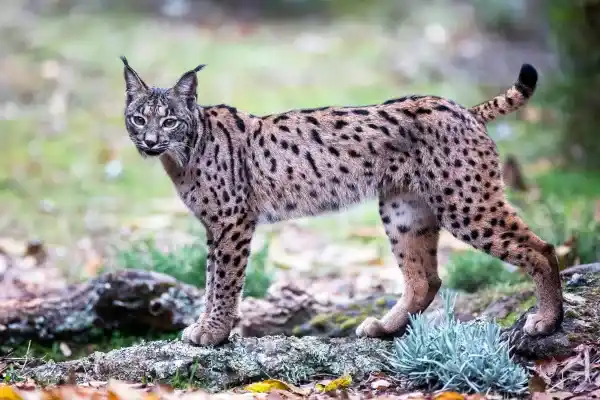
In appearance, it is somewhat similar to the Eurasian lynx: a relatively small head, long legs, a short tail, and a tail tip that is usually black. Its size is within the medium range for lynxes, and its spots are usually quite prominent. The Iberian lynx has no subspecies .
Weight: Approximately 11–15 kg
Lifespan in the wild: up to approximately 13 years
Reproduction and feeding patterns
Females typically enter estrus in January . Gestation lasts approximately 63–73 days , with litters generally consisting of 2–4 offspring . The Iberian lynx is a solitary carnivore and often exhibits distinct diurnal activity patterns, closely related to the activity rhythms of its key prey— the European hare .
The main threats faced
The Iberian lynx has long been affected by multiple factors, including fluctuations or collapses in the European rabbit population , disease, and illegal hunting, and therefore usually receives a higher level of attention in terms of conservation.
How to quickly distinguish between the four types of lynx?
The simplest method: Look at the distribution area.
Canada and northern North America: Canadian lynx
Europe, Russia to Central Asia: Eurasian Lynx
From North America to southern Mexico: Lynx/Wildcat
Spain and Portugal (Iberian Peninsula): Iberian Lynx
Then confirm using body shape and environment.
Largest: Eurasian lynx
Most adaptable and with the most diverse habitats: Red lynx/Lynx
Closely associated with Mediterranean scrubland and the European rabbit: Iberian lynx
More commonly found in cold forests and tundra edges: Canada lynx
A quick overview of 4 lynx species (for easy navigation and internal linking)
Canadian Lynx
Eurasian Lynx — Lynx lynx
Red Lynx/Lynx — Lynx rufus
Iberian Lynx — Lynx pardinus