Bears are a very typical group of mammals, belonging to the family Ursidae . Different species of bears are distributed in a variety of ecosystems in North and South America, Europe, and Asia: from tropical rainforests to alpine forests and even Arctic sea ice. Although they all possess strong bodies, thick fur, and an excellent sense of smell, each bear species has significant differences in appearance, habitat, and adaptability. Below, we will introduce eight common bear species one by one to help you quickly recognize and distinguish them.

What common characteristics do bears share?
Most bears have a sturdy build, powerful limbs and claws, and walk with their paws almost completely on the ground (similar to "walking on their paws"). They generally rely on their sense of smell to find food, and their diets are quite flexible: some are carnivorous, some are omnivorous, and some are almost entirely herbivorous. Different bear species have developed abilities such as climbing, swimming, or walking on snow depending on their environment.
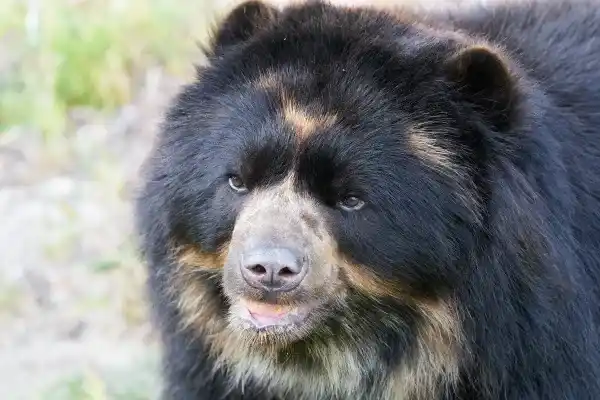
1) Spectacled Bear (Tremarctos ornatus)
Other names: Andean bear
The spectacled bear is the only bear species found in South America, primarily inhabiting the Andes Mountains and surrounding areas of countries such as Venezuela and Bolivia . Common habitats include scrubland, grasslands, and mountain forests . Its most distinctive feature is the light-colored markings on its face, especially around its eyes, resembling "spectacles," hence its name. Its coat color is usually dark, but can also be dark brown or slightly reddish-brown.
Body length: Approximately 120–200 cm (from head to the end of the body)
Weight: Males approximately 100–200 kg; females approximately 35–82 kg
Key features: Noticeable light-colored freckles around the eyes, and varied facial markings.
2) Polar bear (Ursus maritimus)
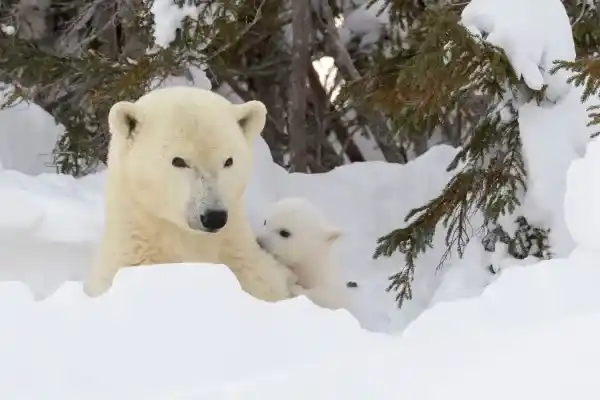
Polar bears are often called "marine mammal-type bears" because they spend almost their entire lives with the sea ice and water of the Arctic Ocean , and are adept at long-distance swimming and walking on ice. Their limbs are very well-developed, with large paws that can be used as "snowshoes" for walking on ice and as "oars" for propelling them through the water. Because their habitat is highly correlated with sea ice changes, the survival status of polar bears is often used to observe changes in polar ecosystems.
Body length: Approximately 180–270 cm
Weight: Approximately 360–590 kg (varies considerably by individual and region)
Key adaptation factors: large feet, strong swimming ability, and a body type suitable for icy and snowy environments.
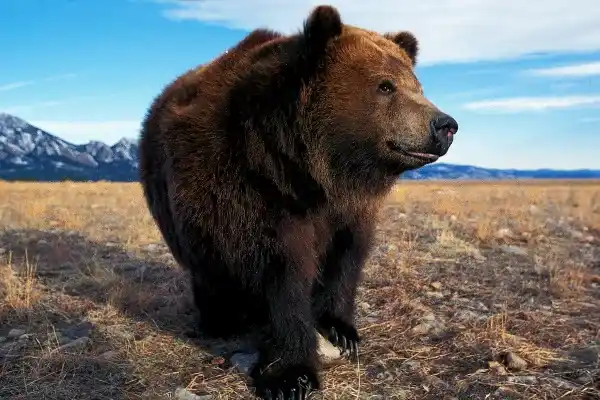
3) Brown bear (Ursus arctos)
Brown bears have a very wide distribution, spanning various regions of Asia, Europe, and North America , and are commonly found in mature forests and mountainous environments. There are many subspecies of brown bears, some of which are particularly large. Brown bear coat color also varies greatly, ranging from light brown and dark brown to golden. The famous North American grizzly bear (often referred to as a "type of North American brown bear") is a very representative group of brown bears.
Physical characteristics: Well-developed shoulder and back muscles, with many individuals having more pronounced shoulder bulges.
Distribution characteristics: Transcontinental distribution, highly adaptable
Identification tips: Heavy build, varied coat colors, and often prominent shoulder contours.
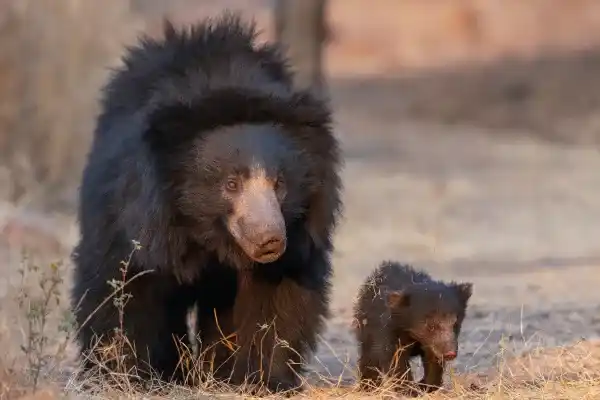
4) Sloth bear (Melursus ursinus)
Other names: long-haired bear, long-snouted bear (different names in some regions)
The sloth bear is mainly distributed in South Asia , such as Nepal, Bangladesh, and India , typically inhabiting grasslands and lowland forests . Its most distinctive features are its thick, long black fur and relatively long snout . The prominent lips and nose give it an advantage when foraging. This species commonly exhibits significant sexual dimorphism: males are typically larger and heavier.
Body length: Approximately 180 cm (individual variations exist).
Weight: Males can reach approximately 175 kg
Key physical features: long fur, long snout, and a highly distinctive facial profile.
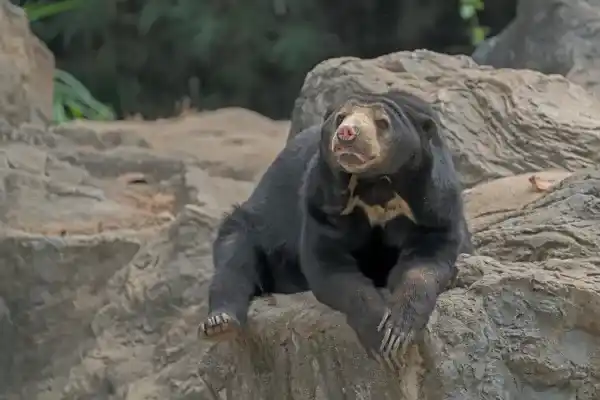
5) Malayan Sun Bear (Helarctos malayanus)
Other names: Sun bear, Honey bear
The Malayan sun bear lives in the tropical rainforests of Southeast Asia, including Myanmar , the Indochina Peninsula, Malaysia, Sumatra, and Borneo . It is one of the smallest bears, with mostly black fur, but usually featuring a light-colored patch on its chest shaped like a sun, hence its common name, the sun bear. Its muzzle and chest area can sometimes be brown, orange, or yellowish.
Size: Generally small, with a common body length/height of around 120 cm.
Weight: Approximately 20–40 kg
Key features: The light-colored, sun-shaped patch on the chest is very distinctive.
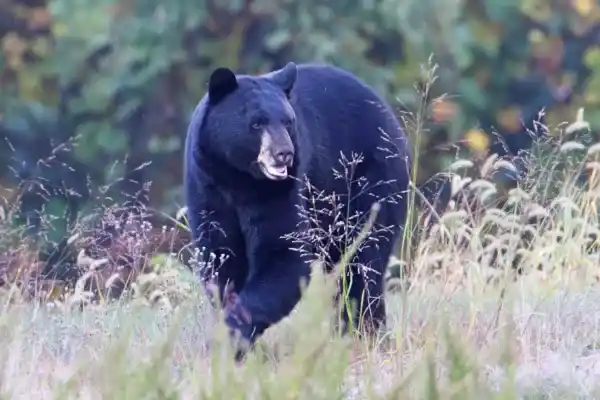
6) American black bear (Ursus americanus)
American black bears are mainly distributed in North America , commonly found in the forests and mountains of the United States and Canada . They prefer to live in densely vegetated environments, which provides them with cover and foraging opportunities. Physically, they are sturdy, with relatively small ears and tails, and many individuals have solid black fur (although other color morphs may be found in some areas).
Body length: up to approximately 200 centimeters
Weight: Females typically weigh around 70–80 kg; males are often heavier, reaching around 120 kg.
Key behavioral characteristics: Strong climbing ability and high adaptability to the environment.
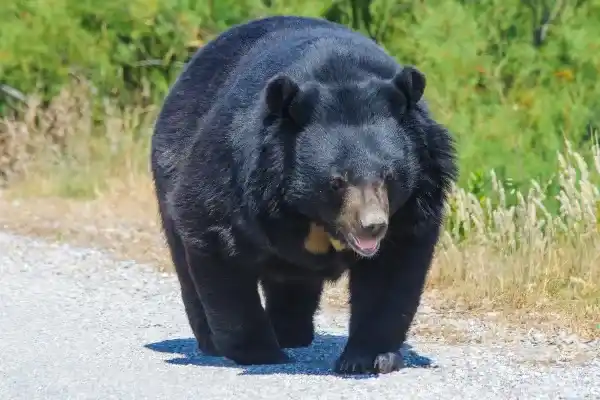
7) Asiatic black bear (Ursus thibetanus)
Other names: Tibetan bear, Himalayan black bear (different names in different regions)
Asiatic black bears are mainly distributed in many countries and regions of Asia, inhabiting forest environments . They can be found in places such as China, South Korea, Japan, and Iran . Their fur is mostly black, with a light-colored patch on their chest often shaped like a "V" or crescent moon , which is one of their most distinctive features. Asiatic black bears are also adept climbers, and arboreal activity is common for them.
Body length: up to approximately 190 cm
Weight: up to approximately 200 kg
Key features: The light-colored crescent/V-shaped markings on the chest are very distinctive.
8) Giant Panda (Ailuropoda melanoleuca)
Giant pandas are native to China and mainly live in mountainous forests at altitudes of up to 3,500 meters . Their most distinctive feature is their black and white fur: the ears, eye rings, shoulders, and limbs are mostly black, while the face and most of the body are white. Giant pandas are medium to large in size among bears, but their diet is very unique, primarily consisting of plant-based foods in their natural habitat.
Body length: up to approximately 190 cm
Weight: Approximately 70–125 kg
Key features: Classic black and white color scheme including dark circles under the eyes, dark ears, and dark limbs.

Quick Comparison of 8 Bear Types
Classified by climate and environment
Polar sea ice: polar bears
Temperate forests/mountains: Brown bears, American black bears, Asiatic black bears
Tropical Rainforest: Malayan Sun Bear
South American Mountains: Spectacled Bear
South Asian grasslands and lowland forests: sloth bears
China's Mountain Forests: Giant Panda
Categorized by "most memorable appearance features"
A bear with glasses on its face: Spectacled Bear
Adapted to sea ice and enormous in size: Polar bear
Brown bears exhibit significant variations in coat color and have thick shoulders and backs.
Long fur, long snout, and unique profile: Sloth Bear
Sun-shaped spot on chest: Malayan sun bear
Crescent/V-shaped light-colored spots on the chest: Asiatic black bear
Black and white stripes, dark circles under the eyes: Giant panda