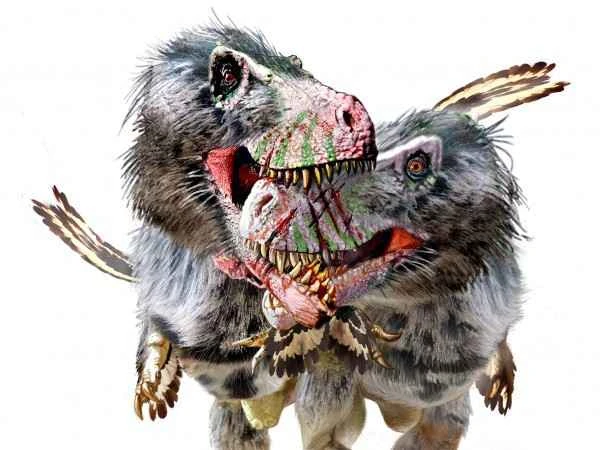
In fact, the history of human discovery of dinosaur fossils is certainly long-standing. Long before the Mantels discovered Iguanodon, Europeans knew that many strangely shaped, enormous skeletal fossils were buried underground. However, at that time, people did not know their exact origin and therefore mistakenly believed them to be the "remains of giants." As for us Chinese, we began collecting large ancient animal fossils unearthed more than 2,000 years ago for medicinal purposes, calling these fossils "dragon bones." Who can be sure that this name "dragon bones" has no connection to the discovery of dinosaur fossils?

Psittacosaurus
However, it wasn't until the Mantels discovered Iguanodon and compared it to iguanas that the scientific community initially identified it as a lizard-like, long-extinct reptile. Therefore, subsequent discoveries of new types of dinosaurs and other ancient reptiles all had names related to lizards, such as "whale-like lizard" and "forest lizard." Furthermore, because these ancient animal fossils that initially attracted attention were often enormous and bizarrely shaped, they were truly terrifying.
As fossils of these terrifying, lizard-like ancient animals continued to be discovered and excavated, their diversity accumulated, and many naturalists began to realize that they should be classified as a distinct group in animal taxonomy. In 1842, the British paleontologist Sir Robert Owen created a Latin name for them, composed of two roots: the first meaning "terrifying" and the second "lizard." From then on, "terrifying lizards" became the collective term for this large group of reptiles that were related but exhibited a wide variety of behaviors. We Chinese, with both imagination and generalization, translated this Latin name as "dinosaur."
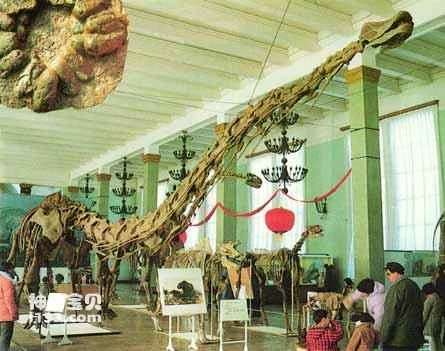
Mamenchisaurus
We now know that while there were indeed many terrifying behemoths in the dinosaur family, there were also some small and adorable "little guys." If you visit the Paleozoological Museum of China, not far west of the Beijing Zoo, you'll see a variety of dinosaurs of different sizes and shapes, from the Psittacosaurus, which is less than 1 meter long, to the Mamenchisaurus, which is 22 meters long. This will surely give you a more comprehensive understanding of the dinosaur world.
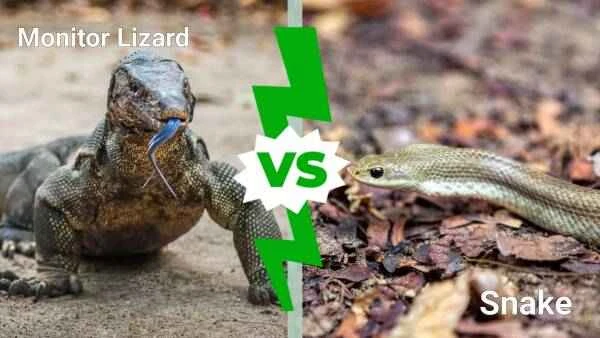
We now also know that dinosaurs were not lizards at all. Although they both belong to the reptile family, dinosaurs and lizards are quite distantly related within the vast and diverse reptile family!