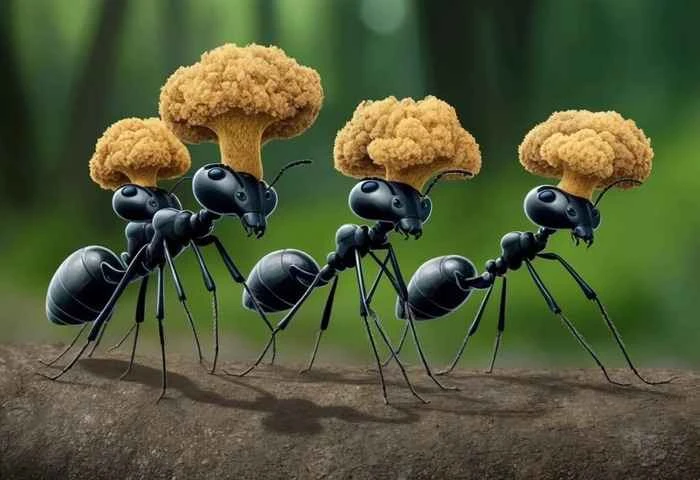
When you think of dragons, you might picture the enormous, flying dragons of mythology, breathing scorching flames, majestic and awe-inspiring, even capable of preying on humans and livestock. But did you know that scientists actually believe "flying dragons" exist in reality, and that "fire-breathing" is not entirely impossible? Today, let's follow the footsteps of science and uncover the truth behind these mysterious creatures.

How big can a dragon fly?
Over 100 million years ago, during the Late Cretaceous period, there existed a massive pterosaur on Earth—the giant pterosaur Quetzalcoatlus, with a wingspan exceeding 11 meters and a weight of approximately 200 kilograms, equivalent to the weight of an adult tiger. Imagine, such a "flying dragon" was perfectly capable of hunting humans or livestock! Modern birds are descendants of these prehistoric flying reptiles, only much smaller in size.
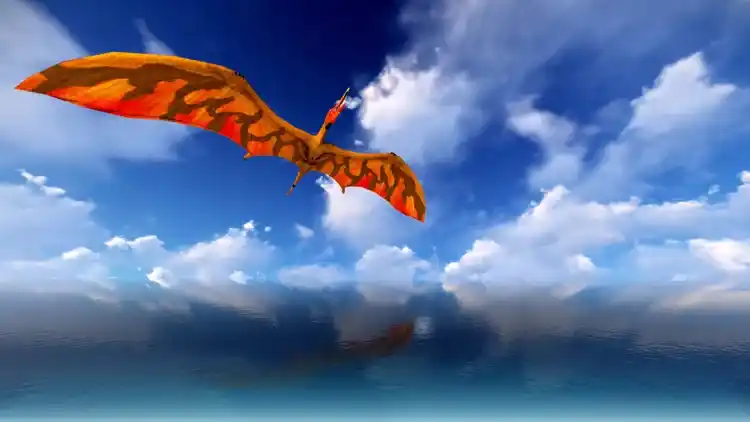
So why don't birds grow as big as they do today? Scientists have several theories: one is that the energy cost of maintaining feathers and flight limits body size; another is that changes in Earth's climate and atmospheric composition affect the development of organisms.
What does a modern "flying dragon" look like?
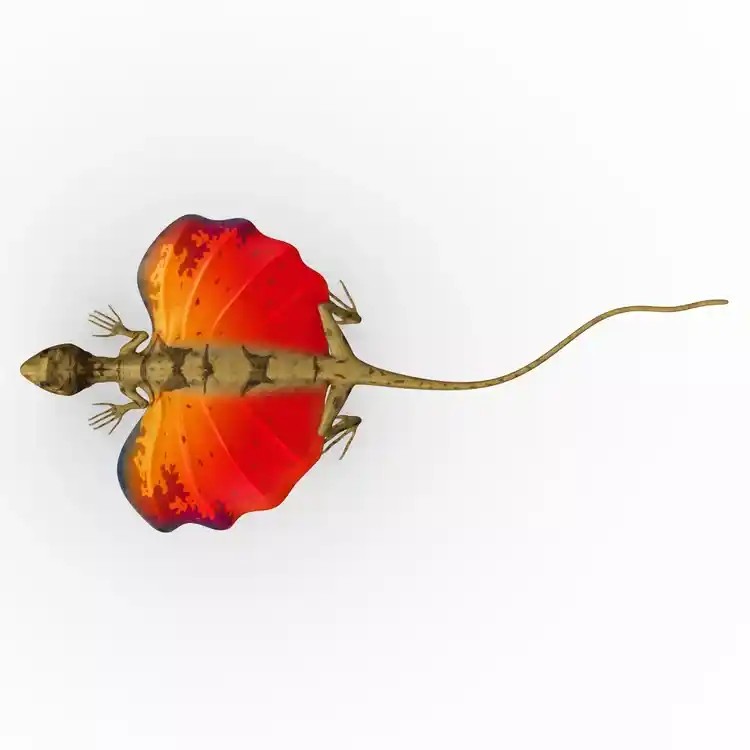
Do "flying dragons" really exist in modern times? The answer is yes! They are a type of "flying lizard" from Asia—the Draco, belonging to the iguana family. Although they are only about 20 centimeters long and cannot hunt large animals, they can glide using the "wing membranes" that spread out on both sides of their bodies, and can glide for up to 60 meters! These flying lizards can also use the membranes on their tails and necks to control their gliding posture, and are very common in the tropical rainforests of Southeast Asia.
Even a wingless "dragon" can glide.
Asia also has a special kind of "flying dragon"—the paradise tree snake (Chrysopelea paradisi). This snake has no wings, yet it can flatten and twist its body, gliding over 100 meters from trees at an optimal angle of 25 degrees! Although they cannot truly "fly," this long-distance gliding is still an amazing natural wonder. If some creature in the future can store gases lighter than air, perhaps it could truly achieve flight.
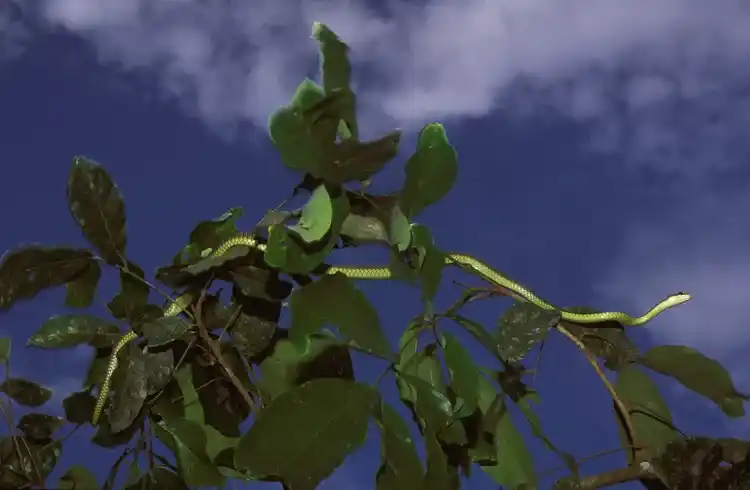
Can a Charizard really breathe fire?
While no animals have actually been found to breathe fire, the act of breathing fire itself is not impossible in nature. For example, bombardment beetles can mix two chemicals and violently eject them, producing a powerful exothermic reaction that scares away enemies, much like "breathing fire." Combustible or reactive compounds, such as hydrogen peroxide and methane, are frequently produced within living organisms; some structures can even generate sparks.
Therefore, theoretically, a certain "fire-breathing dragon" could store these chemicals and ignite the flames through chemical or mechanical means after spraying them. The flames could exit through its mouth or other specialized organs of the body.
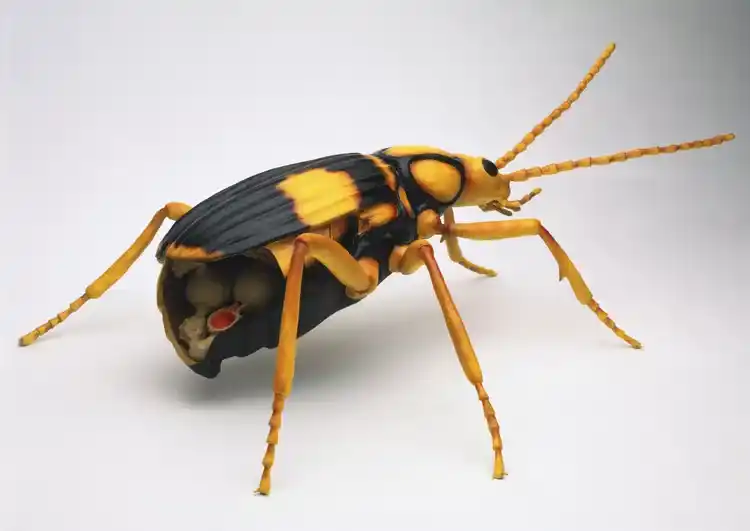
But most of the giant dragons in movies are from legends.
The heavily armored dragons in the movie, with their thick scales, spikes, and giant horns, are scientifically almost impossible to fly. Their massive skeletons and armor would prevent them from taking off. However, if you prefer the image of a smaller, winged dragon, science still has many mysteries to solve—for example, scientists didn't truly understand how bumblebees fly until 2001!
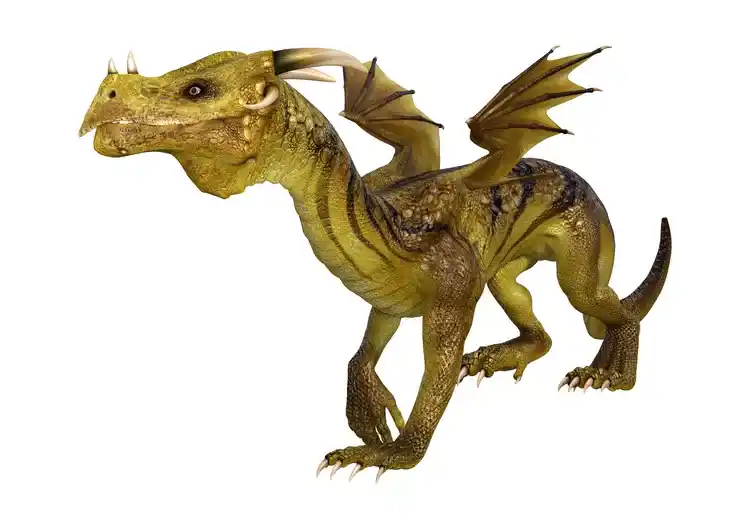
Key points that science tells us:
Giant flying reptiles have actually existed, and modern-day gliding "flying dragons" also exist;
Wingless reptiles can glide for long distances using their special body structures;
Although fire-breathing has not been observed, it is theoretically entirely possible in the biological world.
Giant movie dragons belong to the realm of mythology, but the scientific world is still full of unknowns.
If you're also captivated by these amazing "flying dragon" stories and want to learn more about the wonders of nature, welcome to follow my WeChat official account, 【Animal Encyclopedia】, where I'll take you to discover more amazing stories behind the science!
source
Aneshansley, DJ et al., “Biochemistry at 100°C: the explosive secretions of the stink bug (Brachinus). Science Journal, 1969, Vol. 165, No. 3888, pp. 61-63.
Becker, Robert O., and Andrew A. Marino. “Chapter 4: Electrical Properties (Piezoelectricity) of Biological Tissues.” Electromagnetism and Life. State University of New York Press, 1982.
Eisner, T. et al., “The most primitive spraying mechanism of the stink bug (Metrius contractus). Journal of Experimental Biology, Vol. 203, No. 8, 2000, pp. 1265-1275.
Herre, Albert W. “On gliding in the genus Draco.” Copeia, Vol. 4, No. 4, 1958, pp. 338-339.