Birds of prey, also known as carnivorous birds, are a broad group of birds that feed on other animals and possess strong talons and hooked beaks . They include diurnal birds of prey (such as eagles, buzzards, hawks, falcons, vultures, kites, and ospreys) and nocturnal birds of prey (owls: Strigiformes and Strigidae families). Representative species include the golden eagle ( Aquila chrysaetos ), the eagle-owl ( Bubo bubo ), and the wrinkled-faced vulture ( Torgos tracheliotos ). This article supplements the original text with more complete descriptions of characteristics, key classification points, and species information, facilitating direct publication on animal science websites and reader retrieval.
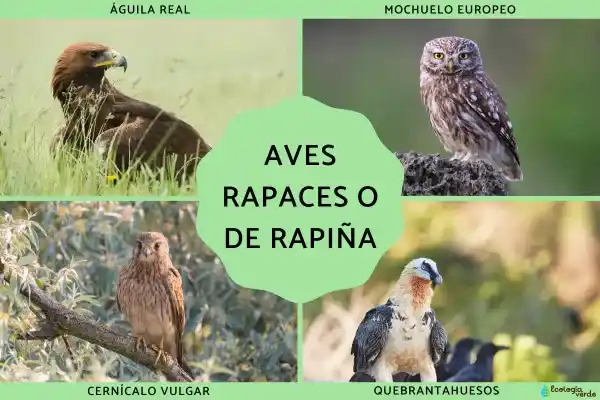
Table of contents
What is a "bird of prey"?
Core characteristics of birds of prey
Two main types: nocturnal birds of prey vs. diurnal birds of prey (including scavengers).
Typical representative species (further explanation)
More lists of birds of prey (with scientific names)
Summary and Further Reading
What is a "bird of prey"?
In a broad sense, "birds of prey" refers to a group of birds that primarily hunt , possess strong talons and sharp beaks , and mostly occupy a high position in the food chain. Taxonomically, they are often divided into:
Diurnal birds of prey : Traditionally included in the order Accipitriformes (eagles, hawks, buzzards, vultures, kites, etc.) and Falconiformes (falcons); there is also the osprey ( Pandion haliaetus ) in a separate family of ospreys.
Nocturnal birds of prey : Strigiformes, mainly consisting of the families Strigidae and Stray owls (such as eagle owls and barn owls).
Core characteristics of birds of prey
Sharp claws and powerful toe muscles : The toes have curved and sharp claws, and the powerful grip is used to capture and move prey.
Hooked beak : A powerful, hooked beak is used to tear muscles and membranes ; vultures have even thicker beaks to tear tough leather.
Superior sensory experience :
Most diurnal raptors have exceptional vision (high-density photoreceptor cells and overlapping of the two eyes in front of each other to enhance stereoscopic vision).
Nocturnal birds of prey have facial disc structures , asymmetrical ear positions , and feather edges that allow for silent flight , making them highly dependent on hearing and low-noise hunting.
Body size and sexual dimorphism : Many groups exhibit sexual dimorphism where females are larger (females are larger than males), which is beneficial for division of labor and reduces competition among members of the same species.
Diet and ecological niche : Most feed on live prey (small mammals, birds, reptiles/amphibians, fish, insects, etc.); scavenging birds of prey (such as vultures and eagles) specialize in cleaning up animal carcasses and are the "cleaners" of the ecosystem.
Flight and hunting strategies include a variety of methods such as high-altitude gliding , skimming through the forest, stooping , and hovering (like the kestrel).
Two main types: nocturnal birds of prey vs. diurnal birds of prey (including scavengers).
Nocturnal birds of prey (owls)
This includes the owl family (Bubo, Strix, etc.) and the barn owl family (Tyto) .
Key adaptations: A round facial disc concentrates sound waves, silent feather edges, and asymmetrical ear placement enable them to accurately locate extremely subtle sounds at night (such as the rustling of rodents in the grass). Examples: Eagle Owl, Snowy Owl, Barn Owl, Long-eared Owl, Short-eared Owl , etc.
Diurnal birds of prey (eagle, buzzard, hawk, falcon, vulture, kite, osprey)
It boasts a diverse range of species and ecological niches. From high-speed aerial hunters (such as peregrine falcons) to gliding and soaring plateau kings (such as Andean condors), and fish experts (ospreys), it covers almost all types of open landforms and habitats such as forests, wetlands, and coastlines.
Scavenging birds of prey
Vultures , including the cinereous vulture and the golden vulture , primarily feed on carrion. They are large in size, have huge wingspans, and are capable of long-lasting flight. Their heads and necks are mostly exposed to keep them clean, making them key members in maintaining ecological hygiene and nutrient cycling.
Typical representative species (further explanation)
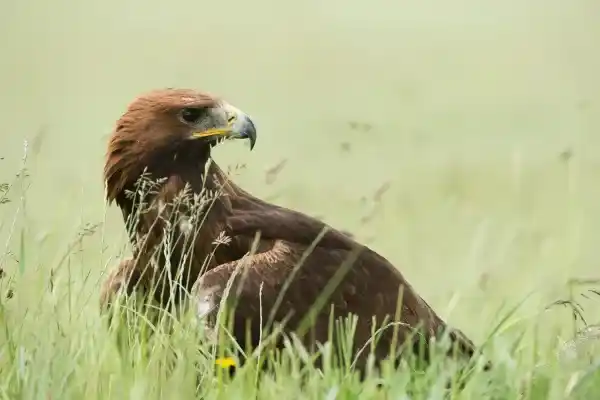
Golden Eagle Aquila chrysaetos
Chinese alias : Golden Eagle; English : Golden Eagle
Distribution : Mountainous, grassland and open areas of North America, Eurasia and North Africa; important populations exist in Britain, Japan, Vancouver and the Mediterranean coast.
Key identifying features : large size, long and broad wings, and a golden-brown "shawl" around the neck.
Ecology : It preys on lagomorphs, rodents, pheasants, and small to medium-sized mammals; occasionally it hunts larger prey.
Conservation : The habitat in some areas has declined due to human disturbance, and these areas are protected by multiple countries.
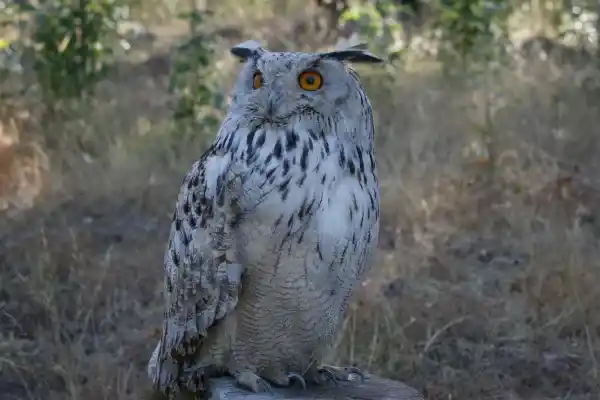
Eagle Owl Bubo bubo
English : Eurasian Eagle-owl
Distribution : Europe, North Africa, West Asia, Central Asia to East Asia; common in northwestern Europe and the Mediterranean region.
Characteristics : A very large owl with prominent "ear tufts" ; it often inhabits rocky cliffs/forest edges.
Human culture : Commonly used in falconry/bird of prey displays (high success rate in artificial breeding).
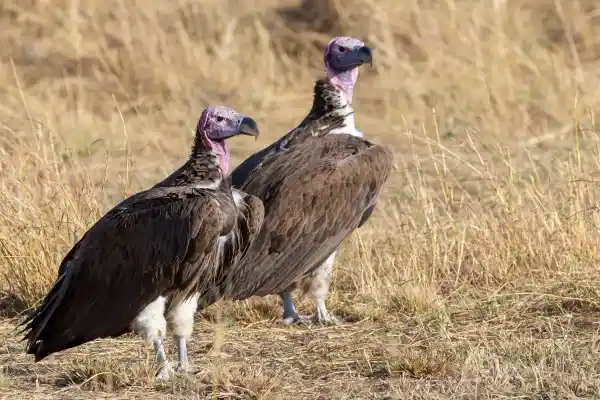
Torgos tracheliotos (wrinkled-faced vulture)
English : Lappet-faced Vulture
Distribution : Africa; bare, pink neck , strong and powerful beak.
Ecology : The "pioneer" of scavenging, able to tear open the thick skin first for other scavengers to eat.
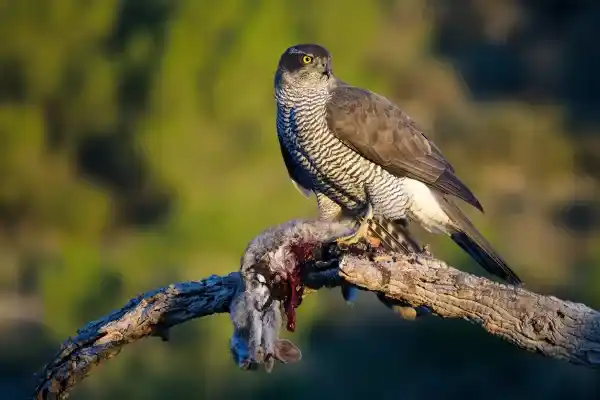
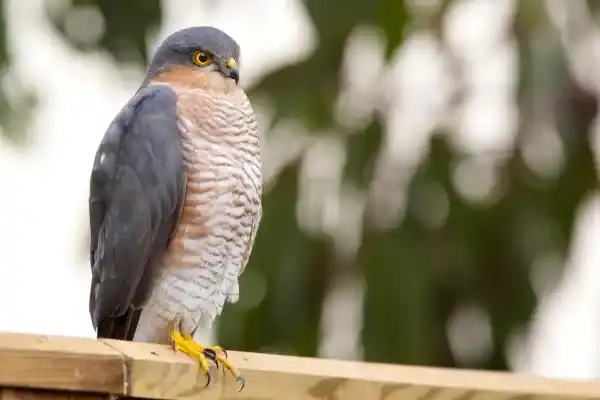
Sparrowhawk (Accipiter nisus)
English : Eurasian Sparrowhawk
Distribution : A vast Eurasian region from Western Europe to Japan.
Characteristics : A small "forest short-winged" hunter with a gray-blue back and horizontal stripes on its chest and abdomen; adept at darting through dense forests to ambush small birds.
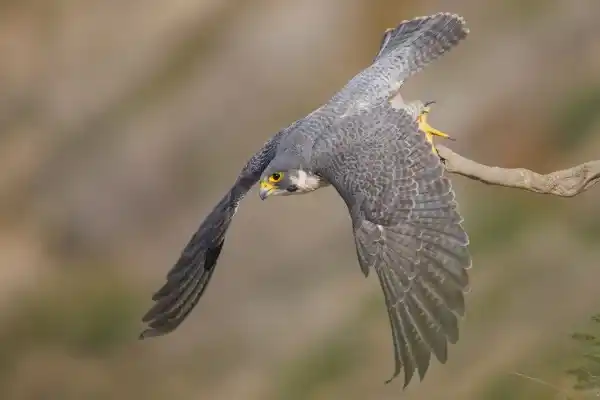
Peregrinus
Peregrine Falcon ( world speed record holder )
Distribution : Almost globally .
Characteristics : Adult birds have a gray-blue back and a black head; they catch birds by swooping down from high altitudes at speeds exceeding 300 km/h .
Diet : Primarily birds, but also small mammals/reptiles and insects.
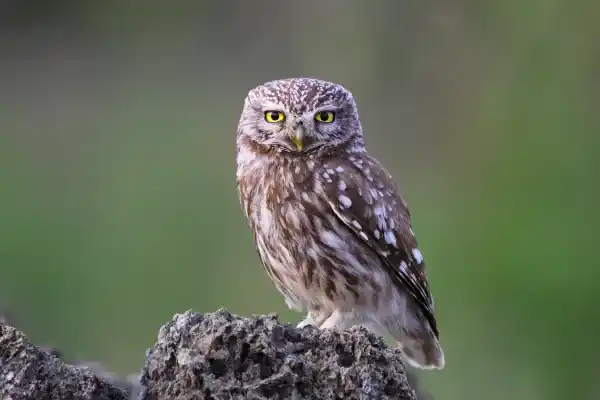
Little Owl (Athene noctua)
English : Little Owl
Body length : approximately 25 cm ; distributed in many parts of Africa and Europe.
Identification features : yellow iris , round head, brown body feathers with white spots, and short, rounded wings.
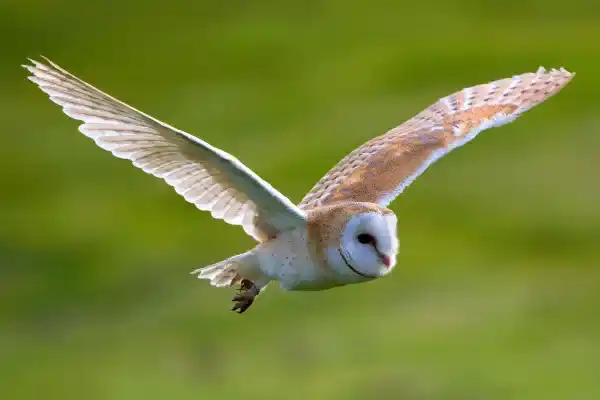
Barn Owl Tyto alba
English : Barn Owl
Distribution : Almost the entire globe except Antarctica; predominantly found in grasslands, farmlands, and around villages.
Features : Heart-shaped facet , quiet flight; relies on hearing to efficiently catch mice.
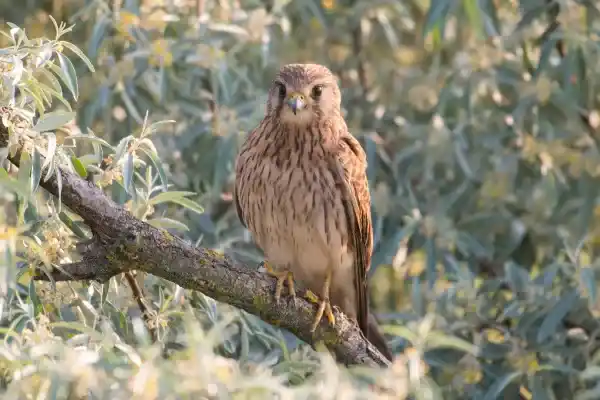
Falco tinnunculus
English : Common Kestrel
Distribution : Widespread in Europe, Asia, and Africa; prefers open scrubland and farmland.
Features : It can "hover in place" to scout small animals and large insects on the ground.
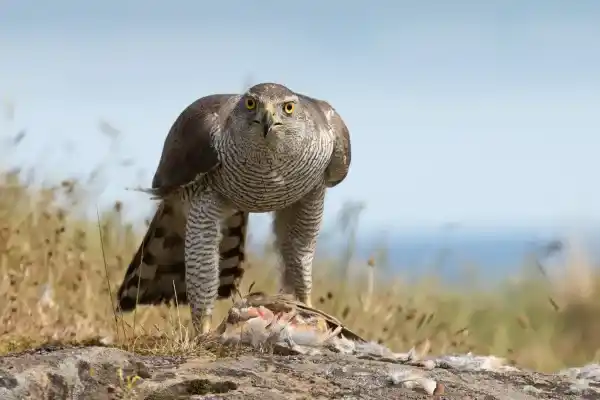
eagle Accipiter gentilis
English : Northern Goshawk
Distribution : Mountain forests and mixed coniferous and broad-leaved forests in Eurasia and North America.
Characteristics : Short wings, long tail, and explosive power; adept at high-speed maneuvering through forests to ambush medium-sized birds and animals.
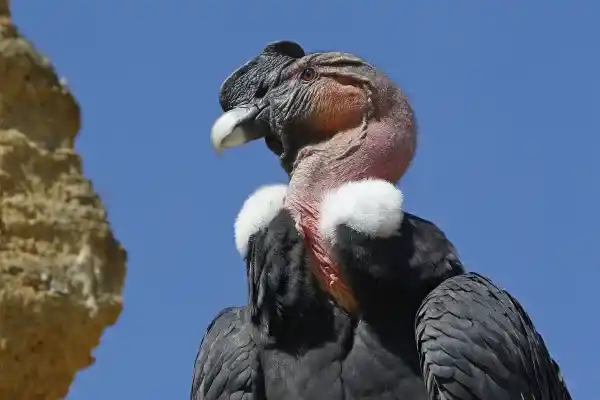
Andean condor Vultur gryphus
English : Andean Condor
Distribution : Andes Mountains, South America; wingspan can reach approximately 3 meters .
Ecology : A typical high-altitude scavenging giant eagle, maintaining the ecological health of the high mountains.
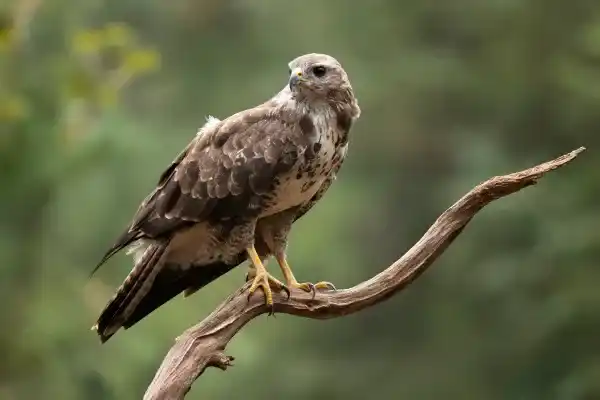
Common buzzard Buteo buteo
English : Common Buzzard
Distribution : Central and surrounding Europe; varied in appearance , commonly found hovering over grasslands, farmland, and wastelands foraging.
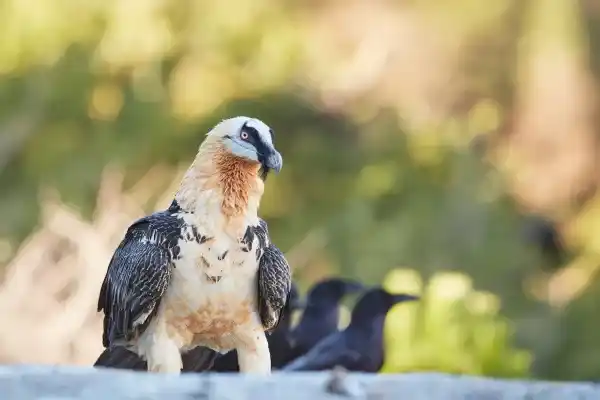
Bearded vulture Gypaetus barbatus
English : Bearded Vulture / Lammergeier
Behavioral characteristics : They will carry bones or turtle shells to a high place, drop them to break them , and then eat them; this is a unique adaptation.
Distribution : Europe (small amounts in the Pyrenees, Alps, Cantabrian Mountains, etc.), North Africa, South Africa, Greece, etc.
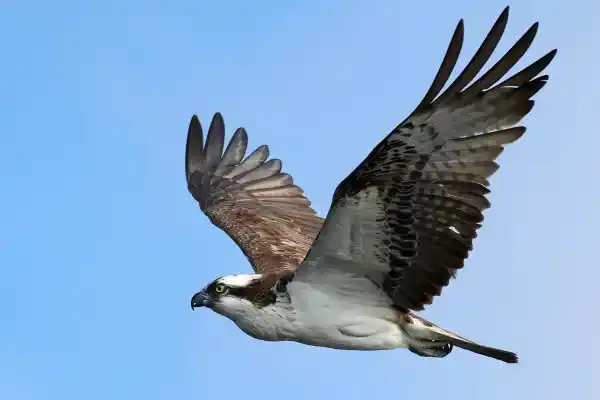
osprey Pandion haliaetus
English : Osprey
Distribution : Widely distributed except in Antarctica; migratory and does not breed in South America.
Ecology : Its toes have reversible toes , which help it grasp slippery fish, making it an expert fisherman .
More raptor names (scientific name comparison; common translations may vary slightly by region).
For ease of retrieval and comparison with popular science illustrations, the following is a list of the main species in the original text (in order of the original text, supplemented with commonly used Chinese/English names; some are given only their scientific names to avoid mistranslation):
Eastern Imperial Eagle ( Aquila heliaca )
Iberian Imperial Eagle ( Aquila adalberti )
Snowy Owl Bubo scandiacus (Snowy Owl)
The Secretary Bird ( Sagittarius serpentarius )
Eleonora 's Falcon
African Fish Eagle ( Haliaeetus vocifer )
New Zealand Falcon ( Falco novaeseelandiae )
Bonelli's Eagle ( Aquila fasciata )
Lophostrix cristata ( Crested Owl)
Falco mexicanus (Prairie Falcon)
Brygyi's Forest Owl ( Athene blewitti / Heteroglaux blewitti )
Falco subbuteo (Eurasian Hobby)
King VultureSarcoramphus papa (King Vulture)
North American Spotted Owl ( Strix occidentalis )
Aquila rapax (Tawny Eagle)
Long-eared Owl ( Asio otus )
The Central American Little Owl, * Glaucidium costaricanum* (Costa Rican Pygmy-owl).
Falco rusticolus (Gyrfalcon)
Pharaoh Eagle-owl ( Bubo ascalaphus )
Aquila verreauxii (Verreaux's Eagle)
Grey Falcon/Grey Falcon (Merlin) Falco columbarius (Merlin)
Striped Owl (Asio = Pseudoscops) clamator
Athene cunicularia ( Burrowing Owl)
White-eyed Falco rupicoloides (Greater Kestrel)
Oriental Hobby ( Falco severus )
Guatemalan shrike ( Megascops guatemalae ) (Guatemalan Screech-owl)
Falco cherrug (Saker Falcon)
Falco deiroleucus (Orange- breasted Falcon)
Jungle Owl ( Glaucidium radiatum )
Great Horned Owl ( Bubo virginianus )
Barbary Falcon (closely related to the peregrine falcon) *Falco pelegrinoides * (Barbary Falcon)
African Hawk -eagle ( Aquila spilogaster )
Philippine Eagle Owl ( Bubo philippensis )
Surnia ulula ( Northern Hawk-owl)
Falco jugger (Laggar Falcon)
Australian Common Falco cenchroides (Nankeen Kestrel)
Steppe Eagle ( Aquila nipalensis )
Marsh Owl ( Asio capensis )
Blue-grey Saker Falco femoralis (Aplomado Falcon)
Lesser Yellow -headed Vulture ( Cathartes burrovianus )
Yellow-clawed Falcon ( Lesser Kestrel)
Pearl -spotted Owlet ( Glaucidium perlatum )
Falco rufigularis (Bat Falcon)
Aquila audax ( Wedge -tailed Eagle)
Bengal Eagle Owl ( Bubo bengalensis )
American Red-crested Vulture ( Cathartes aura) (Turkey Vulture)
The Eurasian vulture (not the bearded vulture) is * Gyps fulvus* (Griffon Vulture).
Clanga clanga (Greater Spotted Eagle)
Harpia harpyja ( Harpy Eagle)
Guatemalan pygmy owl ( Glaucidium cobanense )
Aquila gurneyi ( Gurney's Eagle)
Brown Wood Owl / Coffee Wood Owl Strix (=Ciccaba)virgata (Mottled Owl)
Andean Pygmy Owl ( Glaucidium jardinii )
Spectacled Owl ( Pulsatrix perspicillata )
Falco chicquera (Red-necked Falcon)
Southern Pygmy Owl ( Glaucidium nana )
Lanner Falcon Falco biarmicus (Lanner Falcon)
Falco berigora (Brown Falcon)
Australian Hobby ( Falco longipennis )
Indian Spotted Eagle ( Clanga hastata )
Verreaux 's Eagle-owl / Milky Eagle -owl
Falco fasciinucha (Taita Falcon)
Falco concolor (Sooty Falcon)
Greater Yellow-headed Vulture ( Cathartes melambrotus )
California Condor ( Gymnogyps californianus )
Great Horned Owl (Nacurutu subspecies) Bubo virginianus nacurutu
Grey Kestrel ( Falco ardosiaceus )
Mauritius Falcon ( Falco punctatus (Mauritius Kestrel))
Dark-eared Owl ( Asio stygius (Stygian Owl))
Lesser Spotted Eagle ( Clanga pomarina )
Dickinson's Kestrel Falco dickinsoni (Dickinson's Kestrel)
Asio flammeus ( Short-eared Owl)
Falco newtoni (Madagascar Kestrel)
Barred Eagle-owl Bubo sumatranus (Barred Eagle-owl)
Black Vulture ( Coragyps atratus )
Megascops cooperi (Pacific Screech-owl)
Banded Kestrel Falco zoniventris (Banded Kestrel)
Magellanic Horned Owl ( Bubo magellanicus )
Elf Owl ( Micrathene whitneyi )
Falco vespertinus ( Red -footed Falcon)
Falco alopex (Fox Kestrel)
Fraser's Eagle -owl ( Bubo poensis )
Greyish Eagle-owl Bubo cinerascens
Cape Eagle-owl ( Bubo capensis )
Tropical Screech-owl ( Megascops choliba )
Pygmy Owl (Eurasian) Glaucidium passerinum
Brown-fronted Owl Aegolius harrisii (Buff-fronted Owl)
Seychelles Falco araeus (Seychelles Kestrel)
Red -chested Owlet ( Glaucidium tephronotum )
African Hobby ( Falco cuvierii )
Shelley 's Eagle-owl ( Bubo shelleyi )
Northern Pygmy Owl ( Glaucidium gnoma )
Amazonian Pygmy Owl ( Glaucidium hardyi )
The smallest pygmy owl, Glaucidium minutissimum (Least Pygmy-owl)
Collared Owlet ( Glaucidium brodiei )
Central American Pygmy -owl ( Glaucidium griseiceps )
Kabre's Little Owl ( Glaucidium brasilianum (Ferruginous Pygmy-owl))
African Barred Owl ( Glaucidium capense )
Rusty Hawk ( Buteo regalis )
Note: Common Chinese names may vary in different regions/contexts; scientific names can be used as the most authoritative search keys ; English names can be used to assist in image and data comparison.
Summary and Further Reading
Birds of prey dominate the upper echelons of the aerial food chain with their robust physique and superior senses ;
The two main categories of nocturnal and diurnal flight have completely different directions of adaptation in terms of sensory perception and flight structure.
Scavenging birds of prey are the ecological "cleaners," playing a crucial role in disease control and nutrient cycling ;
Representative species (such as peregrine falcons , Andean condors , bearded vultures , golden eagles , and ospreys ) each have unique ecological niches and behaviors.