Wild boars ( Sus scrofa ) are highly adaptable mammals native to Eurasia and extending into parts of North Africa . They are easily recognizable by their appearance: a long, slender snout with a flat, hard nasal disc at the end, facilitating rooting for food; well -developed toes adapted for traversing forests, mud, mountains, and even farmland; large canines (forming tusks) used for defense and fighting; and a digestive system primarily consisting of a monostomal stomach with additional sac-like structures.
Because wild boars can survive in the wild and easily approach areas with human activity, they have expanded after being introduced to some regions and are considered invasive or "pests." Below is a list of eight commonly mentioned types of wild boars (including several common subspecies and closely related species).
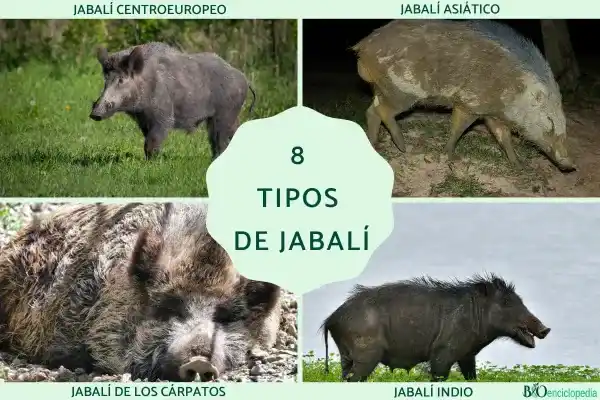
1) Central European wild boar ( Sus scrofa scrofa )
Body size data
Body length: Approximately 90–160 cm
Weight: Males approximately 70–90 kg; females approximately 40–65 kg
Under commercial breeding conditions: males can reach approximately 200 kg; females can reach approximately 170 kg.
Appearance features
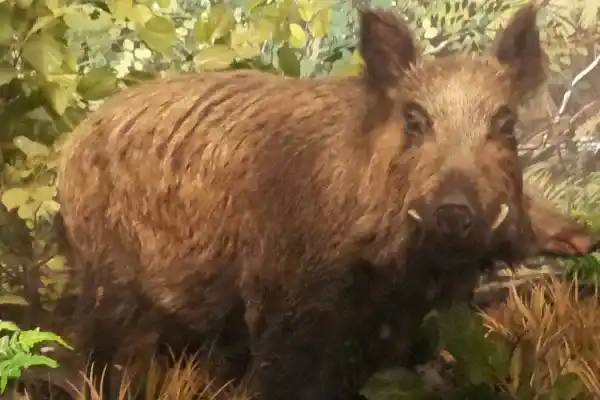
The fur is usually double-layered : the outer layer is coarse and stiff, while the inner layer is finer and softer. The coat color is mostly dark brown, but a few light-colored or white individuals may exist (often thought to be related to recessive genes). The ears are small, the head is wedge-shaped, and the tail is usually straight and not curled.
Diet and Habits
Central European wild boars are omnivorous , but in many environments they primarily feed on plants. A common description is that their diet consists of approximately 90% plant matter and about 10% animal protein (the exact percentage varies depending on the season and food source).
Reproductive characteristics
Reproduction frequency: Usually once a year
Fetal size: mostly 4–6 pups
Gestation period: approximately 115–118 days
Weaning: Approximately 12 weeks after birth
Conflicts with humans and health risks
Wild boars are considered "pests/invasive species" in many areas. They generally do not attack humans unless provoked. However, in areas near towns, they can cause traffic accidents , damage lawns and green spaces, and harm urban infrastructure. More problematic are their potential to spread or carry diseases and parasites, such as tuberculosis and trichinosis mentioned in the text, as well as external parasites (like fleas and ticks).
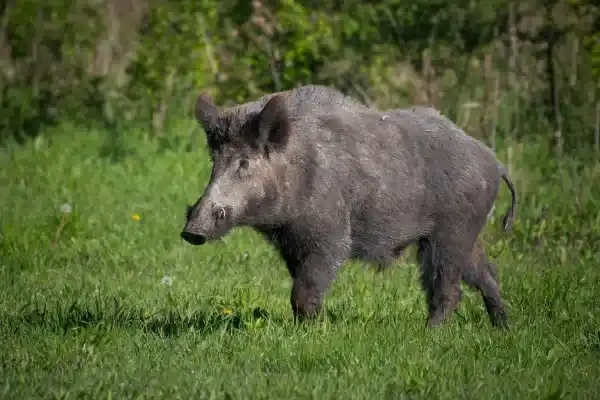
2) Asian wild boar/Indonesian wild boar ( Sus scrofa vittatus )
Differences from the European type
This wild boar is generally described as smaller, leaner , and with shorter hair than the Central European wild boar. Its coat color ranges from dark brown to almost black.
Typical characteristics
The article describes it as a more "basic" type: with more primitive tooth morphology, relatively smaller brain volume, and less highly specialized skull structure.
Distribution range
Primarily associated with Southeast Asia , it is often referred to as the "Indonesian wild boar".
3) North African wild boar ( Sus scrofa algira )
Body type and characteristics
It is smaller than the European type overall, and its teeth, limbs, head and overall structure are also more "miniaturized".
Distribution and Ecology
The article mentions that it is commonly found in Morocco, Algeria, and Tunisia . In the wild, it may become prey for large carnivores (examples of which include leopards, hyenas, bears, and lions).
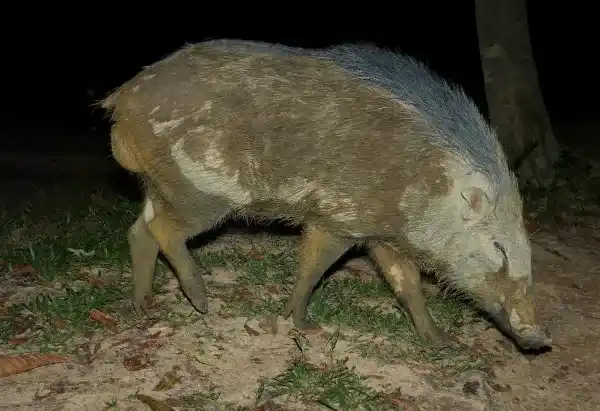
4) Carpathian wild boar ( Sus scrofa attila )
Why became famous
The article describes it as a larger type of wild boar than the European type, even mentioning that individuals can weigh up to 350 kilograms , often referred to as "one of the largest wild boars." Due to its enormous size, the article argues that it has virtually no natural predators.
Distribution range
The article mentions that it can be found in Ukraine, Romania, Hungary, the Balkans, Iran , and the Caspian Sea coast , and notes that there may be a rapid increase in its numbers in some areas.
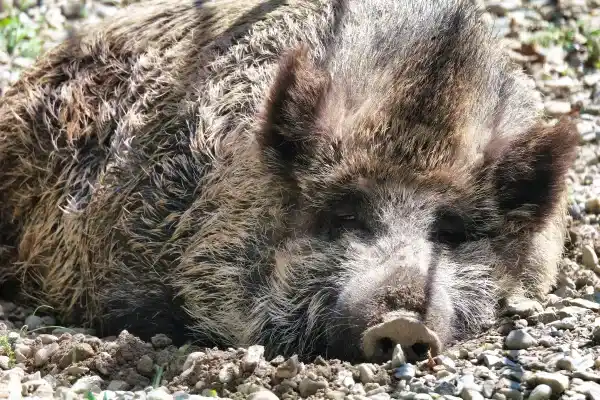
5) Javan wild boar/Javan warthog ( Sus verrucosus )
Habitat
They mainly live on the islands of Java and Bawean .
The most obvious identification point
Facial "wart-like protrusions": The article mentions three pairs of wart-like structures: one pair on the front of the face, one pair in front of the eyes (preorbital region), and one pair on the jawline.
Long mane: Extends from behind the ears to the rump area, with relatively long mane.
Body color: predominantly reddish, with some brighter yellow hues mixed in.

6) Indian wild boar ( Sus scrofa cristatus )
Distribution range
The article lists distributions in India, Nepal, Thailand, Myanmar, Sri Lanka, Pakistan, and other places.
External features
Compared to the European type, it has a larger head but a more slender body; its ears are smaller and more pointed, giving it a sharper overall profile. The text emphasizes that it has a relatively flat forehead (unlike some types with concave foreheads) and a long mane that extends from the back of its neck to the end of its body.
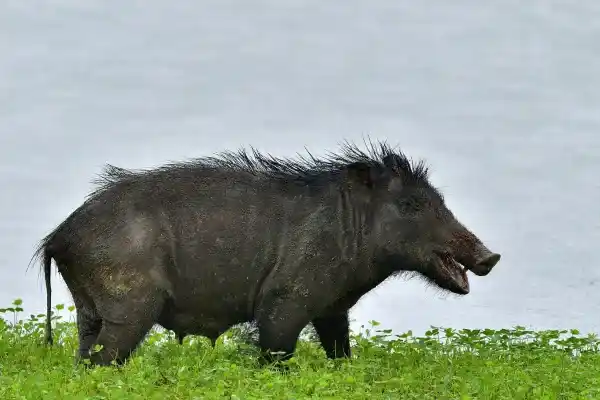
7) Marema wild boar ( Sus scrofa majori )
Body size and distribution
The text describes it as a smaller type of wild boar, mainly living in central Italy , with a high and wide skull.
Why is it gradually becoming "atypical"?
The article mentions that since around 1950, it has often been crossbred with European wild boars in commercial breeding environments, which has diluted its original more unique characteristics over generations of breeding, making it increasingly difficult to distinguish from other types.
8) Central Asian wild boar ( Sus scrofa nigripes )
Distribution range
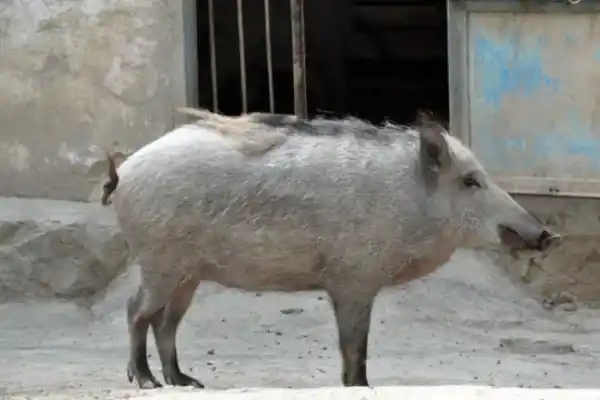
The text mentions that it can be found in Afghanistan, Kashgar, Mongolia, Kazakhstan , and more broadly in Central Asia.
Body shape and appearance
Size: Large individuals, mentioned in the text as exceeding 200 kilograms.
Body color: Overall light in color, but the legs are black and rather thin and short.
Mane: A distinct mane extending from the back of the neck to the ends of the body.
Neck muscles: well-developed and strong, capable of both digging and using the nose to push heavier clods of earth and small stones.
Why are wild boars becoming more and more common?
Highly adaptable: It can survive in forests, farmlands, grasslands, mountains, and even suburbs.
Wide range of food sources: Their omnivorous nature makes them less likely to run out of food when resources change.
Increased conflict with humans: As their numbers rise, the risks of traffic accidents, crop losses, urban destruction, disease, and parasites will all increase.