Overfishing, habitat destruction, climate change, and pollution are pushing many marine and freshwater fish species to the brink of extinction. Unlike terrestrial animals, it is difficult to accurately count the number of aquatic animals, but we can still determine that many species are at high risk by using clues such as changes in catch rates, the length of individuals brought ashore, the size of spawning groups, and distribution gaps .
This article summarizes 33 fish species that are seriously threatened (including common and scientific names), and provides key identification points, distribution habitats, diets and human threats for key species.

Table of contents
Key Species Interpretation
Atlantic bluefin tuna ( Thunnus thynnus)
Napoleon wrasse ( Cheylinus undulatus )
Sunfish (Mola mola )
Siamese Fighting Fish ( Betta splendens )
Whale Shark Rhincodon typus
Mekong giant catfish Pangasianodon gigas
Other endangered fish species (27 species, with scientific names attached)
How to identify "endangered signals"
Recommendations for Protection and Sustainable Consumption
Key Species Analysis (6 species)
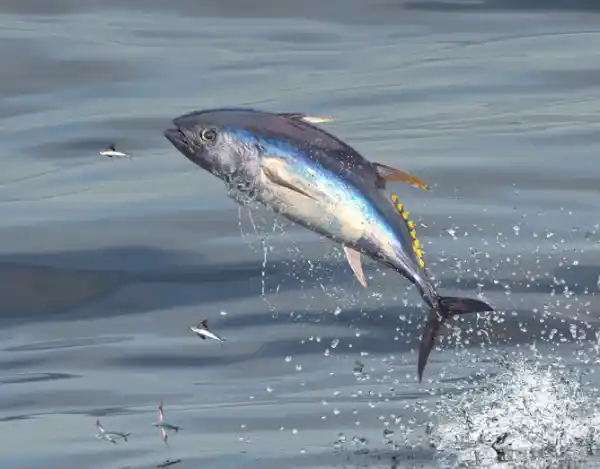
1) Atlantic bluefin tuna (also known as: bluefin tuna, tuna)
Scientific name : Thunnus thynnus
Size and identification : It can be over 3 m in length and weigh hundreds of kilograms; the body is robust and streamlined, with a dark blue back and a metallic sheen on the sides.
Distribution and habitat : Native to the Atlantic Ocean, the Mediterranean Sea and adjacent waters; a pelagic migratory pelagic fish.
Diet : Hunts small to medium-sized fish such as herrings and mackerel at high speed, as well as cephalopods .
Key Threats and Current Status : Reports indicate a significant decline in its overall population in the Atlantic, with no historical records of natural populations in the Caspian and Black Seas . Demand (especially in the high-end raw food market) drives high-price trade and overfishing , limiting breeding and resource recovery. If fishing pressures persist, its long-term survival faces severe challenges.
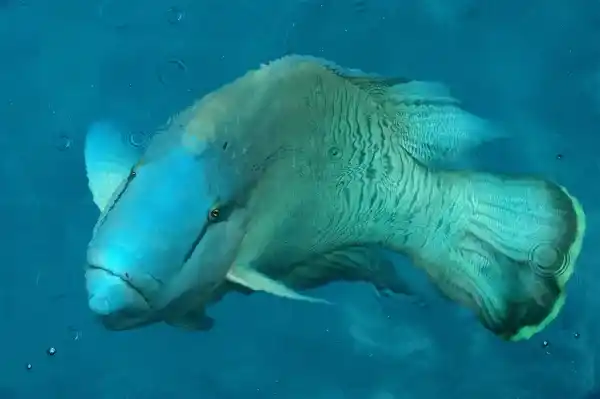
2) Napoleon wrasse/Hamlet (Wrapper family "Hump Wrasse")
Scientific name : Cheilinus undulatus (English: Napoleon wrasse / Humphead wrasse / Maori wrasse)
Size and identification : The body length can exceed 2 m and the weight is about 200 kg; the forehead has a prominent "hump" , and the body color is often blue-green with wavy patterns.
Distribution and habitat : Coral reefs in the Indo-Pacific region .
Diet : It preys on crustaceans, mollusks, starfish, and sea urchins .
Biological characteristics : They exhibit sex-changing characteristics, starting as females and then becoming males. They grow and mature slowly, and the number of fertile males in a population is greatly affected by disturbance.
Major threats and current situation : Overfishing due to high-end live fish and catering demand , coupled with sex conversion and low reproduction rate, has led to slow population recovery and a long-term state of threat.
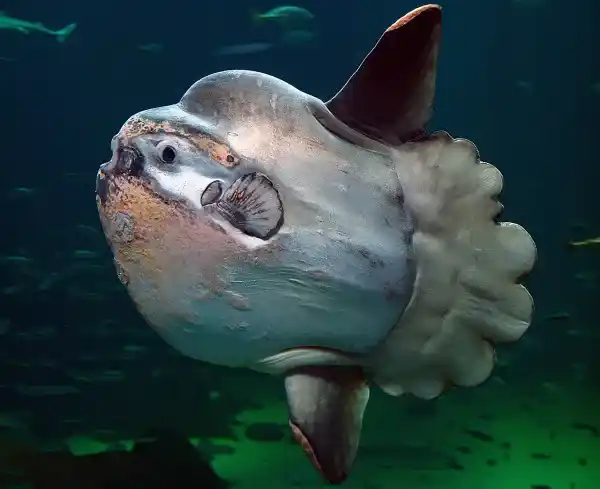
3) Sunfish/Mambo
Scientific name : Mola mola (English: Ocean sunfish)
Size and identification : One of the heaviest living bony fish , reaching more than 1 ton and 3.5 m in length; the body is laterally compressed and nearly disc-shaped , with almost no caudal peduncle, and it swims with its huge dorsal and anal fins.
Distribution and habitat : Temperate to tropical Atlantic, Pacific and Indian Oceans ; usually active in the upper sea and open ocean waters.
Diet : Primarily feeds on hydroids/gelatinous organisms (such as jellyfish), but also consumes crustaceans, mollusks, and polychaetes.
Main threats and current status : Incidental catches from longline fishing and drift nets , accidental ingestion of artificial lures due to floating plastic, and meat trade in local markets keep it at a vulnerable level for a long time .
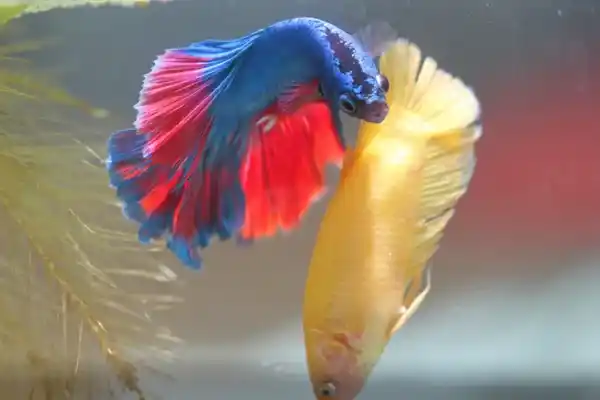
4) Siamese Fighting Fish (Fighting Fish)
Scientific name : Betta splendens (English: Siamese fighting fish)
Size and identification : Body length approximately 6–7 cm ; captive strains exhibit extremely rich colors, while wild-types are more brownish-green . Males are more territorial and aggressive.
Distribution and Habitat : Native to the Mekong River basin (Thailand, Laos, Cambodia, Vietnam), it is commonly found in slow-flowing, slightly hypoxic water bodies such as rice paddies and ditches.
Diet : Omnivorous with a preference for meat, also feeding on insects and small invertebrates.
Key threats and current status : Wild populations are listed as Vulnerable and are declining due to habitat pollution and fragmentation , as well as harvesting and trade pressures; a distinction should be made between wild native populations and captive-bred strains .
5) Whale shark
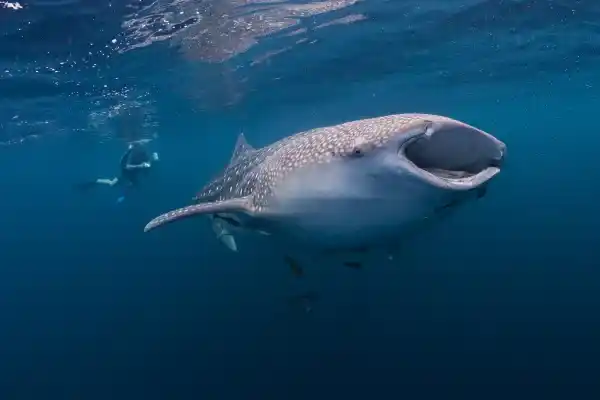
Scientific name : Rhincodon typus (English: Whale shark)
Size and identification : The largest fish in the world, reaching a length of about 12 m ; its back is grayish-blue, covered with white spots and stripes , and its belly is pure white.
Distribution and Habitat : Widely distributed in warm waters around the world, and also seen as seasonal visitors in high latitudes.
Diet and Behavior : A filter-feeding giant species that mainly feeds on plankton, fish eggs, and krill ; harmless to humans, often seen swimming with divers.
Major threats and current situation : It is mainly affected by industrial fishing and bycatch , ship collisions and nearshore habitat degradation. Many countries have imposed strict bans and restrictions on its fishing, trade and processing .
6) Mekong giant catfish (Mekong giant catfish)
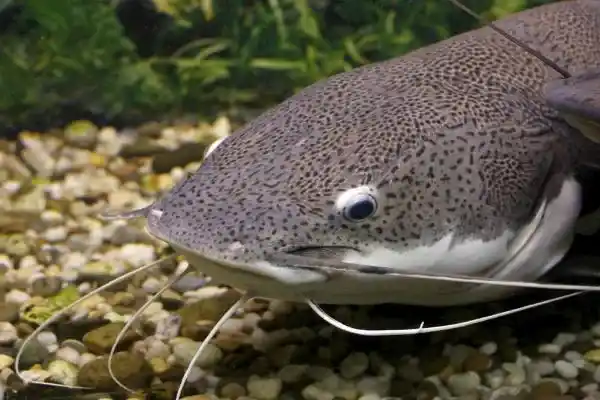
Scientific name : Pangasianodon gigas (English: Giant Mekong catfish)
Size and identification : A freshwater giant, reaching nearly 3 meters in length and weighing approximately 300 kg . In its juvenile stage , it is cannibalistic and feeds on zooplankton, while adults become primarily herbivorous .
Distribution and habitat : Found only in the main stream and some tributaries of the Mekong River .
Major threats and current status : Listed as critically endangered (CR) . River engineering and hydroelectric dams alter hydrological processes and sediment/nutrient transport, disrupting migration. Combined with overfishing and water quality deterioration, current wild stock is extremely low .
Other endangered fish species (27 species, in the original order, with scientific names attached)
Note: Common Chinese names may vary in different regions. The scientific name is the most authoritative search key . To avoid mistranslation, only the scientific name or a direct translation is given for some cases.
European Common Ray / Norwegian Ray — Dipturus batis
Oceanic stingray — Pteroplatytrygon violacea
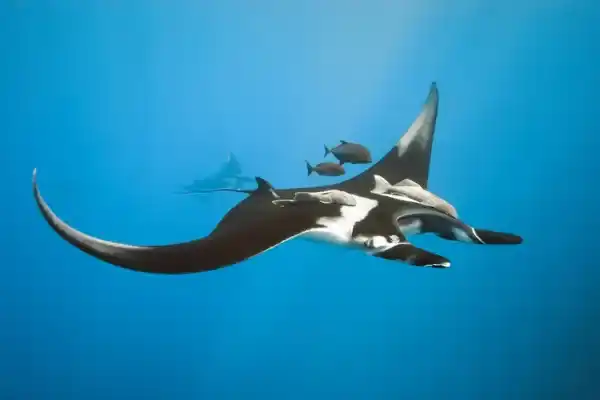
Giant manta ray (Ocean manta ray) — Manta birostris
European sturgeon — Acipenser sturio
European eel — Anguilla anguilla
Swordfish (a species of swordfish in the family Sailfinidae) — Xiphias gladius
Hammerhead Shark — Sphyrna mokarran
Shortfin mako shark (sharp mako shark) — Isurus oxyrinchus
Megamouth shark — Megachasma pelagios
Siamese giant catfish (also known as "Thai shark" or catfish) — Pangasius sanitwongsei
Ganges shark — Glyphis gangeticus
Longfin mackerel — Isurus paucus
African tigerfish (often called "giant tigerfish") — Hydrocynus vittatus
Southern bluefin tuna — Thunnus maccoyii
King salmon (Chinook salmon) — Oncorhynchus tshawytscha
European hake (Pescadilla) — Merluccius merluccius
Iberochondrostoma lemmingii
Chinese paddlefish ( Psephurus gladius )
Neolebias lozii
Valencia hispanica (Samarugo)
Carpione trout of Lake Garda — Salmo carpio
Steelhead fish (rainbow trout sea-walking type) — Oncorhynchus mykiss
Apache Trout — Oncorhynchus apache
Turkish flathead trout — Salmo platycephalus
Comorian coelacanth (coelacanth) — Latimeria chalumnae
Totoaba (Bigmouth White Stonefish) — Totoaba macdonaldi
Ecuadorian mountain catfish (Preñadilla) — Astroblepus ubidiai
How to identify "endangered signals"
Catch rate and body length : Under the same effort, the catch drops sharply and the body length of the individuals brought ashore decreases significantly .
Breeding population shrinkage : spawning ground density/area decreases , and the proportion of mature individuals decreases.
Distributional breaks : Historical production areas have long had no records or only sporadic individuals have been found.
High accidental catch rate : Longline fishing, drift gillnetting, trawl and other methods have a significant impact on the mixed catch of large deep-sea or nearshore species.
Endemic/migration dependence : species with obstructed migration (dams) and those with monoculture habitats (such as fish endemic to river endpoints) are at higher risk.
Recommendations for Protection and Sustainable Consumption
Support traceable fisheries and closed seasons : Choose products with certification and origin information , and avoid breeding seasons and high-risk species.
Reduce plastic and marine debris : lower the risk of accidental ingestion and entanglement , and improve nearshore water quality.
Focus on the connectivity of major rivers : incorporate fishway/ecological flow into hydropower, water diversion and reclamation projects.
Science outreach : Popularize the distinction between artificially bred strains and wild native populations (such as fighting fish) to avoid wild collection.
Citizen Science : Participate in stranding/incaught reporting and species observation to provide data for assessment.
Conclusion
The stability of marine and freshwater ecosystems depends on these flagship or "invisible" fish species. Through responsible fishing, habitat restoration, and changes in consumer behavior , many species still have a chance to return from the brink of collapse.