Planarians, flatworms, can regenerate into complete planarians from each segment even after being cut into hundreds of pieces, within one or two weeks. This remarkable regenerative ability has long captivated researchers. Previously, German researchers discovered a protein that plays a crucial regulatory role in the planarian's regenerative capacity, and now Japanese scientists have made a new discovery.
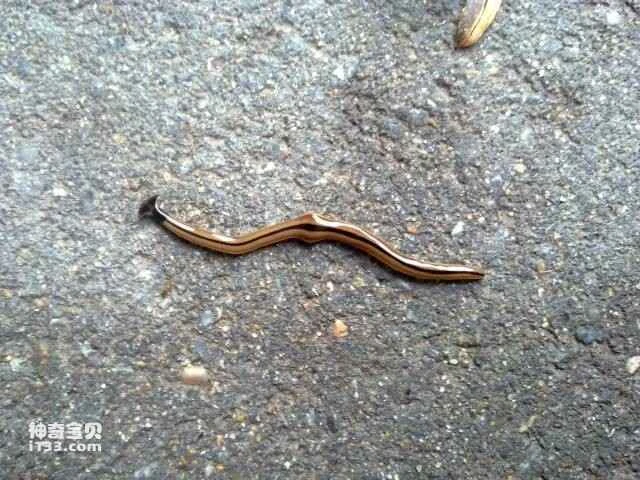
German researchers discovered that the secret to planarian regeneration lies in a type of pluripotent stem cell distributed throughout the planarian's body. When a planarian's body is severed, these stem cells can transform into various tissue cells, such as nerve, muscle, and intestinal cells, regrowing the lost parts. Scientists, by manipulating genes to inhibit the synthesis of a protein called "Smed-SmB" in planarians, rendered them unable to regenerate.
Japanese researchers are interested in why, when a planarian is cut into three segments, the middle segment still regenerates a head on the side closest to the head and a tail on the side closest to the tail. A research team at Kyoto University studied in detail the genetic changes in stem cells after the planarian was cut. They found that in the part near the head, a gene called "extracellular regulated protein kinase" was actively expressed, prompting the regeneration of the head; while in the part near the tail, a gene called "β-chain protein" was actively expressed, prompting the regeneration of the tail.
Researchers also discovered an exception in a planarian species called *Planaria chuanshengensis*, where a severed tail segment does not regenerate. Further investigation revealed that in the tail region, the function of extracellular regulated protein kinase (EGFR) is weakened due to the influence of β-chain protein. If β-chain protein gene expression is inhibited, this tail segment can regenerate.
Researchers say the findings could help develop new stem cell regenerative medicine technologies. The related paper has been published in the British journal *Nature*.