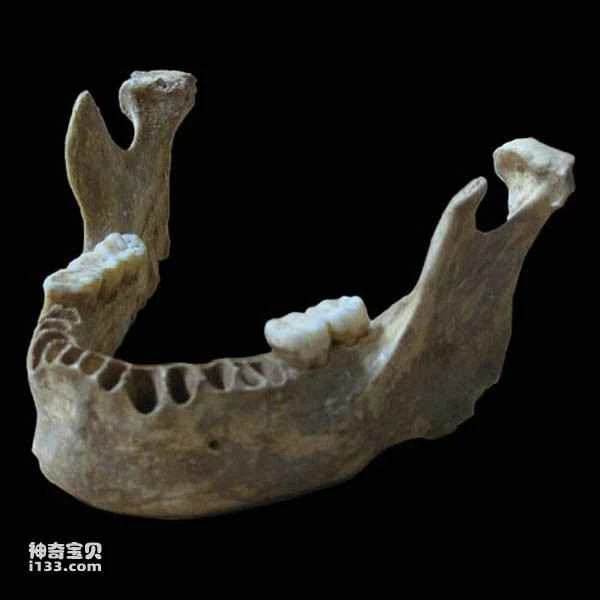
In layman's terms, fossils are the remains or traces of creatures that lived in the distant past that turned into stone.
Throughout geological time, countless organisms have lived on Earth. The remains of these organisms after their deaths, or the traces of their lives, were often buried by sediment. Over time, the organic matter in these remains decomposed, and the hard parts, such as shells, bones, and leaves, along with the surrounding sediment, fossilized into stone. However, their original shape and structure (even some minute internal details) are preserved. Similarly, the traces left by these organisms during their lives can also be preserved in this way. We call these fossilized remains and traces of organisms fossils. By studying fossils, scientists can gradually understand the morphology, structure, and types of organisms in the distant past, infer the process of biological origin, evolution, and development over hundreds of millions of years, and reconstruct the ecological environment of Earth at various stages of its long geological history.
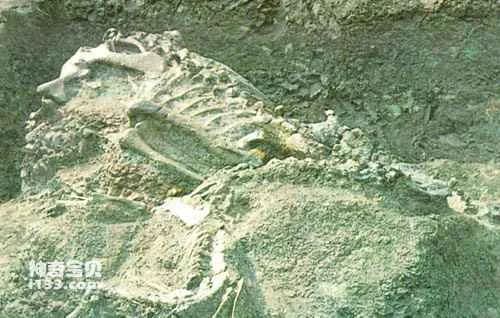
Dinosaur - fossil remains

Dinosaur footprints -- fossil remains
I. Preservation conditions and formation process of fossils
We already know that the remains or traces of ancient organisms from geological history can fossilize after being deposited and buried, through the diagenetic process of sediments over long geological periods. However, not all prehistoric organisms can form fossils. The formation process of fossils and their subsequent preservation require certain special conditions.
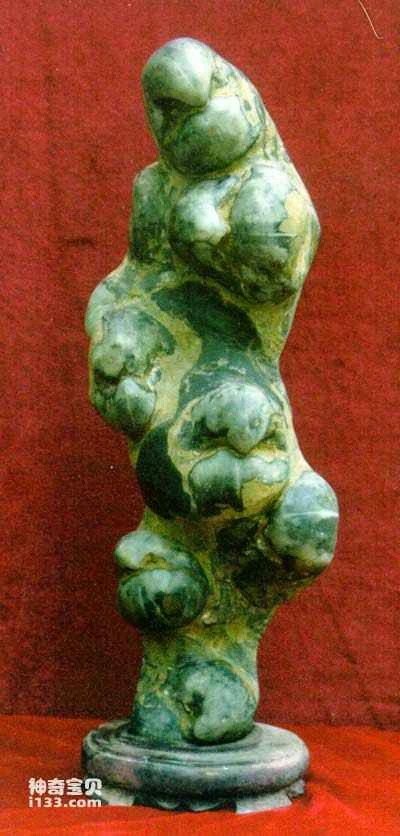
Owlhead shell fossil
The formation and preservation of fossils require certain conditions inherent to the organism itself. Organisms with hard bodies are more likely to be fossilized. Various shells of invertebrates and the skeletons of vertebrates are primarily composed of minerals, which can withstand various forms of damage relatively well. Furthermore, organisms with cuticles, fibrous membranes, and chitinous membranes, such as plant leaves and the body walls of graptolites, while easily damaged, are not easily dissolved and can carbonize at high temperatures to become fossils. In contrast, soft bodies such as animal viscera and muscles are easily oxidized and corroded, making them difficult to fossilize except under very special conditions.
Fossil formation and preservation require specific burial conditions. Organisms have a greater chance of fossilization if they are quickly buried after death. If remains are exposed to the surface or submerged in water for extended periods without being buried by sediment, they are easily consumed by animals, corroded by bacteria, and susceptible to weathering and hydrodynamic forces. Different types of sediments also affect the likelihood and condition of fossilization. If remains are buried in chemical, biogenic, or fine-grained sediments, they are less likely to be damaged during burial. However, if buried in coarse-grained sediments, they are more easily damaged by mechanical movement (rolling and friction of the coarse debris). Under special conditions, resin encapsulation and permafrost burial can even preserve well-preserved soft fossils, providing scientists with more comprehensive and abundant research materials. Spiders in amber and mammoths in Quaternary permafrost are examples of such preservation.
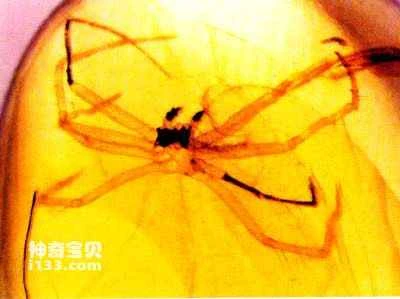
Spider in amber
Time is also an essential factor in fossil formation. The remains of an organism, or its hard parts, must undergo a long period of burial before they can fossilize along with the surrounding sediments during diagenesis. Sometimes, even if an organism is quickly buried after death, it may be re-exposed by various natural forces such as erosion, thus preventing it from becoming a fossil.
The diagenesis of sediments also significantly influences the formation and preservation of fossils. Generally, the compaction and crystallization processes during sediment consolidation affect fossil formation and preservation. The compaction of clastic sediments is particularly pronounced, resulting in fossils in clastic sedimentary rocks rarely retaining their original three-dimensional form. The crystallization of chemical sediments during diagenesis often damages the fine structure of biological remains, especially in deep diagenesis under high temperature and pressure, where metamorphism and recrystallization can severely damage or even completely destroy fossils.
II. Uses of Fossils
We already know that fossils are the remains or traces of various organisms from distant geological periods. Therefore, fossils can more or less reflect the conditions of organisms and their living environment at that time, thus providing important clues for humankind to understand the history of life and the history of ecological changes on Earth.

Foraminifera
At the turn of the 18th and 19th centuries, naturalists discovered through fossil observation that the older the strata, the greater the difference in appearance between fossils and modern organisms; conversely, the younger the strata, the smaller the difference. This discovery directly inspired the development of the theory of evolution. Subsequently, generations of scientists, through the study of an ever-growing number of fossils, have gained a clearer understanding of the phylogenetic relationships between different groups of organisms based on their morphological differences. Building on this foundation, further research has led to a deeper understanding of the lifestyles, evolutionary patterns, and mechanisms of various ancient organisms.
Micropaleontology is a new branch of paleontology that emerged in the 20th century due to rapid industrial development. Its main research objects are tiny fossil organisms, such as foraminifera, radiolarians, chitinozoans, ostracods, dinoflagellates, and diatoms, as well as tiny organ fossils of certain paleontological categories, such as conodonts, charophytes, and pollen (plant spores and pollen). Among these, the study of pollen is of particular significance in classifying and correlating non-marine strata (i.e., all strata other than marine strata) and in studying paleoclimate, paleogeography, and paleovegetation.
Based on fossil research, paleoecologists can study the relationship between paleontology and paleoenvironment to understand the lifestyles, living conditions, traces of life activities, morphology and function of organisms and their organs, burial processes and mechanisms of paleontology after death, and other issues related to paleontology in different periods of geological history.
Theoretical paleontologists study vast amounts of fossil data to explore the laws of biological evolution, including speciation, differentiation, evolutionary patterns, rates, and mechanisms. Paleontogeographers, on the other hand, use comparative studies of numerous fossil organisms to understand the geographical distribution of fauna and flora throughout geological history.
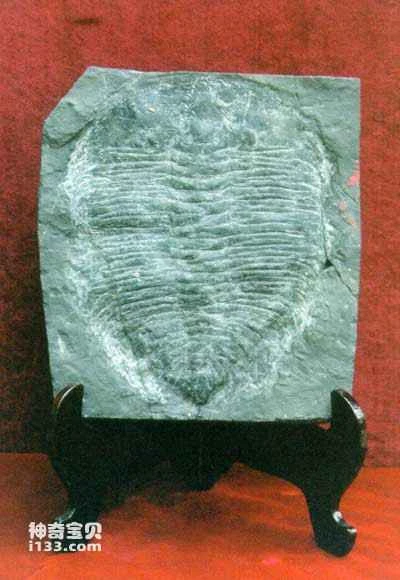
Fossil Collection—Giant Trilobite
Furthermore, research in interdisciplinary fields such as biostratigraphy, molecular paleontology, paleontology, and paleomyochemistry also relies heavily on paleontological fossils. It is evident that all aspects of paleontology and related scientific research rely on paleontological fossils; their uses are truly immense!
Beyond scientific research, fossils possess significant aesthetic, cultural, and social value. Many beautifully shaped fossils are both natural heritage and works of art. In developed countries, many ordinary people are fossil enthusiasts and collectors, learning about natural history and other scientific knowledge through collecting fossils, while also cultivating their character and refining their sentiments. In recent years, with my country's economic development and improved living standards, a group of fossil enthusiasts and collectors has also emerged. Their activities have not only had a certain effect on popularizing science but have also greatly promoted the development of paleontology. For example, many groundbreaking paleontological discoveries in western Liaoning, my country, in recent years were initially related to fossil collectors to varying degrees. However, my country's current fossil collecting market is still very unregulated. While private collections have played a positive role in scientific research, they have also created hidden dangers such as indiscriminate excavation and the smuggling of precious fossils. Therefore, it is essential to improve the relevant laws and regulations concerning the protection of precious fossils and the standardization of the fossil collecting market.
Our ancient ancestors recognized fossils thousands of years ago, and traditional Chinese medicine has long used fossils—specifically, dragon bones—as a medicinal material to treat certain ailments. However, the excavation and medicinal use of dragon bones has caused immense damage to precious fossil resources. In today's knowledge-based economy, we should recognize that the scientific and cultural value of fossils far outweighs their medicinal value; moreover, the medicinal effects of dragon bones have long been replaced by many newly invented drugs. Therefore, it is time to remove dragon bones from the medical field.
III. What is a "living fossil"?
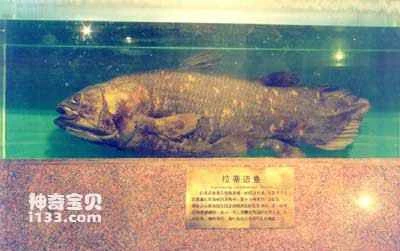
Latima fish
We already know that fossils are the remains or traces of ancient organisms that lived in various periods of geological history. Therefore, fossil organisms are almost all life forms that are different from modern organisms and more primitive than modern organisms.
However, not all organisms living in our modern ecosystems are "modern." Some organisms still tenaciously survive in this world, but their morphology, physiological and metabolic mechanisms, biochemical composition, genetic lineage, and phylogenetic relationships retain many characteristics of primitive organisms. In them, we can see the primitive state of some ancestral life forms, and they provide us with much information that can generally only be obtained from fossils. Scientists vividly call such organisms "living fossils."
Metasequoia, pandas, and other precious plants and animals in my country are living fossils that everyone is familiar with. If you visit our Paleozoological Museum of China, you will find an even more precious living fossil here – the Latimeria. From its fleshy fin peduncle connecting its body and fin rays, you can imagine the evolutionary process of lobe-finned fish stubbornly crawling onto land and evolving into amphibians more than 300 million years ago.