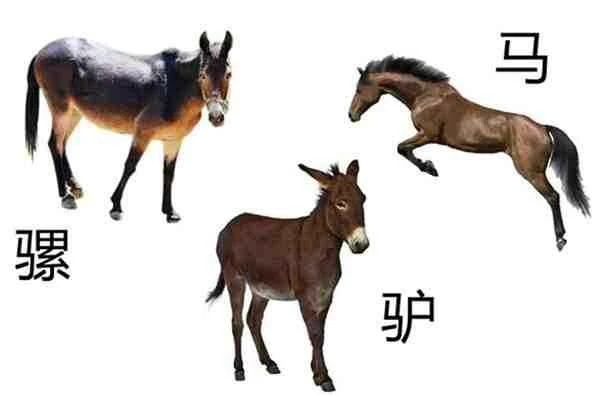
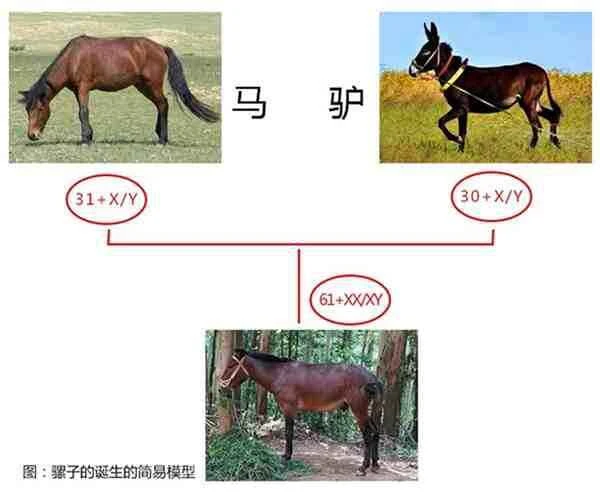
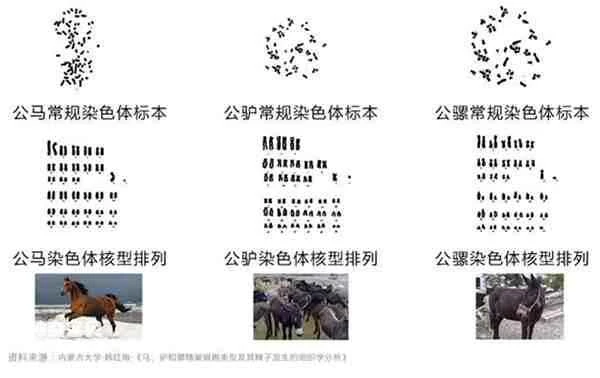
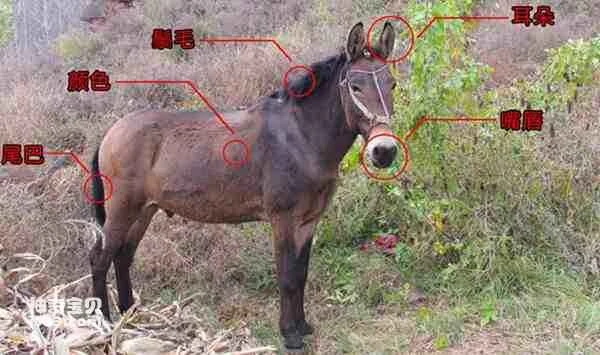
There are two types of mules: the offspring of a male donkey and a female horse is called a horse mule, and the offspring of a male horse and a female donkey is called a donkey mule, both simply referred to as mules. As a hybrid of a horse and a donkey, donkeys have only 31 pairs of chromosomes, while horses have 32 pairs. In this hybridization, the chromosomes combine during fertilization to form 31 or 32 pairs. Mules have 63 chromosomes, which naturally combine the shared genes of the two species, making the mule breed very strong, but losing its ability to reproduce.
Mule breeding has a long history in my country. However, its widespread use as a draft animal in agricultural production took a very long time. According to Gu Yanwu's "Daily Records of Knowledge" from the late Ming and early Qing dynasties, "From the Qin Dynasty onwards, there were no legends about donkeys, and although they existed, they were not common livestock kept by people."
In ancient times, farmers in inland my country did not have donkeys, let alone mules. The earliest mules came from the ethnic minority regions of the northwest. According to the research of ancient agronomists, mules were introduced from the border regions to the interior around 3,000 years ago, during the Shang Dynasty. At that time, the ethnic minorities in the northwest presented mules as "tribute" to the emperor, who considered them precious exotic animals for their amusement. By the end of the Warring States period, although there were more mules than before, they were still considered royal playthings.
Lu Jia's "New Discourses" from the Han Dynasty states: "Donkeys, mules, camels, coral, jade... are born in water and choose their dwelling places carefully." This shows that in the early Han Dynasty, the value of mules was comparable to that of precious items like coral.
After the Han Dynasty, the number of mules increased in the inland areas, but people had not yet fully explored their reproductive potential. It wasn't until the Northern and Southern Dynasties that ethnic minorities from the northwest brought large numbers of donkeys and mules. People in the agricultural areas of the inland regions gradually mastered the methods and knowledge of breeding mules by mating horses with donkeys or donkeys with horses, and only then did they classify them as livestock of the horse family, widely using them for plowing and transportation. By the Tang Dynasty, donkey and mule breeding pastures were established in the Shaanxi area, and mules' tracks were found almost throughout the entire country.