Pigs are omnivorous mammals with an average lifespan of 20 years. They are one of the five domestic animals (cattle, dogs, sheep, pigs, and chickens). In the Chinese zodiac, they are called "Hai". There are many historical anecdotes and customs related to pigs. Humans have a long history of raising pigs, but it was not widely known to the world until the 16th century. The pigs raised in China are direct descendants of the earliest domesticated pigs.
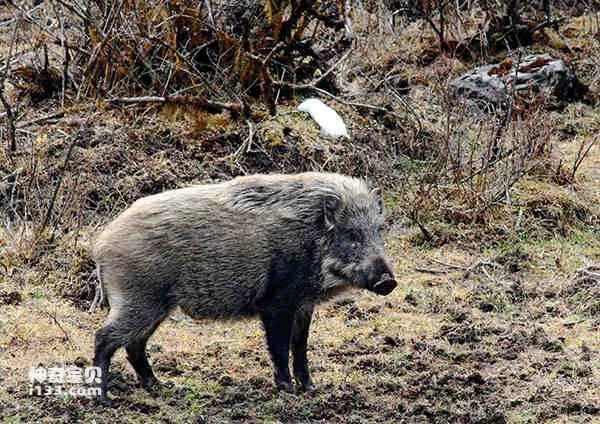
Pigs are also among the most utilized animals by humans. Domestic pigs are divided into three categories: large-boned fat pigs, salted pigs, and fresh-meat pigs. Domestic pigs originated from wild boars. Wild boars have existed on Earth for 36 million years. Since the advent of humans, they have been a primary prey. With the development of productivity, people had surplus prey, so they began to raise captured wild boars. Humans chose wild boars as their domestic animal mainly because they are easy to raise and breed. There is little difference between wild boars and domestic pigs, except that the tusks of domestic pigs are not as well-developed as those of wild boars.
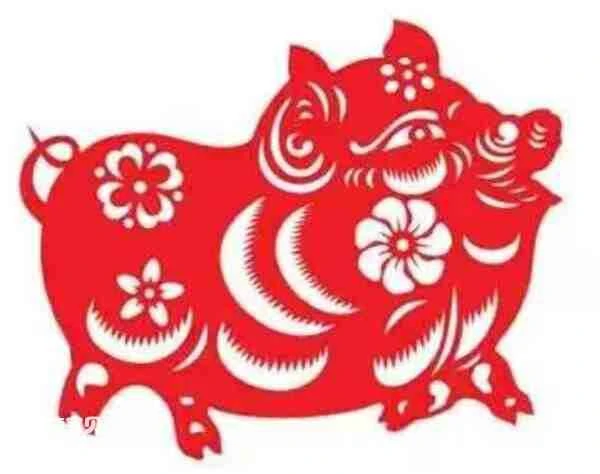
Overview of the Chinese Zodiac Pig
Pigs are associated with the period from 9 to 11 pm (the "Hai hour"). At this time, pigs sleep most soundly, snore the loudest, their muscles twitch most vigorously, and they gain weight the fastest; therefore, the Hai hour is associated with the pig.
Advantages of the Pig
1. Sincere and honest, takes everything seriously, and has excellent interpersonal relationships.
2. Straightforward, kind-hearted, individualistic, resolute, generous, direct, with a strong sense of justice, upright, unconcerned with trivialities, and innocent and romantic.
3. People born in the Year of the Pig with blood type O are simple-minded and innocent. They don't haggle with others. People born in the Year of the Pig never buy friends. They are honest, sincere, and very tolerant.
4. They don't compete much with others, and they won't lie unless absolutely necessary. They behave properly and have a kind attitude.
5. People born in the Year of the Pig are intelligent, have a strong thirst for knowledge, are generous, and are straightforward.
6. True friendship lasts a long time. Once you become friends, you will take meticulous care of them.
7. People born in the Year of the Pig are optimistic and can make a living without excessive hard work.
8. Women place great importance on family and plan their household chores meticulously.
9. They are the most tolerant of others' ridicule and accept adversity with equanimity.
There is a folk legend about the pig becoming a zodiac animal.
Once upon a time, there was a wealthy man who owned vast tracts of fertile land, but he had no children. Unexpectedly, when he was nearing sixty, he was blessed with a son. The whole family rejoiced, and relatives and friends celebrated together. The wealthy man even threw a grand banquet to celebrate having an heir.
During the celebration, a fortune teller with exceptional skills came before the child. Seeing that the child had a broad forehead, a large face, wide ears with prominent rims, a full forehead, and was fair and plump, he predicted that the child would surely be a person of great fortune and nobility.
This fat boy was born and raised in luxury, never lifting a finger from childhood. He neither studied literature nor martial arts, nor did he engage in farming; he simply indulged in debauchery and idleness, believing his fate was predetermined and that he was destined for great fortune, needing no hard work. However, after he grew up, his parents died, his family declined, his land was sold off, and his servants scattered. The fat boy continued his extravagant lifestyle until he finally starved to death in his room.
The chubby boy's restless spirit lingered after his death, going to the King of Hell in the underworld to complain that he was born with a life of wealth and honor and should not have died so tragically. The King of Hell brought the spirit before the Jade Emperor in heaven, asking for his judgment. The Jade Emperor summoned the Kitchen God and asked how this man with such a wealthy appearance could have starved to death in his room. The Kitchen God then recounted the chubby boy's neglect of his studies, his lack of involvement in farming, his squandering of his fortune, and his dissolute and extravagant lifestyle. The Jade Emperor was furious upon hearing this and ordered his officials to receive the chubby boy's punishment.
The Jade Emperor said, "Although your fate is good, you are lazy by nature. I hereby punish you by making you a pig, to eat coarse chaff." At this time, the Heavenly Palace was selecting the zodiac animals, and the Heavenly official misheard "eat coarse chaff" as "become a zodiac animal." He immediately brought the chubby boy down to earth. From then on, the chubby boy became a pig, eating coarse chaff and also becoming a zodiac animal.
Another legend tells of the pig becoming one of the twelve zodiac animals through its own efforts. On the day the zodiac animals were chosen in Heaven, the Jade Emperor decreed that everyone must arrive at the Heavenly Palace at a specific time, and the first twelve animals to arrive would be chosen as the zodiac animals. Knowing it was slow and clumsy, the pig got up in the middle of the night to rush to join the queue. Due to the long journey and many obstacles, the pig struggled desperately to reach the South Gate of Heaven, but the appointed time had already passed. However, the pig pleaded earnestly, and the other six domestic animals also pleaded on its behalf. Finally, the gods were moved, and the pig was allowed to enter the South Gate of Heaven, becoming the last animal in the zodiac. Thus, the horse, ox, sheep, rooster, dog, and pig—the "six domestic animals"—became the zodiac animals on Earth.
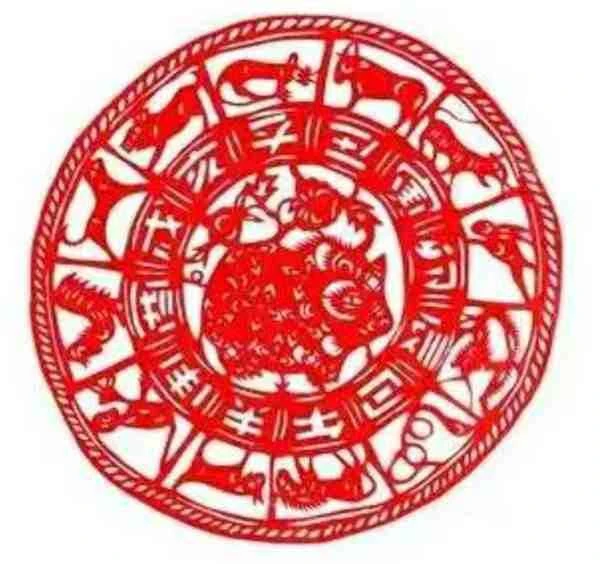
The symbolism of the Chinese zodiac pig
In people's minds, pigs are probably the most honest domestic animals. Unlike dogs, which are clever and understand their masters' thoughts, following them around and doing their best to please them, pigs have a round, plump, and憨厚 (honest and simple) appearance. They eat and sleep, and eat when they're hungry, appearing honest and dutiful. Pigs are notoriously lazy among animals. A major reason why pigs grow the fastest among all domestic animals is their lack of activity. Apart from moving around while eating, pigs rarely do any strenuous exercise, let alone worry or work. Pigs are also known for being dirty. Although there are objective reasons for their lack of hygiene, they spend almost their entire lives eating, living, defecating, and urinating in a pen, covered in excrement, giving people a disgusting feeling. Because of these characteristics, pigs have often become synonymous with stupidity, laziness, greed, and ugliness. When used in human cultural life, they carry a deep derogatory connotation.
In ancient times, the cultural significance of pigs contained no negative connotations whatsoever. On the contrary, pigs were a measure of courage. Not only did the word "home" imply raising pigs inside a house, but social activities at the time also centered around pig-related matters. For example, the oracle bone script for "matter" depicts two hands holding a long-handled net to catch a pig or wild boar. A person's character was also judged by pig-related matters; for instance, the character "dare" implies catching a pig barehanded, demonstrating bravery, while the inability to catch a pig was considered cowardice. Domestic pigs appear so docile and docile because they have been domesticated and isolated from nature for a long time, losing their natural instincts. Wild boars, on the other hand, are fierce and skilled in fighting. Therefore, based on this characteristic, pigs came to symbolize "courageous advance."