A fossil is a fossil formed from the preservation of all or part (especially the hard parts) of the remains of an ancient organism.
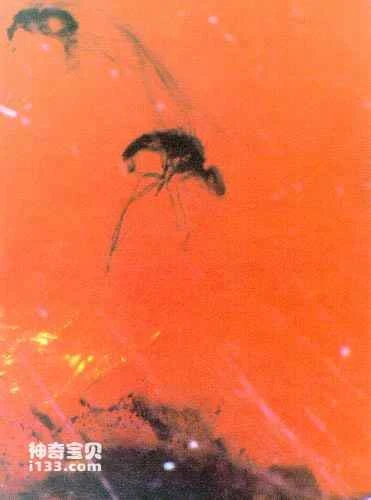
Mosquitoes in amber
Under exceptionally suitable conditions, where oxidation and bacterial decay are avoided, the remains of some organisms can be preserved remarkably well without significant alteration. For example, some mammoths found in Siberia, preserved in permafrost dating back to the Quaternary period 25,000 years ago, have not only intact skeletons but also well-preserved skin, hair, flesh, and even the food in their stomachs. The complete fossil of a woolly rhinoceros, discovered in Stalunya, Poland, which accidentally fell into a bitumen lake 10,000 years ago, is the most complete vertebrate fossil known to date. In my country, the coal seams in the Fushun coal mine, formed during the Eocene to Oligocene epochs (approximately 56 million to 23 million years ago), contain abundant amber, often containing well-preserved and exquisite fossils of mosquitoes, bees, and other insects, as well as spiders.
However, such biological remains that have not undergone significant fossilization or have only experienced minor changes are rarely found. The vast majority of fossils only preserve their hard parts, and all have undergone varying degrees of fossilization. "Fossilization" refers to the physical and chemical alteration of biological remains buried in sediments during diagenesis, when sediments are transformed into rock, while still retaining their biological appearance and some structural features. Fossilization generally includes several modes and processes such as mineral filling, alternation, and distillation.
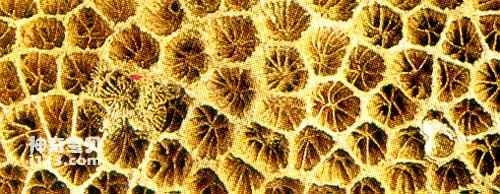
Coral fossils
For example, the hard structures of invertebrates often have gaps, such as the septa of corals, the grooves of sponges, the chambers of foraminifera, the porous and loose inner layers of some shells, and the skeletons of vertebrates. Especially in the limb bones of vertebrates, after the organic matter of the medulla decomposes and disappears, hollow parts remain. After being buried underground for a long time, minerals dissolved in groundwater (mainly calcium carbonate) often recrystallize within these pores, transforming them into denser, more solid, and heavier fossilized bodies. This process is known as mineral filling.
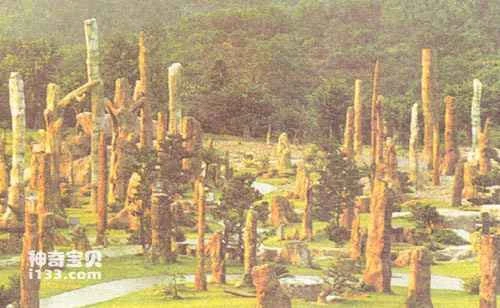
Petrified wood
The process by which the constituent materials of biological hardness gradually dissolve under burial conditions and are then gradually replaced by external minerals is called alternation. In this process, if the rates of dissolution and alternation are equal and occur at the molecular level, the original fine structure can be preserved. For example, the formation of petrified wood, frequently found around the world, is the result of the replacement of wood fibers in ancient trees with silica, while fine structures such as annual rings and cell outlines are still preserved. However, if the rate of alternation is less than the rate of dissolution, the fine structure of the biological hardness will be destroyed, ultimately leaving only the external form of the original object. Common alternating materials include silica, calcite, dolomite, and pyrite, and the corresponding processes are called silicification, calciteification, dolomitization, and pyritization.
Distillation refers to the process by which unstable components decompose and volatile substances evaporate after ancient biological remains are buried, leaving only a carbonaceous film for preservation. This process is also known as carbonization. For example, graptolite skeletons are composed of chitin; after distillation under burial conditions, elements such as hydrogen, nitrogen, and oxygen evaporate, leaving only a carbonaceous film. Similarly, plant leaves, mainly composed of carbohydrates, often only retain carbonaceous material as fossils after distillation.
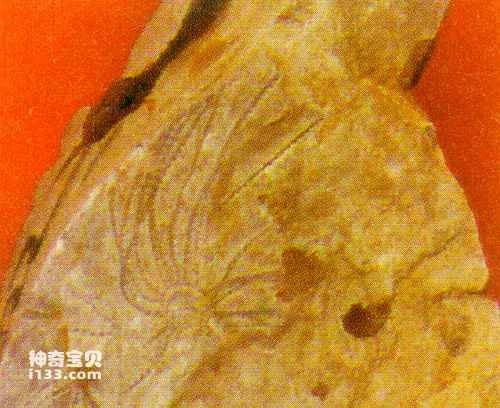
Penstone
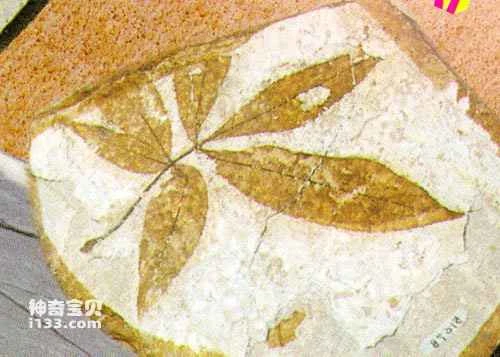
Leaf fossils
Fossil remains preserve all or part of the remains of ancient organisms, so they generally provide scientists with the most detailed information on the morphology and structure of ancient organisms, making them the most important material in paleontological research.