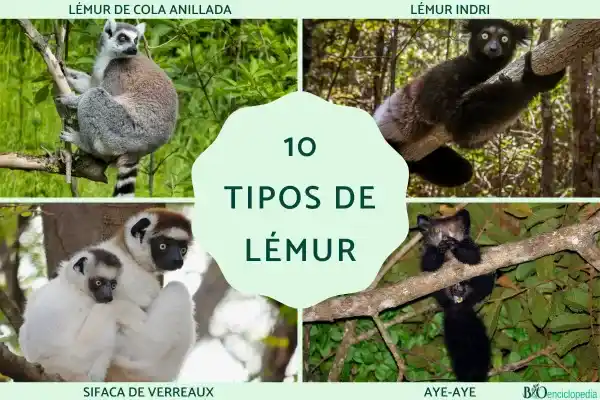
Lemurs belong to the class Mammalia, order Primates, and are one of the most representative animal groups in Madagascar. They range in size from the size of a palm to that of a domestic cat, and their lifestyles are highly diverse: some are diurnal, while others are nocturnal; some primarily eat fruit, while others rely heavily on insects, nectar, and even tree bark. Because almost all lemurs are found only in Madagascar, they are often among the first to be affected by deforestation or fragmentation.
Below is a summary of 10 classic and representative lemur types, presented in the format of " identifiable features + distribution and habitat + diet and habits + conservation status ".
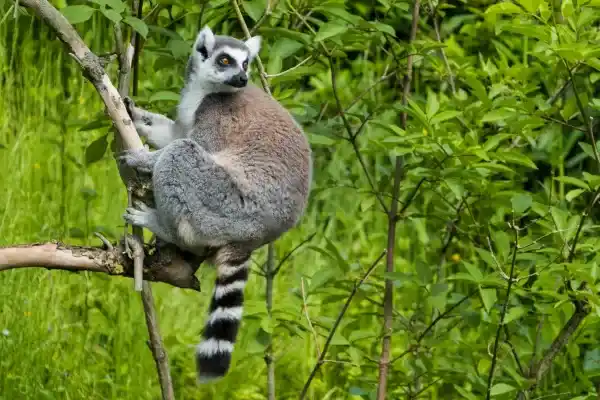
1. Ring-tailed lemur ( Lemur catta )
External features
The most famous feature of the ring-tailed lemur is its long, conspicuous tail: the black and white ringed stripes are very striking. Its body fur is mostly gray and white, with a distinct black and white contrast on its face.
Habitat and Distribution
It is found only in Madagascar, mainly in the southern and southwestern parts of the island, and is commonly found in continuous canopy forests, shrublands and mixed forest environments.
Diet and Behavior
They are mostly diurnal , and their diet consists of both plant and animal matter, making them omnivorous . They exhibit strong social dynamics and often communicate through scent and vocalizations.
Preserve the status quo
They face significant challenges in surviving in the wild and are typically classified as high-threat species.
2. Small steel-gray dwarf lemur ( Cheirogaleus minusculus )
External features
They are very small in size, and their fur is usually gray to steel gray, making them look like "miniature arboreal animals".
Habitat and Distribution
This species is found in Madagascar, with the original text emphasizing that it mainly appears in parts of the central and eastern parts of the island. It prefers woodland environments and is often active in trees, but it is not as agile as some mouse lemurs.
Diet and Behavior
Typical nocturnal . Communication methods include screams, whistling calls, and low grunts, mostly used for social or alert purposes.
Preserve the status quo
They are mostly considered threatened species with relatively limited habitat range.
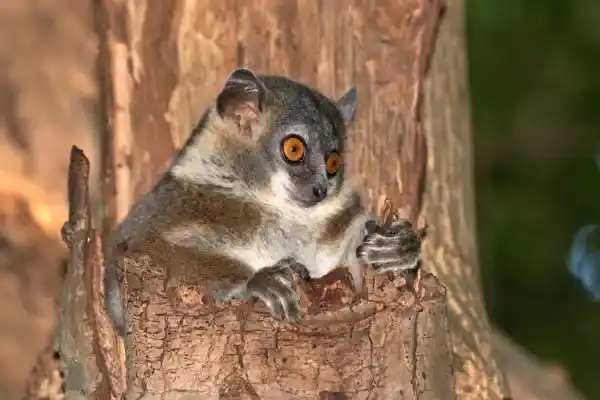
3. Indri lemur
External features
Its black and white coat is very eye-catching. It is about the size of a domestic cat, with a body length of about 57–70 cm . It has strong limbs and is good at leaping between trees.
Habitat and Distribution
Endemic to Madagascar, primarily distributed in the northeast . Commonly found in coastal tropical rainforests and mountain rainforests, ranging in altitude from sea level to approximately 1800 m .
Diet and Behavior
They primarily feed on plant-based foods (tender leaves, fruits, etc.), maintain relatively stable family groups, and have loud calls that are often used to declare territory and communicate with companions.
Preserve the status quo
It is generally considered to be at an extremely high risk level and is a key target for protection efforts.
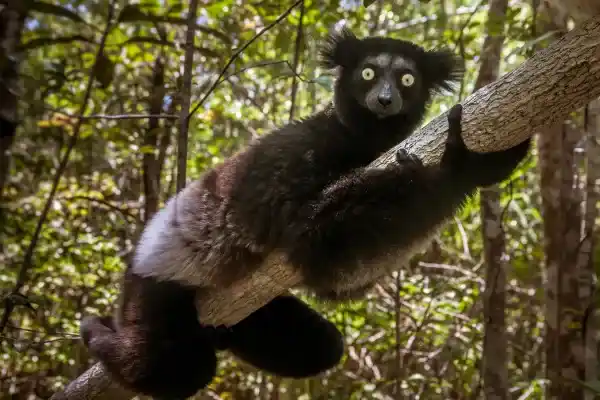
4. Black lemur ( Eulemur macaco )
External features
There are obvious differences in appearance between males and females:
Males are usually black or dark chocolate colored.
Females are light brown and can reach 90–110 cm in length (including tail).
Habitat and Distribution
It is unique to Madagascar and can live in both primary and secondary forests, making it relatively more adaptable.
Diet and activity time
Their diet consists mainly of fruit (mentioned in the original text as making up a large proportion), but they also consume other plant-based foods. Their activity rhythm is quite flexible, being active during the day or night.
Preserve the status quo
Their numbers in the wild are significantly affected by deforestation, and they are usually listed as threatened species.
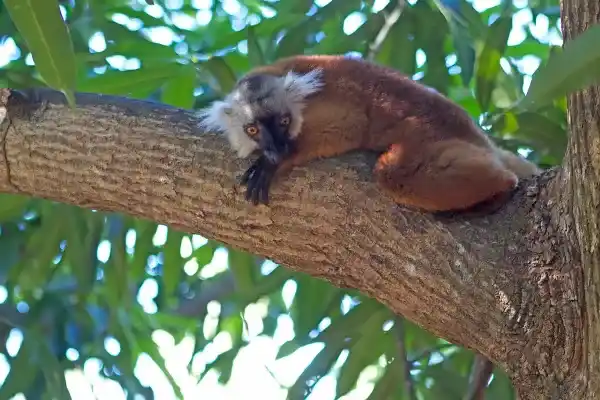
5. Pale-tailed dwarf lemur ( Cheirogaleus medius )
External features
The body length is approximately 20–23 cm , and the tail can reach 27 cm . The coat color is mostly reddish-brown or gray, with a whitish belly. The eyes are large and reflect light noticeably at night.
Habitat and Distribution
Endemic to Madagascar, commonly found in the dry forests of the west and the evergreen moist forests of the southeast .
Diet and special habits
Its most interesting feature is that it exhibits a behavior similar to "hibernation/long-term dormancy" during the dry season to reduce energy consumption and avoid dehydration, which is quite rare among primates.
Preserve the status quo
They are often considered to be at a high level of threat and require protection of their habitat integrity.
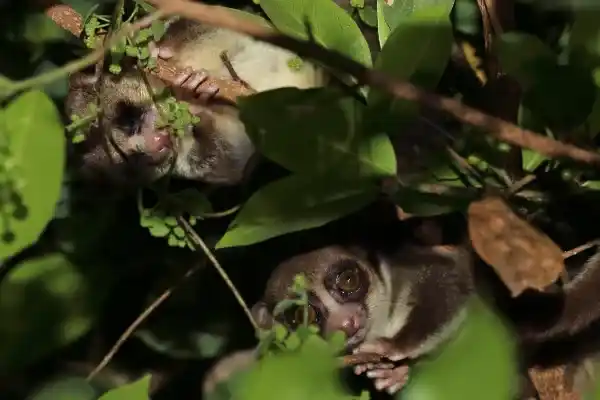
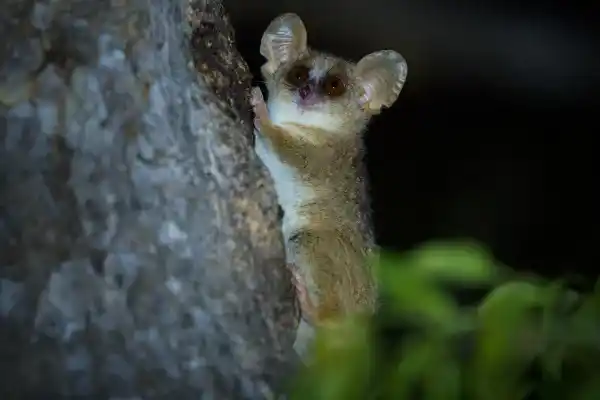
6. Gray mouse lemur ( Microcebus murinus )
External features
They are extremely small, weighing about 58–67 g , and resemble mice in appearance, hence the name "mouse lemur". Some individuals have an orange tinge on their backs.
Habitat and Distribution
It is endemic to Madagascar, has a wide distribution, and can be found in various woodland environments.
Behavior and Reproduction
Typical nocturnal and arboreal
They usually move in small groups of 5–10.
Food includes fruits, insects, nectar, etc.
They reproduce relatively quickly; the original text mentions that they can raise their young every few months (this can vary depending on environmental changes).
Preserve the status quo
Compared to some rare lemurs, its overall risk is lower, but it still depends on the stability of the forest ecosystem.
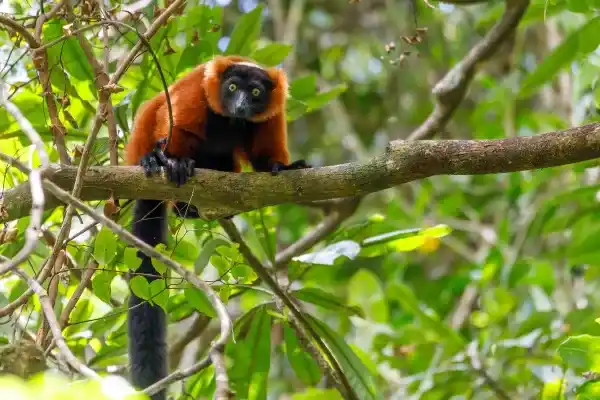
7. Red lemur ( Varecia rubra )
External features
It is medium to large in size, weighing about 3.5–4 kg and measuring about 53 cm in length. Its coat is mainly reddish-brown , with darker areas on the face, abdomen, tail, and limbs, and lighter or white patches often contrasting on the neck.
Habitat and Distribution
It is unique to Madagascar and is mainly distributed in the tropical forests of regions such as the Masoala Peninsula.
Diet and Behavior
It primarily feeds on fruits, but also consumes leaves and nectar. It has a wide range of movement within forests and is an important "seed transporter."
Preserve the status quo
It is generally considered to be at extremely high risk, with habitat fragmentation having a significant impact on it.
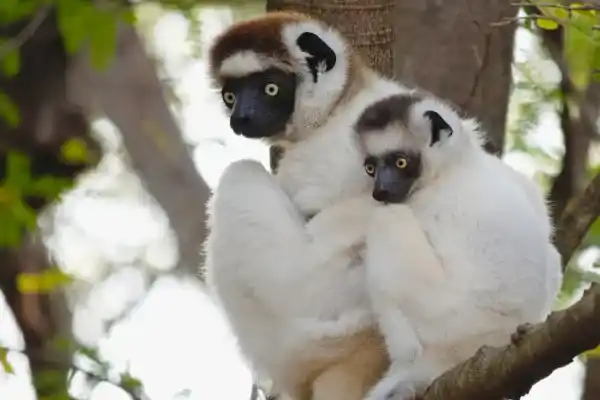
8. Verre's crowned lemur ( Propithecus verreauxi )
External features
Its fur is soft and silky, predominantly white , with brown or tan markings often on the sides of its body, head, and arms, making it highly recognizable.
Habitat and Distribution
It is unique to Madagascar and adapts to a wide range of ecological types: from tropical forests to dry deciduous forests, and even thorny thickets in the south.
Behavioral characteristics
They have strong jumping ability and can leap across large distances between trees; when moving on the ground, they often have a "side-jumping" gait, which is very distinctive.
Preserve the status quo
They are generally considered to be a representative of highly threatened lemurs.
9. Collared Lemur ( Eulemur collaris )
External features
Its fur is mainly brown, and it has a more obvious " collar-shaped long hair " around its neck and ears, hence the name; some sources also refer to it as "red collared lemur".
Habitat and Distribution
It is found only in southeastern Madagascar, with a relatively clear distribution zone, usually extending along rivers and mountainous forests.
Diet and Behavior
They primarily feed on fruits and other plant-based foods, live in groups, and have stable daily foraging routes.
Preserve the status quo
Because of its small distribution area and the severe disturbance of its forests, it is usually listed as a threatened species.

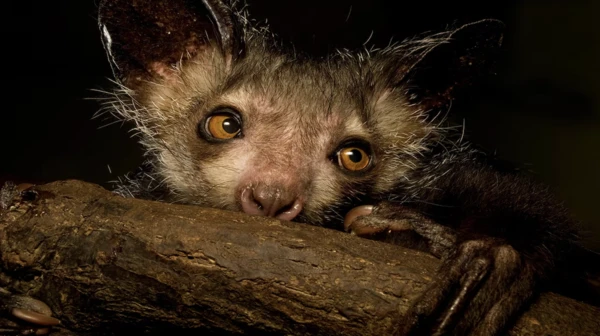
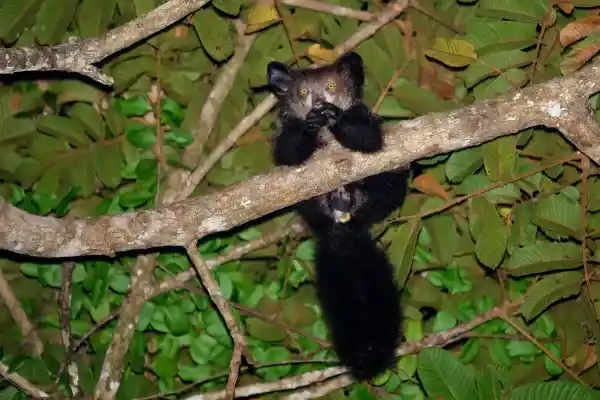
10. Aye-aye, Daubentonia madagascariensis
External features
Its appearance is very "strange and cool": its fur is mostly black and brown, its face is lighter, and its body shape is similar to that of a domestic cat. It is most famous for its particularly thin and long middle finger , which it uses to tap tree bark and retrieve food.
Habitat and Distribution
It is unique to Madagascar and is commonly found in the tropical rainforests of the eastern part of the island, but can also be found in other forest environments.
Diet and feeding methods
It feeds on insect larvae, fruits, leaves, etc. It first "taps" the tree trunk to find a cavity, and then uses its long, thin fingers to reach in and pull out the larvae, which is a very typical "tool-type feeding" style.
Preserve the status quo
Typically considered a threatened species, habitat loss and human disturbance are the main sources of stress.
Frequently Asked Questions (FAQ)
Why are almost all lemurs in Madagascar?
The ancestors of lemurs were isolated from other primates long ago and evolved independently in Madagascar for a long time, resulting in an extremely rich species diversity.
What do lemurs mainly eat?
Most lemurs primarily consume a plant-based diet (fruits, leaves, nectar, etc.), supplemented with insects or small invertebrates. The proportion of their diet as a staple food varies greatly among different species.
Which lemurs are the most endangered?
Generally speaking, species with small distribution ranges, those that rely on primary forests, and those that reproduce slowly are at higher risk, such as certain large lemurs and species endemic to specific regions.
What is the most crucial aspect of protecting lemurs?
The core is to protect forests: reduce logging, prevent habitat fragmentation, and maintain ecological corridors so that different populations can interact and reproduce.