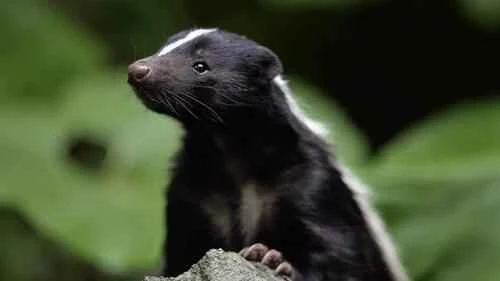
Skunks are small mammals widely distributed in North America, known for their unique defense mechanism—spitting out stench. Belonging to the mustelid family (Mephitidae), they may appear cute, but their odor is repulsive. This article will delve into the skunk's habits, habitat, and important role in the ecosystem.
1. Types of Skunks
Skunks are mainly divided into four categories:
Striped Skunk: This is the most common species, widely distributed, medium-sized, and characterized by its black and white stripes.
Spotted Skunk: Small in size, with spotted black and white fur, and agile in movement.
Meerkats (Hog-nosed Skunks): They have a prominent nasal protrusion used to dig in the soil in search of food.
Humboldt's Hog-nosed Skunk: Slightly larger in size, mainly inhabiting parts of South America.
2. The Habits of Skunks
Nocturnal animals: Skunks are typical nocturnal animals. During the day, they usually hide in burrows or tree hollows and only come out at night to forage. They have a relatively omnivorous diet, including insects, plants, fruits, bird eggs, and small mammals.
Defense Mechanism: The skunk's most distinctive defense mechanism is its pungent odor. This foul-smelling liquid is secreted from glands on either side of its tail and is extremely irritating, deterring predators. Skunks can spray this substance up to 3 meters away with remarkable accuracy.
Reproduction and life cycle: Skunks typically mate in the spring, with females giving birth to one litter of about 4 to 7 pups per year. The pups are born blind and hairless, but grow rapidly within two months and learn to spray their odor.
3. The habitat of skunks
Skunks primarily inhabit grasslands, forest edges, and areas near farmland. They are not demanding in terms of habitat requirements, are highly adaptable, and are frequently found in suburban and urban fringe areas. Because they can utilize a variety of food sources and habitats, skunks are still able to thrive in areas with frequent human activity.
4. The role of skunks in the ecosystem
Although skunks are known for their foul odor, they play an important role in the ecosystem. As omnivores, skunks help control pest and rodent populations, contributing to crop protection. Furthermore, they provide food for other scavengers, helping to maintain ecological balance.
5. The relationship between skunks and humans
Skunk Invasion in Cities: As cities expand, skunk habitats sometimes overlap with human settlements, leading to skunks appearing in residential areas. Although skunks do not actively attack humans, they may spray foul odors if threatened, causing inconvenience.
Pet Skunks: In some countries, skunks are domesticated as pets. Their scent glands are removed, so they don't spray foul odors at their owners. As pets, skunks are gentle, intelligent, and lively, and can develop deep bonds with their owners.
6. How to deal with the skunk problem
If skunks appear near your home, here are some steps you can take to reduce conflict:
Clean up trash and store it properly to prevent food scraps from attracting skunks.
Repair holes or cracks around the house to prevent skunks from nesting in the yard or garage.
Use light or sound devices around the garden to scare away skunks.
7. Current Status of Skunk Conservation
Skunks are not endangered animals, and their populations are relatively stable in most areas. However, due to habitat loss and increased human activity, some skunk species still face the threat of habitat destruction. Therefore, protecting skunk habitats and reducing human-skunk conflict are crucial for maintaining the health of the ecosystem.
Skunks, iconic small mammals of North America, are renowned for their unique odor defense mechanisms. Despite their unpleasant smell, skunks play a vital role in pest control and maintaining ecological balance. Understanding their habits and defense mechanisms allows us to better coexist with these remarkable creatures.
How strong is the stench of a skunk? A deep dive into the skunk's unique defense mechanisms.
Skunks are known for their foul-smelling odor defense mechanism, a rare defense mechanism in the animal kingdom and a highly threatening experience for humans. So, just how strong is a skunk's odor? This article will provide a detailed analysis of the composition of skunk odor, its range of influence, its effects on organisms, and how to deal with it.
1. The source and composition of skunk odor
Skunks produce their stench primarily from glands on the sides of their tails, which can store up to 15 milliliters of foul-smelling liquid. The main component of the odor is thiols , chemicals with a strong, putrid smell, similar to rotten eggs or stinky onions. Thiols are highly volatile and produce a pungent odor even at very low concentrations in the air.
In addition, the liquid secreted by skunks contains other compounds such as sulfides , which further enhance the persistence and aggressiveness of the odor. The gas sprayed by skunks not only strongly irritates the sense of smell but can also cause discomfort to the eyes and skin.
2. The ability of a skunk to project its stench.
Precise range and control : Skunks are not only powerful but also precise in their ability to spray stench. Adult skunks can spray stench up to 3 meters away, and they can accurately aim at their targets, especially attacking predators' eyes.
Skunks typically give warning signals before emitting their stench. They will arch their backs, raise their tails, and stomp their feet rapidly. These actions are usually intended to scare away potential predators. If the warning is ineffective, the skunk will quickly turn around, point its tail at the threat, and spray its stench.
3. The impact of skunk odor on organisms
Skunk odor is not only pungent and unpleasant, but it also has strong physiological effects on organisms. The following are the effects of skunk odor on different organisms:
Defense against predators : The skunk's stench is primarily used to deter predators. Animals attacked by the stench, especially canines, will temporarily lose their ability to attack due to the irritation to their eyes and respiratory tract. In severe cases, the stench can cause temporary blindness.
Effects on humans : If a human is sprayed by a skunk, the stench will not only adhere to the skin and clothing, but will also irritate the eyes, nasal cavity, and throat, causing symptoms such as tearing, coughing, and difficulty breathing. This odor is very stubborn and cannot be removed by ordinary soap and water; it must be thoroughly cleaned with specialized cleaning agents (such as a mixture of baking soda, hydrogen peroxide, and dish soap).
4. The range and duration of odor diffusion
Skunk odor can spread over a large area. After being sprayed, the odor can quickly spread to a radius of 2 kilometers . Meteorological conditions such as wind speed and humidity may affect the speed and distance of the odor's spread.
What's even more troublesome is that the skunk's odor lingers in the air for a long time. If not removed promptly, the smell can persist in the environment for days or even weeks . In enclosed indoor spaces, the odor remains for even longer, often requiring professional deodorization treatments for complete removal.
5. How to deal with the stench of skunks?
If you are unfortunately sprayed by a skunk or there is lingering skunk odor nearby, here are some effective countermeasures:
Immediate treatment : If your pet or you are sprayed by a skunk, treat it immediately. You can use a solution made of baking soda, hydrogen peroxide, and dish soap to clean the area. This method is effective in removing thiol compounds and breaking down the odor.
Ventilation and air purification : If a skunk sprays its odor indoors, immediately open windows for ventilation and use an air purifier to help remove odor molecules from the air.
Preventing skunk invasions : Ensure your trash cans are sealed to prevent food scraps from attracting skunks; also, repair burrows or tree root cavities in your yard to prevent skunks from nesting.
6. The ecological significance of skunk odor
The skunk's stench is a highly effective defense mechanism in the animal kingdom. It uses this unique scent to warn and repel predators, thus protecting itself. Unlike other animals' defense mechanisms, the skunk's stench works without physical contact, making it an object of avoidance for many predators.
In addition, the skunk's stench helps them survive in complex environments, especially when they face multiple threats; the stench can effectively reduce the frequency of attacks.
7. Misconceptions and Facts about Skunks and Their Odor
There are some misconceptions about the intensity and danger of skunk odor:
Myth 1: Skunks spray foul odor anytime, anywhere. In fact, skunks don't readily use their odor defense mechanism. They prefer to avoid direct confrontation with enemies by issuing warning signals, only spraying odor when they feel extremely threatened.
Myth 2: Skunk odor is permanent. While skunk odor is indeed very difficult to remove, it can be effectively eliminated with proper cleaning methods.
The skunk's stench is so strong due to its unique thiol compounds, which can spread rapidly over a wide area and cause intense physiological stimulation to living organisms. As a highly evolved defense mechanism, the skunk's odor has helped it survive when facing predators. Although humans may occasionally be "attacked" by skunks, understanding their behavioral characteristics and proper response methods can reduce conflicts with them.
The Importance of Skunks to the Ecosystem: Small Animals That Cannot Be Ignored
Skunks, iconic small mammals of North America, are known for their foul-smelling defense mechanism, but they play a vital role in the ecosystem. Skunks not only occupy a unique position in the food chain but also influence the environment and other organisms in a variety of ways. This article will explore how skunks contribute to the balance of the ecosystem through their behavior and lifestyle.
1. Control the population of pests and rodents.
Skunks are omnivorous, and their diet includes insects, rodents, frogs, small mammals, bird eggs, berries, and plant roots. Especially in summer, insects (particularly beetles and mole crickets) make up a large proportion of their diet. Because skunks dig in the soil while searching for food, they are effective at preying on soil-borne pest larvae and insects.
In agricultural areas, skunks control pest populations, helping farmers reduce damage to crops. Furthermore, skunks prey on small rodents, such as voles and mice, which helps suppress explosive rodent population growth, thus reducing their damage to crops, trees, and other vegetation. Therefore, skunks can indeed be considered natural "pest controllers," playing a vital role in maintaining ecological balance and agricultural health.
2. Promote soil health
Skunks are known for their habit of digging in search of food. This behavior not only helps them catch insects and underground food sources, but also has a positive effect on soil health. Skunk burrowing helps aerate the soil, increasing oxygen levels, improving soil structure, and promoting plant growth.
In addition, skunks can help decompose organic matter while foraging, such as by preying on carrion or turning over fallen leaves. Skunks inadvertently promote the decomposition of organic matter and the return of nutrients, providing a fertile soil environment for plant growth.
3. Provide a food source for other animals
Although skunks can effectively deter most predators when they spray their stench, they are not entirely without natural enemies. Some animals, especially birds of prey (such as owls), still prey on skunks because these predators are not sensitive to the skunk's odor. In addition, some scavengers will also use dead skunks as a food source.
Therefore, the presence of skunks not only helps control the population size of prey species, but also provides a food source for other predators and scavengers, maintaining the integrity and dynamic balance of the food chain.
4. Maintain biodiversity in ecosystems
Skunks are highly adaptable to their environment, able to survive in a variety of habitats, including forests, grasslands, wetlands, farmlands, and even urban fringe areas. Because they can adapt to different environments and find abundant food sources within them, skunks play a vital role in maintaining diverse ecosystems.
As a widely distributed species, skunks help connect organisms and resources in different areas. For example, by feeding on the seeds and fruits of various plants, skunks aid in plant dispersal, thereby promoting vegetation renewal and expansion. This not only helps vegetation recovery but also provides habitat and food sources for other herbivores.
5. The Influence of Natural Defense Mechanisms on Predator Behavior
The skunk's stench is not only a defense mechanism, but it also influences the behavior of many predators through chemical signaling. Because many predators (such as foxes and wolves) experience severe stench stimulation after attacking a skunk, they often alter their predation behavior towards the skunk and its habitat. This chemical defense mechanism helps regulate the predator's range, allowing skunks to inhabit a wider area within the ecosystem.
This defense mechanism also helps other animals whose habitats overlap with skunks to some extent. These animals may be protected from predators under the skunk's protection, thus having the opportunity to reproduce. Skunks therefore indirectly provide a "protective umbrella" for some more vulnerable species.
6. The unique position of the skunk in the food chain
As intermediate predators, skunks act as a bridge between upper-level predators and lower-level prey in the food chain. They are both predators and potential prey for some larger predators. This dual role makes skunks an important part of the food web, regulating energy flow between lower food levels and higher predators.
By preying on insects and small animals, skunks can control the population of their prey, preventing overpopulation and thus maintaining the balance of the ecosystem. As prey, skunks provide a food source for higher predators, ensuring that energy is transferred from the bottom up to the top of the food chain.
7. Potential benefits of skunks to humans
Although the stench of skunks repels humans, their importance to the ecosystem indirectly benefits humankind. For example, skunks help control agricultural pests and rodents, contributing to reduced crop losses. Furthermore, they are crucial for maintaining healthy forest and grassland soils, indirectly supporting the sustainable development of agriculture and natural resources.
Skunks also play an important role in the conservation of biodiversity. By promoting the health and balance of ecosystems, they help maintain the stability of the natural environment, thus benefiting the entire biosphere of the Earth.
Despite their notorious stench, skunks play a vital role in ecosystems far beyond that. They are an integral part of ecosystems by controlling pests, promoting soil health, providing food for other animals, and maintaining biodiversity. Understanding and respecting the role of skunks in nature helps us better appreciate their importance in maintaining natural balance.
How to avoid conflicts with skunks: A practical guide
Skunks are notorious for their strong stench, and conflicts can easily escalate into an unpleasant situation for both people and pets. Therefore, learning how to avoid conflicts with skunks is crucial. Skunks are generally not aggressive and tend to avoid humans, but they will release their stench when they feel threatened. This article will share some effective strategies to help you avoid conflicts with skunks in your daily life.
1. Avoid food sources that attract skunks.
Skunks are omnivorous, with a wide range of food sources including garbage, pet food, bird feed, and insects from the garden. To keep skunks out of your yard or residential area, the key is to reduce the food sources they might find.
Lock your trash cans : Make sure your trash cans have tight lids to prevent skunks from getting in looking for food. Storing trash cans in an enclosed garage or warehouse is the best option.
Do not leave pet food outdoors : Pet food may attract skunks, so take the food bowl away as soon as possible after your pet has finished eating.
Clean up bird feed : Bird feeders often spill food, which can attract small animals such as skunks. Regularly clean up any leftover feed around the feeder or use protective devices to reduce spillage.
2. Prevent skunks from nesting in your home or yard.
Skunks prefer to nest in dark, quiet places, such as underground burrows, woodpile, garages, or under houses. To prevent skunks from making their home on your property, you can take some precautions.
Seal off potential nesting sites : Check under your house and garage for cavities or gaps and seal them off if they could become nesting places for skunks. You can use wire mesh or planks to block the entrances, especially at the foundation of the building.
Clear away wood piles and debris : Skunks often nest in piles of wood, waste heaps, or thick vegetation. Keep your yard tidy and remove unnecessary clutter to reduce the chances of skunks finding hiding places.
3. Avoid startling the skunk.
Skunks are typically nocturnal, being most active at dusk and night. During these times, avoiding direct contact with skunks is key to preventing conflict.
Keep your distance : If you see a skunk outdoors, remain quiet and slowly back away. Do not try to approach or frighten them. Skunks usually give warning signals before they feel threatened, such as stomping their feet, arching their backs, and raising their tails. If you see these signals, leave immediately.
Use outdoor lighting : Turning on outdoor lighting at dusk and night can help you spot skunks' activity areas in advance, allowing you to avoid them. Motion-sensor lights are a good option, as they automatically turn on when animals approach, helping you reduce accidental encounters with skunks.
4. Use natural skunk repellent methods.
There are natural repellents that can help keep skunks away from your home, and these methods are very environmentally friendly and human-friendly.
Citrus scents : Skunks dislike the smell of citrus fruits. You can scatter orange or lemon peels in your yard to deter them from entering.
Pepper or chili spray : Use a spray made from pepper or chili powder to spray in areas where skunks frequently appear. The pungent smell can effectively repel skunks.
Ammonia : Skunks also dislike strong chemical smells, so you can place cotton balls soaked in ammonia in some key areas (such as the base of buildings or around gardens).
5. Protect your pet
The stench of skunks can also irritate pets, especially curious dogs, who are easily drawn to skunks and may subsequently be attacked.
Supervise your pets : When outdoors, especially at night or in the morning, keep a close eye on your pets and prevent them from approaching areas where skunks may be present.
Pet training : Teach your pet to avoid contact with wild animals through basic training. If signs of skunk activity are detected, your pet should obey the command to immediately leave.
6. Build fences or barriers.
Installing a skunk-proof fence around your yard can effectively prevent them from entering your space. While skunks are excellent diggers, they are not good climbers.
Deeply buried fencing : The fencing should be buried at least 30 centimeters deep to prevent skunks from digging in from underground.
Sloping top : The top of the fence can be slightly sloping outwards to make it more difficult for skunks to climb.
7. How to deal with a skunk invasion
If a skunk has entered your home or yard, do not attempt to catch it yourself. Trying to catch a skunk may make it feel threatened and cause it to spray its odor. The safest course of action is to contact your local wildlife control office or a professional animal capture service to handle the skunk.
8. Understanding Skunk Behavior
Finally, understanding skunk habits and behavior can help you better avoid conflicts with them. Skunks are generally docile and will not attack unless threatened. They are usually nocturnal and prefer to hide during the day. Therefore, be extra careful at night and in the early morning to avoid contact with skunks.
Skunks are known for their stench, but they don't usually attack humans unprovoked. By reducing their food sources, preventing them from nesting in your home, avoiding startling them, and using natural repellent methods, you can effectively reduce the chances of conflict with skunks. If a skunk has already entered your home, be sure to seek professional help. Understanding skunk habits and behavior is the best way to prevent conflict.