Share this
Are deer wild animals? Revealing the ecology and habitat of deer.

Are deer wild animals? Revealing the ecology and habitat of deer.

2026-01-19 13:12:55 · · #1

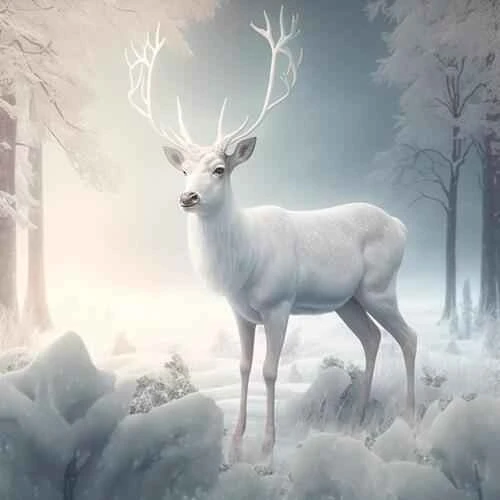
Deer are common animals in forests, grasslands, and mountains, and their elegant appearance and diverse species give them an important place in the natural world. However, many people still have questions about deer's habitats and whether they can be classified as wild animals. This article will explore the ecological characteristics of deer, their habitats, and whether they can be considered true wild animals.


Basic introduction to deer

Deer (Cervidae) are a family of mammals, mainly distributed in temperate and subarctic regions of the Northern Hemisphere. Deer include many different species, such as white-tailed deer, elk, and reindeer. They typically feed on grasses, leaves, and twigs, and exhibit different lifestyles in different seasons and environments.


Deer habitat

Deer are highly adaptable animals, capable of surviving in a wide variety of habitats, including forests, grasslands, mountains, and wetlands. Their habitats are widely distributed, ranging from the Arctic tundra to tropical rainforests. For example, caribou primarily live near the Arctic Circle, while white-tailed deer are commonly found in the forests and grasslands of North America.

Deer habitats include not only natural environments but also environments affected by human activities. In many areas, deer populations have begun to adapt to environments with human contact due to factors such as deforestation and urban expansion. For example, deer have begun to appear and adapt to semi-wild environments in some city parks and suburbs.


Are deer wild animals?

"Wild animals" generally refers to animals that live in their natural environment and have not been domesticated or raised in captivity. According to this definition, most deer species can be considered wild animals. They live independently in their natural environment, finding food and avoiding predators without direct human intervention.

However, with the acceleration of urbanization, some deer species have become increasingly common in urban and suburban habitats. While this phenomenon has allowed deer to adapt to new environments in these areas, it does not change their essential nature as wild animals. Even deer living in semi-wild environments retain the behavioral characteristics and survival strategies of wild animals.


The Importance of Deer Conservation

Although deer are highly adaptable animals, changes in their habitat still threaten their survival. Deforestation, urban sprawl, and climate change all impact deer habitats, potentially leading to habitat loss and disruption of the food chain. Protecting deer and their habitats is crucial for maintaining ecological balance and biodiversity.


As a typical wild animal, deer's lifestyle and behavioral habits in the natural environment allow them to adapt to a variety of different habitats. Although deer appear in some semi-urban environments, this does not change their essential nature as wild animals. Protecting deer and their habitats is our shared responsibility to ensure that this beautiful species can continue to thrive in the wild.
56c63958ecc7271ad55f0b6f5d7a5578 (1).jpeg

Deer protection level


Conservation levels for deer vary by species, depending on their habitat, population size, and threats faced. Below are the conservation levels for some major deer species:

1. Reindeer (Rangifer tarandus)

  • Protection level : Least Concern

  • Distribution : Arctic Circle and surrounding areas

  • Current situation : Although reindeer are widespread in their natural distribution areas, some subspecies and local populations may face threats such as habitat destruction and climate change.

2. Père David's deer (Alces alces)

  • Protection level : Least Concern

  • Distribution : Forest regions of North America, Europe, and Asia

  • Current situation : The number of elk is stable in most of their habitats, but in some areas, such as parts of Europe, they may face threats such as habitat loss and traffic accidents.

3. White-tailed deer (Odocoileus virginianus)

  • Protection level : Least Concern

  • Distribution : Forests, grasslands, and wetlands of North America

  • Current situation : White-tailed deer are very common in their distribution area and have a large population, but in some areas, such as urbanized areas, they may face problems such as insufficient food resources and traffic accidents.

4. Deer (Cervus nippon)

  • Protection level : Least Concern

  • Distribution : East Asia, including China, Japan, and the Korean Peninsula.

  • Current situation : Deer populations are stable in their natural habitats, but may be affected by habitat loss and human activities in some areas.

5. Great elk (Cervus canadensis)

  • Protection level : Least Concern

  • Distribution : Forest regions of North America and East Asia

  • Current situation : The population of giant deer is healthy and stable in most of its habitat, but some local populations may face habitat loss and hunting threats.

6. Indian longhorned deer (Rusa unicolor)

  • Protection level : Near Threatened

  • Distribution : India, Sri Lanka, and Southeast Asia

  • Current situation : The Indian longhorn deer population faces certain threats due to habitat loss and illegal hunting.

7. Angolan deer (Elaphurus davidianus)

  • Conservation status : Endangered

  • Distribution : Native to China, now mainly found in protected areas and artificial habitats.

  • Current situation : Due to habitat destruction and overhunting, the Angolan deer was once extinct in the wild and now relies on artificial breeding and conservation measures to maintain its population.

8. Indian Black Deer (Cervus eldi)

  • Conservation status : Endangered

  • Distribution : Thailand, Myanmar, and Laos in Southeast Asia.

  • Current situation : Indian black deer face multiple threats, including habitat loss, hunting, and human activities, resulting in a sharp decline in their population.


Different deer species face different threats, therefore conservation measures need to be tailored to specific circumstances. Protecting deer and their habitats is crucial for maintaining ecological balance and biodiversity.


Countries that eat deer

Venison is widely consumed in some countries, primarily due to its delicious flavor, rich nutritional value, and low fat content. Here are some countries that use deer as a food source:

1. Japan

  • How to eat it : In Japan, venison (called "shika-niku") is typically used in grilling (e.g., "shika-yaki"), simmered dishes (e.g., "shika-nabe"), and sashimi (e.g., "shika-sashimi"). Venison holds a place in traditional Japanese cuisine, especially in the Kyoto and Nara regions.

2. China

  • How to eat it : In China, venison is considered a precious ingredient and is mainly used to make soups, stews, and stir-fries. In traditional Chinese medicine, venison is also considered to have nourishing properties and is often used in some traditional medicinal dishes.

3. South Korea

  • Methods of consumption : Koreans eat venison in various ways, including grilling (e.g., "sikye"), stewing (e.g., "sikye-tang"), and adding it to stews. Venison is considered a high-end ingredient in Korea and is often used at banquets and festivals.

4. New Zealand

  • Consumption : New Zealand is one of the major producers of venison, which is widely sold in local markets. New Zealand venison is commonly used in hamburgers, roasts, stews, and other Western dishes. New Zealand venison is highly regarded for its quality and sustainability.

5. Australia

  • Consumption methods : In Australia, venison is widely consumed as a healthy red meat. Australian venison is typically used in grilling, stews, and burgers. Due to its high protein and low fat content, venison is favored in healthy diets.

6. North America (including the United States and Canada)

  • How it's eaten : In the United States and Canada, especially in rural areas and regions with a strong hunting culture, venison is a common ingredient. It's often used to make hunter's stew, roast meat, sausages, and jerky. The consumption of venison has a long history and tradition in these countries.

7. Finland and Sweden

  • How it's eaten : In Finland and Sweden, venison (especially reindeer meat) is a traditional ingredient. It's commonly used in stews, roasts, cured meats, and sausages. Reindeer meat is particularly prevalent in the northern regions of these countries.


The consumption of venison has different traditions and cooking methods in different cultures. Due to its high nutritional value and unique flavor, venison holds an important place in the diets of many countries.


Read next

Why are chimpanzees on the verge of extinction? A detailed explanation of the main threats and conservation efforts.

Chimpanzees (scientific name: *Pan troglodytes*) are among the primates most genetically related to humans, and their b...

Articles 2026-01-12