Skunks are a very "famous" group of mammals: they typically have striking black and white fur and are known for their ability to release a strong odor for defense. All true skunks belong to the family Mephitidae , a name that means "foul odor," which corresponds perfectly to their most typical survival weapon— the spraying of secretions from their anal glands . When startled or sensing danger, skunks release a pungent liquid from their anal glands to repel predators.
Below is a list of 10 common skunk species (including skunk, spotted skunk, pig-nosed skunk, etc.) , covering their distribution, size, physical characteristics, diet, and behavior to help you quickly understand "what kinds of skunks there are".
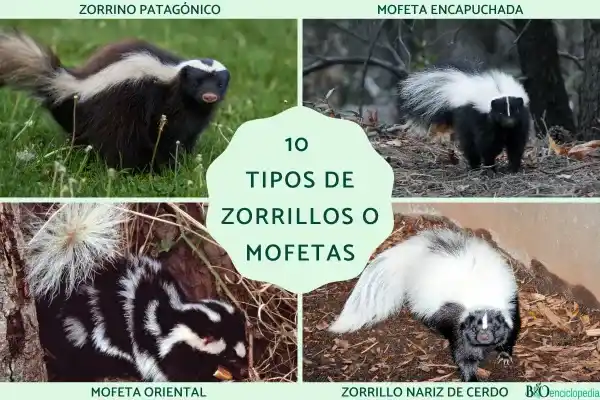
What kind of animal is a skunk?
Skunks are small to medium-sized mammals in the order Carnivora, mostly omnivorous : they eat insects, small animals, as well as fruits and plant matter. They are typically nocturnal , have a keen sense of smell, and are adept at finding food on the ground or in the soil, especially digging for underground invertebrates. Skunks are best known for their anal glands , which can spray a strongly scented liquid at crucial moments, forming a highly effective defensive barrier.
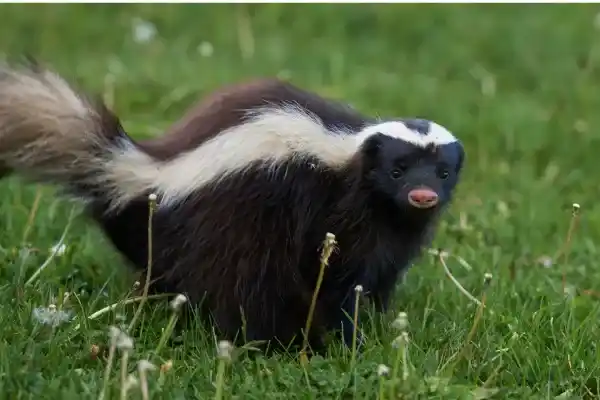
1) Patagonian hog-nosed skunk ( Conepatus humboldtii )
Distribution and Habitat
They are mainly distributed in Argentina and Chile , and are often found in open areas or mixed habitats suitable for digging and foraging.
Shape identification points
Its body is predominantly black, with two white stripes on its back extending from its head to its thick tail , creating a striking contrast.
Diet and Behavior
They primarily feed on subterranean invertebrates, using their sense of smell to locate prey and then digging it out with their powerful claws. When startled or threatened, they activate their anal glands to release a strong odor.
Body length: Approximately 20–30 cm
2) Striped skunk ( Mephitis mephitis )
Distribution and Habitat
Native to the Americas, it is distributed across North America , from Canada to Mexico .
Shape identification points
It has broad white stripes on its back and a long, bushy tail. Some individuals may have a thinner, lighter-colored stripe on their forehead.
Dietary habits and seasonal habits
Typically omnivorous with a wide range of food sources. In cold regions, they may cope with low temperatures and food scarcity by hibernating for extended periods or reducing their activity levels. When threatened, they often raise their tails and release a strong scent as a warning.
Body length: Approximately 30–40 cm
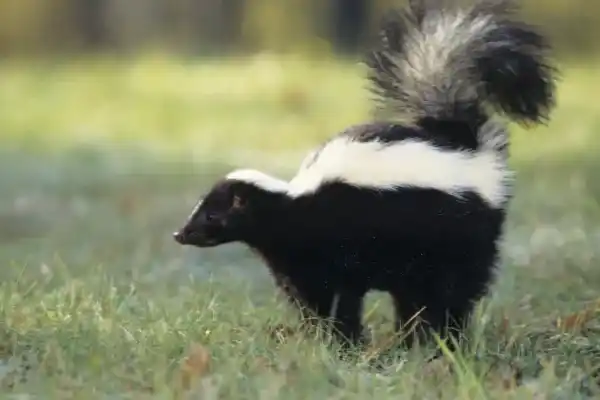
3) Hooded Skunk ( Mephitis macroura )
Distribution and Habitat
They are mainly distributed in Central America and parts of Mexico .
Shape identification points
Its body surface features a striking black and white contrast, with finer, lighter-colored stripes commonly seen on its forehead. The white fur on its neck and back creates a visual effect resembling a hood or cape, hence its name.
feeding habits
Omnivorous, it preys on small animals and insects, and also supplements its diet with fruits and other plant-based foods.
Body length: Approximately 25–35 cm
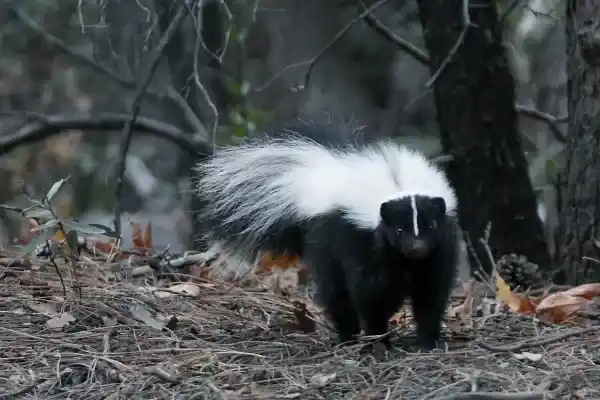
4) Eastern Spotted Skunk ( Spirogale putorius )
Distribution and Habitat
They are mainly distributed in the eastern United States .
Shape identification points
Compared to many skunks, it has a more slender and agile body. The text describes it as having a distinctive white square patch on its forehead, along with black and white markings similar to those found on other skunks.
Behavioral characteristics
With strong climbing ability, they are a very representative type of spotted skunk, which can improve their foraging efficiency and help them avoid danger.
Body length: Approximately 20–30 cm
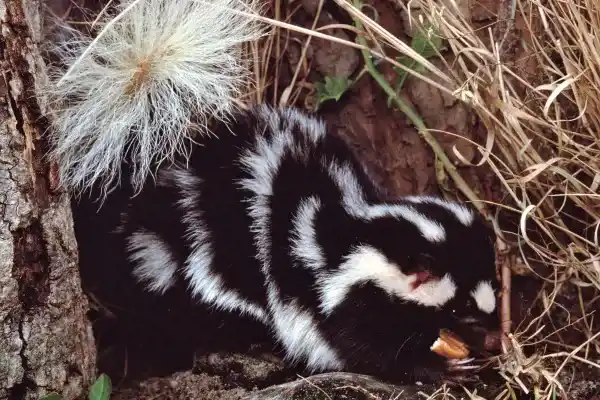
5) South American hog-nosed skunk / "Chingue" ( Conepatus chinga )
Distribution and Habitat
They live in the Pampas grasslands and surrounding temperate regions of South America , and are adapted to a relatively mild climate.
Shape identification points
The coat is predominantly black with striking white longitudinal stripes on the back, and the tail is long and bushy.
Diet and Defense
Omnivorous, mostly nocturnal. The anal glands near the tail secrete a strongly scented liquid, which is used to defend against predators when threatened.
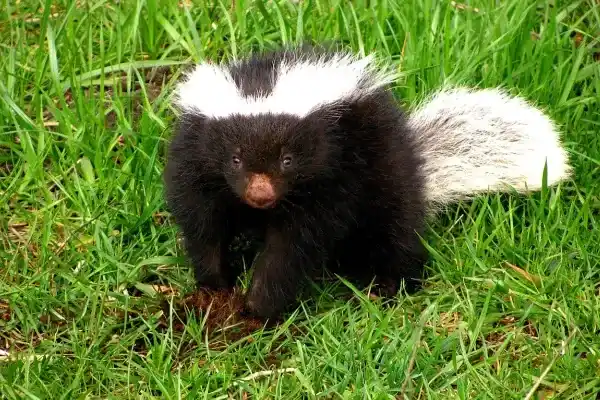
6) White-backed skunk ( Conepatus semistriatus )
Distribution and Habitat
It is distributed in parts of Central and South America , with relatively scattered distribution points.
Diet and adaptability
They are opportunistic predators , eating whatever is available depending on environmental conditions, and can survive in diverse ecosystems.
Body length: Approximately 30–50 cm
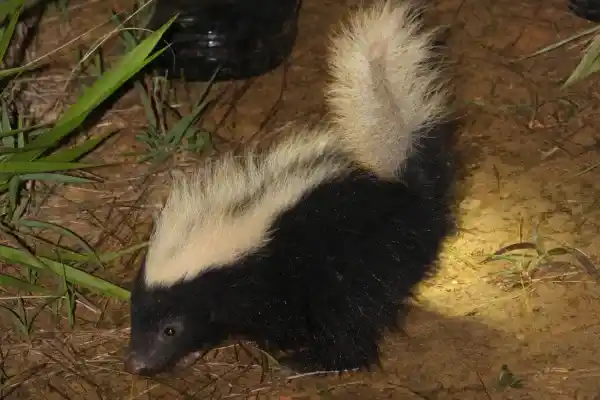
7) American hog-nosed skunk ( Conepatus leuconotus )
Distribution and Habitat
They are distributed in North and Central America .
Shape identification points
This is one of the easiest skunks to identify: its back is often covered in a large white patch (like a broad, single white band), while its belly is darker; its tail is almost entirely white . It has a particularly large snout with little hair, hence it is often called a "pig-nosed skunk."
Diet and Abilities
Omnivorous, it forages for insects in the soil and also eats plant matter. When larger, it may even prey on small mammals or reptiles. It is very adept at digging and can also climb when necessary.
Body length: up to approximately 80 centimeters
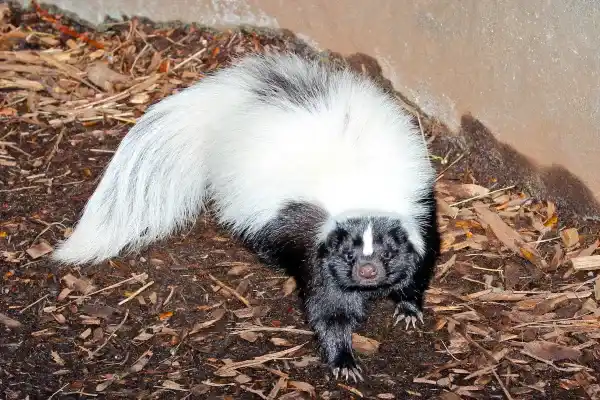
8) Dwarf Spotted Skunk ( Spirogale pygmaea )
Distribution and current conservation status
Its distribution range is very narrow, found only along the southwestern coast of Mexico , thus facing greater survival pressure and often listed as a species requiring special attention in conservation assessments.
Body size and dietary characteristics
It is one of the smallest skunks (approximately 10–30 cm in length excluding the tail). It is also described as a more carnivorous skunk: as winter approaches, it may shift its diet from primarily fruits and insects to preying on reptiles, small mammals, and birds. It is an excellent climber and occasionally seeks out bird nests to eat their eggs.
Body length (excluding tail): approximately 10–30 cm
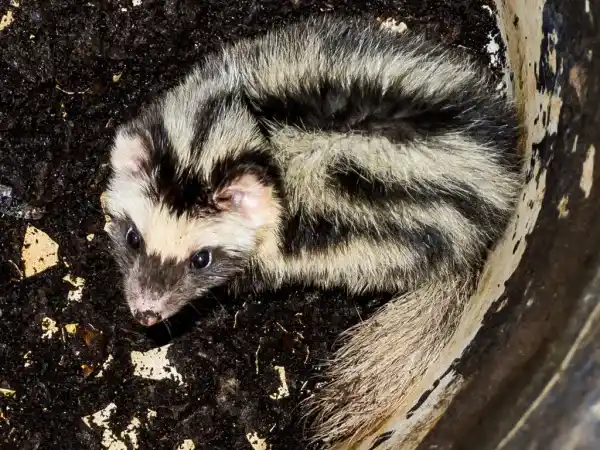
9) Western Spotted Skunk ( Spirogale gracilis )
Distribution and Habitat
It is distributed in North America , mainly found on the west coast of the United States and parts of northern Mexico .
Shape identification points
Its coat has black and white patches or swirls , hence it is often called a "spotted skunk". The tail is usually black with a white tip.
Defensive posture and diet
When threatened, it may display an exaggerated defensive display: changing its posture to reveal its warning coloration and confuse its opponent, while also making it easier to spray secretions from its anal glands. It is omnivorous, primarily feeding on insects, and the text mentions that it specifically seeks out scorpions; it also occasionally preys on small vertebrates. It does not strictly hibernate, but its activity may significantly decrease for several weeks during the winter.
Body length: Approximately 30–45 cm
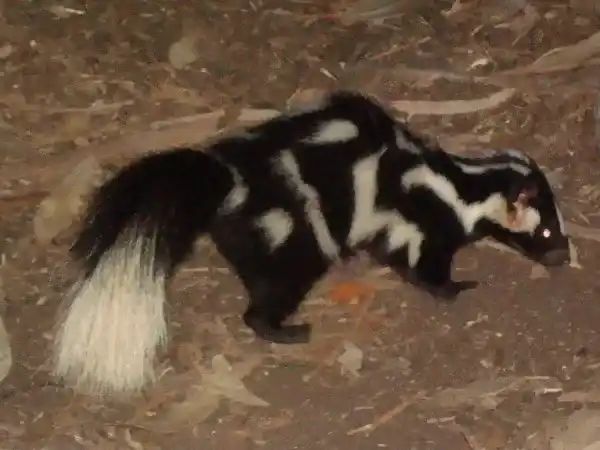
10) Southern Spotted Skunk ( Spirogale angustifrons )
Distribution and Habitat
They are mainly distributed in Central America .
Shape identification points
The markings are similar to those of other spotted skunks, often featuring black and white patches or swirling patterns.
Diet and Behavior
It feeds on bird eggs, small mammals, rodents, reptiles, and amphibians. It is capable of climbing and often uses this ability to find nests and obtain bird eggs.
Average body length: approximately 35 cm
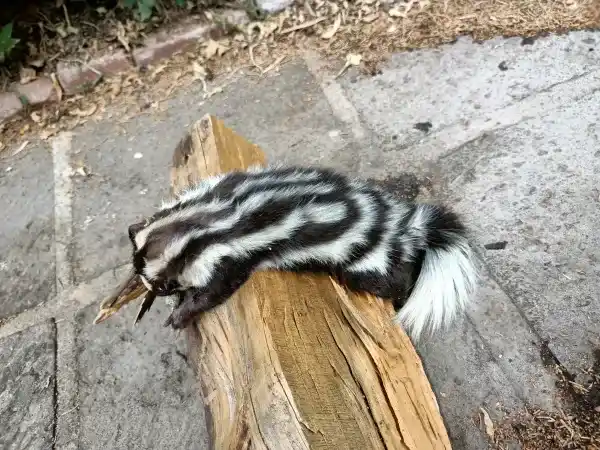
Practical methods for quickly identifying skunks
Four observation points to quickly determine which category it belongs to.
Pattern types: coarse stripes (common in Mephitis , Conepatus ) vs. spots/swirls (common in Spilogale ).
Mouth and snout morphology: The "pig-nosed skunk" ( Conepatus ) has a more prominent snout and is often more robust.
Distribution areas vary across North America, Central America, and South America, which can quickly narrow down the range.
Warning signs: Tail raised, body tense, and adopting a defensive posture are often warning signals before spraying.