I. Types of Dinosaurs:
Currently, over 200 dinosaurs have been discovered, which can be divided into two categories: carnivores and herbivores. Among carnivores, the most familiar one is Tyrannosaurus Rex, as it is arguably the most ferocious of all dinosaurs, hence its name. There are many herbivorous dinosaurs, which will not be discussed here.
II. Dinosaur Habits:
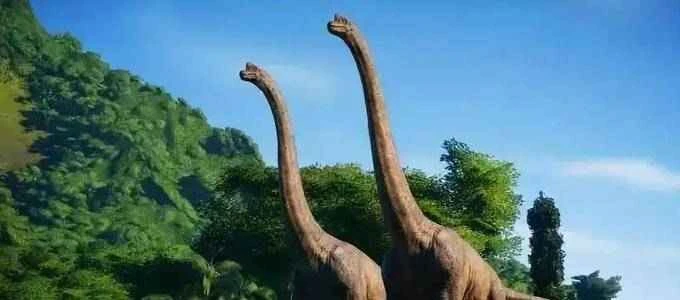
Dinosaurs preferred to live in groups, forming a cohesive unit, and they were all very "polite." When a larger dinosaur came along while the smaller ones were eating, the smaller ones would always give way to the larger ones, and the older ones would also give way to the younger ones.
III. The Mystery of the Dinosaur Extinction:
The extinction of dinosaurs remains a mystery. Currently, there are two main theories about their extinction: one is that an asteroid impact shrouded the Earth in smoke, preventing sunlight from reaching the dinosaurs, leading to their extinction. The other is that acid rain fell at that time, corroding the dinosaurs and their eggs, thus causing their extinction. Which theory is correct requires further investigation.
IV. How do dinosaurs become fossils?
After dinosaurs died, their flesh decomposed and was buried in the ground. Later, the soil hardened, and the dinosaur skeletons became fossils. Dinosaur fossils unearthed around the world vary greatly in characteristics, but they generally belong to only a certain period or species of the Jurassic period, or are incomplete individuals, or are found sporadically and on a small scale. However, the Lufeng dinosaur fossils have the following characteristics: high scientific research value and strong appeal for scientific research, popular science education, and tourism.
The dinosaur problem is a multidisciplinary research topic, involving geography, evolutionary biology, zoology, geography, botany, and other disciplines. The dinosaurs discovered in Lufeng lived between 135 million and 180 million years ago, spanning the Triassic, Jurassic, and Cretaceous periods. The Jurassic fossils are the most complete, covering the evolutionary trajectory of dinosaurs from the Early, Middle, and Late Jurassic periods. The coexistence of herbivorous and carnivorous dinosaurs from the Early, Middle, and Late Jurassic periods is unique in the world. The world-renowned Lufeng lizard fauna is my country's oldest dinosaur fauna, characterized by its large number, high density, and excellent preservation. All excavated Lufeng dinosaur fossils face east, and the presence of herbivorous and carnivorous dinosaurs from different eras buried together raises questions that scientists need to further explore and answer.
V. The Mystery of the Dinosaurs in Lufeng, China
Since the initial discovery in 1938 by Academician Yang Zhongjian (1877-1979), the founder of Chinese paleontology and the father of Chinese dinosaur research, and Bian Meinian, nearly 120 complete or nearly complete dinosaurs belonging to 33 species and 25 genera have been identified, ranging from primitive sauropods to sauropods, and from the Lower Lufeng Formation of the Early Jurassic to the Upper Lufeng Formation of the Middle Jurassic. The Jurassic section near Laochangqing Village, Chuanjie Township, Lufeng County, measured by the Yunnan Provincial Institute of Geological Sciences in October-November 1997, is located south of Lufeng, approximately 30 kilometers away. This section lies east of the Yuanmou Luzhijiang Fault and belongs to the Lufeng Small Basin sedimentary type. The section is complete from top to bottom, with a simple structure, intact stratigraphy, abundant fossils, and convenient transportation. The significant findings of this section are: firstly, the first discovery of a dinosaur fauna in the Upper Lufeng Formation of the Middle Jurassic in Yunnan; secondly, the discovery of two dinosaur fossil groups in different strata (upper and lower strata) within the same location and stratigraphic system, a unique finding worldwide; and thirdly, plasma atomic emission spectrometry analysis revealed exceptionally high levels of La, Y, Yb, and Sr in the dinosaur fossils, indicating a close relationship between the dinosaurs' deaths and the ecological environment at that time. The large number, high density, and excellent preservation of fossils make it a valuable site for experiential tourism.
Lufeng Dinosaur Mountain, covering an area of approximately 7 square kilometers, is named for its abundant dinosaur fossils and is composed of Lower Jurassic red sandstone and mudstone. The "Lufengosaur Fauna" is found on this mountain. Currently discovered are ancient dinosaurs such as *Lufengosaurus xuei*, *Lufengosaurus giganticatus*, and *Lugouosaurus qunshi*; therapsids such as *Bian's yunnanensis* and *Siniodon*; and lepidosaur reptiles such as *Lufengosaurus yangi*. The fossils discovered include mammals such as *Sinosaurus ridis* and *Sinosaurus niger*, as well as over 30 species of vertebrates belonging to 25 genera, including fish and amphibians. More than 100 dinosaur fossils have been unearthed, and two complete dinosaur skeletons are still exposed on the mountain. Bone fragments of various sizes are scattered throughout the area and can be easily collected. In addition, fossils of bivalves, gastropods, ostracods, phyllopods, and plants have also been found. The Lufeng dinosaur fossils are remarkably well-preserved, with even small caudal vertebrae, toe bones, and the most fragile ribs intact, showing remarkably clear bone patterns. The Lufeng dinosaur fossils are mainly concentrated in Dawa Dinosaur Mountain and the "World Dinosaur Valley." Located in Chuanjie Dinosaur Mountain, within the nearly 10,000 square meter section of the "China Lufeng Dinosaur Site Museum," over a hundred dinosaur fossil skeletons are buried in the rock strata. Such a high density and diverse variety of dinosaur fossil burial site is unparalleled in the world and can be called a world wonder. Within the exposed area of over 400 square meters, 12 individual dinosaur fossil skeletons can be identified. Among them are 11 giant sauropod dinosaur skeletons, which are nearly complete. The largest scapula is two meters long, and the dinosaur's body length is 27 meters, making it the largest in Asia. It is highly ornamental, has a strong sense of suspense, and has outstanding tourism and sightseeing value.
The scale and quality of the Lufeng dinosaur fossils are unparalleled elsewhere, making them a unique and unparalleled resource in the world. In February 1997, naturally exposed dinosaur fossils were discovered in Laochangqing, Chuanjie, 30 kilometers south of the county seat. Eight dinosaurs and five turtles were unearthed within a 440-square-meter area, a miracle in the history of dinosaur excavation worldwide. It was named the Laochangqing Dinosaur Fauna. Professor Kens Rigby, an American dinosaur expert who participated in the excavation, stated: "The discovery of so many fossils in such a small area irrefutably proves that Lufeng Chuanjie is the most concentrated, richest, and most valuable place for research on dinosaur fossils known in the world. In particular, the discovery of dinosaur fossil groups from both the Early Jurassic and Middle Jurassic periods at the same location is unique in the world." This has created a highly scenic and suspenseful tourism resource. It possesses strong local and cultural tourism value.
Since 1938, 507 species of paleontological fossils have been unearthed in Lufeng, including as many as 34 species of dinosaurs belonging to 25 genera. With in-depth research, new dinosaur species are constantly being discovered. Lufeng is world-renowned for its dinosaurs, with 28 dinosaur fossil sites discovered within its borders, containing over 100 dinosaurs and accompanying vertebrate fossils of over 30 species belonging to 25 genera. It is the richest, most complete, oldest, and most primitive vertebrate fossil site in China. Currently, Lufeng dinosaurs have become a symbol of the county, with dinosaur sculptures, murals, and dinosaur-themed souvenirs visible everywhere. A dinosaur museum was built in the county seat in 1989, displaying several mounted dinosaurs. In 1993, two dinosaur fossil in-situ burial halls were built on Dinosaur Mountain, showcasing dinosaurs as... To make the people of Lufeng proud, the county government designated October 26th of each year as the "Dinosaur Culture Festival." The first "Dinosaur Culture Festival" in 1991 attracted merchants from all over the country and domestic and international news organizations, who subsequently reported and introduced the Lufeng Dinosaur Festival, allowing people to further understand the "Hometown of Dinosaurs." In various overseas exhibitions organized by the State Administration of Cultural Heritage, Lufeng dinosaur fossils have received widespread acclaim and attracted numerous tourists. The situation during the exhibition in Japan is a testament to this. At that time, thousands of people lined up late into the night every day to see them the following day, and even in torrential rain, no one left, demonstrating the value of Lufeng dinosaurs and the interest of overseas tourists. The mysteries remain to be solved.
VI. The Mystery of Dinosaurs in Sichuan, China
The newly discovered Chuanjie dinosaurs are still under research. Experts estimate that the study of Chuanjie dinosaurs will be rich, vivid, and challenging, and new dinosaur species will continue to be discovered as research progresses. Dinosaurs have left behind many global mysteries, and unraveling these mysteries is a global endeavor. The Lufeng dinosaurs are fascinating for their large numbers, diverse species, high density, excellent preservation, long geological span, the coexistence of carnivorous and herbivorous dinosaurs, and the fact that no dinosaur egg fossils have been found to date. All of these unsolved mysteries embody the uniqueness and wonder of the Lufeng dinosaur family.