South of the mainland and Hainan Island lies a group of beautiful islands, scattered like jade beads in the South China Sea. For thousands of years, the Chinese have known them as the Dongsha Islands, Xisha Islands, Zhongsha Islands, and Nansha Islands, an inseparable part of our motherland. But do you know how these islands were formed? Interestingly, they were created by countless tiny, primitive marine organisms accumulating over a long geological history. Geologists have proven through investigation and research that these islands are composed of reefs with special formations, and the organisms that created these reefs are corals.
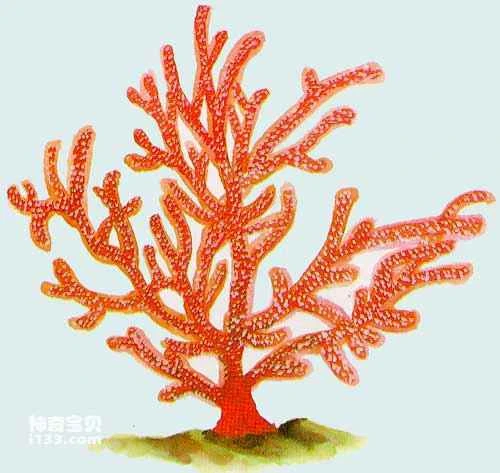
coral
Corals are a group of primitive invertebrates that live in the ocean, including modern sea anemones, stony corals, red corals, and extinct species such as tetracorals and tabulate corals. The entire coral family forms a class within the phylum Cnidaria, called the class Anthozoa, which is divided into four subclasses: tabulate corals, tetracorals, hexacorals, and octoculate corals. Tabulate corals are the oldest, with the vast majority living from the Late Cambrian to the Triassic period; only a small group called spicata survived until the Tertiary period. Tetracorals had a relatively short lifespan, distributed only from the Middle Ordovician to the Permian. Hexacorals and octoculate corals, on the other hand, have survived from the Triassic period to the present day. However, some scientists have reported that the history of octoculate corals can be traced back to the Devonian or even the late Precambrian period.
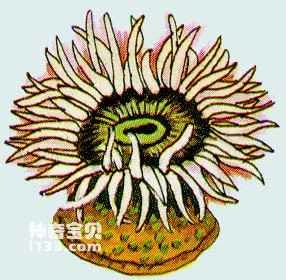
sea anemone
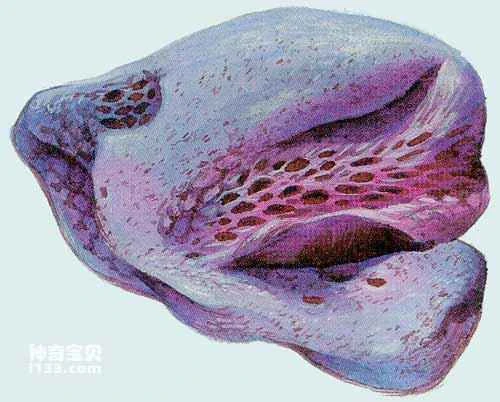
Horizontal Coral
Based on their ecological characteristics, corals can be divided into two categories: reef-building corals and non-reef-building corals. They have different requirements for living conditions, such as seabed depth, temperature, salinity, light intensity, seawater circulation, and seabed substrate. According to research on modern corals, scientists understand that reef-building corals generally live in water depths of up to 50 meters, with a maximum depth of 100 meters. They require a water temperature of around 20 degrees Celsius, strong sunlight, and normal seawater circulation and salinity. Therefore, reef-building corals can only be distributed near the equator, that is, in tropical and subtropical shallow sea areas between 28 degrees south latitude and 28 degrees north latitude.
When reef-building corals die, their skeletons form hard biomass. New reef-building corals then live and die on this biomass, leaving behind new biomass that accumulates on top of the old. Over time, this biomass eventually forms a coral reef. Modern coral reefs can be classified geographically into fringing reefs, barrier reefs, and atolls. Fringing reefs are coral reefs that grow close to the coast; barrier reefs are located some distance from the coast; and atolls are typically circular or horseshoe-shaped with a shallow lagoon in the center. These three main types of coral reefs actually represent continuous stages of coral growth around submerged volcanic islands.
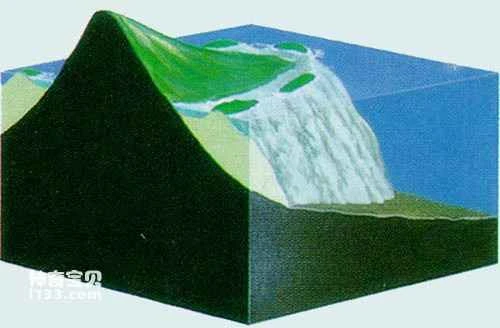
fringing reef
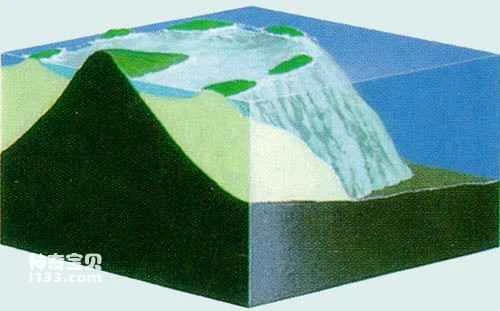
Barrier Reef
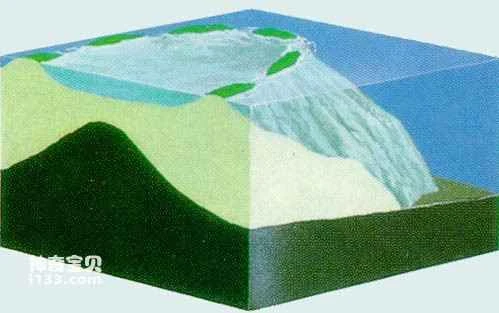
atoll
Paleontologists have discovered that coral reefs were also quite developed during the Paleozoic and Mesozoic eras. Through the study of the distribution patterns of these ancient coral reefs, it has been found that the Earth's equator has been constantly changing over long geological periods, and its position has been shifting southward in a regular manner over time.
Non-reef-building corals have a wide range of adaptability, generally living in seawater with temperatures ranging from 4.5 to 10 degrees Celsius, with some species even able to live in seawater as cold as -1.1 degrees Celsius. They are distributed in both shallow and deep seas, and some can even live at depths of 6,000 meters.
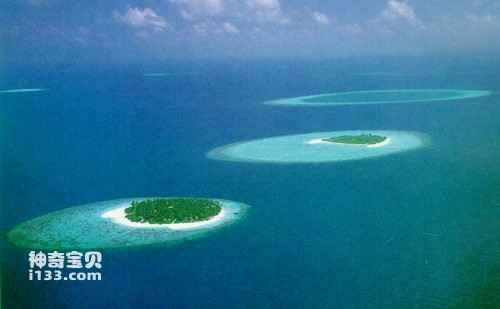
The tropical island nation of the Maldives is entirely composed of coral reef islands.
Some scientists believe that the growth patterns of the growth lines on the outer surface of corals are related to seasonal temperature changes and cyclical variations in nutrient supply, thus linking these growth lines to the concept of time. Modern corals grow one growth line per day, with every 28 growth lines forming a growth zone, equivalent to a lunar month (28 days). Through observation and calculation of the growth lines of tetracoral fossils from various geological periods, paleontologists have deduced time figures that are largely consistent with astronomical calculations. Devonian tetracorals had approximately 400 growth lines per year, while Carboniferous corals had 385 to 390. This indicates that the number of days in a year has gradually decreased, while the number of hours in a day has gradually increased. This result proves that the Earth's rotation speed is gradually slowing down! Tiny corals can even serve as clocks recording time in geological history!