Paleochaetes appeared in the Early Cambrian period and became extinct by the Jurassic period. No modern organism can be directly compared to them. Furthermore, their skeletal structures were highly diverse, so scientists still do not fully understand them, and their soft tissues remain largely unknown.
Archaeochaeta were marine benthic organisms, most of which lived sessilely on the seabed, although some groups may have been mobile. Archaeochaeta fossils are mostly preserved in limestone and are often found in symbiosis with algae, trilobites, brachiopods, gastropods, as well as hyoliths and cone-shaped shells, proving they were normal shallow-sea animals. Based on the symbiotic cyanobacteria, scientists speculate that Archaeochaeta's optimal living depth was 20-30 meters, with a maximum depth not exceeding 50 meters.
Paleocrystals likely inhabited only the warm, hot oceans between the Tropic of Cancer and the Tropic of Capricorn, forming paleocrystal mounds or layers, but reefs formed by them are relatively rare. Scientists speculate that the larvae of Paleocrystals could float in the seawater, and as they grew into adults with larger bodies and skeletons, they sank to the seabed, attaching themselves to the seabed with various types of holdfasts. Some adult Paleocrystals could lie flat on the seabed in a disc-like shape and could even flip over.
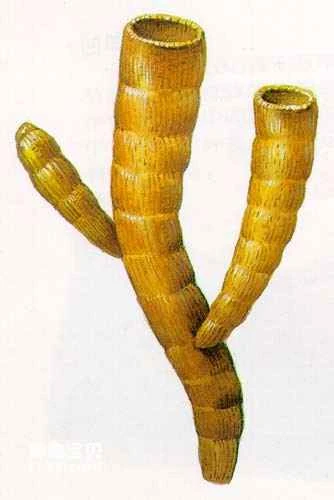
Ancient Cup Animals