The Zanda Basin, located in the Xiangquan River basin in western Tibet Autonomous Region, sits at an altitude of 3,700-4,500 meters and is administratively under the jurisdiction of Ngari Prefecture. The Xiangquan River is the second largest river in Ngari Prefecture and the upper reaches of the Satlej River, the largest tributary of the Indus River. When people talk about Zanda, they often think of the ruins of the Guge Kingdom, which records the rise and fall of this kingdom that lasted 700 years. Another much-discussed feature is the Zanda Earth Forest, formed from late Cenozoic fluvial and lacustrine sediments, stratigraphically named the Zanda Formation, which records the uplift of the Tibetan Plateau over the last few million years.
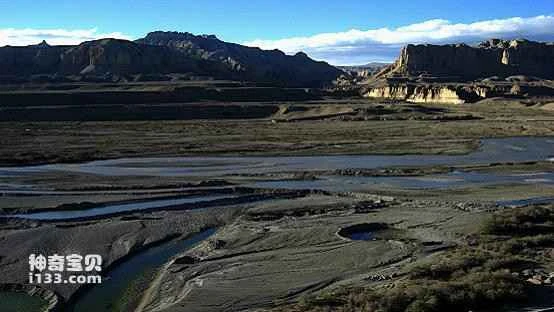
Xiangquan River
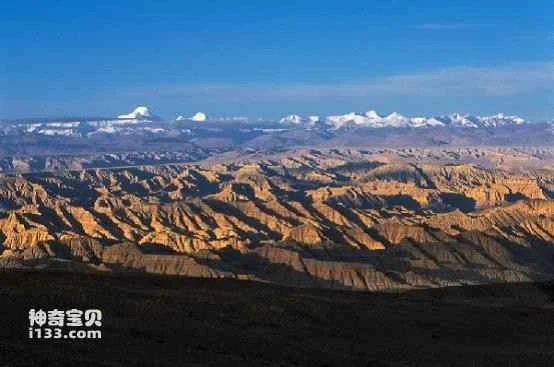
Zanda Basin
Geologically, the Zanda Basin is located at the contact point between the Lhasa Block and the Himalayan tectonic belt. The Yarlung Tsangpo suture zone passes along the northern edge of the basin along the Ayirariju Mountains. Since the Late Cenozoic, the Karakoram Fault has passed along the northern and southern edges of the Ayirariju Mountains. The southern edge of the Zanda Basin is formed by the Tethys Himalayas and the detached system of southern Tibet. The basin is approximately 140 kilometers long from east to west and has a maximum width of 50 kilometers from north to south, giving it a funnel shape that opens to the west. The Cenozoic strata within the basin occur nearly horizontally, overlying the Jurassic-Cretaceous metamorphic sandstone bedrock. The exposed thickness of the strata reaches its maximum at the southern edge of the basin, at approximately 800 meters. The lower part consists of rapidly deposited gravelly sandstone interbedded with thin layers of mudstone; the middle part consists of alternating layers of sandstone, mudstone, and marl; and the upper part consists of thick conglomerate interbedded with thin layers of marl and mudstone.
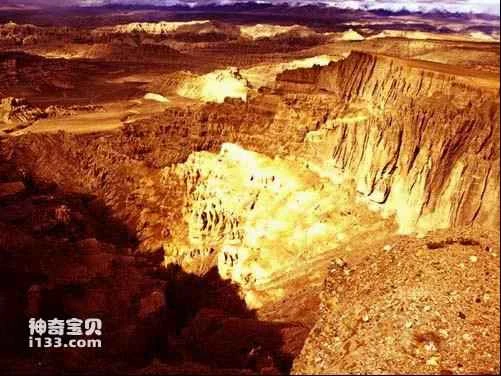
Zanda Basin
The woolly rhinoceros is not the only Ice Age animal originating from the Tibetan Plateau. Other members of the Zanda fauna, as well as mammal fossils found at other locations on the Tibetan Plateau, have shown that the unique Tibetan fauna dates back to the Late Miocene. The ancestors of the blue sheep (Pseudois nayaur) also appeared in the Zanda Basin and spread to northern Asia during subsequent Ice Ages, exhibiting a very similar evolutionary history to the woolly rhinoceros.
Furthermore, molecular biologists have established phylogenetic links between the ancestral types of yaks (Bos mutus) and argali sheep (Ovis ammon) in the Tibetan Plateau or surrounding mountains and their North American Ice Age relatives, such as bison and canadensis. Yaks, with their large size and thick wool, similar to woolly rhinoceroses, have also been found to have spread northward during the Pleistocene, reaching as far as the Lake Baikal region of Siberia.
Among the typical species of extant fauna on the Tibetan Plateau, the Tibetan wild ass has also been found in Pleistocene sediments in Alaska, North America. The origin of the Tibetan antelope can be traced back to the Querliqnoria in the Late Miocene of the Qaidam Basin in northern Tibet. The primitive type of snow leopard was found in the Pliocene of the Zanda Basin and spread to surrounding areas in the Pleistocene.