Most people may know about dinosaurs, but probably don't know much about them in detail. Let's learn more about them through some dinosaur fossils.

1. Manchuria, Heilongjiang
China's First Dragon
The Heilongjiang Manchurianosaurus was discovered in Jiayin, Heilongjiang Province in 1902 and was known as "China's first dragon." The fossils were later transported to Russia, where they were named Heilongjiang Manchurianosaurus in 1930. The holotype fossil of Heilongjiang Manchurianosaurus is now kept in the Geological Museum of St. Petersburg, Russia.
2. Shi's Panzu Dragon
China's first sauropod dinosaur
The sauropod dinosaur was discovered in Mengyin, Shandong Province, between 1922 and 1923 by Austrian geologist Sztansky and Chinese geologist Tan Xichou. The fossil was transported to Uppsala University in Sweden and named the sauropod dinosaur in 1929. It was the first sauropod dinosaur discovered in China.
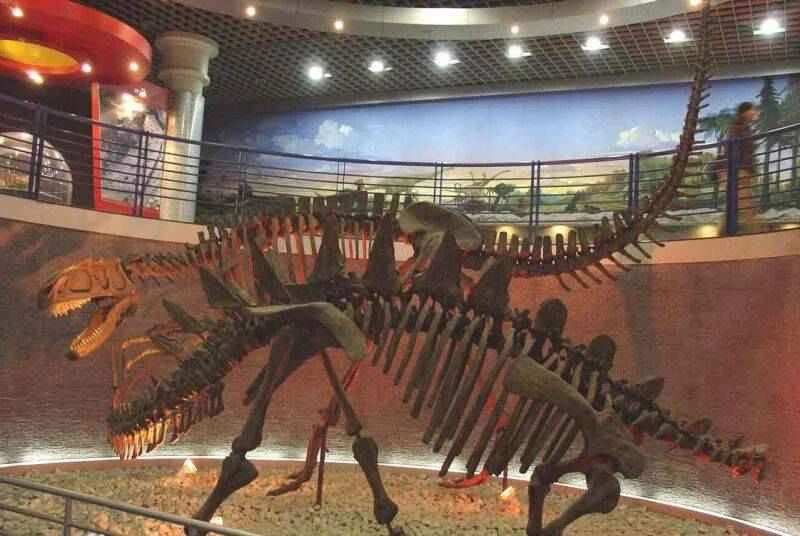
3. Xu's Lufeng Dragon
One of the oldest dinosaurs
*Lufengosaurus xuei* is a genus of sauropod dinosaur that lived in southwestern China during the Early to Middle Jurassic period. The fossil specimen was discovered in Lufeng, Yunnan Province, China. *Lufengosaurus xuei* is one of the oldest dinosaurs excavated in China. It was the first dinosaur fossil to be mounted in China (mounted and exhibited in Beibei, Chongqing in 1941), and was named by Academician Yang Zhongjian, a founder of Chinese vertebrate paleontology, in 1941. It is a prized possession of the Paleozoological Museum of China.
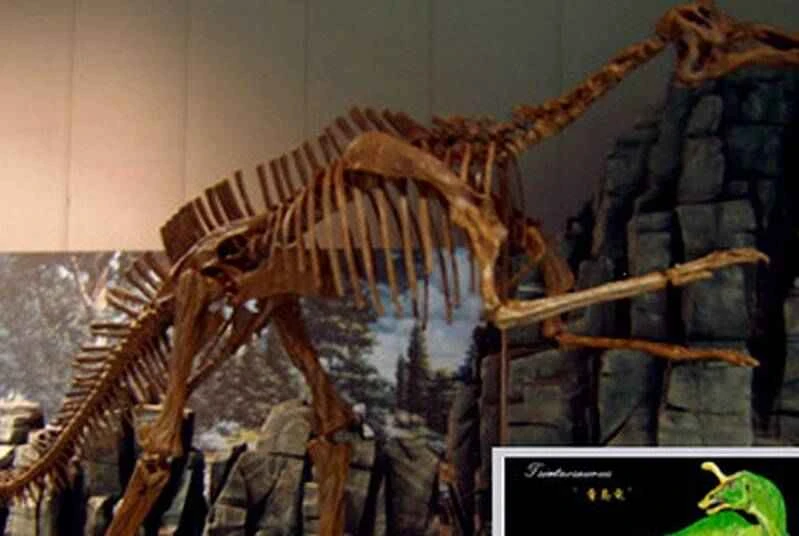
4. Spiny-nosed Qingdao Dragon
Hadrosaurus fossil with crest
The Spinosaurus spinosum is the most famous hadrosaur fossil with a crest discovered in my country, and also the first complete dinosaur fossil discovered in the country. The specimen is currently preserved at the Paleozoological Museum of China. It is named after the spiky crest on its head, which was discovered in Xigou, Jingangkou Village, Laiyang City, near Qingdao. The strata where the Spinosaurus spinosum fossil was found date back to the Late Cretaceous period.
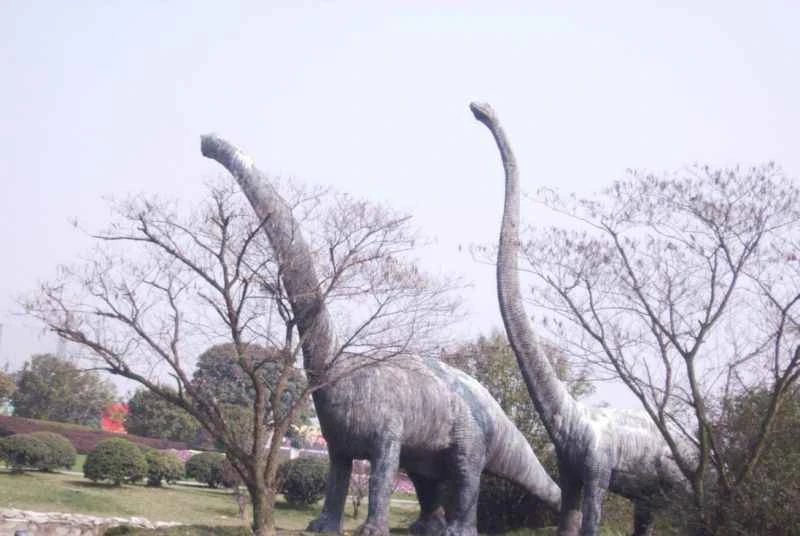
5. Hechuan Mamenchisaurus
The first dinosaur fossil discovered after the founding of the People's Republic of China
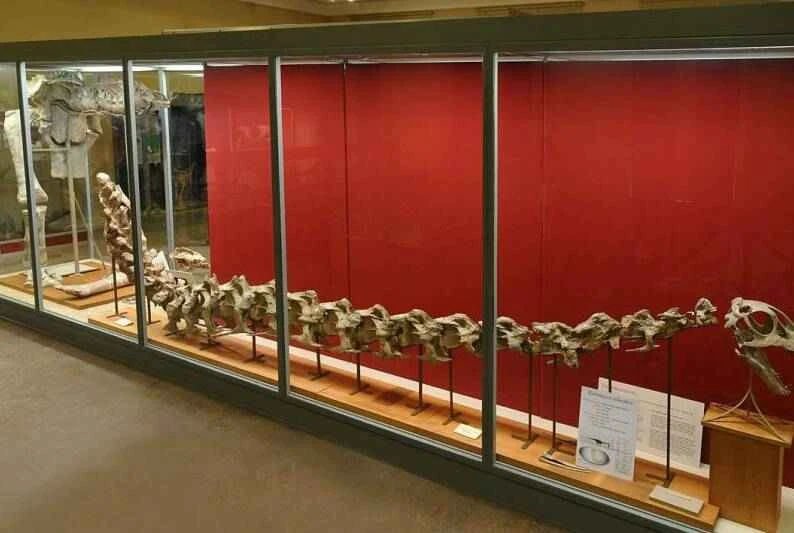
One of the largest sauropod dinosaurs discovered in China, its fossils were found at the Mamingxi ferry crossing in Yibin City. Scientific identification has confirmed it belongs to the order Sauropoda, specifically the order Epsilon. This animal was approximately 22 meters long and nearly 7 meters tall. Its neck was exceptionally long, equivalent to half its body length. Not only were each cervical vertebrae long, but the number of cervical vertebrae was also as high as 19, the most among sauropods. Furthermore, its neck was the longest of all dinosaurs (reaching up to 12.1 meters). Compared to the cervical vertebrae, the dorsal, sacral, and caudal vertebrae were relatively fewer.
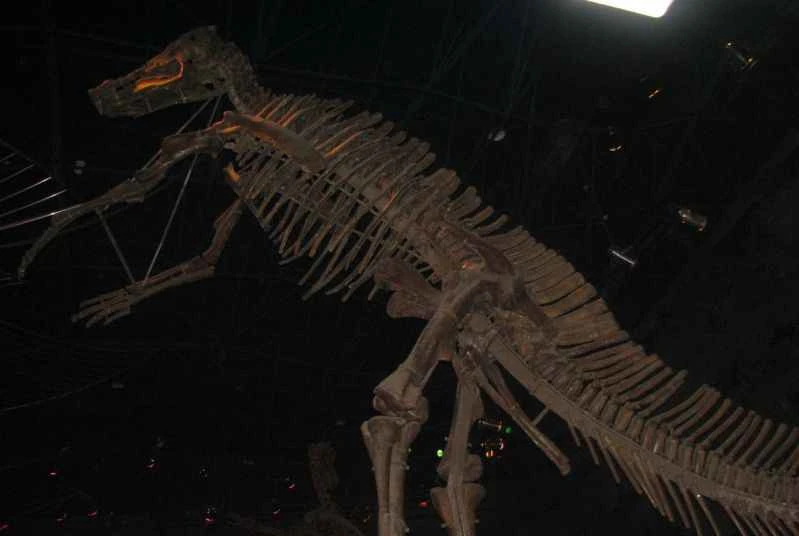
6. Giant Shandong Dragon
Bipedal walking dinosaurs
*Shantungosaurus giganteus* is a species of ornithopod dinosaur belonging to the family Hadrosauridae and the genus *Shantungosaurus*. It was herbivorous, standing 8 meters tall and 15 meters long, with a flat, unadorned head, typical of flat-headed hadrosaurs. It lived during the Late Cretaceous period of the Mesozoic Era. Fossil specimens were discovered in Shandong Province, China.
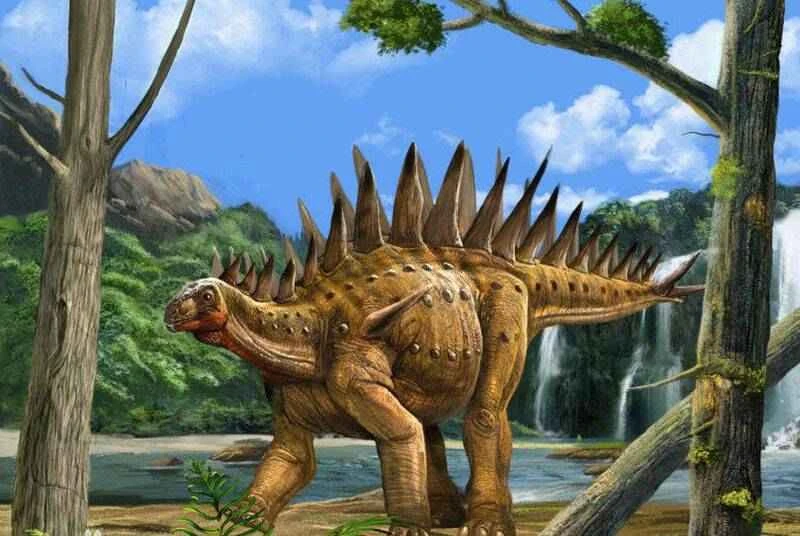
7. Taibai Huayang Dragon
The world's most primitive and best-preserved Stegosaurus has been discovered.
Taibai Huayangosaurus is a medium-sized primitive stegosaur, measuring 4.3 meters in length. Its main characteristics include a large, thick, triangular head, a relatively short neck, and forelimbs significantly shorter than its hind limbs, yet it walks on all fours. The two rows of bony plates on its back are relatively small and vary in shape, and its tail ends in two pairs of plate-like spines. Existing specimens are displayed at the Zigong Dinosaur Museum and the Chongqing Museum.
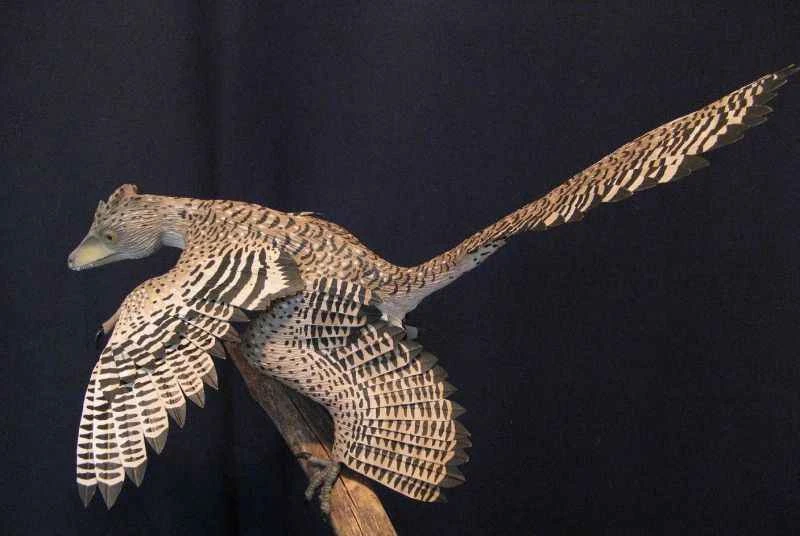
8. Gu's Microraptor
The first known flying dinosaurs
The holotype of *Microraptor guyi* is only about 77 cm long and is carnivorous. Its trunk is relatively short, only 44% to 50% the length of its hind limbs, and its tail is longer than its body. It can be distinguished from *Microraptor zhaoyi* by the prominent biceps tubercle on its radius, a very short first finger on its forelimb, a single flat and large sternum, a strongly curved pubis, and an arched tibia.