For most vertebrates, the tail is not merely an "extension of the body," but a multifunctional "fifth limb" for balance, climbing, defense, communication, and even warmth . Different species have tails of varying shapes: some are laterally flattened like oars, some are thick and strong like iron rods, and others are covered in thick, long hair like brooms. Below, we'll introduce you to 10 wild animals known for their "extra-long tails" and see how they maximize this "advantage."

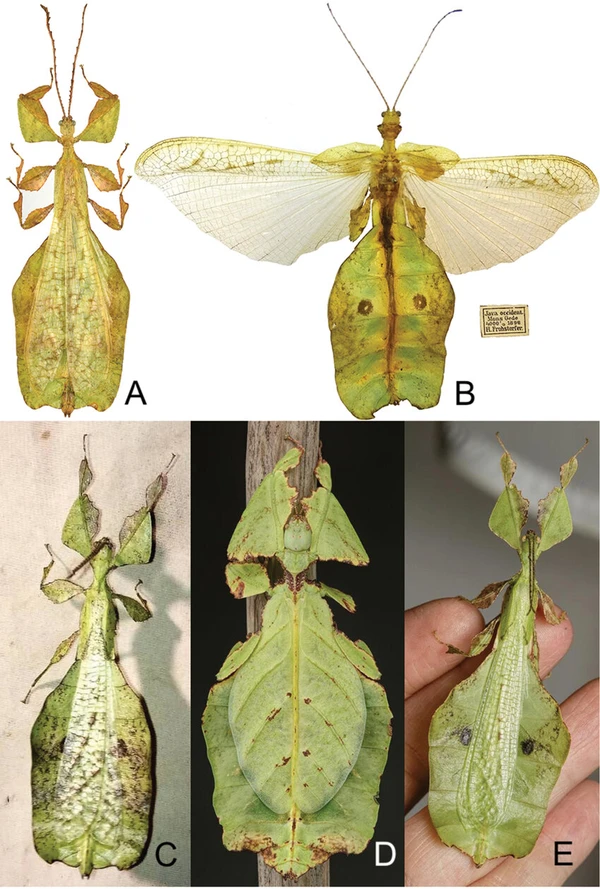
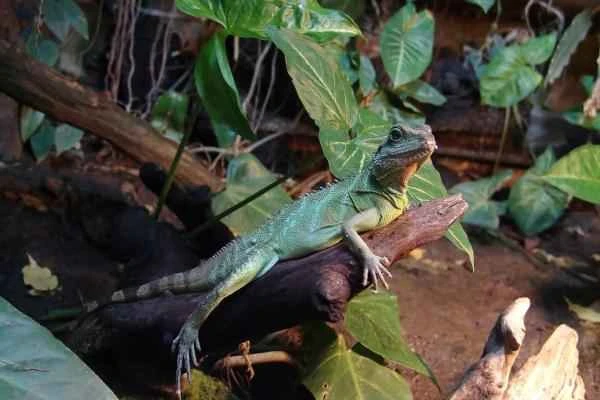
1. Water dragon of the Indochina Peninsula
Physignathus cocincinus
Tail length advantage : The tail is about 3 times the length of the body and is laterally flattened into a "paddle" shape.
use :
Swimming : Splashing water horizontally, like flippers;
Defense : When startled, it plunges into the water from a great height while simultaneously whipping its tail to strike predators;
Land balance : When walking on all fours, the tip of the tail touches the ground for support.
Habitat and Habits : Distributed in the canopy layer of tropical rainforests and riverbanks in Vietnam, Laos, Cambodia, etc., it is a typical "amphibious" arboreal lizard.
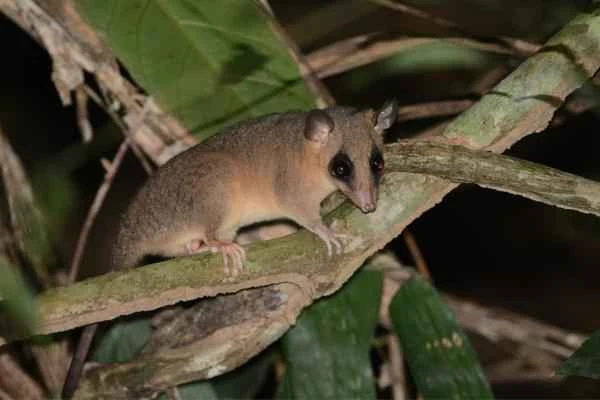
2. Long-tailed dwarf opossum
Cercartetus caudatus
Advantage of long tail : The tail is almost twice the length of the body and has well-developed curling muscles , which can wrap around branches like a "monkey tail".
use :
Climbing : Hanging upside down at night in the top layer of the Australian rainforest to feed on nectar and insects;
Energy storage : During the cold season, fat can be stored at the base of the tail to cope with food shortages.
A funny moment : Before hibernation, the tail will swell up noticeably, like a "little peanut" hanging on it.
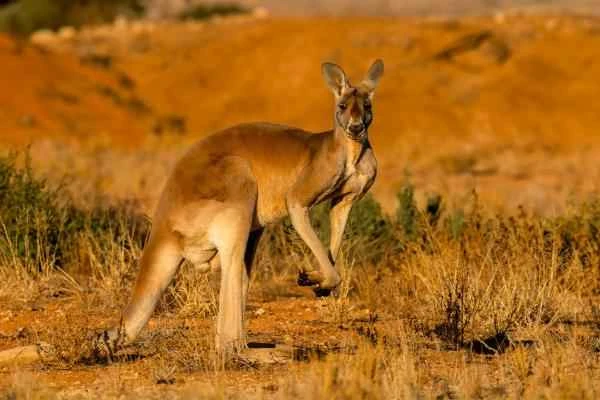
3. Kangaroo
Family Macropodidae
Tail length advantage : thick and muscular, the tail of the "red kangaroo" can reach 110 centimeters.
use :
Jumping fulcrum : Use the tail as a lever to support the ground before leaping;
Aerial counterweight : Adjusts the body's center of gravity to prevent leaning forward;
"Three-point landing" walking : When moving slowly forward, the tail and both forelimbs support the body weight together.
Evolutionary trivia : Because the tail bears the weight, the first toe on the hind foot has disappeared, and the second and third toes are highly degenerate.
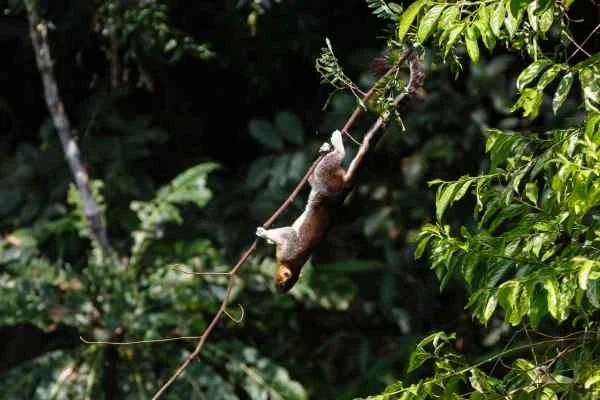
4. Giant Squirrel
Ratufa affinis
Tail length advantage : The tail can reach 45 cm in length, which is almost the same as the body length of 45–50 cm.
use :
Leaping between trees and balancing poles ;
When feeding, it uses a "reverse balance hammer" posture , gripping the food with its two forelegs and letting its tail hang down behind it for stability.
Distribution : Southeast Asian lowland rainforests; one of the world's largest tree squirrels.
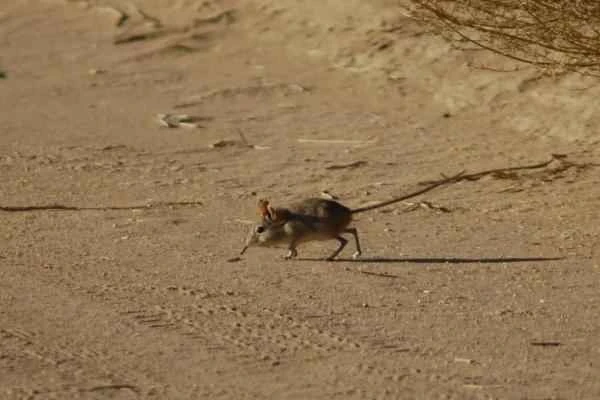
5. Bush's prone elephant shrew
Elephantulus intufi
Tail length advantage : The tail length accounts for about half of the overall length, and the female's tail is slightly longer than the male's.
Purpose : To maintain directional stability by wagging the tail when jumping or running at high speed.
Special features : It looks like a "miniature elephant", but is more closely related to shrews and is the fastest among "African jerboas".
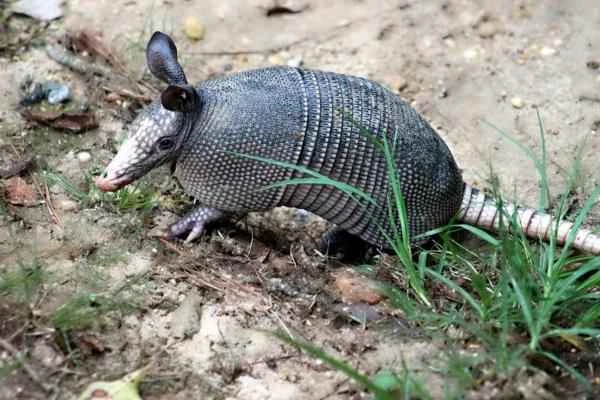
6. Giant Armadillo
Priodontes maximus
Tail length advantage : The tail can reach 50 cm in length and is covered with hard bony scales.
use :
Bipedal "reconnaissance" : When sniffing while standing upright on its hind legs, the tail supports its balance on the ground;
Excavation aid : Used as a fulcrum when backing up to shovel soil.
Social function : During courtship, they express affection by wagging their tails and using signals from their body odor glands.
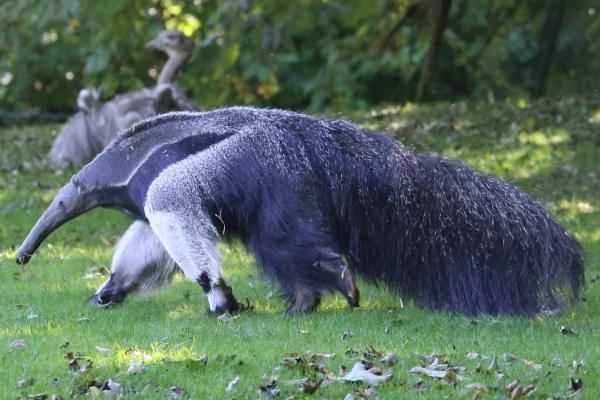
7. Giant anteater
Myrmecophaga tridactyla
Tail length advantage : The tail is 150 cm long on average, which is 3 times the body length, and the fur is thick like a "grass skirt".
use :
Support : When feeding on ant nests, the tip of the tail touches the ground to stabilize the front of the body;
Keeping warm : When curled up to rest, it covers its body with its tail fur, like wearing a thick blanket.
Fun fact : Long-haired tails accumulate dead branches and leaves, making it look like they are dragging a moving broom when they walk.
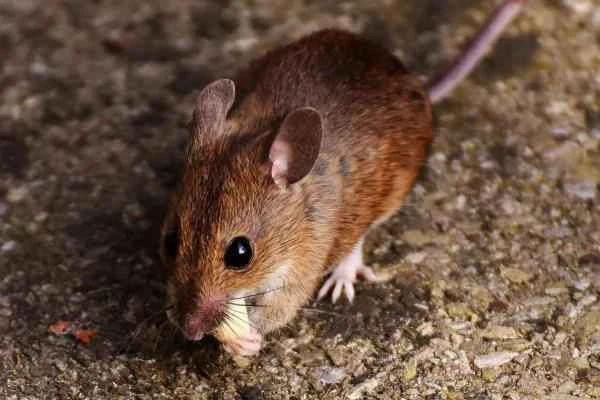
8. Grass jerboa
Zapus hudsonius
Tail length advantage : Of its 22-centimeter body length, the tail accounts for 15 centimeters.
Purpose : To assist in jumping and turning in mid-air, using the long, slender hind legs; and to "brake" with the tail upon landing.
Distinguishing features : A dark stripe runs from the tip of the nose to the end of the tail, and the tail is sparsely covered with bicolor hair.
Distribution : North American grasslands and wetlands, extending from Arizona to New Mexico.
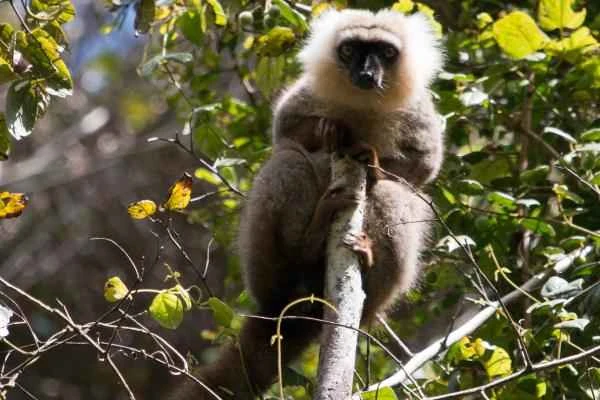
9. White-headed lemur
Eulemur albifrons
Tail length advantage : The tail length is about 40 cm, and the body length is fluffy and thick.
Use : To provide "weight" to the body when jumping between soft branches woven from reeds and papyrus to prevent falls.
Conservation status : Habitat around Lake Ara Otra in Madagascar has drastically decreased, and it has been listed as critically endangered .
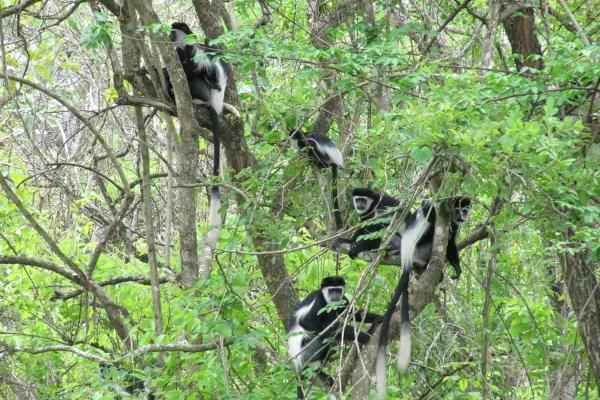
10. Black-and-white colobus monkey (maned colobus monkey)
Colobus guereza
Tail length advantage : The tail can reach 85 cm in length, with dense hairs at the end resembling the "tassel" of a paintbrush.
Features : Can be entirely white or half black and half white, creating a strong contrast with the black and shiny body hair.
Uses : When swinging in the upper layers of African rainforests and riparian forests, the tail end bends back and hooks around branches, making it an excellent tool for half-curled tails .
Summary: Why is the long tail so important?
Balance and acceleration : For example, kangaroos and jerboas rely on their tails to adjust their center of gravity, improving the efficiency of running and leaping.
Climbing and hanging : Pygmy opossums, colobus monkeys, and other animals with long tails and curling muscles are comparable to "fifth hands".
Social interaction and warning : Giant armadillos communicate with their companions through tail movements and scent.
Warmth and camouflage : The giant anteater's "blanket tail" serves both to keep warm and to confuse predators.
Swimming and defense : The water dragon's flattened tail acts as a paddle and can also be used to strike and drive away enemies.
These diverse long tails not only showcase the ingenious evolution of nature but also remind us that every detail of the body is a testament to the wisdom a species has developed for survival over countless years . We hope this article has given you a deeper understanding of the "science of tails," and we welcome you to continue following our website to explore more fascinating stories of wild animals!
References
Schweighoefer, K. (1999). *Cercartetus caudatus*. Accessible at: https://animaldiversity.org/accounts/Cercartetus_caudatus/
Carter, TS, Superina, M., & Leslie, DM (2016). Priodontes maximus (Cingulata: Chlamyphoridae). Mammal Species, 48(932), 21–34.
University of Wisconsin Department of Biology (SF) - Zapus hudsonicus - Grass Jerboa. Link: https://www3.uwsp.edu/biology/VertebrateCollection/Pages/Vertebrates/Mammals%20of%20Wisconsin/Zapus%20hudsonicus/Zapus%20hudsonicus.aspx
Beatty, R., Beer, A., & Deeming, C. (2010). The Book of Nature. Dorling Kindersley, UK.