Among various pet turtles, aquatic turtles are the easiest to keep, followed by semi-aquatic turtles. However, when it comes to tortoises, the difficulty of keeping them increases dramatically, requiring consideration of issues such as temperature, humidity, and internal stones, which can be quite a headache. Do you know how to properly care for tortoises? What types of tortoises are kept, and what are the precautions for their care? This article will list the world's ten most difficult tortoise species to keep: Indian Star Tortoise, Concave-shelled Tortoise, Folded-back Tortoise, Sulcata Tortoise, Leopard Tortoise, Booted Tortoise, Spider Tortoise, Biscuit Tortoise, Burmese Tortoise, and European Tortoise. If you don't have sufficient experience in keeping turtles, perhaps it would be wiser to avoid keeping these species!
1. Indian Star Tortoise
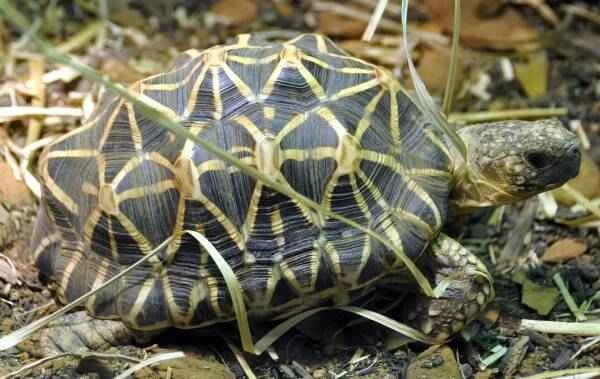
The Indian Star Tortoise, also known as the Indian Star Tortoise, Star Tortoise, or Earth Tortoise, is a reptile belonging to the family Testudinidae and the genus *Gyrodactylus*. They are widely distributed in India, Pakistan, Sri Lanka, Syria, Iraq, and other regions. In 1997, a limited number of Indian Star Tortoises were introduced to China.
The Indian Star Tortoise has a deep black carapace with pale yellow radiating stripes on each scute, resembling stars in the night sky, making it very beautiful and beloved by many tortoise enthusiasts. They prefer to inhabit flat grassy areas and favor foods such as fruits, spiny cacti, succulent plants, and thistles. Under captive conditions, Indian Star Tortoises can live for 30 to 50 years.
2. Concave-shelled tortoise
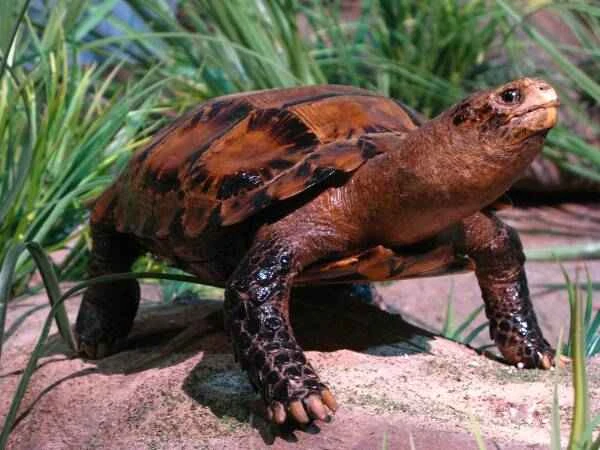
The Eurasian tortoise, also known as the Chinese giant tortoise, belongs to the family Testudinidae and the genus *Eurasian*. It is listed as a Class I protected species in the *List of National Key Protected Wild Animals of China*. Eurasian tortoises are mainly distributed in Laos, Malaysia, Myanmar, Thailand, Vietnam, Cambodia, and China, and inhabit tropical and subtropical high-altitude regions.
Adult Eurasian tortoises prefer to live along the banks of mountain streams, while juveniles can climb onto tree trunks to bask in the sun. They primarily feed on bamboo shoots, tender grass, and fruits. These adorable Eurasian tortoises are a precious biological resource on Earth, and we should work together to protect their habitats so they can continue to thrive in nature.
3. Folded-back turtle
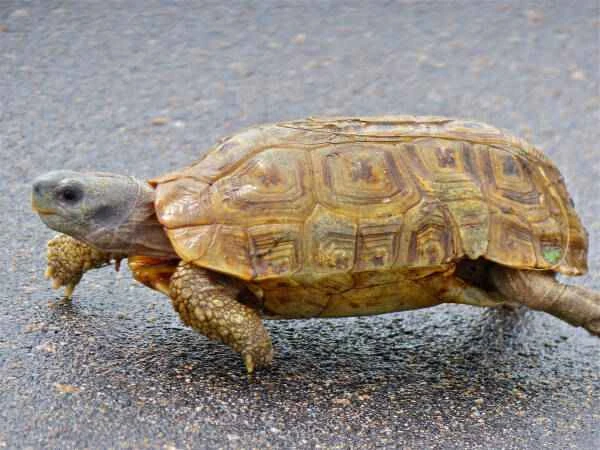
Fold-backed tortoises are widely distributed in central Africa. They share a common characteristic: the posterior half of their carapace has a joint that allows it to fold. This feature protects their hind limbs and tail when encountering enemies, a unique characteristic among all tortoises. There are some differences between male and female fold-backed tortoises.
First, they can be distinguished by their tails; males have thicker tails, while females have shorter ones. Additionally, males have a concave plastron. Furthermore, male bell-shaped tortoises are highly territorial; it's best to keep only one male in a household, otherwise, violent confrontations may occur during the breeding season.
4. Sulcata tortoise
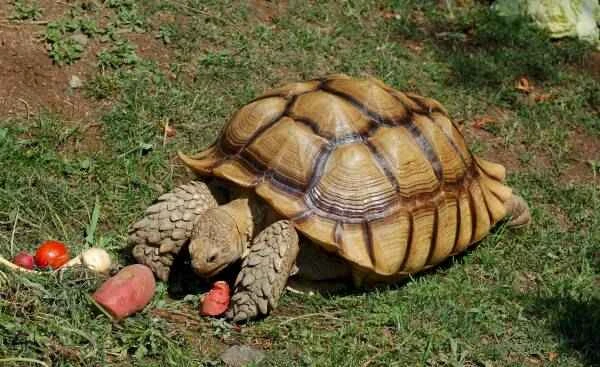
The Sulcata tortoise, scientifically known as *Geochelone sulcata*, is also called the Sulcata giant tortoise or Sulcata land tortoise. It is a very active tortoise. Its carapace is highly domed, with large, symmetrical scales on the top of its head. The skull is relatively short; the squamous bones are not connected to the parietal bones, the frontal bone may not enter the orbital fossa, and the postorbital bones are reduced or almost absent. The posterior part of the quadrate bone is usually closed, completely surrounding the stapes. The maxilla is almost connected to the quadracus, and the masculine surface of the maxilla may or may not have a central ridge.
Their carapace and plastron are tightly connected by sutures via a bridge. Their limbs are stout and cylindrical. The phalanges and toes have no more than two phalanges, claws, but no webbing or scent glands. They are herbivores and can survive in relatively arid environments. The Sulcata tortoise is found in Ethiopia, Sudan, Senegal, Mali, Chad, and other African countries.
5. Leopard Tortoise
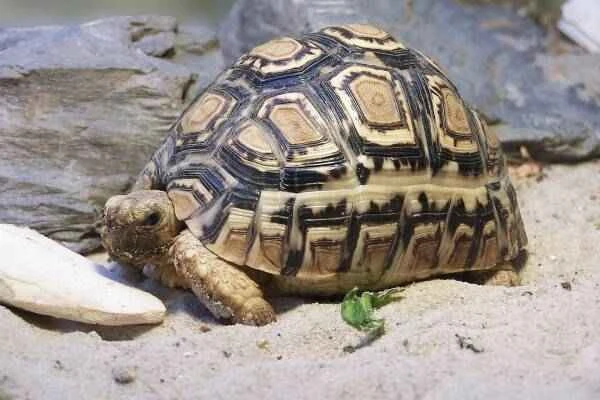
The leopard tortoise, also known as the leopard turtle, is a reptile belonging to the order Testudines, family Testudinidae, and genus Leopard Tortoise. They are large tortoises with distinctive markings and are listed as a protected species under the Convention on International Trade in Endangered Species of Wild Fauna and Flora (CITES).
Leopard tortoises have a high, domed carapace, sometimes with a mounded back. Their skin is typically creamy yellow, with black spots and stripes on the carapace, and each tortoise has unique markings. Leopard tortoises are mainly distributed in southern Africa, and are widely found in sub-Saharan Africa. They are herbivorous tortoises, primarily feeding on various herbaceous plants.
6. Boot-footed tortoise
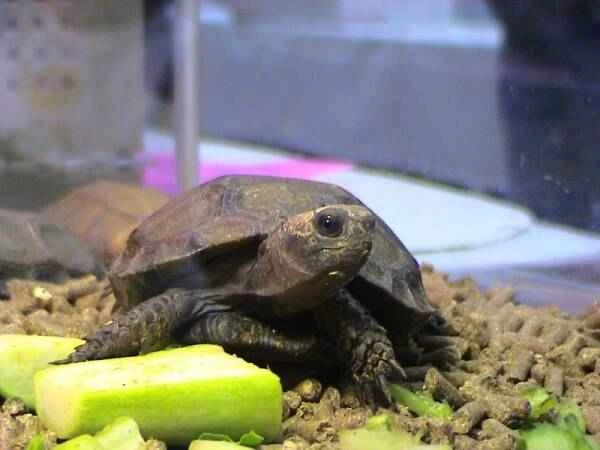
The booted tortoise, scientifically known as *Manouria emys*, is the largest tortoise in Asia and the fourth largest tortoise species in the world. It is possibly one of the oldest living tortoise species. Booted tortoises belong to the family Testudinidae. They are herbivores, but sometimes also prey on invertebrates and frogs. They are distributed from western India to southern Vietnam, and south to the Malay Peninsula and Sumatra.
The booted tortoise has several small, toe-like, well-developed scales between its tail and the base of its hind legs. They live in tropical rainforests and prefer areas near streams. In captivity, booted tortoises lay approximately 40 spherical eggs at a time, with an incubation period typically not exceeding 70 days.
7. Biscuit Turtle
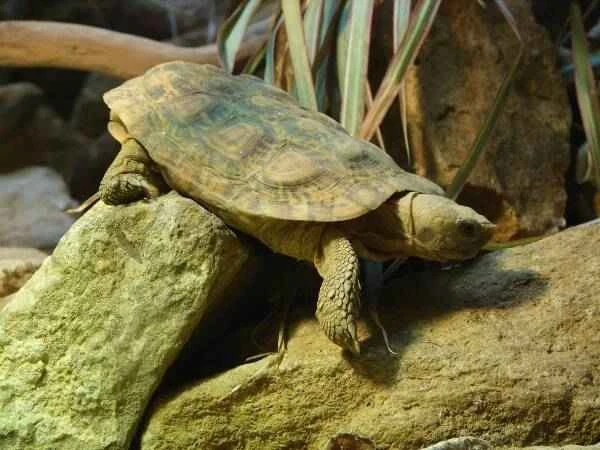
The biscuit tortoise is quite distinctive, possessing a remarkably flat yet beautifully patterned shell. Its plastron features large, smooth, soft areas covered with numerous scutes or grooves on the bony scutes. Biscuit tortoises are relatively small, typically with a plastron length not exceeding 15 cm (maximum 18 cm) and a weight of only about 500 grams. Adult males have longer and thicker tails than females.
Cookie turtles primarily feed on grasses and inhabit hilly areas at altitudes up to 1800 meters. Living at higher elevations, they have adapted to cooler temperatures. The average temperature in these areas is typically around 24-30°C, but can drop to as low as 12°C.
8. Spider-web turtle
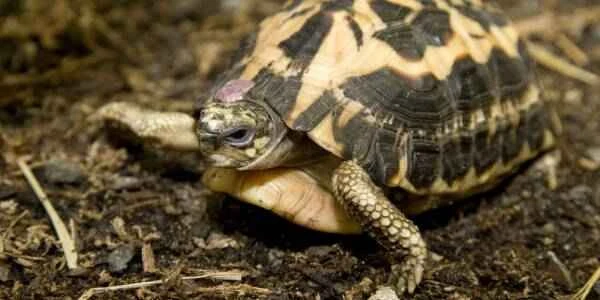
The Common Spider Tortoise, scientifically known as *Pyxis arachnoides*, is primarily found in southwestern Madagascar. It inhabits the coastal areas of southwestern Madagascar, where the relative humidity is slightly higher due to the moderating influence of maritime monsoons. They mainly inhabit shrublands, with some individuals venturing deep into the forest.
Spider tortoises are small land tortoises, with mature individuals typically having a carapace length of 12-15 cm. Their carapaces have a distinctive glazed black color and are adorned with a bright yellow, net-like pattern. There is a movable hinge joint at the junction of the dorsal and pectoral scutes.
9. Burmese Star Tortoise
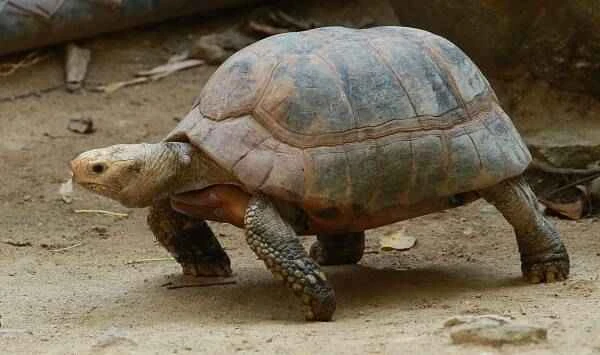
The Burmese star tortoise, also known as the dragon claw tortoise, dry tortoise, or Burmese tortoise, belongs to the genus *Tortoise* within the family Testudinidae. It is one of the most common tortoises found in the market. It is a medium-sized tortoise, with adults weighing approximately 1 kilogram. The carapace length is generally over 20 centimeters, with some reaching up to 40 centimeters. The Burmese star tortoise has an oval body shape and a domed carapace.
Burmese tortoises are subtropical terrestrial tortoises, primarily inhabiting mountainous, hilly, and shrubland environments. Their distribution includes northeastern India, Vietnam, and the Malay Peninsula. Burmese tortoises are mainly herbivorous, but also consume some animal matter.
10. European Tortoise
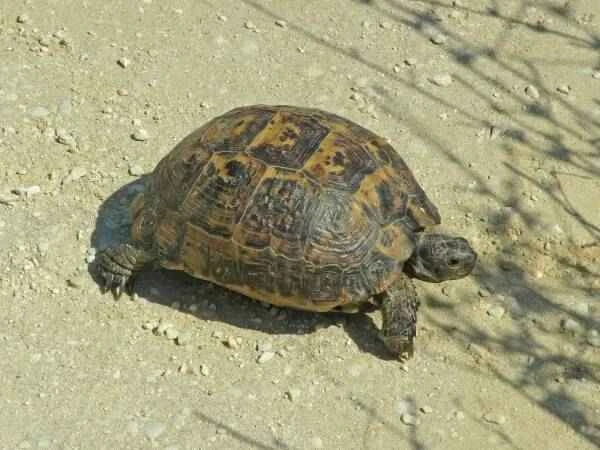
The European tortoise exhibits great variation in size and coloration, ranking second only to the four-toed tortoise among Mediterranean tortoises, and is the most numerous tortoise species. Its classification remains highly controversial. Generally speaking, the European tortoise is highly adaptable and has a wide distribution. They can hibernate in their native habitat and adapt well to captive environments. They generally accept a variety of fruits and vegetables and usually start eating immediately after purchase, thus requiring little acclimatization period.
In the wild, European tortoises have a plastron length of about 10 cm and a carapace length of over 14 cm to reproduce. They lay 4-6 eggs at a time, and the incubation period is about 60-80 days, which is about half the incubation time of other tortoises.
The ranking of the top ten most difficult tortoises to keep was primarily based on research into the difficulty of keeping various tortoises on relevant online platforms, combined with a comprehensive consideration of their popularity. If you have any questions, please feel free to comment/criticize at the end.